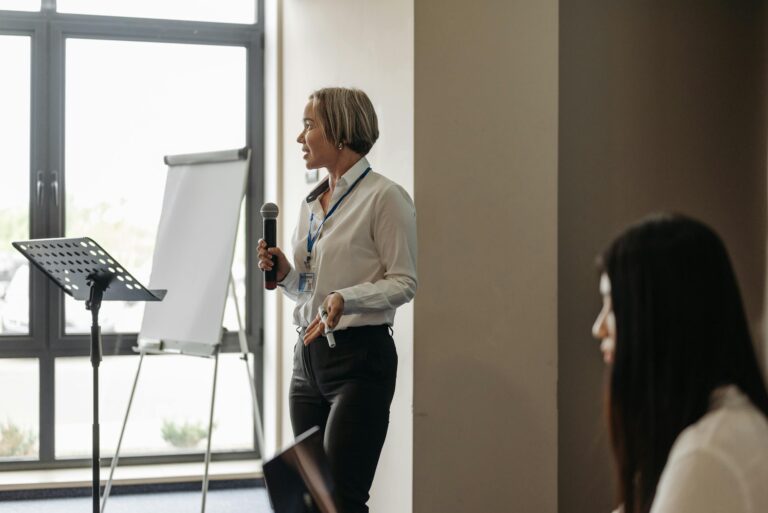

Quiet people are underestimated at work more often than any other personality type, and it rarely has anything to do with their actual performance. Colleagues assume silence means disengagement. Managers mistake measured responses for lack of confidence. The result: capable, deeply thoughtful people get passed over while louder voices collect the credit. This article examines why it happens and what you can do about it.

There’s a specific kind of frustration that comes from watching someone else get the promotion you earned, the project you were perfect for, or the recognition that belonged to your work. It stings differently when you know the gap isn’t competence. It’s volume. You didn’t speak loudly enough, often enough, or with enough visible enthusiasm. And somehow, that became the metric.
I’ve lived this. After two decades in advertising and marketing, including years running agencies and managing Fortune 500 accounts, I can tell you that the most insightful people in every room I’ve ever been in were rarely the loudest. They were the ones scribbling notes in the margins, asking the one question nobody else thought to ask, or quietly building the strategy that everyone else eventually took credit for presenting.
Our work here at Ordinary Introvert covers the full experience of being an introvert in a world built for extroverts. If you want to explore how these patterns show up across your career, our Introvert at Work hub is a good place to start.
Why Are Quiet People So Consistently Underestimated at Work?
The short answer is that most workplaces are designed around extrovert ideals. Open floor plans, brainstorming sessions, back-to-back meetings, the expectation that enthusiasm looks like volume. A 2020 study published in the Journal of Personality and Social Psychology found that people who speak more frequently in group settings are consistently rated as more competent by observers, regardless of the actual quality of their contributions. Frequency of speech, not depth of insight, shapes perception.
What’s your personality type?
Take our free 40-question assessment and get a detailed personality profile with dimension breakdowns, context analysis, and personalised insights.
Discover Your Type8-12 minutes · 40 questions · Free
That’s a structural problem. And it’s one that disproportionately affects people who process before they speak, prefer written communication, or simply don’t feel the need to fill silence with filler.
There’s also something called the “extrovert ideal,” a term psychologist Susan Cain brought into mainstream conversation. The cultural assumption that the ideal worker is gregarious, expressive, and quick to respond shapes hiring decisions, performance reviews, and promotion timelines in ways that most organizations haven’t examined carefully.
Add to that the visibility bias: what gets seen gets rewarded. Quiet people often do their best work behind the scenes, in preparation, in analysis, in careful execution. None of that is easily visible in a 30-minute all-hands meeting.
What Does Being Underestimated at Work Actually Feel Like?
Ask anyone who’s experienced it and the description tends to follow a pattern. You contribute something substantive in a meeting, and it gets glossed over. Twenty minutes later, a louder colleague says something similar and the room responds with energy. You watch your ideas get attributed to someone else. You’re described in reviews as “reserved” or “hard to read” when what you actually are is focused.
I remember sitting in a strategy session early in my career where I’d spent the previous week building a detailed competitive analysis. I walked in with a clear point of view. A colleague walked in with a confident tone and a half-formed idea. By the end of the meeting, his version of the direction was the one being discussed. Mine had been absorbed into the conversation and lost its source. That experience taught me something important: doing excellent work isn’t enough if the work isn’t visible.

The emotional weight of this is real. A 2019 report from the American Psychological Association found that feeling unrecognized at work is one of the top contributors to occupational stress and burnout. Being overlooked isn’t just frustrating. Over time, it erodes confidence and makes people question whether they belong in the spaces they’ve worked hard to earn.
Many quiet professionals internalize the underestimation. They start to wonder if there’s something wrong with how they show up, rather than questioning whether the environment is measuring the right things. That internalization is where the real damage happens.
Are Quiet Employees Actually Less Effective?
No. And the data supports that clearly.
A Harvard Business Review analysis found that introverted leaders often deliver better outcomes than their extroverted counterparts, particularly when managing proactive teams. The reason: they listen more carefully, give space for others to contribute, and tend to think through consequences before acting. Those aren’t soft skills. They’re strategic advantages.
Quiet employees also tend to score higher on measures of preparation and follow-through. They’re less likely to overpromise in the moment and more likely to deliver on what they commit to. In client-facing roles, that reliability builds trust in ways that charisma alone cannot sustain.
What quiet people are often less effective at is performing effectiveness for an audience. And in workplaces that reward performance over output, that gap becomes a career obstacle.
A study from the National Institutes of Health examining personality traits and career outcomes found that conscientiousness, a trait strongly associated with introverted processing styles, was the single strongest predictor of long-term professional success across industries. Not extraversion. Not assertiveness. Conscientiousness.
How Does the Workplace Reward Extroversion Over Substance?
It’s worth being specific about the mechanisms, because naming them makes them easier to work with.
Meeting Culture Favors Speed Over Depth
Most meetings reward whoever speaks first and most confidently. Quiet thinkers who need a moment to formulate a considered response get talked over or assumed to have nothing to add. The format itself creates a structural disadvantage that has nothing to do with intelligence or preparation.
Performance Reviews Measure Presence, Not Impact
Many review processes ask managers to evaluate “communication skills,” “team collaboration,” and “executive presence,” categories that are often proxies for extroverted behavior. A quiet person who communicates precisely in writing, builds deep relationships one-on-one, and executes flawlessly may score lower on these dimensions than a louder peer whose actual output is weaker.
Networking Events Are Built for a Specific Personality Type
Company social events, happy hours, and team-building activities are almost universally designed around extroverted social preferences. Quiet employees who find these environments draining often skip them, which managers sometimes read as disengagement rather than a reasonable response to overstimulation.

Promotions Often Go to Whoever Is Most Visible
Visibility and capability are not the same thing, but they’re treated as if they are. People who volunteer for high-profile projects, speak up in leadership meetings, and build relationships with senior stakeholders get promoted more consistently, regardless of whether their actual contributions are stronger than those of quieter colleagues.
Can You Change How Others Perceive You Without Changing Who You Are?
Yes. And this distinction matters enormously. There’s a difference between performing extroversion (exhausting, unsustainable, and in the end ineffective) and making your actual strengths more visible. success doesn’t mean become someone else. The point is to stop letting your work be invisible.
A few approaches that have worked for me and for people I’ve worked with over the years:
Claim Your Ideas Before They Leave the Room
One of the simplest shifts I made was learning to attach my name to ideas explicitly, in the moment. Not aggressively, but clearly. “I want to build on what I mentioned earlier about the positioning strategy.” That one habit changed how my contributions were tracked and attributed in meetings. It felt uncomfortable at first. It became natural quickly.
Write More Than You Think You Need To
Quiet professionals often underuse their strongest communication channel: writing. A well-constructed follow-up email after a meeting, a clear project summary, a brief strategic memo, these create a documented record of your thinking that verbal contributions rarely produce. Written work also plays to the depth and precision that most quiet people naturally bring.
Build Relationships Intentionally, One at a Time
Quiet people are often exceptional in one-on-one conversations. Use that. A 20-minute coffee with a senior colleague, a genuine check-in with a teammate, a thoughtful question to a manager after a presentation. These interactions build influence more durably than any networking event. They also feel far more natural.
Prepare to Speak Early in Meetings
One pattern I’ve noticed: quiet people who speak once, early, and with substance are perceived very differently than those who stay silent for the full hour. You don’t need to dominate the conversation. One clear, well-timed contribution shifts how you’re perceived in that room. Prepare it in advance if you need to. There’s no rule against that.
What Should Managers Know About Quiet Employees?
If you manage people, this section is worth sitting with. The quiet person on your team who rarely speaks in all-hands meetings may be the one doing the most careful thinking. The employee who doesn’t network at company events may be building the deepest client relationships. The person who takes a beat before responding may be giving you the most considered answer in the room.
A 2021 piece in the Harvard Business Review argued that organizations consistently underinvest in introverted talent because they conflate communication style with capability. The cost isn’t just individual: teams that don’t create space for quieter voices lose access to a category of thinking that extrovert-dominated environments systematically suppress.
Practical adjustments that make a real difference include sending meeting agendas in advance so quieter thinkers can prepare, creating space for written input alongside verbal discussion, and evaluating performance on outcomes rather than on how someone presents themselves in group settings.

Is Being Quiet at Work a Long-Term Career Disadvantage?
Only if you let the environment define the terms without pushing back on them.
Many of the most respected professionals I’ve worked with over a 20-year career were quiet people. Not quiet in the sense of having nothing to say, but quiet in the sense of choosing their words carefully, holding their observations until they mattered, and building reputations on consistency rather than charisma. That kind of credibility compounds over time in a way that loud, performative confidence rarely does.
There’s also a generational shift happening. Remote and hybrid work has partially leveled the playing field. Written communication, asynchronous collaboration, and documented work product have become more central to how teams operate. Those formats favor the strengths that quiet professionals have always had.
A 2022 study from Psychology Today noted that introverted professionals who developed strategic visibility practices, not performance, but genuine visibility, reported higher career satisfaction and faster advancement than those who either tried to act extroverted or stayed entirely invisible.
The path forward isn’t pretending to be someone else. It’s making sure the person you actually are gets seen clearly.
How Do You Stop Internalizing the Underestimation?
This is the part that doesn’t get talked about enough. Being consistently overlooked leaves a mark. Over time, many quiet professionals start to believe the narrative their environment has created about them. They shrink further. They stop advocating for themselves. They accept less because they’ve been conditioned to expect less.
Separating external perception from internal reality is work. It requires actively cataloging your own contributions, seeking out feedback from people who see your work clearly, and finding environments (teams, managers, companies) that measure what you actually produce rather than how loudly you announce it.
It also requires some honest self-assessment. Are there ways you’re making yourself invisible that go beyond temperament? Are there moments where you’re holding back not because you’re processing, but because you’re afraid? Both things can be true simultaneously, and they require different responses.
Many quiet professionals find that working with a therapist or coach who understands introversion helps them separate the two. The Mayo Clinic has written about the relationship between chronic workplace invisibility and self-esteem, noting that the effects are real and addressable, but they don’t resolve on their own.

What I’ve found, both personally and in watching others, is that the shift usually starts with one small act of self-advocacy. One moment where you say, clearly and without apology: I did this. That was my idea. I want to be considered for this. It feels enormous the first time. It becomes ordinary with practice.
Explore more career resources for introverts in our complete Introvert at Work hub.
About the Author
Keith Lacy is an introvert who’s learned to embrace his true self later in life. After 20 years in advertising and marketing leadership, including running agencies and managing Fortune 500 accounts, Keith now channels his experience into helping fellow introverts understand their strengths and build fulfilling careers. As an INTJ, he brings analytical depth and authentic perspective to every article, drawing from both professional expertise and personal growth.
Frequently Asked Questions
Why are quiet people underestimated at work?
Most workplaces reward visible, vocal behavior over thoughtful, precise contribution. Because quiet professionals tend to process internally, speak less frequently in group settings, and avoid self-promotion, they’re often perceived as less engaged or capable than they actually are. The bias is structural, not personal, but it has real career consequences.
Are quiet employees less productive than extroverted ones?
No. Multiple studies, including NIH research on personality traits and career outcomes, show that conscientiousness, a quality strongly associated with introverted work styles, is the strongest predictor of long-term professional success. Quiet employees often outperform on preparation, follow-through, and depth of analysis. They’re less likely to perform productivity for an audience, which can make their contributions harder to see.
How can a quiet person become more visible at work without pretending to be extroverted?
Strategic visibility doesn’t require personality performance. Practical approaches include claiming ideas explicitly in meetings, using written communication to document your thinking, building relationships one-on-one rather than in group settings, and preparing one clear contribution for each meeting rather than trying to dominate the conversation. These tactics work with your natural strengths rather than against them.
What should managers do differently for quiet team members?
Effective managers create conditions where quieter employees can contribute on their own terms. Sending meeting agendas in advance, accepting written input alongside verbal discussion, evaluating performance on outcomes rather than presentation style, and having regular one-on-one conversations all make a measurable difference. The goal is to measure what people actually produce, not how loudly they announce it.
Does being quiet hurt your chances of getting promoted?
It can, in environments that equate visibility with capability. Yet quiet professionals who develop intentional visibility practices, documenting their work, advocating for themselves clearly in one-on-one settings, and building strong relationships with decision-makers, advance at rates comparable to extroverted peers. The disadvantage is real but not permanent. It responds to deliberate strategy.