Yin yoga and meditation work together as a restorative practice that invites slow, sustained stillness, making them particularly well-suited for introverts and highly sensitive people who process the world at depth. Where most movement practices push outward, yin yoga turns inward, holding poses for several minutes at a time to release connective tissue and quiet the nervous system. Paired with meditation, this combination creates a rare environment where the introvert mind can finally exhale.
My first encounter with yin yoga happened during a period when I was running a mid-sized advertising agency and carrying the particular exhaustion that comes from leading a team of extroverts through a high-stakes product launch. I wasn’t burned out in the dramatic sense. I was just emptied, like a container that had been poured from too many times without being refilled. A colleague mentioned yin yoga almost offhandedly. I showed up to a class expecting a workout and found something closer to a conversation with myself.
If you’ve been exploring ways to support your mental health as an introvert or a highly sensitive person, our Introvert Mental Health Hub covers the full range of tools and strategies, from anxiety management to emotional processing, and yin yoga sits naturally within that broader picture.

What Makes Yin Yoga Different From Other Practices?
Most yoga styles are yang in nature. Vinyasa flows, power yoga, even a brisk Ashtanga sequence all ask you to generate heat, move quickly, and sustain effort. There’s real value in that. But yin yoga operates on an entirely different logic.
Career Coaching for Introverts
One-on-one career strategy sessions with Keith Lacy. 20 years of Fortune 500 leadership as an introvert, now helping others build careers that work with their wiring.
Learn More50-minute Zoom session · $175
In a yin practice, you settle into a pose, usually something floor-based like a supported dragon, butterfly, or sleeping swan, and you stay there. Three minutes. Sometimes five. Occasionally longer. The goal isn’t muscular engagement. You’re actually encouraged to let the muscles soften so that the deeper layers, the fascia, ligaments, and joint capsules, can gradually release. These tissues respond to gentle, sustained pressure rather than dynamic movement. They need time.
That principle resonated with me immediately as an INTJ. My mind has always needed time to process. I’ve sat in agency meetings where extroverted colleagues would generate twenty ideas in ten minutes, and I’d be quietly working through the implications of the first one. Neither approach is wrong, but the world tends to reward speed. Yin yoga was the first physical practice I’d encountered that rewarded slowness, that treated depth as the point rather than a liability.
The physiological mechanism matters here. Holding a yin pose for several minutes activates the parasympathetic nervous system, the branch responsible for rest and recovery. For people who carry chronic tension in the body, whether from anxiety, perfectionism, or the accumulated weight of absorbing other people’s emotional states, this parasympathetic activation can feel genuinely profound. The research published through PubMed Central on yoga and the autonomic nervous system supports what many practitioners report anecdotally: slow, mindful movement measurably shifts the body’s stress response.
Why Do Highly Sensitive People Respond So Strongly to This Practice?
Not everyone who benefits from yin yoga is an introvert, and not every introvert is a highly sensitive person. But there’s significant overlap between these groups, and the overlap matters when we’re talking about a practice that works through stillness and sensation.
Highly sensitive people process sensory information more deeply than the general population. That’s not a metaphor. It’s a neurological reality. The same nervous system that makes an HSP notice the quality of light in a room or feel moved by a piece of music also makes them more susceptible to overstimulation. If you’ve ever read about HSP overwhelm and sensory overload, you’ll recognize the pattern: a perfectly ordinary day can accumulate into something exhausting when your nervous system is processing every detail at high resolution.
Yin yoga addresses this directly. The practice removes stimulus rather than adding it. You’re on a mat, usually in a quiet room, with minimal instruction once you’re in a pose. The teacher’s role shifts from directing movement to creating space. For an HSP, that environmental simplicity is itself restorative. There’s nothing to react to, nothing to monitor, nothing to absorb. You’re just here, breathing, releasing.
I managed a creative director at one of my agencies who was a textbook HSP. Brilliant with concepts, deeply attuned to clients’ unspoken needs, but visibly depleted after long client days. She started a yin practice and described it as “the only hour of the week where my nervous system believes it’s safe.” That phrase stayed with me. Safety at the nervous system level is different from intellectual reassurance. Yin yoga provides the former.
How Does Meditation Deepen the Yin Yoga Experience?
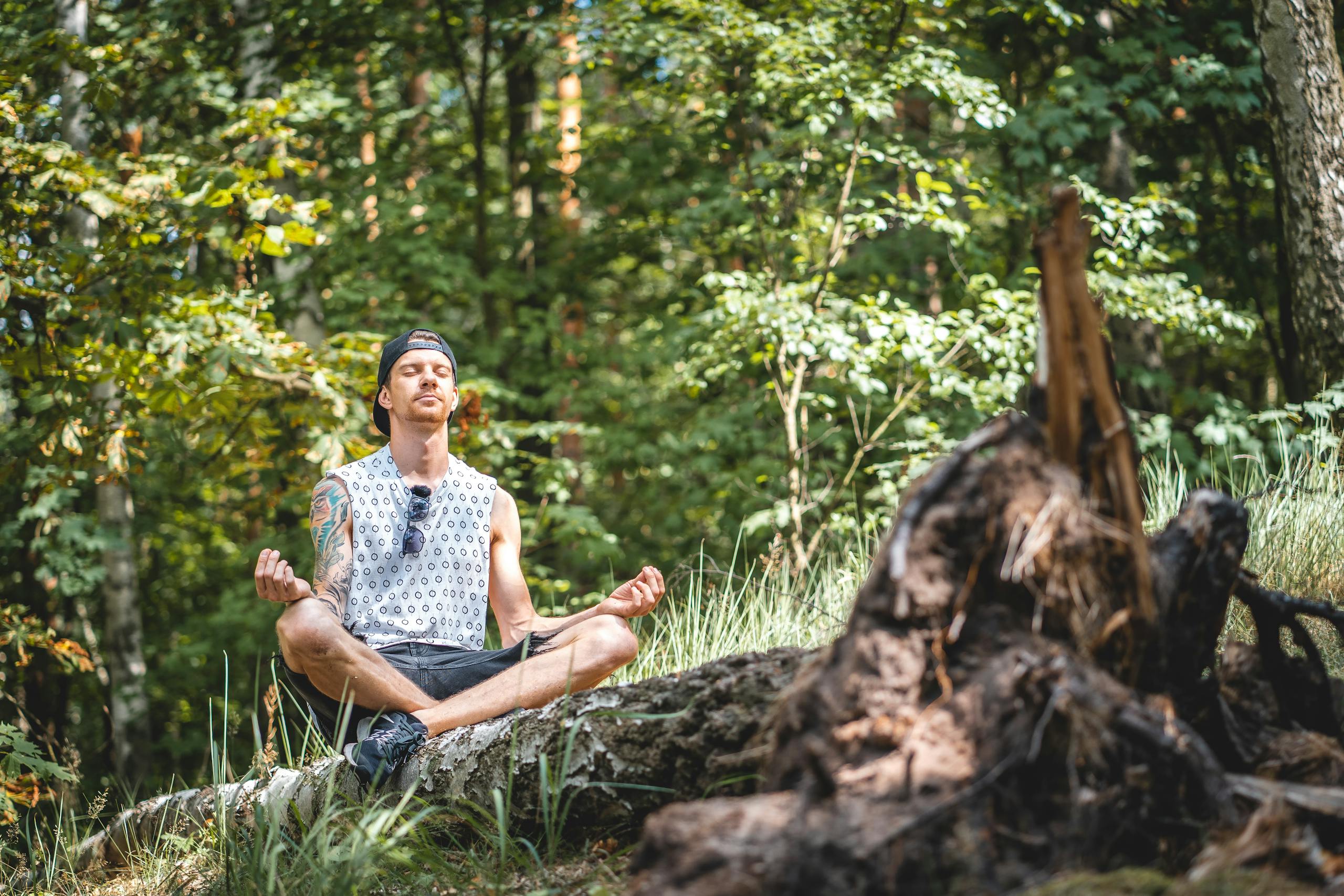
Yin yoga and meditation aren’t just compatible. They’re almost structurally identical in what they ask of you. Both require sustained, non-reactive attention. Both involve sitting with discomfort without immediately trying to fix it. Both build what practitioners sometimes call “witness consciousness,” the capacity to observe your own inner experience without being consumed by it.
In a yin pose, you’ll often encounter sensation that isn’t quite pain but isn’t comfortable either. A tightness in the hip flexors, a pull along the inner thigh, a heaviness in the lower back. The instruction is to stay, breathe, and notice without judgment. That’s meditation. The pose is just the container.
Many teachers weave formal meditation directly into yin classes, offering a body scan or breath awareness practice during the longer holds. Some classes close with a seated or lying meditation after the final pose. Either way, the two practices reinforce each other. The physical release from yin creates a quieter mental environment for meditation. The meditative attention brought to yin deepens the physical release.
For introverts who struggle with conventional meditation, yin yoga can serve as a useful entry point. Pure sitting meditation can feel abstract or frustrating, especially for minds that are used to processing through analysis. Having a physical anchor, a specific sensation in the body to return attention to, makes the meditative state more accessible. You’re not trying to empty your mind. You’re just watching what’s happening in your left hip while you breathe.
The evidence on mindfulness-based practices consistently points toward their effectiveness in reducing anxiety symptoms, and yin yoga’s built-in meditative component means you’re accessing those benefits even if you’ve never sat on a meditation cushion in your life.
What Does Yin Yoga Actually Do for Anxiety?
Anxiety in introverts and HSPs often has a particular texture. It’s not always the racing, urgent panic associated with acute stress. More often it’s a low hum of vigilance, a background monitoring of the environment, a readiness for something to go wrong. The National Institute of Mental Health’s overview of generalized anxiety disorder describes this persistent, difficult-to-control worry well, and many sensitive introverts will recognize themselves in that description even if they’ve never received a clinical diagnosis.
Yin yoga interrupts this vigilance cycle at the physiological level. When you hold a pose for several minutes and focus on breath and sensation, you’re essentially giving your nervous system evidence that the environment is safe. The body’s threat-detection system begins to downregulate. Cortisol levels, which tend to run elevated in chronically anxious people, respond to this kind of sustained, gentle practice over time.
There’s also something important about the emotional material that surfaces during yin holds. Many practitioners report unexpected waves of emotion during long hip openers or chest stretches. This isn’t unusual. Connective tissue holds tension, and releasing it can release the emotional charge stored alongside it. For people working through HSP anxiety, having a structured, safe container in which emotions can surface and pass is genuinely therapeutic.
I noticed this in my own practice during a particularly difficult period after losing a major Fortune 500 account. The professional grief of that experience sat in my body for weeks before I could articulate it. It was during a long yin hold in a supported fish pose that something shifted. Nothing dramatic. Just a quiet recognition that I’d been carrying something heavy, and my body had known it before my mind caught up.
How Does Yin Yoga Support Emotional Processing?
Introverts process emotion differently than extroverts. Where an extrovert might work through feelings by talking them out, an introvert tends to need quiet time and internal space. The emotional processing happens in layers, often slowly, and it requires an environment that doesn’t demand immediate responses or visible reactions.
Yin yoga provides exactly that environment. The long holds create a kind of interior spaciousness. You’re not performing wellness for anyone. You’re not being asked to share or respond. You’re just present with whatever is moving through you. For people who relate to what I’ve written about HSP emotional processing and feeling deeply, this kind of uninterrupted internal space is rare and precious.
The meditation component amplifies this. Mindfulness practices, particularly those that emphasize non-judgmental observation, train you to be with difficult emotions rather than immediately trying to resolve or suppress them. Over time, this builds what psychologists sometimes call emotional tolerance, the capacity to experience intense feelings without being overwhelmed by them.
That capacity matters enormously for introverts who also carry strong empathic sensitivity. When you absorb other people’s emotional states readily, as many introverts and HSPs do, you need somewhere to put what you’ve accumulated. Yin yoga and meditation create that somewhere. Not a place of suppression, but a place of metabolization, where what you’ve taken in can be felt, acknowledged, and released.
The American Psychological Association’s work on resilience emphasizes that emotional processing, rather than avoidance, is central to psychological recovery. Yin yoga builds this capacity not through talk or analysis but through embodied experience.
Can Yin Yoga Help with Empathy Fatigue?
Empathy is one of the most complex gifts an introvert or HSP carries. It allows for deep connection, genuine attunement to others, and the kind of leadership that actually serves people rather than just directing them. But it comes with a cost. Absorbing other people’s emotional states, carrying their concerns alongside your own, can deplete a person in ways that are hard to explain to someone who doesn’t experience it.
If you’ve spent time with the idea of HSP empathy as a double-edged sword, you understand this tension. The same sensitivity that makes you an exceptional friend, colleague, or leader also makes you vulnerable to carrying weight that isn’t yours to carry.
Yin yoga creates a clear boundary between self and other. When you’re on your mat, in your body, following your breath, you’re practicing a kind of loving return to yourself. You’re not responsible for anyone else’s experience in that room. You’re not monitoring, managing, or absorbing. You’re simply present in your own skin.
Over time, this practice builds a stronger sense of self as a container, something with defined edges that can engage with others without dissolving into them. That’s not coldness. It’s sustainability. An introvert who has learned to return to themselves regularly is far more capable of genuine empathy than one who is chronically depleted.
During my agency years, I watched empathy fatigue play out in real time on my teams. The people who burned out fastest weren’t the ones who cared least. They were the ones who cared most and had no practice for coming back to themselves. I wish I’d understood yin yoga then. I would have recommended it to half my staff.

What About Perfectionism and the Pressure to “Do It Right”?
Perfectionism is a thread that runs through many introvert and HSP experiences. It shows up differently for different people, but the underlying mechanism is usually the same: a belief that your worth is contingent on performance, that good enough isn’t safe, that errors carry disproportionate consequences. If this resonates, the piece on HSP perfectionism and breaking the high standards trap goes deeper into why this pattern develops and how to work with it.
Yin yoga is one of the few physical practices that actively resists perfectionism. There is no correct expression of a yin pose. The entire point is to find your appropriate edge, which varies by body, by day, by how much sleep you got, by whether you’ve been sitting at a desk for eight hours. A teacher who tells you to look like the person on the poster is missing the point of the practice entirely.
This anti-perfectionist quality extends into the meditation component. Meditation isn’t something you succeed or fail at. Your mind will wander. That’s not a mistake. Noticing that it wandered and returning your attention is the practice. Every distraction is an opportunity to practice returning. There’s no accumulation of errors, no score being kept.
For someone who has spent years in environments where performance was constantly evaluated, where campaigns were judged by metrics and presentations were ranked by client reactions, this non-evaluative space is genuinely disorienting at first. I remember feeling almost suspicious of it. What was the point of doing something that couldn’t be measured? It took time to understand that the point was exactly that: an experience that existed outside of measurement.
The clinical literature on mindfulness consistently identifies non-judgment as one of its core therapeutic mechanisms. When you practice observing your experience without immediately evaluating it, you gradually extend that capacity into the rest of your life. The perfectionist inner critic doesn’t disappear, but it loses some of its automatic authority.
How Does Yin Yoga Help with Rejection Sensitivity?
Rejection sensitivity is something many sensitive introverts carry quietly. A critical comment lands harder than intended. A social slight replays for days. A professional setback activates something that feels disproportionate to the actual event. The piece on HSP rejection processing and healing addresses why this happens at a neurological level, and understanding the mechanism helps. But understanding alone doesn’t discharge the emotional charge.
Yin yoga and meditation offer a somatic pathway through rejection experiences. When a rejection activates the nervous system, it creates physical correlates: tightness in the chest, constriction in the throat, a heaviness in the belly. These sensations can persist long after the intellectual processing is done. The mind says “I’ve thought this through and I’m okay.” The body hasn’t gotten the message yet.
A yin practice gives you a way to address the body directly. You’re not analyzing the rejection. You’re breathing into the physical sensation it left behind. You’re letting the nervous system complete a cycle it may have interrupted in the moment of the event itself. Over time, this builds a kind of somatic resilience, a body that knows how to move through difficult experiences rather than storing them indefinitely.
I’ve had my share of professional rejections over the years. Pitches that didn’t land. Clients who left for competitors. A partnership that dissolved badly. Each one left a physical residue that I used to push through rather than process. Yin yoga taught me that pushing through and processing are not the same thing, and that the latter actually works.
How Do You Build a Sustainable Yin and Meditation Practice?
Sustainability is the word that matters most here. A practice you do twice and abandon accomplishes nothing. A modest practice maintained consistently over months and years changes you in ways that are difficult to fully articulate but unmistakable in lived experience.
Starting small is not a compromise. It’s strategy. A twenty-minute yin session three times a week will outperform a ninety-minute session you do once and never return to. The nervous system responds to regularity. It learns to anticipate the downshift. Over time, the transition into a calm state becomes faster and more reliable because you’ve trained it to happen.
For introverts, the home practice is often more sustainable than a studio class. Not because studio classes lack value, they absolutely have it, but because the introvert’s energy budget is real. Getting in a car, finding parking, being in a room with strangers, making small talk afterward: these all cost something. A home practice on a mat in a quiet room costs nothing except time, and it asks nothing social of you.
There are excellent guided yin yoga and meditation resources available through apps and online platforms. The academic literature on yoga practice adoption suggests that guided instruction significantly improves both technique and consistency, particularly for newer practitioners. A good voice in your ear, one that doesn’t rush you and doesn’t perform enthusiasm, makes a real difference.
Pairing yin with meditation doesn’t require elaborate sequencing. A simple approach: fifteen to twenty minutes of yin poses, followed by five to ten minutes of seated or lying meditation. That’s it. You don’t need candles or incense or a special room, though if those things help you transition into the practice, use them. What matters is the consistency of showing up, not the aesthetics of the space.

What Should You Expect in the First Few Months?
Honest expectations matter. Yin yoga and meditation are not quick fixes. They’re not meant to be. What you’re building is a different relationship with your own nervous system, and that takes time.
In the first few weeks, you may find the stillness uncomfortable. Your mind will generate reasons to get up, check your phone, do something useful. This is normal. The discomfort of stillness is itself information about how chronically activated your nervous system has been. Sit with it. Breathe. Come back to the sensation in your body.
Around the four-to-six-week mark, most consistent practitioners notice something shifting. Sleep quality often improves. The transition from work mode to rest mode becomes slightly faster. Emotional reactions, while still present, feel a little less automatic, a little more spacious. You’re not less sensitive. You’re more resourced.
By three to six months, the practice starts to feel less like something you do and more like something you are. The meditative quality of attention, that non-reactive witnessing, begins to show up in ordinary moments. You notice you’re less reactive in difficult meetings. You recover from setbacks more completely. You can be with other people’s intensity without being consumed by it.
None of this is magic. It’s the predictable result of training your nervous system consistently over time. The Psychology Today work on introverts has long recognized that introverts thrive when they have adequate space for internal processing. Yin yoga and meditation are simply a structured way of creating that space, deliberately, regularly, and with intention.
What I can tell you from my own experience is that the version of me who runs on empty, who pushes through depletion and calls it discipline, is not actually more productive than the version who practices yin yoga three times a week. The rested version thinks more clearly, leads more generously, and makes better decisions. That’s not soft. That’s just true.
There’s much more to explore about mental health practices that work with the introvert and HSP nervous system rather than against it. Our Introvert Mental Health Hub brings together resources on anxiety, emotional processing, sensory sensitivity, and more, all grounded in the reality of how sensitive, inward-oriented people actually experience the world.
About the Author
Keith Lacy is an introvert who’s learned to embrace his true self later in life. After 20 years in advertising and marketing leadership, including running agencies and managing Fortune 500 accounts, Keith now channels his experience into helping fellow introverts understand their strengths and build fulfilling careers. As an INTJ, he brings analytical depth and authentic perspective to every article, drawing from both professional expertise and personal growth.
Frequently Asked Questions
Is yin yoga good for introverts specifically?
Yin yoga aligns particularly well with how introverts process experience. The slow, sustained nature of the practice, the minimal external stimulation, and the emphasis on internal awareness all match the introvert’s natural orientation toward depth and inward attention. Many introverts find that yin yoga is the first physical practice that feels genuinely restorative rather than just another demand on their energy.
How is yin yoga different from restorative yoga?
Both practices are slow and floor-based, but they have different intentions. Restorative yoga uses props to fully support the body in positions of complete rest, targeting the nervous system directly. Yin yoga applies gentle, sustained stress to the connective tissues, particularly fascia and ligaments, to increase flexibility and release deep tension. Yin poses have an element of appropriate discomfort that restorative poses deliberately avoid. Both are valuable, and many practitioners include both in their routine.
Can yin yoga help with anxiety?
Many practitioners find yin yoga helpful for anxiety, particularly the low-grade, persistent variety common in highly sensitive people. The long holds activate the parasympathetic nervous system, which counteracts the stress response. The meditative quality of the practice also builds the capacity to observe anxious thoughts without immediately reacting to them. Over consistent practice, this can meaningfully reduce baseline anxiety levels, though it works best as part of a broader approach to mental health care.
How do I start a yin yoga and meditation practice at home?
Starting at home is entirely feasible. You need a yoga mat, a quiet space, and either a guided video or a basic understanding of a few foundational poses like butterfly, dragon, and sleeping swan. Begin with twenty to thirty minutes, holding each pose for three to five minutes, and follow with five to ten minutes of seated or lying meditation. Guided apps and online platforms can provide instruction and pacing, which most beginners find helpful. Consistency matters far more than duration, so three shorter sessions per week will serve you better than one long session.
Why do emotions sometimes come up during yin yoga?
Connective tissue, particularly in areas like the hips and chest, tends to hold physical tension that is often linked to emotional experiences. When yin yoga releases this tension through sustained, gentle pressure, the emotional charge stored alongside it can surface. This is a normal and often beneficial part of the practice. The meditative awareness cultivated in yin yoga helps you observe these emotional waves without being overwhelmed by them, allowing the feelings to move through and complete their natural cycle rather than being suppressed or stored indefinitely.