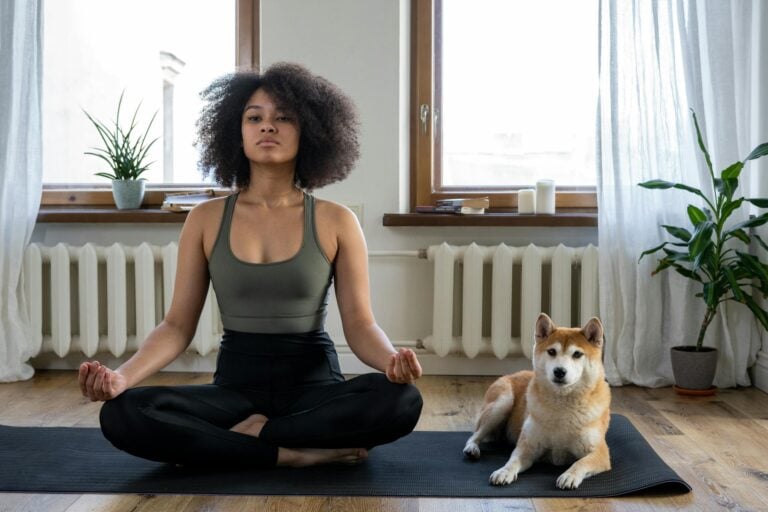

YouTube hypnosis for shyness refers to guided hypnotherapy sessions available on the platform that aim to reduce social anxiety, quiet the inner critic, and help people feel more at ease in social situations. These videos use relaxation techniques, suggestion, and visualization to work on the subconscious patterns that make shyness feel so persistent. Whether they actually help depends on the person, the depth of their shyness, and how honestly they understand what shyness is in the first place.
There’s a version of me from twenty years ago who would have typed “how to stop being shy” into a search bar at midnight and clicked on anything that promised relief. Running an advertising agency meant constant client presentations, new business pitches, and rooms full of people who seemed to thrive on noise I found exhausting. I didn’t need to stop being introverted. What I actually needed was to understand the difference between introversion and shyness, and that distinction changes everything about how you approach something like hypnosis.

Before we get into what hypnosis can and can’t do for shyness, it’s worth grounding this in the broader conversation about personality and social behavior. My full hub on introversion vs. extroversion covers the spectrum in depth, because where you fall on that spectrum shapes how you experience shyness, social situations, and the tools that actually help.
Is Shyness the Same as Introversion, and Why Does It Matter for Hypnosis?
Conflating shyness with introversion is one of the most common mistakes I see, and it’s a mistake that sends people toward the wrong solutions. Shyness is rooted in fear. It’s the anxious anticipation of social judgment, the tight chest before a conversation, the voice that says you’ll say something wrong and everyone will notice. Introversion, by contrast, is simply a preference for less stimulation and a tendency to restore energy through solitude rather than social activity. Plenty of introverts are not shy at all. And plenty of extroverts are deeply shy.
What’s your personality type?
Take our free 40-question assessment and get a detailed personality profile with dimension breakdowns, context analysis, and personalised insights.
Discover Your Type8-12 minutes · 40 questions · Free
This distinction matters enormously when you’re considering YouTube hypnosis for shyness. Hypnosis works by bypassing the analytical mind and delivering suggestions directly to the subconscious. If your social discomfort comes from fear-based patterns, conditioned responses, or a long history of self-critical thinking, hypnosis has a genuine mechanism to work with. If your discomfort comes from introversion, from simply preferring quiet and needing time to recharge, hypnosis isn’t addressing anything real. You’d be trying to reprogram a preference, not heal a wound.
I spent years confusing the two in myself. At client pitches, I’d feel that particular tightness that I now recognize as performance anxiety, not introversion. My introversion was the reason I preferred one-on-one conversations over cocktail parties. My shyness, when it showed up, was the fear that I’d be exposed as less polished than the extroverted presenters in the room. Those are different problems requiring different approaches.
Understanding what extroverted actually means can help clarify this. Extroversion isn’t confidence. It isn’t the absence of fear. It’s an orientation toward external stimulation. Some of the most confident people I’ve managed over the years were quiet, methodical, and deeply introverted. Some of the most socially anxious people I’ve known were extroverts who desperately wanted connection but feared rejection intensely.
How Does Hypnosis Actually Work on Shyness?
Hypnosis operates on the principle that many of our behavioral patterns and emotional responses are stored below conscious awareness. Shyness often begins early. A child is told they’re too quiet, laughed at when they spoke up, or watched a parent handle social situations with visible anxiety. Those experiences get encoded not as memories we consciously revisit but as automatic responses. The heart races before a presentation not because we’ve decided to be afraid, but because the nervous system learned to treat social exposure as a threat.
Hypnotherapy works by inducing a deeply relaxed, focused state where the critical filter of the conscious mind becomes less active. In that state, a skilled practitioner or a well-constructed recorded session can introduce new suggestions: that social situations are safe, that your voice has value, that the judgment you fear is far less severe than your nervous system believes. Over repeated sessions, these suggestions can gradually reshape the automatic response.

The research published in PubMed Central on hypnotic suggestion and cognitive change indicates that hypnosis can produce measurable shifts in how people process emotional information. It’s not magic, and it’s not a single-session fix. What it does is create a window of receptivity that other forms of intervention, like conscious affirmations or willpower-based approaches, often can’t replicate.
YouTube sessions can approximate this process. The quality varies enormously, but the better ones use progressive muscle relaxation, slow breathing cues, and carefully constructed suggestion scripts. They’re not the same as working with a trained hypnotherapist who can tailor suggestions to your specific history, but for mild to moderate shyness, they can provide a meaningful starting point.
What Personality Type Responds Best to This Approach?
Not everyone experiences shyness the same way, and not everyone responds to hypnosis equally. Your position on the introversion-extroversion spectrum plays a real role here, as does how deeply wired your shyness is and how you process suggestion.
People who are fairly introverted versus extremely introverted often experience shyness differently. Someone who is fairly introverted might feel mild social hesitation that responds well to relaxation-based approaches like hypnosis. Someone at the far end of the introversion spectrum might find that their social discomfort is more complex, layered with sensory sensitivity and a genuine need for solitude that hypnosis can’t and shouldn’t address.
As an INTJ, I’ve always processed the world through systems and patterns. When I eventually worked with a hypnotherapist on performance anxiety during a particularly brutal new business season, what struck me was how my analytical mind kept trying to evaluate the process while I was in it. The hypnotherapist told me that was common for thinking-dominant personality types. The suggestion still landed, but it took more sessions than it might for someone who naturally accesses emotional states more fluidly. That’s not a failure of the method. It’s just useful information about how you’re wired.
People who fall somewhere in the middle of the personality spectrum, sometimes called ambiverts or omniverts, may find hypnosis particularly accessible. If you’re curious about where you actually sit on that spectrum, the introvert, extrovert, ambivert, and omnivert test is a good place to start. Knowing your baseline helps you understand what you’re actually working with before you press play on a YouTube session.
What Should You Actually Look for in a YouTube Hypnosis Video?
The quality gap on YouTube is significant. Some channels are run by certified hypnotherapists with genuine training. Others are produced by people who read a few articles and recorded themselves speaking slowly over ambient music. The difference matters, especially if your shyness is connected to deeper anxiety or past experiences that need careful handling.
A few things worth looking for: the creator should have verifiable credentials or a transparent background in hypnotherapy or clinical psychology. The session should include a proper induction, the gradual process of guiding you into a relaxed state, rather than jumping straight into suggestion. The suggestions themselves should be positive and forward-focused, building toward confidence rather than simply telling you to “not be afraid.” Fear-based framing in hypnosis tends to reinforce the problem rather than dissolve it.
Length matters too. A three-minute video isn’t going to take you anywhere close to the depth of trance where suggestion becomes effective. Sessions of twenty to forty-five minutes are more realistic for genuine work. And consistency matters more than any single session. One video watched once is unlikely to shift a pattern that’s been reinforced for years. Watching a quality session regularly over several weeks is a different proposition entirely.

One thing I’ve noticed in my own experience with audio-based relaxation tools is that the environment matters as much as the content. I used to try to squeeze in meditation or relaxation work between calls, sitting at my desk in the agency with ambient office noise bleeding through. It didn’t work. The sessions that actually shifted something happened in a quiet room with my phone on silent and no chance of interruption. Introverts often understand the value of this kind of protected space instinctively. Creating it deliberately is part of the practice.
Can Hypnosis Work Alongside Other Approaches to Shyness?
Hypnosis works best when it’s part of a broader approach rather than a standalone solution. Shyness has cognitive components, the thoughts and beliefs you hold about yourself and social situations. It has behavioral components, the avoidance patterns that keep you from getting the exposure you need to build confidence. And it has physiological components, the nervous system responses that fire before you’ve even consciously registered a threat. Hypnosis addresses the subconscious layer effectively, but the other layers benefit from their own tools.
Cognitive behavioral approaches help you examine and challenge the beliefs that feed shyness. Gradual exposure, starting with lower-stakes social situations and building up, helps the nervous system learn through experience that the feared outcome rarely materializes. Prioritizing deeper one-on-one conversations over large group settings, as Psychology Today explores, can also help shy introverts build genuine social confidence in conditions that suit their natural style.
The combination I’ve seen work well for people I’ve coached and for myself is this: use hypnosis or guided relaxation to soften the fear response at the subconscious level, use cognitive work to challenge the beliefs consciously, and use behavioral practice to build the evidence base your nervous system needs. None of these alone is sufficient. Together, they address shyness from multiple angles simultaneously.
It’s also worth understanding whether what you’re experiencing is shyness specifically or something closer to social anxiety disorder. Shyness exists on a continuum, and for some people it tips into territory where professional support is genuinely warranted. Work published in PubMed Central on anxiety and behavioral intervention suggests that more structured therapeutic approaches produce stronger outcomes for clinical-level anxiety than self-directed tools alone. YouTube hypnosis might be a useful supplement in that context, but it shouldn’t be the primary intervention.
Where Do Omniverts and Ambiverts Fit Into This Picture?
Most conversations about shyness and introversion assume you fall cleanly into one category or another. The reality is messier and more interesting. Many people experience their social energy as genuinely variable, sometimes craving connection and sometimes needing complete withdrawal. Understanding the difference between omniverts and ambiverts helps clarify this.
An ambivert sits in the middle of the introversion-extroversion spectrum fairly consistently. An omnivert swings between the poles depending on context, mood, or circumstance. Both can experience shyness, but it may show up differently. An ambivert’s shyness might feel like a moderate, consistent hesitation in new social situations. An omnivert’s shyness might feel confusing and inconsistent, present in some contexts and completely absent in others, which can make it harder to recognize as a pattern worth addressing.
There’s also the concept of the otrovert versus ambivert distinction, which adds another layer to how people relate to social energy. If you’ve never been quite sure where you fit, taking the introverted extrovert quiz can give you a clearer picture. Knowing whether you’re dealing with introversion, ambiversion, or omniversion helps you interpret your shyness more accurately and choose tools that actually match your experience.

In my agency years, I managed a creative team that included people across this entire spectrum. The omnivert on the team was the one who baffled clients most. In a brainstorm session, she’d be the loudest voice in the room, full of energy and ideas. In a client presentation the following week, she’d be almost silent, visibly uncomfortable. She wasn’t being inconsistent. She was handling genuinely different internal states. Her shyness wasn’t about introversion. It was about a specific fear of formal evaluation that hypnosis, combined with some coaching, eventually helped her work through.
What Are the Real Limitations of YouTube Hypnosis for Shyness?
Honesty matters here. YouTube hypnosis has real limitations, and pretending otherwise would be doing you a disservice.
The first limitation is personalization. A recorded session delivers the same script to everyone who watches it. A trained hypnotherapist working with you directly can tailor suggestions to your specific history, adjust pacing based on your responses, and address the particular flavor of fear that drives your shyness. The gap between these two experiences is significant.
The second limitation is depth. YouTube sessions can help you access a relaxed state and receive positive suggestions, but they rarely go deep enough to address the root experiences that seeded the shyness in the first place. If your shyness is connected to specific memories or early experiences of humiliation or rejection, a more structured therapeutic approach is likely to be more effective. Frontiers in Psychology has published work on how emotional processing connects to behavioral change, and the evidence points toward the value of structured, personalized intervention for deeper patterns.
The third limitation is accountability. Watching a YouTube video requires no commitment, no follow-through, and no external support. That’s also its appeal, but it means the approach depends entirely on your own consistency and motivation. Many people watch a session once, feel briefly calmer, and never return to it. The benefit evaporates. Treating it like a practice, with regular sessions built into a routine, is what separates people who get something from it from people who don’t.
There’s also the question of susceptibility. Not everyone enters hypnotic states equally easily. Some people, particularly those with highly analytical minds, find it difficult to let the critical faculty quiet down enough for suggestion to land effectively. This doesn’t mean hypnosis won’t work for them, but it may take more practice and patience than they initially expect.
What Does Embracing Your Introversion Have to Do With Overcoming Shyness?
Something shifted for me when I stopped trying to fix my introversion and started addressing my shyness directly. Those are separate projects, and mixing them up had kept me stuck for years.
Introversion isn’t a problem. It’s a way of being in the world that comes with genuine strengths: depth of focus, careful observation, the ability to hold complexity without rushing to resolution. When I finally stopped treating my introversion as a deficiency to overcome, I had more energy available to work on the actual fear-based patterns that were holding me back. Shyness, once I could see it clearly, was something I could address. Introversion was something I could build on.

YouTube hypnosis for shyness, used thoughtfully, is one tool in a larger process of understanding yourself. It works best when you’re clear on what you’re actually trying to change. If you’re trying to become more extroverted, it won’t help and it shouldn’t. If you’re trying to quiet the fear response that makes social situations feel threatening, it has something real to offer.
The agency work I did for two decades taught me that the most effective creative teams weren’t the loudest ones. They were the ones where people understood their own strengths clearly enough to contribute from a place of genuine confidence rather than performed energy. That kind of confidence isn’t about personality type. It’s about doing the work to remove the fear that obscures who you actually are.
Shyness obscures. Introversion doesn’t. And tools like hypnosis, when aimed at the right target, can help you see yourself more clearly.
For a fuller picture of how introversion, extroversion, and everything in between shapes your social experience, the Introversion vs. Other Traits hub brings together all of these threads in one place.
About the Author
Keith Lacy is an introvert who’s learned to embrace his true self later in life. After 20 years in advertising and marketing leadership, including running agencies and managing Fortune 500 accounts, Keith now channels his experience into helping fellow introverts understand their strengths and build fulfilling careers. As an INTJ, he brings analytical depth and authentic perspective to every article, drawing from both professional expertise and personal growth.
Frequently Asked Questions
Does YouTube hypnosis for shyness actually work?
It can, for the right person and the right kind of shyness. YouTube hypnosis works best for mild to moderate fear-based social hesitation when used consistently over time. It’s less effective for deeply rooted social anxiety or when someone confuses introversion with shyness and tries to use it to change a personality preference rather than address a fear response. Quality varies significantly across channels, so seeking out sessions created by credentialed hypnotherapists improves your chances of a meaningful result.
Is shyness the same as being an introvert?
No, and this is one of the most important distinctions to understand. Introversion is a personality orientation toward less stimulation and internal processing. Shyness is a fear-based response to social evaluation and potential judgment. Introverts can be completely confident in social situations while still preferring solitude. Extroverts can be deeply shy despite craving social connection. Mixing up these two concepts leads people toward the wrong solutions, including using hypnosis to try to change something that doesn’t need changing.
How long does it take for YouTube hypnosis to reduce shyness?
There’s no universal timeline, but expecting results from a single session is unrealistic. Most people who report genuine shifts from self-directed hypnosis describe using quality sessions consistently over several weeks, often three to five times per week. The subconscious patterns that drive shyness were built through repeated experience over years. Reshaping them takes repeated exposure to new suggestions in a genuinely relaxed state. Patience and consistency matter far more than the specific video you choose.
Can everyone be hypnotized through a YouTube video?
Susceptibility to hypnosis varies from person to person. People with highly analytical or critical thinking styles sometimes find it harder to quiet the conscious mind enough for deep suggestion to take effect, though this can improve with practice. The recorded format of YouTube sessions also means there’s no therapist adjusting the approach based on your responses. Most people can access at least a light relaxed state through quality recorded sessions, but the depth of trance, and therefore the depth of potential change, tends to be shallower than what’s possible in a live one-on-one hypnotherapy context.
Should I use YouTube hypnosis instead of therapy for shyness?
For mild shyness, YouTube hypnosis can be a useful self-directed tool. For shyness that significantly limits your life, affects your career, or connects to deeper anxiety or past experiences, professional support is worth pursuing alongside or instead of self-directed approaches. YouTube hypnosis works best as one component of a broader approach that might include cognitive work, gradual behavioral exposure, and professional guidance when needed. It’s a complement to other tools, not a replacement for them when the need is more serious.