
ENTP self-care products work best when they match how this personality type actually thinks, not how wellness culture assumes everyone should relax. ENTPs need stimulation, variety, and mental engagement even in their downtime, which means the wrong self-care tools can feel more like a punishment than a recharge.
Over my years running advertising agencies, I worked alongside several ENTPs who were genuinely brilliant at their best and genuinely burnt out at their worst. What struck me was how differently they crashed compared to my INTJ wiring. Where I needed silence and solitude to recover, they needed something to chew on mentally, even when they were exhausted. Their self-care looked nothing like mine, and the products that helped them reflected that completely.
Not sure where you land on the personality spectrum? Our free MBTI personality test can help you identify your type before investing in products that may or may not fit how you’re actually wired.
If you want broader context on how ENTPs and ENTJs approach life, work, and personal development, our MBTI Extroverted Analysts hub covers the full landscape of these two types, including their shared strengths and their very different blind spots. This article zooms in on something more specific: what products actually support ENTP wellbeing, and why the reasoning behind each recommendation matters as much as the recommendation itself.
Why Do ENTPs Need a Different Approach to Self-Care?
Most mainstream self-care advice is built around slowing down, quieting the mind, and doing less. For an ENTP, that prescription can feel genuinely torturous. Their dominant function is Extraverted Intuition, which means their minds are constantly generating connections, possibilities, and what-if scenarios. Asking an ENTP to simply sit still and breathe is like asking a river to stop flowing.
A 2019 study published via PubMed Central found that personality traits significantly influence how individuals experience stress and recovery, with people higher in openness and extraversion often requiring more stimulating environments to feel genuinely restored. ENTPs, who score high on both dimensions, tend to experience boredom as a genuine stressor rather than a neutral state.
This matters enormously when choosing self-care products. A meditation cushion might be exactly what an INFJ needs. For an ENTP, it might collect dust within a week. The products that actually serve this type tend to share a few qualities: they engage the mind without demanding output, they offer variety or novelty, and they support the body without requiring the brain to go completely offline.
One of the patterns I noticed in my agency work was that the ENTPs on my teams would cycle through wellness phases rapidly. One month it was cold plunges, the next it was breathwork, then biohacking supplements. What looked like inconsistency was actually their intuition doing what it does naturally: scanning for what’s interesting, testing it, moving on when the novelty wore off. Good self-care products for ENTPs need to account for this tendency rather than fight it.
If you’ve ever watched an ENTP get excited about seventeen new ideas and then struggle to implement any of them, you already understand the pattern explored in Too Many Ideas, Zero Execution: The ENTP Curse. Self-care products that help ENTPs channel their energy rather than suppress it tend to have much better staying power.
What Mental Stimulation Products Actually Help ENTPs Recharge?
ENTPs recharge through mental engagement, not mental rest. That distinction shapes everything. Products that support cognitive play, creative exploration, or intellectual curiosity serve as genuine recovery tools for this type, even when they don’t look like traditional wellness products.
Books and Audiobooks Across Disciplines
ENTPs are voracious cross-disciplinary thinkers. A curated reading stack that spans philosophy, behavioral economics, science, and fiction gives their minds the variety they crave without the pressure of producing anything. Audiobooks are particularly valuable because they allow ENTPs to absorb ideas while doing something physical, which suits their preference for parallel processing.
Subscription services like Audible or Blinkist, which offers condensed nonfiction summaries, tend to suit ENTPs well because they can sample widely before committing to a full read. what matters is giving their intuition room to graze rather than forcing it down a single track.
Puzzle and Strategy Games
Physical strategy games, logic puzzles, and even well-designed video games serve a real self-care function for ENTPs. Products like chess sets, Settlers of Catan, or puzzle books engage their competitive, analytical side in a low-stakes environment. The brain gets to work without the weight of professional consequences.
I’ve seen this play out vividly. One of my most effective creative directors was an ENTP who kept a chess board on his desk and would play against himself during lunch. His colleagues thought it was eccentric. I thought it was genius. He came back from those sessions visibly sharper, the way I come back from a long walk alone.
Whiteboards and Idea Capture Tools
A large wall-mounted whiteboard or a glass whiteboard panel is one of the most genuinely useful self-care products an ENTP can own. It externalizes the mental noise. When ideas have somewhere to land, the brain can actually rest between bursts of generation. Products like the Quartet Glass Dry-Erase Board or even a simple roll of whiteboard contact paper applied to a wall give ENTPs a physical space for their mental activity.
Pair this with a good set of colored markers and the ability to photograph and clear the board regularly, and you’ve created a recovery system that works with ENTP neurology rather than against it.

Which Physical Wellness Products Suit the ENTP Lifestyle?
ENTPs are not typically drawn to slow, repetitive wellness routines. They tend to prefer physical activities that involve some element of skill development, novelty, or social engagement. Products that support this kind of movement tend to get used. Products that demand quiet, solitary repetition tend to get abandoned.
Versatile Home Gym Equipment
Adjustable dumbbells, resistance bands, and suspension trainers like the TRX system appeal to ENTPs because they offer variety within a single tool. The ability to constantly modify workouts, experiment with new movements, and track progress on their own terms suits an ENTP far better than a rigid machine that does one thing.
A 2014 study in PubMed Central found that exercise variety and autonomy in physical activity significantly increased long-term adherence, particularly among individuals with higher openness to experience. For ENTPs, a home gym setup that allows experimentation is genuinely more therapeutic than one that demands consistency in a single format.
Wearable Health Trackers
ENTPs love data, especially data about themselves. A quality wearable like the Garmin Fenix series or the Whoop strap gives them quantifiable feedback on sleep, recovery, heart rate variability, and stress levels. This transforms self-care from a vague concept into a system they can analyze and optimize, which is language their brain actually speaks.
The gamification element matters too. ENTPs respond to streaks, scores, and metrics in a way that keeps them engaged with their own health data long after the novelty of the device itself has faded. Whoop in particular, with its recovery scores and strain coaching, tends to hold ENTP attention because it keeps generating new information to interpret.
Cold and Heat Therapy Tools
ENTPs are often early adopters of wellness trends, and cold therapy has had genuine staying power in their community for good reason. Products like the Plunge cold tub, portable ice bath setups, or even a quality sauna blanket offer intense physical sensation paired with documented recovery benefits. The novelty of the experience, combined with the biohacking culture around it, tends to suit ENTP curiosity well.
What I find interesting about this from my own experience is how different the appeal is between types. As an INTJ, I’m drawn to cold exposure because of the discipline and the data. The ENTPs I’ve known are drawn to it because it’s an experiment. Same product, completely different motivation, and both valid.
What Sleep and Recovery Products Work for ENTP Brains?
Sleep is often an ENTP’s most neglected self-care area. Their minds tend to run hot late into the evening, generating ideas and connections when the rest of the world has gone quiet. Products that support winding down without demanding that the brain go completely silent tend to work best.
White Noise and Soundscape Machines
Products like the LectroFan Evo or the Hatch Restore 2 give ENTPs an auditory environment that occupies just enough of their background attention to prevent the mind from spiraling into planning mode. Unlike silence, which can feel amplifying to an active ENTP brain, a consistent soundscape provides a kind of gentle cognitive anchor.
The Hatch Restore 2 is particularly worth mentioning because it combines sound, light, and a gradual wake-up function. ENTPs tend to respond well to products that do multiple things intelligently, and the ability to customize the experience keeps it from feeling like a rigid routine.
Blue Light Blocking Glasses and Screen Filters
ENTPs are screen-heavy by nature. Their research, their conversations, their late-night idea generation all tend to happen on devices. Blue light blocking glasses from brands like Felix Gray or Gunnar don’t eliminate screen time, they make it less physiologically disruptive. For an ENTP who isn’t going to stop reading and thinking before bed, this is a practical harm-reduction tool rather than a behavioral demand.
Magnesium Supplements
Magnesium glycinate has a well-documented role in supporting sleep quality and nervous system regulation. For ENTPs whose nervous systems tend to run in high gear, a quality magnesium supplement taken in the evening can support the transition into sleep without requiring any behavioral change. Brands like Thorne or Pure Encapsulations offer pharmaceutical-grade options that ENTPs, who tend to be skeptical of wellness claims, can actually trust.

How Can ENTPs Use Journaling and Reflection Tools Without Fighting Their Nature?
Traditional journaling advice tells people to sit quietly, write about their feelings, and process their inner world. For many ENTPs, that prescription creates immediate resistance. Their auxiliary function is Introverted Thinking, which means they do have a reflective inner life, but it tends to be analytical rather than emotional, and it often needs a structured prompt to activate.
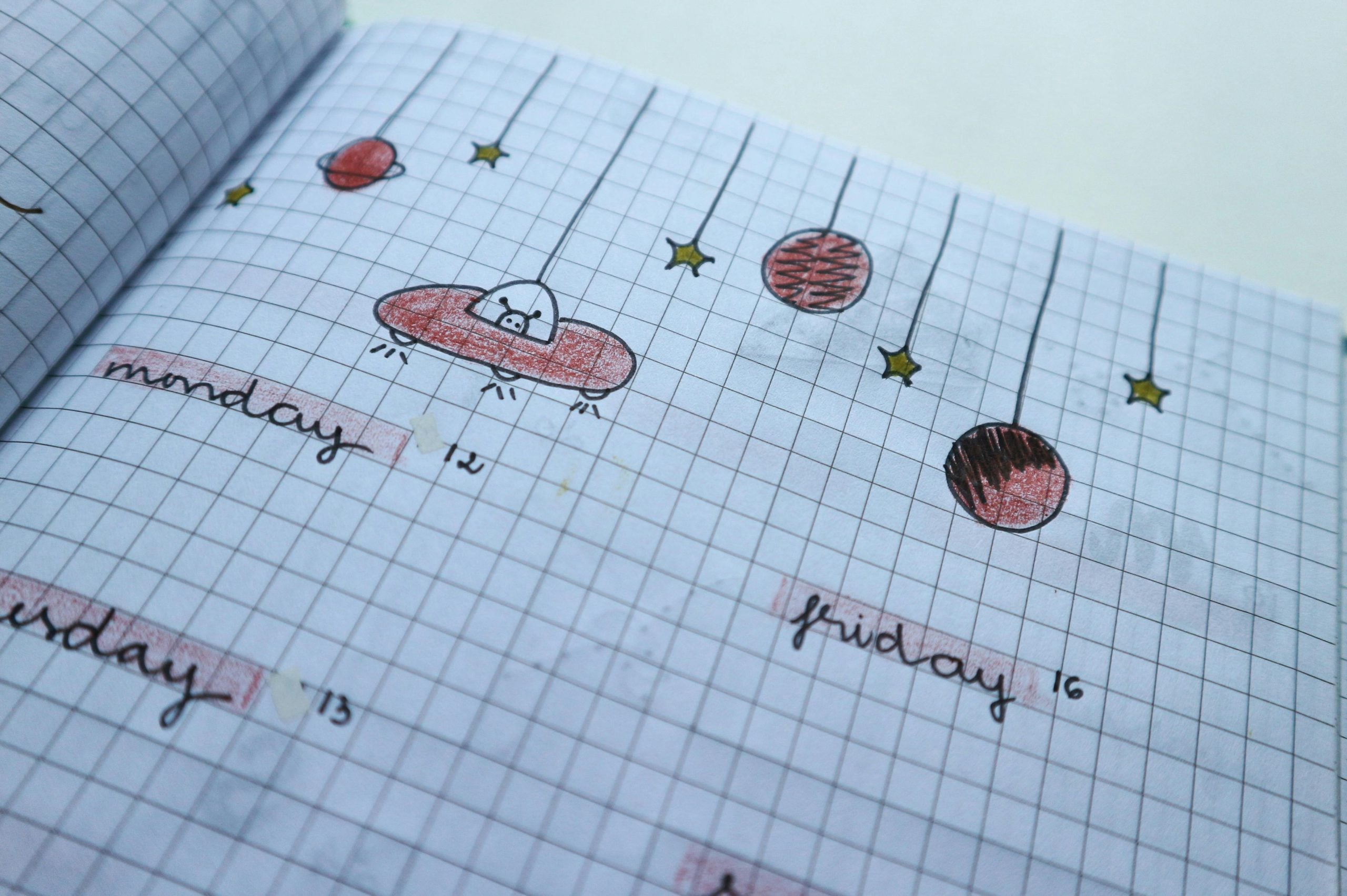
Products that give ENTPs a framework for reflection tend to work far better than blank pages. The Five Minute Journal, with its structured prompts, or the Bullet Journal system, which offers flexibility within a consistent structure, both tend to suit ENTP reflection styles. what matters is that the structure reduces the activation energy required to start, which is often where ENTPs stall.
That stalling pattern is worth understanding more deeply. The piece on the ENTP Paradox: Smart Ideas, No Action gets into why this happens at a cognitive level, and it’s directly relevant to why certain journaling products work and others don’t. When the barrier to entry is too high, the habit never forms.
Voice Memo and Audio Journaling Apps
ENTPs often think better out loud than on paper. Products and apps that support audio journaling, like a quality voice recorder or apps such as Otter.ai or even the native voice memo app paired with a transcription service, allow ENTPs to capture their thinking in the format that comes most naturally. Speaking a thought is often faster and more authentic for this type than writing it.
I’ve used voice memos myself for years, though my INTJ process is different. I use them to capture observations I want to process later in silence. The ENTPs I’ve worked with use them to think out loud in real time, which serves a similar function but through a completely different mechanism.
Concept Mapping Software and Tools
Apps like Miro, Milanote, or even physical products like large format index cards and corkboards allow ENTPs to map their thinking visually. This kind of non-linear reflection suits their cognitive style far better than sequential journaling. Seeing connections between ideas on a board is genuinely reflective for an ENTP in a way that writing paragraphs often isn’t.
According to 16Personalities, ENTPs thrive when they can see the big picture and work outward from it rather than building sequentially. Products that support this visual, non-linear thinking style serve a genuine self-care function by reducing the cognitive friction of reflection.
What Sensory and Environment Products Help ENTPs Feel Grounded?
ENTPs can be surprisingly disconnected from their physical environment when their minds are running fast. Products that engage the senses without demanding attention can help them feel more grounded without requiring them to slow down artificially.
Quality Coffee and Tea Equipment
ENTPs tend to have strong opinions about their daily rituals, and coffee or tea preparation is often one of them. A quality pour-over setup, a good burr grinder, or a premium loose-leaf tea collection gives them a sensory ritual that requires just enough attention to create a brief moment of presence. Products like the Fellow Stagg EKG kettle or the Hario V60 pour-over kit turn a daily habit into a small act of craftsmanship.
This matters more than it sounds. ENTPs who have no grounding rituals tend to float through their days entirely in their heads. A sensory anchor, even a small one, creates a brief but genuine moment of embodiment that supports overall wellbeing.
Diffusers and Scent Products
Aromatherapy is easy to dismiss as soft wellness, but scent is one of the fastest pathways to the nervous system, and ENTPs who work in stimulating environments often benefit from having a consistent olfactory anchor in their home or workspace. A quality ultrasonic diffuser with essential oils like eucalyptus, peppermint, or bergamot can shift the sensory quality of a space without requiring any behavioral change from the person in it.
The Vitruvi Stone Diffuser is worth mentioning here because it’s well-designed enough that ENTPs, who tend to care about aesthetics alongside function, will actually leave it out and use it rather than relegating it to a drawer.
Noise-Canceling Headphones
ENTPs are extroverts who also need genuine mental space. Quality noise-canceling headphones like the Sony WH-1000XM5 or the Bose QuietComfort 45 give them control over their auditory environment without requiring physical isolation. They can work in a coffee shop, tune out the world when needed, and re-engage when they want to. That kind of control is genuinely restorative for a type that often feels overstimulated by environments they can’t modulate.

How Do Relationship and Communication Tools Factor Into ENTP Self-Care?
ENTPs are social beings who also have a well-documented tendency to turn conversations into debates. This pattern can erode their relationships over time, which creates a source of stress that no physical wellness product can address. Self-care for ENTPs includes tools and practices that support their relational health, not just their individual recovery.
The piece on ENTPs: Learn to Listen Without Debating addresses this pattern directly and is worth reading alongside any conversation about ENTP wellbeing. Relational friction is one of the most significant sources of chronic stress for this type, and it often goes unaddressed because it doesn’t feel like a wellness issue.
Products that support better communication aren’t always obvious. Books on active listening, courses on nonviolent communication, or even a simple timer used to ensure equal conversational turns can function as genuine self-care tools for ENTPs who want to protect their relationships. The Gottman Card Decks app, which offers conversation prompts for couples and close relationships, is one product that ENTPs tend to engage with because it frames connection as an interesting challenge rather than a soft exercise.
The broader point here is that ENTPs who neglect their relational health often find themselves cycling through the kind of burnout that no supplement or gadget can fix. According to Truity’s relationship research, Extraverted Thinking types in general benefit significantly from developing intentional practices around listening and emotional attunement. The products that support this are often the most impactful self-care investments this type can make.
I’ve watched this dynamic play out in professional settings more times than I can count. An ENTP colleague of mine during my agency years was genuinely one of the sharpest strategists I’ve ever worked with. He also had a habit of winning every argument at the cost of the relationship. It took years and some real personal work before he understood that being right less often would make him more effective, not less. That shift didn’t come from a productivity tool. It came from a different relationship with how he communicated.
What Creative and Entrepreneurial Tools Support ENTP Wellbeing?
ENTPs are natural entrepreneurs and creative thinkers. According to MIT Sloan’s entrepreneurship research, personality traits associated with high openness and extraverted intuition correlate strongly with entrepreneurial behavior and innovation. For ENTPs, having outlets for their creative and entrepreneurial energy isn’t optional, it’s a mental health requirement.
Products that support side projects, creative experiments, and entrepreneurial exploration serve a genuine self-care function. A quality podcast microphone for someone who wants to start a show. A domain name and simple website builder for someone with a business idea. A good camera for someone who wants to document their thinking visually. These aren’t frivolous purchases for ENTPs. They’re pressure valves for a mind that generates far more ideas than any single job can contain.
The challenge, of course, is that ENTPs often invest in the tools without completing the projects. This is the tension explored in the piece on the ENTP paradox, and it’s worth naming honestly. The goal isn’t necessarily to finish every project. Sometimes the act of starting is itself the release valve. A well-chosen creative tool that gets used for three months and then sits on a shelf still served its purpose if it gave the ENTP’s mind somewhere to go during that time.
That said, ENTPs who want to build accountability around their creative projects often benefit from community-based tools. Platforms like Ness Labs, which focuses on applied neuroscience and personal projects, or creative accountability communities tend to suit ENTPs better than solo productivity systems because they provide the social engagement that keeps this type motivated.
It’s also worth noting that ENTPs who are in leadership positions carry a particular kind of cognitive load. The pressure of generating ideas while also managing outcomes can be genuinely depleting. Both What ENTJ Women Sacrifice For Leadership and Even ENTJs Get Imposter Syndrome touch on how Extraverted Analyst types experience the hidden costs of high performance, which is directly relevant to why self-care isn’t a luxury for this group. It’s a sustainability strategy.
According to Truity’s type profiles, ENTPs and ENTJs share a tendency to push through discomfort in pursuit of goals, often at the expense of their own recovery. Products and practices that make recovery feel productive rather than passive tend to have the highest adoption rates with these types.
One more dimension worth addressing: ENTPs who are parents face a specific version of this challenge. Their natural debate style, their tendency to challenge assumptions, and their low tolerance for inefficiency can create real friction at home. The piece on ENTJ Parents: Your Kids Might Fear You speaks to a dynamic that ENTP parents will recognize in themselves as well. Self-care products that help ENTPs decompress before engaging with family, whether that’s a post-work workout, a brief audio session, or even a short walk with noise-canceling headphones, serve a relational function that ripples outward beyond the individual.

How Should ENTPs Build a Self-Care Product Stack That Actually Lasts?
ENTPs are prone to enthusiastic starts and gradual drift. The self-care product stack that works for them long-term tends to be modular and low-friction rather than rigid and demanding. A few principles worth building around:
Choose products that serve multiple functions. An ENTP who buys a wearable tracker, a whiteboard, and a pair of noise-canceling headphones has three tools that each do more than one thing and can be combined in different ways. Products that do only one thing tend to get abandoned when the novelty fades.
Build in permission to rotate. ENTPs who accept that their self-care interests will shift seasonally, and plan for it, experience far less guilt about changing their routines. A self-care product that served well for three months and then gets replaced isn’t a failure. It’s evidence of a type that knows how to respond to its own changing needs.
Prioritize the fundamentals. Sleep quality, physical movement, and genuine social connection are the foundations that no amount of interesting products can replace. The gadgets and tools work best as support systems for these basics, not substitutes for them. A Frontiers in Psychiatry review of personality and wellbeing research consistently identifies sleep, exercise, and social connection as the most strong predictors of psychological health across all personality types.
Finally, choose products that match your actual life rather than the life you imagine having. An ENTP who travels constantly needs different tools than one who works from home. An ENTP who has young children needs different recovery strategies than one who lives alone. The best self-care product stack is the one that fits your real circumstances, not an idealized version of them.
After years of watching people invest in self-improvement tools that never got used, I’ve come to believe that the most important question isn’t “Is this a good product?” It’s “Does this match how I actually function?” For ENTPs, that question has a very specific answer, and the products in this guide are chosen with that answer in mind.
Find more resources on Extraverted Analyst types, including deep dives on ENTP and ENTJ strengths, challenges, and growth areas, in our complete MBTI Extroverted Analysts hub.
About the Author
Keith Lacy is an introvert who’s learned to embrace his true self later in life. After 20 years in advertising and marketing leadership, including running agencies and managing Fortune 500 accounts, Keith now channels his experience into helping fellow introverts understand their strengths and build fulfilling careers. As an INTJ, he brings analytical depth and authentic perspective to every article, drawing from both professional expertise and personal growth.
Frequently Asked Questions
What makes a self-care product suitable for an ENTP?
ENTP-friendly self-care products tend to offer mental engagement, variety, and novelty rather than passive relaxation. Because ENTPs recharge through stimulation rather than stillness, products that give their minds something interesting to interact with, whether that’s a strategy game, a wearable health tracker, or a concept mapping tool, tend to get used consistently. Products that demand quiet repetition or rigid routines often get abandoned quickly by this type.
Why do ENTPs struggle to maintain self-care routines?
ENTPs are driven by Extraverted Intuition, which constantly seeks new connections and possibilities. Once a routine becomes familiar, it loses the novelty that made it appealing in the first place. This isn’t a character flaw. It’s a feature of how this type is wired. The most sustainable self-care approaches for ENTPs are modular ones that allow for rotation and experimentation rather than fixed daily protocols that never change.
Are there specific sleep products that work better for ENTPs?
ENTPs often struggle with sleep because their minds remain active late into the evening. Products that support winding down without demanding complete mental silence tend to work best. White noise machines, blue light blocking glasses, and magnesium glycinate supplements are all well-suited to ENTP sleep challenges because they reduce physiological arousal without requiring behavioral changes that conflict with how ENTPs naturally spend their evenings.
How does self-care for ENTPs differ from self-care for introverted types?
Introverted types typically recover through solitude, quiet, and reduced stimulation. ENTPs, as extroverts, often find that too much isolation or sensory deprivation actually increases their stress rather than reducing it. Their self-care needs to include social engagement, mental stimulation, and physical activity alongside the more traditional recovery practices. The products that serve ENTPs well reflect this difference by supporting engagement rather than withdrawal.
Can journaling actually work as a self-care practice for ENTPs?
Yes, but the format matters enormously. Traditional blank-page journaling often creates too much friction for ENTPs, whose minds work better with prompts, structures, or visual formats. Products like the Five Minute Journal, the Bullet Journal system, or even audio journaling apps tend to work far better than conventional diaries. Concept mapping tools and whiteboards can also serve a reflective function for ENTPs who think better spatially than linearly.