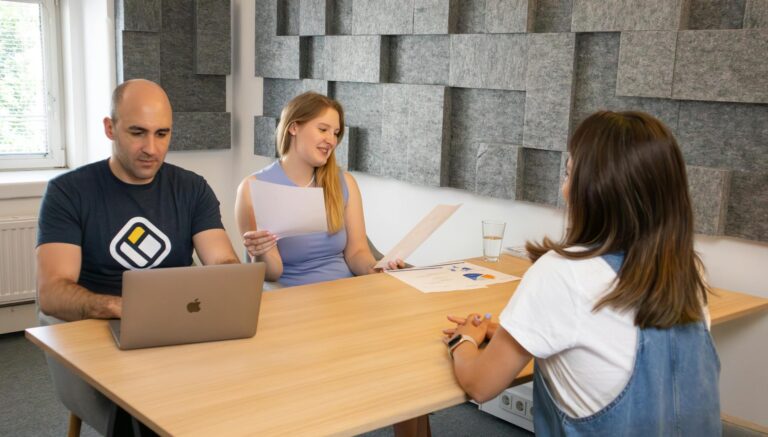

The official Myers-Briggs Type Indicator has been administered to millions of people worldwide, making it one of the most recognized personality assessments in existence. Taking it feels deceptively simple, a series of questions about how you think, decide, and relate to the world, yet the results can reframe how you understand yourself in ways that last decades. What you get from the experience depends almost entirely on what you bring to it.
Most people click through quickly, answer from habit rather than honest reflection, and then wonder why their results feel slightly off. A few slow down, sit with the questions, and walk away with something genuinely useful. The difference between those two outcomes is what this article is really about.

My own relationship with personality typing has been anything but straightforward. I spent two decades running advertising agencies, managing teams, pitching Fortune 500 clients, and performing a version of leadership that looked nothing like how I actually operated internally. When I finally took a proper Myers-Briggs assessment, not a throwaway quiz but a real, considered sit-down with the questions, the results didn’t just confirm something I suspected. They gave me language for something I’d been living without words for. That experience shapes everything I write here at Ordinary Introvert, and it’s why I think getting this test right actually matters.
Our MBTI General and Personality Theory hub covers the full landscape of Myers-Briggs, from cognitive functions to type dynamics to practical applications. This article focuses on something more specific: what the official test actually measures, why your mindset going in changes everything, and how to get results that reflect who you genuinely are rather than who you’ve trained yourself to appear to be.
What Does the Official Myers-Briggs Test Actually Assess?
There’s a meaningful distinction between the official Myers-Briggs Type Indicator, published by The Myers-Briggs Company, and the dozens of free approximations floating around online. Both can be useful. They’re not the same thing.
The official MBTI was developed over decades by Isabel Briggs Myers and her mother Katharine Cook Briggs, building on Carl Jung’s theory of psychological types. It’s been refined through extensive psychometric research, and the full assessment includes forced-choice questions designed to surface your natural preferences across four dimensions: where you direct your energy, how you take in information, how you make decisions, and how you structure your outer world.
Those four dimensions produce the familiar four-letter type codes: E or I for extraversion and introversion, S or N for sensing and intuition, T or F for thinking and feeling, and J or P for judging and perceiving. A 2020 study published in PubMed Central examining personality assessment frameworks found that structured, validated instruments show significantly higher reliability than informal self-report tools, which is worth keeping in mind when you’re deciding how much weight to give any particular result.
What the test assesses is preference, not ability. This distinction matters more than most people realize. Preferring introversion doesn’t mean you’re incapable of extraverted behavior. It means your natural, energetically efficient default leans inward. Preferring thinking in decision-making doesn’t make you cold. It means you tend to prioritize logical consistency when the pressure is on.
Understanding the E vs I dimension in Myers-Briggs is often where the most significant self-recognition happens, especially for people who’ve spent years in environments that reward extraverted behavior. I was one of those people. My agency ran on client entertainment, team energy, and constant communication. I got good at all of it. But good at something and genuinely energized by something are very different experiences, and the MBTI helped me name that gap.

Why Your State of Mind When You Take It Changes the Results
One of the most underappreciated factors in personality testing is the psychological state you bring to the questions. A 2005 piece from the American Psychological Association examined how self-perception shapes the way people respond to personality instruments, noting that people often answer based on their idealized self-image rather than their actual behavioral patterns.
That’s a polite way of saying: most people answer the way they wish they were, or the way they’ve been rewarded for being, rather than the way they actually are when no one’s watching.
I see this pattern constantly in the people who write to me after getting results that feel wrong. A manager who’s been praised for decisiveness answers every question from her “work self” and gets a strong J result, even though at home she’s famously flexible and resistant to rigid plans. A creative director who’s been told his whole career that he’s “too in his head” answers defensively, leaning toward S answers to seem more practical, and ends up mistyped as a sensor when his actual preference runs deep toward intuition.
Getting mistyped is more common than most people acknowledge. The cognitive functions approach to identifying your true type can help you cross-check a result that doesn’t quite fit, because functions reveal how your mind actually processes information rather than just how you describe yourself on a questionnaire.
Before you take the official test, or any serious personality assessment, do yourself the favor of a few minutes of genuine settling. Close other tabs. Take the questions as they apply to your whole life, not just your professional role. Ask yourself how you’d answer if no one you worked with would ever see the results. That shift alone can meaningfully change what you discover.
The Role of Cognitive Functions Beneath the Four Letters
The four-letter type code is the entry point, not the destination. Beneath those letters sits a more nuanced architecture called the cognitive function stack, and understanding it is what separates a surface-level personality label from genuine self-knowledge.
Each MBTI type has a preferred order of eight cognitive functions, two of which tend to dominate. An INTJ like me leads with Introverted Intuition (Ni) and uses Extraverted Thinking (Te) as a secondary function. An ISTP leads with Introverted Thinking (Ti) and relies heavily on Extraverted Sensing (Se) as a support function. Same general introvert orientation on the surface, very different internal wiring underneath.
What does that mean practically? Extraverted Thinking as a cognitive function explains why certain leaders, myself included, feel most alive when they’re organizing systems, setting measurable goals, and cutting through ambiguity with clear frameworks. It’s not just a personality quirk. It’s a fundamental orientation toward how the mind engages with the external world.
Compare that with Introverted Thinking, which drives a very different kind of analytical process, one that turns inward to build precise internal models rather than outward to impose structure on the environment. An ITi-dominant person and a Te-dominant person can both appear “logical” to outside observers, yet their reasoning styles are almost opposites at the process level.
And then there’s Extraverted Sensing, which grounds certain types in immediate physical reality, sensory detail, and present-moment awareness. For types where Se appears lower in the stack, like my own INTJ configuration, that function is a genuine blind spot. I’ve had to work consciously throughout my career to stay grounded in concrete details rather than living entirely in the strategic abstractions my dominant function prefers.
Understanding your function stack doesn’t require a psychology degree. A good cognitive functions test can help you identify which mental processes feel most natural, giving you a second layer of self-understanding to pair with your four-letter result.

How Introversion Specifically Shapes the Testing Experience
There’s something worth naming directly for anyone who identifies as an introvert approaching this assessment. The way introversion actually operates in your life is often more complex than the simple “you prefer being alone” definition most people default to.
Introversion, in the Jungian and Myers-Briggs sense, is about the direction of your energy and attention. Introverts characteristically process experience internally, drawing meaning from reflection rather than from external stimulation. A 2008 study in PubMed Central examining personality and cognitive processing found consistent differences in how introverts and extraverts allocate attentional resources, with introverts showing greater internal processing depth across multiple cognitive tasks.
What this means for test-taking is that introverts often have a more layered, nuanced sense of their own internal states, which can actually make the forced-choice format of the MBTI feel frustrating. You may find yourself wanting to answer “it depends” to questions that ask you to choose between two options. That’s not a flaw in your personality. It’s a reflection of how deeply you’ve observed yourself.
My advice, drawn from my own experience and from conversations with hundreds of introverts over the years: when a question feels genuinely split, ask yourself which option you’d choose in a low-stakes, low-pressure situation where you’re not performing for anyone. Your answer in that context is closer to your actual preference than your answer under professional scrutiny.
Data from 16Personalities’ global research suggests that introverted types make up a meaningful portion of the population, though the exact percentages vary by methodology and region. What that tells us is that introversion isn’t a statistical outlier, it’s a genuine and common orientation that the MBTI was specifically designed to capture without pathologizing.
What Separates a Useful Result from a Useless One
Getting a four-letter type code is the beginning of a process, not the conclusion of one. The people who get the most value from their MBTI results are the ones who treat the output as a hypothesis to investigate rather than a verdict to accept.
Early in my agency career, I had a business partner who was a textbook ESTP. He was quick, adaptive, charming in client meetings, and almost allergic to long-term planning. I was the one who stayed late building five-year models while he was already out the door to the next thing. We drove each other absolutely crazy at times, and we also built something genuinely strong together, because our differences covered each other’s blind spots.
Understanding our types didn’t make the friction disappear. It made the friction interpretable. Instead of “he’s reckless and I’m rigid,” we could see that his Se-dominant processing made him brilliant in real-time situations while my Ni-dominant processing made me better at long-horizon strategy. Neither approach was wrong. They were just differently suited to different problems.
That kind of interpretive usefulness is what a good result enables. Research from 16Personalities on team collaboration reinforces that personality awareness improves working relationships not by eliminating differences but by making them legible to everyone involved.
A result becomes useless when you use it as a ceiling rather than a map. “I’m an introvert, so I can’t do presentations” is a ceiling. “I’m an introvert, so I do better with prepared remarks than spontaneous Q&A, and I should structure client meetings accordingly” is a map. One limits you. The other helps you work with your actual wiring instead of against it.

Where to Take a Reliable Assessment Right Now
The official MBTI is available through The Myers-Briggs Company’s website, and it does carry a cost. For many people, the investment is worth it, particularly if you’re using the results for professional development, coaching, or significant career decisions. The official version includes detailed reporting and sometimes access to a certified practitioner who can walk you through the nuances.
That said, a well-constructed free assessment can absolutely give you meaningful, actionable results, especially when you approach it with the kind of honest self-reflection we’ve been discussing. Our free MBTI personality test is designed to surface genuine preferences rather than just confirm what you already believe about yourself, and it’s a solid starting point if you’re new to type theory or want to revisit your results with fresh eyes.
Whichever assessment you choose, a few practical suggestions will improve the quality of your results significantly.
Take it when you’re not exhausted or emotionally activated. Stress pushes most people toward their inferior functions, which means a test taken during a difficult week can produce results that reflect your coping behavior rather than your natural preferences. A Tuesday morning after a good night’s sleep is a better testing environment than a Sunday night after a brutal week.
Answer for your whole self, not your professional self. This is worth repeating because it’s where the most distortion happens. Think about how you’ve operated across your life, including childhood, close relationships, and private time, not just your current job role.
Read the full type description before deciding whether it fits. First impressions of a type description can be misleading. Some people reject accurate types because they focus on one element that feels wrong while missing the broader pattern that fits remarkably well. Sit with the description for a few days. Notice what resonates and what doesn’t.
Truity’s research on deep thinking patterns offers some interesting context here. Their work on signs of deep thinkers aligns with several traits common among introverted types, including a tendency to process experiences extensively before drawing conclusions. That same tendency, applied to your test results, is actually an asset.
What the Test Won’t Tell You (And Why That’s Fine)
Personality typing has real limits, and being honest about those limits is part of using it well. The MBTI doesn’t measure intelligence, emotional maturity, values, or life experience. Two people with identical four-letter types can lead very different lives and make very different choices, because type describes a cognitive orientation, not a complete human being.
It also doesn’t account for the ways people grow and adapt over time. My INTJ preferences have been consistent across every assessment I’ve taken over twenty-five years, yet how I express those preferences has shifted significantly. The young agency owner who used his Te function to bulldoze through opposition is not the same person as the older one who learned to use that same function with more precision and less collateral damage. Same type, meaningfully different person.
The MBTI also doesn’t capture the full complexity of how personality intersects with things like culture, neurodivergence, trauma, or social conditioning. A person who grew up in an environment that punished introversion may answer questions as an extravert not because they are one, but because they’ve thoroughly internalized the expectation. This is one reason why the emotional sensitivity research covered by WebMD is relevant context: many introverts carry layers of adaptive behavior that can obscure their genuine preferences on a questionnaire.
None of this makes the test less valuable. It makes it more valuable when used with appropriate humility. A four-letter type is a starting point for self-understanding, not a final answer about who you are. The most useful thing you can do with your results is stay curious about them.

Making the Results Work in Your Actual Life
The practical value of knowing your type shows up most clearly in the decisions that shape your daily energy. Career choices, communication styles, relationship patterns, working environments, all of these are places where type awareness can shift you from constant effortful adaptation toward something closer to natural alignment.
One of the most significant shifts I made after genuinely engaging with my INTJ results was restructuring how I ran client presentations. For years I’d tried to match the improvisational, high-energy presentation style I saw from some of my more extraverted peers. I was technically competent at it and I could feel the energy drain in real time. Once I accepted that my natural strength was in deep preparation, clear frameworks, and precise language rather than spontaneous performance, I stopped trying to compete on a dimension that wasn’t mine. My presentations got better. My energy after them stopped being depleted for an entire day.
That’s a small example of a large principle. Personality type awareness isn’t about accepting limitations. It’s about investing your effort where it compounds rather than where it just costs you.
The same logic applies to team dynamics, personal relationships, and the design of your work environment. Understanding your type gives you a framework for making deliberate choices rather than just reacting to circumstances. And for introverts who’ve spent years adapting to environments built for different wiring, that kind of deliberate choice-making can feel genuinely freeing.
Explore more personality theory and MBTI resources in our complete MBTI General and Personality Theory Hub.
About the Author
Keith Lacy is an introvert who’s learned to embrace his true self later in life. After 20 years in advertising and marketing leadership, including running agencies and managing Fortune 500 accounts, Keith now channels his experience into helping fellow introverts understand their strengths and build fulfilling careers. As an INTJ, he brings analytical depth and authentic perspective to every article, drawing from both professional expertise and personal growth.
Frequently Asked Questions
Is the official Myers-Briggs test the same as free online MBTI tests?
No. The official Myers-Briggs Type Indicator is a psychometrically validated instrument published by The Myers-Briggs Company, developed over decades and refined through extensive research. Free online tests vary widely in quality and methodology. Some are well-constructed approximations that can give meaningful results, while others are loosely designed quizzes with limited reliability. The official test typically includes more detailed reporting and may involve a certified practitioner. A carefully designed free assessment, approached with honest self-reflection, can still be a valuable starting point for understanding your type.
Can my MBTI type change over time?
Your core type preferences tend to remain stable across your lifetime, because they reflect fundamental cognitive orientations rather than learned behaviors or current circumstances. That said, many people report different results at different points in their lives, often because they answered from a professional persona, a stressed state, or a period of significant adaptation rather than from their genuine natural preferences. Personal growth also affects how you express your type, even when the underlying preferences stay consistent. If your results feel different from a previous assessment, it’s worth considering whether your circumstances or mindset during testing may have influenced your answers.
What should I do if my MBTI results don’t feel accurate?
Start by reading the full type description rather than just the summary, since first impressions can miss the broader pattern. Consider whether you answered from your work self or professional role rather than your whole life. Retake the assessment in a different mental state, ideally calm and unhurried. Exploring cognitive functions can also help, since the function stack often reveals your true type more clearly than the four-letter code alone. Many people find that reading descriptions of two or three adjacent types and comparing them honestly is the most effective way to identify where they genuinely belong.
How do cognitive functions relate to the four-letter MBTI type?
Each MBTI type corresponds to a specific ordering of eight cognitive functions, mental processes that describe how you take in information and make decisions. The four-letter code captures your preferences at a surface level, while the cognitive function stack reveals the underlying mechanisms. For example, two types might both show a preference for introversion and thinking, yet operate through very different functional processes. Understanding your dominant and auxiliary functions adds significant depth to your type description and often explains behavioral patterns that the four-letter code alone doesn’t fully capture.
Does introversion or extraversion affect how accurately I’ll test?
Both introverts and extraverts can be mistyped, but introverts face a particular challenge because many have spent years adapting to extraverted environments and may have internalized extraverted behaviors deeply enough to answer questions from that adapted self rather than their natural preferences. Social conditioning, workplace culture, and family expectations can all create layers of adaptive behavior that obscure genuine introversion on a questionnaire. Taking the assessment while consciously setting aside professional and social roles, and answering based on what feels naturally energizing rather than what you’ve learned to perform, tends to produce more accurate results for introverts.