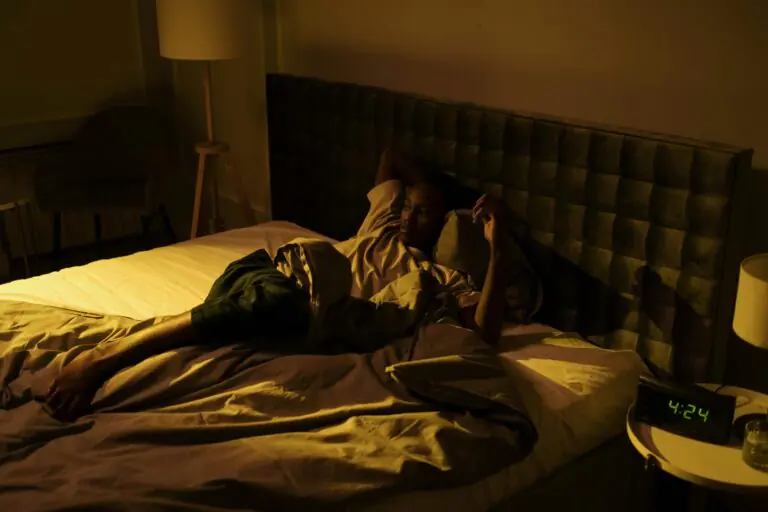

Introverts meet significant others on dating apps at a surprisingly high rate, and the reason comes down to format, not luck. The written, asynchronous nature of app-based dating removes the pressure of immediate social performance and replaces it with something introverts genuinely excel at: thoughtful, deliberate self-expression. Instead of competing in a noisy bar or forcing small talk at a party, you get to think before you respond, choose your words carefully, and reveal yourself at your own pace.
That shift matters more than most people realize. Dating apps were not designed with introverts in mind, yet they accidentally built a system that plays directly to introvert strengths. If you have ever felt exhausted by traditional dating scenes but found yourself energized by a long, meaningful text conversation with someone you met online, you already know what I mean.

If you want to understand the full picture of how introverts approach romantic connection, our Introvert Dating and Attraction hub covers everything from first impressions to long-term compatibility. But the specific story of why dating apps work so well for people wired like us deserves its own conversation, because it goes deeper than convenience.
Why Does the App Format Suit Introverted Communication?
My agency years taught me something that took too long to accept: I was always better in writing than in rooms. When a client sent a brief via email, I could craft a response that was precise, layered, and genuinely persuasive. Put me in a live pitch meeting with the same client, and I spent half my mental energy managing the room instead of communicating the idea. The idea suffered for it.
What’s your personality type?
Take our free 40-question assessment and get a detailed personality profile with dimension breakdowns, context analysis, and personalised insights.
Discover Your Type8-12 minutes · 40 questions · Free
Dating apps work on the same principle. They give you the email version of romance rather than the pitch meeting version. You can read a message twice before responding. You can take twenty minutes to think about how you actually feel about a question someone asked. You can share something vulnerable without the immediate social exposure of watching someone’s face react to it in real time.
For introverts, that breathing room is not a crutch. It is the environment where authentic connection actually forms. Truity explores this tension thoughtfully, noting that while online dating removes some social friction, it also introduces its own challenges around energy and overstimulation. That nuance matters. The format suits introverts, but using it well still requires intention.
There is also something to be said for the way written communication filters for depth. A person who writes in full sentences, who asks follow-up questions, who remembers something you mentioned three messages ago, signals a kind of attentiveness that introverts tend to notice and value immediately. The medium rewards the qualities introverts bring naturally.
What Makes Introverts Particularly Good at the Early Stages of App Dating?
Early app dating is essentially a writing exercise with emotional stakes. You are crafting a profile that represents you accurately without oversharing. You are opening conversations in a way that feels genuine rather than scripted. You are reading between the lines of someone else’s messages to understand who they actually are beneath the curated surface. These are all activities that introverts tend to approach with more care and precision than their extroverted counterparts.
One of the account directors I managed at my agency was a classic introvert, the kind who would sit quietly in a brainstorm for forty minutes and then offer the one observation that reframed the entire brief. She was also, as she told me once over coffee, extraordinarily good at online dating. Not because she was charming in the conventional sense, but because she wrote profiles that felt like actual people rather than highlight reels, and she asked questions in conversation that nobody else thought to ask.
She eventually met her partner through an app. When I asked her what made the difference, she said something that stuck with me: “I stopped trying to seem interesting and started being actually curious.” That shift, from performance to genuine inquiry, is something introverts can access more readily because they are less invested in the social theater of seeming impressive.
Understanding how introverts fall in love and the relationship patterns that follow helps explain why that early-stage curiosity translates into something real. Introverts tend to build attachment through accumulated understanding rather than immediate chemistry, and app-based communication, with its record of every conversation, actually supports that kind of layered knowing.

How Do Introverts Handle the Energy Drain of Constant Messaging?
Here is where I want to be honest, because this article would be incomplete without it. Dating apps can be genuinely exhausting for introverts, even when the format suits them. Managing multiple conversations simultaneously, feeling obligated to respond quickly, and the low-grade anxiety of not knowing whether a conversation is going anywhere can accumulate into a kind of social fatigue that feels identical to being stuck at a party you cannot leave.
I ran agencies for two decades, and one thing I got better at over time was protecting my cognitive bandwidth. Early in my career I said yes to every meeting, every call, every drop-in conversation. By the time I understood what that was costing me, I had spent years operating at a chronic deficit. The same principle applies to dating apps. Saying yes to every match, maintaining ten conversations at once, treating the app like a full-time social obligation, those habits will drain you faster than any crowded event.
The introverts I know who have had the most success with apps are the ones who treat them with intentional limits. They check in at set times rather than keeping notifications on all day. They pursue depth with two or three people rather than breadth with twenty. They give themselves permission to let a conversation fade without guilt if it is not going anywhere meaningful. That kind of boundary-setting is not antisocial. It is how you stay present enough to actually connect.
The psychological research on online relationship formation points to something interesting here. A study published in PubMed Central examining online relationship development found that the quality of self-disclosure, not the quantity of interaction, predicted relationship satisfaction. Introverts who communicate less but more meaningfully may actually be better positioned for lasting connection than those who flood the conversation with activity.
What Happens When Two Introverts Match With Each Other?
Dating apps make introvert-introvert pairings more likely than traditional social environments ever did. In a bar or at a party, two introverts might never speak to each other because neither initiates. On an app, the matching mechanism removes that barrier. Both people have already signaled mutual interest before the first word is exchanged.
What follows can be genuinely beautiful and occasionally complicated. Two people who both prefer depth over small talk, who both need time to process before responding, who both find large social obligations draining, can build a remarkable kind of understanding together. The conversations tend to go somewhere real faster than either person expects.
That said, when two introverts fall in love, specific relationship patterns emerge that are worth understanding before you are already deep in them. The shared preference for quiet can sometimes mean that neither person pushes the relationship forward. Both partners might wait for the other to suggest meeting in person, to define the relationship, to initiate difficult conversations. That mutual hesitation, while comfortable in the short term, can stall a connection that had real potential.
16Personalities examines the specific dynamics of introvert-introvert relationships and identifies this stalling pattern as one of the more common friction points. Knowing it exists means you can name it when it happens and choose to move through it deliberately rather than letting the relationship quietly dissolve from mutual inaction.
How Should Introverts Approach the Transition From App to In-Person?
This is the moment that trips up more introverts than any other part of app dating. The written connection has been real and warm and promising. Then you suggest meeting in person and something shifts. The anxiety of performing in a live social setting, the fear that you will seem less interesting face-to-face than you do in writing, the sheer energy cost of a first date with someone you barely know, all of it lands at once.
What I have found, both personally and in watching others work through this, is that the transition goes better when you design it rather than default to it. A first meeting that lasts ninety minutes at a quiet coffee shop beats a three-hour dinner at a loud restaurant. A walk in a park where conversation has natural pauses beats sitting across from each other under fluorescent lighting. Choosing an environment where you feel like yourself gives you access to the same thoughtfulness and warmth that made the app conversation work.
There is also something worth saying about expectations. The in-person version of someone will never match the written version exactly, and that goes both ways. You will be slightly more guarded than you were in text. They will be slightly different from what you imagined. That gap is not a failure of the connection. It is just the adjustment from one medium to another. Give it more than one meeting before you decide the chemistry is not there.
Understanding how introverts process love feelings can help here too. Because introverts tend to build attachment gradually and internally, the feelings that have been quietly developing through weeks of conversation may not be immediately visible in a first meeting. That does not mean they are not real. It means they need a little more space to surface.
What Role Does Authenticity Play in Introvert Dating App Success?
Every introvert I have ever talked to about dating apps eventually circles back to the same tension: the pressure to present an idealized version of yourself versus the desire to be genuinely known. That tension is not unique to introverts, but introverts tend to feel it more acutely because they are generally more attuned to the gap between performance and reality.
In my agency years, I learned to write client proposals that were honest about what we could deliver rather than promising what we thought they wanted to hear. The clients who stayed with us longest were the ones who appreciated that honesty. The ones we oversold to eventually became the most difficult relationships to maintain, because we were always managing the distance between what we promised and what we could actually give.
Dating app profiles work the same way. A profile that accurately represents who you are, including the fact that you prefer quiet evenings to crowded events, that you need time to open up, that you find one deep conversation more satisfying than ten surface-level ones, will attract people who are actually compatible with you. A profile that performs extroversion to seem more appealing will attract people who are incompatible with your actual life.
Psychology Today’s piece on romantic introverts captures this well, noting that introverts often bring a quality of presence and intentionality to relationships that is deeply attractive to the right person. The problem is that quality only comes through when you are being authentic rather than performing.
Authenticity also matters in how you communicate what you need. If you need a day to respond to a long message, saying so is not a red flag. It is information. The person who responds well to that information is telling you something important about whether they can actually meet you where you are.

How Do Highly Sensitive Introverts handle the Emotional Intensity of App Dating?
A significant portion of introverts also identify as highly sensitive people, and for that group, dating apps carry an additional layer of emotional weight. The experience of being seen and then suddenly ghosted, of building something that disappears without explanation, of interpreting silence as rejection, can be genuinely destabilizing in a way that goes beyond ordinary disappointment.
I managed a creative director at one of my agencies who was both introverted and highly sensitive, and watching her work taught me a lot about how that combination processes interpersonal dynamics. She felt things deeply and processed them slowly. When a client dismissed her work without explanation, she did not shrug it off the way some of my more extroverted team members did. She needed time to understand what had happened before she could move forward. Dating app rejection, especially the ambiguous kind, works similarly for people wired this way.
If you recognize yourself in that description, the complete dating guide for HSP relationships is worth reading alongside this. It addresses the specific emotional architecture that highly sensitive people bring to romantic connection and offers practical ways to protect yourself without shutting down.
One thing worth naming directly: the volume and pace of app dating is genuinely harder for HSPs. The solution is not to toughen up or feel less. It is to build in more recovery time between conversations, to be honest with yourself about when you are getting overwhelmed, and to remember that the goal is not to match with everyone. It is to find one person who fits.
Conflict, when it eventually arises in a relationship that started on an app, also tends to hit HSP introverts harder. Understanding how to handle conflict peacefully as a highly sensitive person becomes especially relevant once a relationship moves from the app stage into real daily life, where friction is inevitable and unavoidable.
What Do Introverts Actually Need From a Partner They Meet Online?
The question of what introverts need in a partner is distinct from what they tend to say they want. Many introverts, especially those who spent years trying to fit extroverted social molds, have internalized the idea that they should want a partner who brings them out of their shell, who fills the social calendar, who pushes them to be more outgoing. That narrative is not entirely wrong, but it often obscures what actually creates sustainable happiness.
What most introverts genuinely need is a partner who respects their energy. Not someone who tolerates introversion as a quirk, but someone who understands that solitude is not rejection, that quiet is not coldness, that needing a night at home after a long week is not a failure of enthusiasm for the relationship. That kind of understanding is rare and worth holding out for.
Dating apps, used well, can actually help you screen for this. The way someone responds when you say you need a quiet weekend tells you more about compatibility than almost anything else. So does the way they react when you take a day to respond to a message. Those small moments of data are available earlier in app-based dating than they would be in a traditional courtship, and introverts who pay attention to them save themselves a lot of future misalignment.
How introverts show affection through their love language is another piece of this. Many introverts express care through actions and quality attention rather than words and grand gestures. Finding a partner who can receive that kind of love, who does not need constant verbal reassurance to feel secure, makes an enormous difference in whether the relationship feels nourishing or depleting over time.
There is also the matter of intellectual compatibility. Psychology Today’s advice on dating an introvert points to the importance of meaningful conversation as a core need rather than a preference. For many introverts, a partner who engages genuinely with ideas, who can go deep on a topic without needing to keep things light, is not a luxury. It is a baseline requirement for long-term satisfaction.
Can Science Tell Us Anything Useful About Introverts and Online Dating?
The science of online relationship formation is still relatively young, but some of what has emerged is genuinely useful for introverts trying to make sense of their experience. Research published in PubMed Central examining personality and online communication found that people who score higher on introversion tend to engage in more self-reflective communication online, which correlates with higher perceived intimacy in early relationship stages. In plain terms: introverts tend to go deeper faster in written communication, and that depth registers as closeness.
That finding aligns with what many introverts report anecdotally. The written format of app communication seems to lower the defenses that normally make it hard for introverts to share personal things quickly. There is something about the physical distance of a screen that paradoxically enables emotional proximity.
Academic work on online dating and personality, including this Loyola University dissertation examining online dating patterns, suggests that the self-presentation strategies people use on dating platforms vary significantly by personality type. Introverts tend to present themselves more accurately online than in person, which sounds counterintuitive until you remember that in-person social performance is where introverts feel most pressure to adapt.
One myth worth addressing directly: introverts are not less capable of forming deep romantic bonds. Healthline’s breakdown of introvert and extrovert myths covers this clearly. The capacity for connection is not a function of social energy. It is a function of willingness to be known, and introverts, in the right environment, are often more willing than anyone.

What Practical Habits Help Introverts Get More From Dating Apps?
After everything I have described, the practical question is still worth answering directly. What actually works?
Write a profile that sounds like you, not like a highlight reel. Use specific details rather than generic descriptors. “I spent last Sunday reading three chapters of a novel and then taking a long walk alone and feeling completely restored” tells someone more about who you are than “I enjoy quiet evenings and good books.” Specificity signals authenticity, and authenticity attracts compatible people.
Ask questions that you actually want the answers to. Not “what do you do for fun?” but something that reflects your genuine curiosity. The quality of your questions signals the quality of your attention, and for introverts, that attention is one of the most attractive things you bring to a relationship.
Set limits on your app time and honor them. Checking in twice a day for thirty minutes is more sustainable than keeping the app open all day. That sustainability matters because you need to still have energy left over to actually be present when you meet someone in person.
Move conversations toward a meeting within a reasonable timeframe. Two to three weeks of messaging is usually enough to know whether the energy is worth pursuing in person. Longer than that and you risk building an idealized version of someone in your head that the real person can never match.
Finally, be patient with yourself. Dating apps are not a system you optimize once and then succeed at. They are a practice. Some conversations will go nowhere. Some first meetings will be disappointing. That is not evidence that the format does not work for you. It is just the nature of finding one person among many.
There is more to explore about how introverts approach romantic connection at every stage, from first messages to long-term commitment. Our complete Introvert Dating and Attraction hub brings together the full range of that conversation if you want to keep reading.
About the Author
Keith Lacy is an introvert who’s learned to embrace his true self later in life. After 20 years in advertising and marketing leadership, including running agencies and managing Fortune 500 accounts, Keith now channels his experience into helping fellow introverts understand their strengths and build fulfilling careers. As an INTJ, he brings analytical depth and authentic perspective to every article, drawing from both professional expertise and personal growth.
Frequently Asked Questions
Are dating apps actually better for introverts than traditional dating?
Many introverts find the written, asynchronous format of dating apps more comfortable than in-person social settings because it allows time for reflection before responding. The format rewards thoughtful communication over immediate social performance, which tends to suit introverted strengths. That said, apps introduce their own challenges around energy and emotional exposure, so they work best when used with clear personal limits.
How do introverts avoid burnout from using dating apps?
The most effective approach is to treat app time as a scheduled activity rather than a constant background presence. Checking in at set times, limiting the number of active conversations, and giving yourself permission to step back when you feel overwhelmed all help preserve the energy you need to actually show up well when you meet someone. Prioritizing depth with fewer matches over breadth with many tends to produce better outcomes and less fatigue.
What should introverts put in their dating app profiles?
Specific, honest details that reflect who you actually are will serve you better than generic positive descriptors. Mentioning that you prefer quiet evenings, that you need time to open up, or that you find one meaningful conversation more satisfying than a crowded party is not a liability. It is a filter that attracts compatible people and repels incompatible ones, which saves everyone time. Authenticity in the profile stage tends to produce more sustainable connections.
How do introverts handle the transition from app messaging to meeting in person?
Designing the first meeting deliberately helps significantly. Choosing a quiet, low-pressure environment, keeping the initial meeting shorter rather than longer, and giving yourself permission to feel slightly different in person than you did in writing all reduce the anxiety of the transition. Expecting a perfect match between the written connection and the in-person experience sets up unnecessary disappointment. Give the in-person version of the relationship at least two or three meetings before drawing conclusions.
What do introverts most need from a partner they meet through a dating app?
Beyond general compatibility, introverts tend to thrive with partners who understand that needing alone time is not rejection, that quiet is not coldness, and that depth of connection matters more than frequency of contact. A partner who can receive care expressed through attentiveness and action rather than constant verbal reassurance tends to be a better long-term fit. Early signals in app communication, like how someone responds when you take time to reply or mention preferring a quiet weekend, can reveal a lot about this kind of compatibility before you ever meet in person.