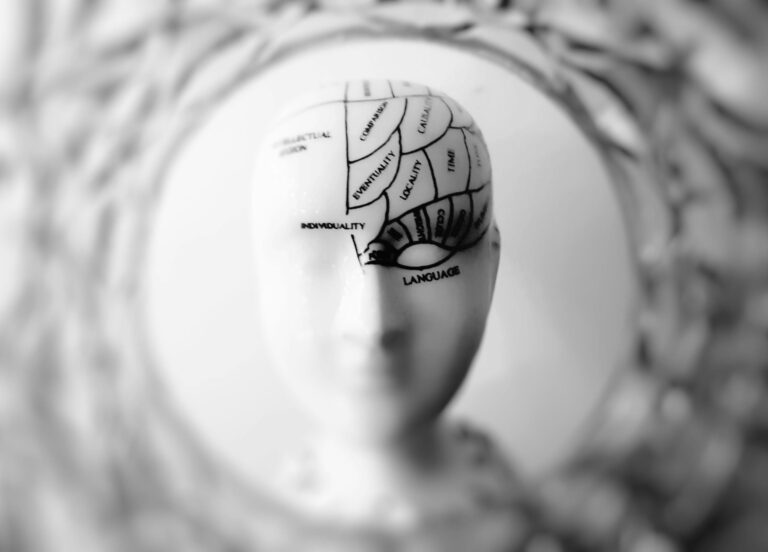

Trance state meditation is a practice that guides the mind into a deeply focused, inward state, somewhere between full waking awareness and sleep, where attention narrows, external noise falls away, and the brain shifts into slower, more receptive patterns. For introverts, this state often feels less like something new and more like a formalized version of what their minds already do naturally.
My mind has always had a pull toward stillness. Not emptiness, but a kind of rich, purposeful quiet where real thinking happens. When I first encountered trance state meditation, I didn’t feel like I was learning a technique. I felt like someone had finally given a name to what I’d been doing in small doses my entire adult life, usually at 5:30 in the morning before the agency demands began.
Mental health for introverts isn’t just about managing stress. It’s about understanding the specific ways an inward-facing mind experiences the world and finding practices that work with that wiring rather than against it. Our Introvert Mental Health Hub covers the full range of these experiences, and trance state meditation sits at a particularly interesting intersection: it’s both a clinical tool and a deeply personal one.
What Actually Happens in a Trance State?
The word “trance” carries a lot of cultural baggage. Stage hypnotists. Old movies. The idea of someone losing control of their mind. None of that is accurate, and the clinical reality is considerably more interesting.
What’s your personality type?
Take our free 40-question assessment and get a detailed personality profile with dimension breakdowns, context analysis, and personalised insights.
Discover Your Type8-12 minutes · 40 questions · Free
A trance state, in the context of meditation and therapeutic practice, refers to a condition of focused inward attention where the critical, analytical mind quiets and the brain becomes more open to suggestion, insight, and deep processing. Neurologically, this correlates with increased activity in slower brain wave patterns, particularly alpha and theta waves, which are associated with relaxed alertness and the hypnagogic states between waking and sleep.
What matters practically is that in this state, the brain becomes less reactive and more receptive. The constant filtering and evaluating that characterizes normal waking consciousness softens. Emotions that have been pushed aside can surface. Patterns that weren’t visible in the noise of daily life become clearer.
During my agency years, I spent enormous mental energy managing the gap between how I processed things and how the world expected me to respond. A client would deliver feedback in a high-energy, emotionally charged meeting, and I’d need to respond in real time while internally I was still three layers deep in analyzing what they actually meant. Trance state practice gave me something I hadn’t had before: a structured space to finish the processing my mind had started but never gotten to complete.
The research published in PubMed Central on meditation and neurological states supports what many practitioners have observed: regular engagement with deep meditative states produces measurable changes in how the brain handles stress responses and emotional regulation over time. This isn’t a one-session fix. It’s a practice that reshapes default patterns.
Why Does This Feel So Natural to Introverted Minds?
Introverts are often already operating in something adjacent to a light trance state without realizing it. The tendency to get absorbed in thought, to lose track of time while working through an idea, to feel most alive in the quiet hours before the world wakes up, these are all expressions of a mind that gravitates toward inward focus.
Carl Jung’s foundational work on introversion described it as a natural orientation toward the inner world of ideas, images, and reflection. What trance state meditation does is take that natural orientation and give it structure, depth, and intentionality. Instead of drifting inward randomly, you go there on purpose.
I’ve noticed over the years that highly sensitive people tend to find trance state work particularly resonant, and also particularly necessary. If you’ve ever felt overwhelmed by the sheer volume of sensory and emotional input that comes with being in the world, you’ll recognize what I mean. The practice creates a kind of internal pressure valve. Managing HSP overwhelm and sensory overload often requires more than just removing yourself from a situation. It requires giving your nervous system a genuine reset, and trance state meditation is one of the most effective tools I’ve found for that.

There’s also something worth naming about the introvert relationship with silence. Many extroverted practices, even well-intentioned wellness ones, involve talking, sharing, group processing. Trance state meditation is fundamentally private. It happens inside you. The insights are yours. The processing is yours. That alignment with how introverted minds prefer to work isn’t incidental. It’s part of why the practice tends to stick for people who’ve struggled with other approaches.
How Does Trance State Meditation Affect Anxiety?
Anxiety in introverts often has a particular texture. It’s not always the racing heart and immediate panic that people associate with the word. More often, it’s a persistent background hum of worry, a tendency to rehearse conversations and outcomes in exhaustive detail, a sensitivity to perceived criticism or social friction that lingers long after the moment has passed.
The National Institute of Mental Health’s overview of generalized anxiety disorder describes this kind of persistent, difficult-to-control worry as a defining feature of anxiety conditions. What’s worth noting is that the cognitive patterns underlying this kind of anxiety, rumination, hypervigilance, excessive internal rehearsal, are the same patterns that trance state practice directly addresses.
When the mind enters a trance state, the default mode network, which is responsible for much of our self-referential thinking and rumination, quiets. The mental loop of “what did they mean by that” and “what should I have said” loses its grip. Not permanently, but long enough for the nervous system to recalibrate.
I managed a creative director at one of my agencies who dealt with significant anxiety, the kind that expressed itself as constant second-guessing and an inability to let finished work be finished. She was talented, deeply so, but the anxiety was costing her. She eventually found her way to hypnotherapy-adjacent trance work, and what she reported back was telling: it wasn’t that the anxiety disappeared, but that she stopped being afraid of it. She could observe it from a slight distance rather than being swallowed by it. That’s a meaningful distinction.
For those who experience HSP anxiety specifically, the sensitivity that makes life vivid also makes it overwhelming. Trance state work doesn’t dull that sensitivity. What it does is create more space between stimulus and response, which is often exactly what’s needed.
What Role Does Deep Emotional Processing Play?
One of the things I’ve come to appreciate about trance state meditation is that it doesn’t just calm the surface. It reaches the material that lives underneath.
Introverts and highly sensitive people tend to process emotion with considerable depth, often returning to experiences long after they’ve passed, turning them over, extracting meaning, integrating them slowly. This isn’t a flaw in the system. It’s how deep emotional processing works, and there’s real value in it. The challenge is that without a structured outlet, that processing can become circular rather than progressive.
Understanding the full scope of HSP emotional processing and feeling deeply helps explain why trance state work is so well-suited to this kind of mind. In a trance state, the brain is in a mode that’s particularly receptive to emotional integration. Memories and feelings that have been stored without full resolution can surface in a way that allows them to be processed rather than just re-experienced.

I’ve had sessions where I went in thinking about one thing and came out having processed something I hadn’t consciously connected to it at all. A decision I’d made at the agency years ago, one I’d rationalized thoroughly at the time, surfaced with its emotional weight intact. I’d done the intellectual processing but skipped the emotional part entirely. Trance state gave me access to what I’d stored without finishing.
The findings from this PubMed Central review on mindfulness and emotional regulation point toward something practitioners have observed for years: meditative states that involve reduced external attention tend to increase access to internally stored emotional material. Whether you frame that clinically or experientially, the result is the same. You get to finish things your mind started but couldn’t complete in the noise of daily life.
Can Trance State Work Help With Empathy Fatigue?
Empathy is one of the most discussed traits in introvert and HSP communities, and for good reason. The capacity to feel what others feel, to absorb the emotional atmosphere of a room, to be genuinely moved by other people’s experiences, is both a gift and a source of real exhaustion.
The tension at the heart of HSP empathy is that the same trait that makes you a perceptive, caring, deeply connected person can also leave you depleted in ways that are hard to explain to people who don’t share it. You walk out of a difficult meeting not just tired from the content but drained from absorbing everyone else’s emotional states throughout it.
Trance state meditation addresses this in a specific way: it creates a clear boundary between you and the emotional material you’ve absorbed. In the inward state, you’re not taking in more. You’re sorting through what’s already there, and more importantly, you’re returning to a sense of your own center. The practice rebuilds the distinction between what belongs to you emotionally and what you’ve picked up from the environment.
Running a 40-person agency meant I was constantly surrounded by other people’s stress, ambitions, frustrations, and anxieties. As an INTJ, I processed this differently than the empaths on my team, but I wasn’t immune to it. The cumulative weight of absorbing organizational tension was real. My morning practice, which had trance-like qualities before I ever formalized it, was what allowed me to show up each day without carrying the previous one into it.
What About Perfectionism and the Inner Critic?
Perfectionism is one of the most common patterns I see discussed in introvert communities, and it makes sense. When your primary relationship is with your own internal world, the standards you hold yourself to become very loud.
The inner critic isn’t just a productivity problem. It’s an emotional one. And it tends to be particularly active in quiet moments, which creates a cruel irony for introverts who need quiet to function but find that quiet filled with self-evaluation and self-criticism.
Trance state meditation doesn’t silence the inner critic through force. What it does is shift your relationship to it. In a deep meditative state, you observe thoughts rather than being inside them. The critical voice becomes something you can hear from a distance rather than something you’re inside of. Over time, that observational capacity carries over into waking life.
If you’re familiar with the patterns described in HSP perfectionism and the high standards trap, you’ll recognize the particular exhaustion of a mind that never quite lets work be good enough. Trance state practice has been, for me, one of the most effective ways to interrupt that loop, not by lowering standards but by creating enough internal space to distinguish between productive refinement and self-punishment.
There’s also a body of work worth noting here. Ohio State University’s research on perfectionism highlights how perfectionist patterns are often anxiety-driven rather than quality-driven, which aligns with what many practitioners observe in trance work: when the anxiety underneath the perfectionism gets addressed, the perfectionism itself often softens without the person having to fight it directly.

How Does Trance State Meditation Support Healing After Rejection?
Rejection is disproportionately painful for people who process deeply. When you’ve invested genuine thought, care, and vulnerability into something, whether a creative project, a relationship, or a professional risk, having it dismissed or refused lands differently than it does for someone who moves through experiences more lightly.
The challenge with rejection for introverts and HSPs isn’t usually the immediate pain. It’s the aftermath. The replaying. The searching for what you should have done differently. The way it can calcify into a reluctance to risk again.
Understanding the full weight of HSP rejection and the process of healing from it
makes clear why surface-level reassurances don’t help much. The processing has to go somewhere real. Trance state meditation provides a container for that. In the inward state, you can revisit the experience without being retraumatized by it, process the emotional weight, and begin the work of releasing the grip it has on future action.I pitched and lost significant accounts over my agency years. Some of those losses stung in ways that surprised me given how long I’d been in the business. One in particular, a Fortune 500 account we’d worked toward for eight months, came down to a final presentation where we were edged out by a larger shop with more resources. I processed the strategic lessons quickly. The emotional residue took considerably longer. What I know now is that the trance state work I was doing during that period is what kept the loss from becoming a story I told myself about my own limitations.
The American Psychological Association’s framework on resilience consistently points to emotional processing as a core component of recovering from setbacks, not bypassing the feeling but moving through it with intention. Trance state practice is one of the most direct ways I know to do that.
How Do You Actually Practice Trance State Meditation?
The practical question matters. Knowing that something is beneficial doesn’t help if the how remains vague.
Trance state meditation can be entered through several pathways. Guided hypnotic induction is one of the most reliable, where a practitioner or recorded voice leads you through progressive relaxation and focused attention until the mind settles into the trance state. Body scan practices achieve something similar, directing attention sequentially through physical sensations until external awareness softens. Rhythmic breathing, particularly extended exhales, activates the parasympathetic nervous system in ways that facilitate the shift.
What distinguishes trance state meditation from ordinary relaxation is the element of focused intention. You’re not just resting. You’re entering a particular quality of attention, inward, receptive, and purposeful. The clinical overview of hypnotherapy and trance-based interventions at PubMed Central describes this as a state of heightened suggestibility and focused attention that has documented applications across anxiety, pain management, and behavioral change.
For introverts starting out, I’d suggest beginning with 15 to 20 minutes in the early morning, before the demands of the day have populated your mental space. The mind is naturally closer to the trance state upon waking, and that proximity makes the entry easier. A quiet room, a comfortable seated or lying position, and a simple anchor, your breath, a repeated word, a gentle visual image, are all you need to begin.
Consistency matters more than duration. A daily 15-minute practice will produce more change over three months than an occasional hour-long session. The brain responds to repetition. You’re training a default mode, and that takes time.
The academic work from the University of Northern Iowa examining meditative states explores how regular practice changes not just the meditation experience itself but the baseline neurological state people return to between sessions. That’s the real prize: not just feeling better during the practice but carrying a different quality of awareness into ordinary life.

What Should Introverts Know Before Starting?
A few honest observations from someone who came to this practice through trial and error rather than formal instruction.
First, the mind will resist. Especially an analytical INTJ mind like mine. The first several sessions will likely feel like you’re doing it wrong, like you’re just sitting there thinking rather than achieving some elevated state. That resistance is normal. The trance state isn’t a dramatic shift in most cases. It’s subtle. You’ll often only recognize you were in it when you come out of it and notice that 20 minutes passed in what felt like five.
Second, emotional material may surface. This is the practice working, not a sign that something is wrong. If you’ve been storing unprocessed experiences, and most of us have, the trance state creates conditions where they can emerge. Having a journal nearby and a few minutes of quiet after each session to let things settle is worth building into the routine.
Third, this is not a replacement for professional mental health support when that’s what’s needed. The Psychology Today writing on introvert inner experience has long acknowledged that introverts often process things alone when they might benefit from external support. Trance state meditation is a powerful complement to therapy, not a substitute for it.
Fourth, give it time. Three weeks of consistent practice is the minimum before you can assess whether something is shifting. The changes are gradual and often noticed in retrospect: a moment when you realize you handled something with more ease than you would have six months ago, a difficult conversation that didn’t linger in your mind the way it once would have.
What I can say from my own experience is that the practice has changed my relationship to my own mind in ways I didn’t anticipate. I went in looking for stress reduction. What I found was something more like clarity, a quieter, more settled quality of attention that makes everything else, the work, the relationships, the hard decisions, feel more manageable.
There’s a broader conversation happening in the introvert mental health space about practices that actually align with how inward-facing minds work. You can find more of that conversation in our complete Introvert Mental Health Hub, where we cover everything from anxiety and sensory overwhelm to emotional processing and resilience.
About the Author
Keith Lacy is an introvert who’s learned to embrace his true self later in life. After 20 years in advertising and marketing leadership, including running agencies and managing Fortune 500 accounts, Keith now channels his experience into helping fellow introverts understand their strengths and build fulfilling careers. As an INTJ, he brings analytical depth and authentic perspective to every article, drawing from both professional expertise and personal growth.
Frequently Asked Questions
Is trance state meditation the same as hypnosis?
They share significant overlap. Both involve guiding the mind into a state of focused inward attention where the critical faculty quiets and the brain becomes more receptive. Hypnotherapy is a clinical application of trance states, typically guided by a practitioner toward a specific therapeutic goal. Trance state meditation is a broader practice that can be self-directed and used for general mental wellness, emotional processing, and stress reduction. Many of the neurological mechanisms are the same, and the line between them is more about context and intention than fundamental difference.
How long does it take to enter a trance state during meditation?
For beginners, entry into a recognizable trance state can take anywhere from 10 to 20 minutes of sustained practice. With experience, that window shortens considerably. Many regular practitioners can reach a trance-adjacent state within a few minutes of beginning. The key factors are consistency of practice, a quiet environment, and a reliable induction method, whether that’s breath focus, body scanning, or a guided recording. The brain learns the pattern over time and begins to associate the setup conditions with the state itself.
Can trance state meditation help with social anxiety specifically?
Many practitioners and individuals report meaningful improvement in social anxiety symptoms through regular trance state work. The practice addresses several of the underlying mechanisms: it reduces baseline nervous system activation, it creates distance from the inner critic that feeds social anxiety, and it allows the emotional processing of past social experiences that may be driving current avoidance. That said, social anxiety exists on a spectrum, and more significant presentations often benefit from professional support alongside any self-directed practice. Trance state meditation works well as part of a broader approach rather than as a standalone solution for clinical social anxiety.
Do introverts have a natural advantage in trance state meditation?
There’s a reasonable argument that they do, though “advantage” may not be the most precise framing. Introverts tend to have a natural orientation toward inward attention, comfort with sustained quiet, and a preference for depth over breadth of experience. These are all qualities that facilitate trance state entry and depth. What introverts may need to work through is the analytical resistance that comes with a mind accustomed to evaluating its own experience, the tendency to observe the meditation rather than be in it. Once that resistance softens, the natural inward orientation becomes a genuine asset.
What’s the difference between trance state meditation and regular mindfulness?
Standard mindfulness practice emphasizes present-moment awareness of external and internal experience without judgment. You observe thoughts, sensations, and feelings as they arise and pass. Trance state meditation goes a step further inward: the goal isn’t just to observe experience but to enter a qualitatively different state of consciousness where the mind becomes more deeply absorbed and receptive. Mindfulness tends to maintain a gentle awareness of the environment; trance state practice deliberately narrows that awareness down. Both are valuable, and many people find that mindfulness practice is a useful foundation before exploring trance state work.