
Sky Ting is a New York City wellness company offering yoga, meditation, and breathwork in a setting deliberately designed to feel less like a fitness studio and more like a refuge. For introverts and highly sensitive people managing the relentless sensory weight of city life, that distinction matters more than most wellness marketing would have you believe.
My honest take: Sky Ting gets some things genuinely right for quieter, more inward-facing people, and a few things still miss the mark. What follows is a grounded evaluation, not a promotional piece.
If you’ve been searching for mental health tools that actually fit how your nervous system works, the broader conversation lives in our Introvert Mental Health hub, where we cover everything from sensory overwhelm to anxiety management through an introvert-specific lens. This article sits inside that larger framework.
What Is Sky Ting and Why Does It Keep Coming Up in Wellness Conversations?
Sky Ting was founded in 2015 by Krissy Jones and Chloe Kernaghan, two teachers who wanted to build something that felt different from the high-intensity, performance-oriented yoga culture that had taken over Manhattan. The name itself comes from a Chinese term loosely meaning “sky hall,” a space above the noise. That framing is intentional. The founders built the brand around Katonah yoga, a geometric and Taoist-influenced practice, layered with breathwork, sound healing, and meditation offerings.
What’s your personality type?
Take our free 40-question assessment and get a detailed personality profile with dimension breakdowns, context analysis, and personalised insights.
Discover Your Type8-12 minutes · 40 questions · Free
The company operates physical studios in New York, along with a digital platform called Sky Ting TV. What makes it worth evaluating specifically for introverts and sensitive people is not just the class menu but the philosophy underneath. Sky Ting talks openly about nervous system regulation, about slowing down rather than pushing through, and about the body as a system that holds stress rather than simply performs movement. That language resonates with people who already know their nervous systems run hot.
Running an advertising agency in New York for over two decades, I watched the wellness industry from the outside for most of that time. We pitched wellness brands, shot campaigns for meditation apps, and wrote copy about stillness while I personally worked 60-hour weeks and called it ambition. The disconnect was real. So when I eventually started taking my own mental health seriously as an INTJ who had spent years suppressing his introversion, I became a careful consumer of wellness spaces rather than a credulous one. Sky Ting came onto my radar through a client in the health sector, and I’ve since spent time evaluating it with the same analytical skepticism I’d apply to any brand claiming to solve a real human problem.
How Does Sky Ting’s Meditation Approach Differ From Standard NYC Wellness Studios?
Most meditation offerings in New York fall into one of two camps. The first is the app-adjacent drop-in model: guided sessions in sleek rooms, timed to fit a lunch break, optimized for efficiency. The second is the boutique fitness crossover, where meditation gets bolted onto a yoga or cycling class as a five-minute cooldown and called mindfulness. Neither serves people who process deeply.
Sky Ting sits in a different category. Their meditation programming draws from Katonah yoga’s structural philosophy, which treats the body as a map and the breath as a tool for internal reorganization rather than relaxation theater. Sessions tend to be longer and less performance-oriented than what you’d find at a typical SoulCycle-adjacent wellness brand. The instructors are trained to hold silence, which sounds trivial until you’ve sat in a room where the teacher fills every quiet moment with affirmations because they’re uncomfortable with stillness themselves.
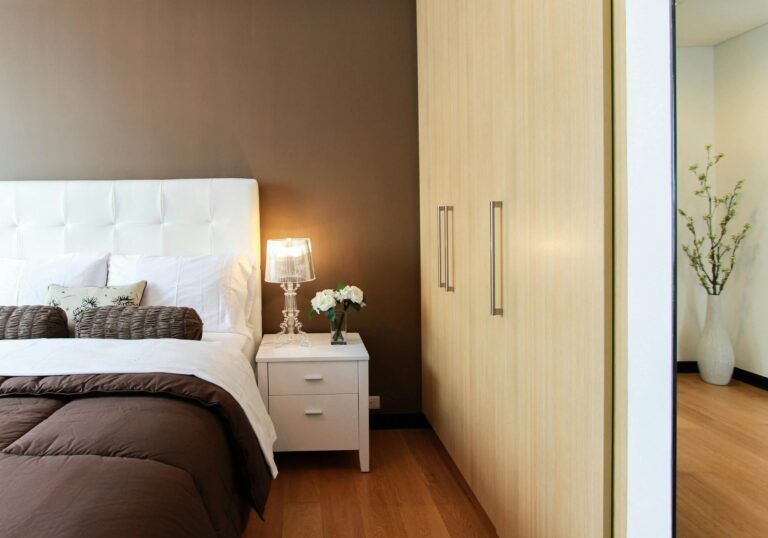
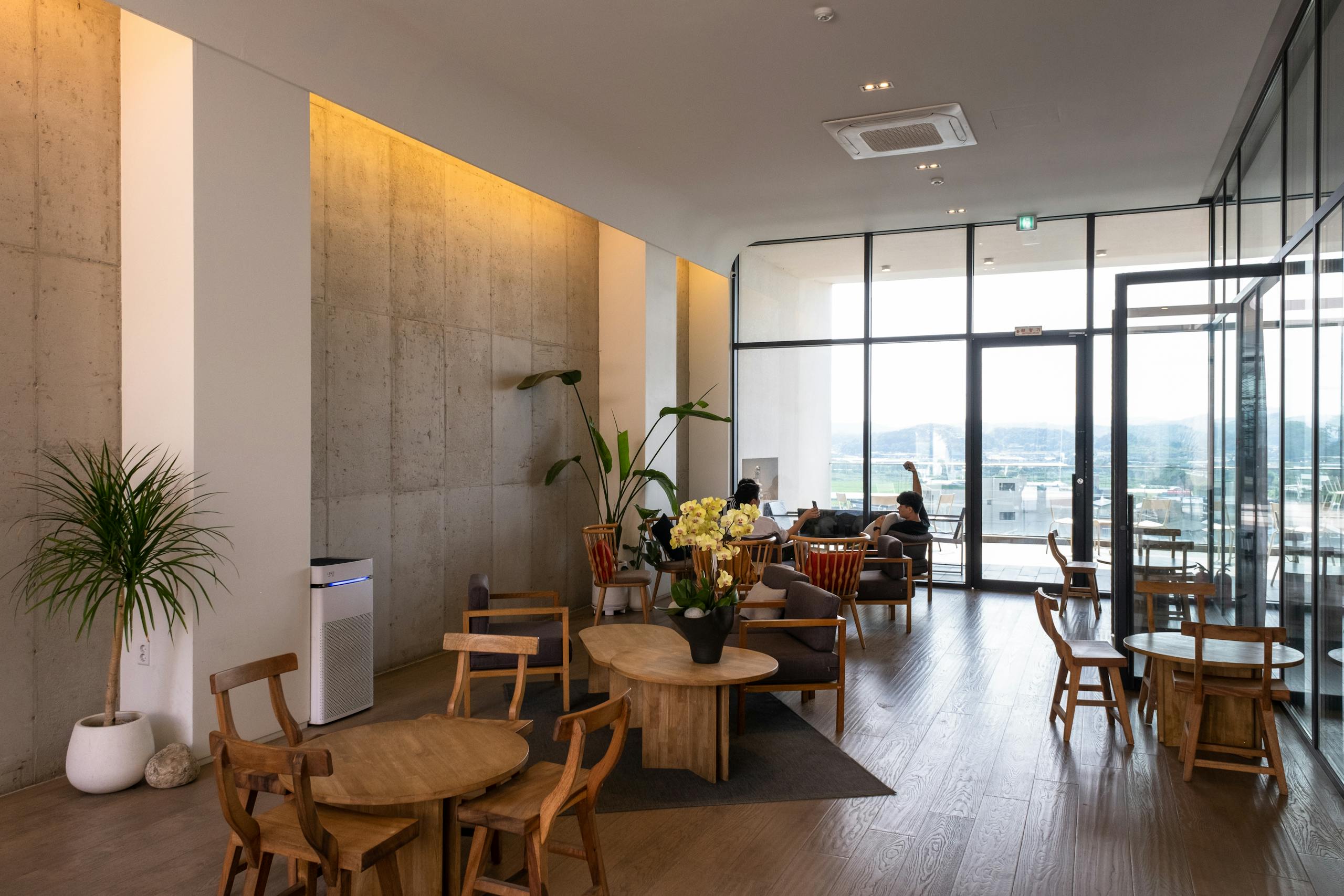
For people who deal with HSP overwhelm and sensory overload, the physical environment matters as much as the instruction. Sky Ting’s studios lean toward natural materials, lower lighting, and a quieter color palette than the neon-accented aesthetic that dominates a lot of New York fitness culture. That’s not incidental. Sensory input affects how quickly a highly sensitive nervous system can actually settle, and a studio that looks like a nightclub is working against you from the moment you walk in.
That said, Sky Ting is still a New York wellness brand. It operates in a city where the ambient noise level outside the studio door is a constant, and where the social dynamics of a group class carry their own low-grade pressure. I’ve noticed that some of their more popular classes attract a certain kind of social energy, the kind where people know each other, where there’s a visible in-group, and where a quiet newcomer can feel conspicuous. That’s worth naming honestly.
Is Sky Ting Actually Designed With Sensitive People in Mind?
Sky Ting doesn’t market itself explicitly to introverts or highly sensitive people. It markets to people interested in “intelligent movement” and nervous system health, which overlaps significantly but isn’t identical. The distinction matters because it means the programming isn’t built around introvert-specific needs. It’s built around a wellness philosophy that happens to align with those needs in several meaningful ways.
The breathwork offerings are where I see the strongest value for sensitive people. Controlled breathing practices have a well-documented effect on the autonomic nervous system, specifically on the balance between sympathetic activation (the stress response) and parasympathetic recovery. The research published in PubMed Central on yoga and stress physiology supports the general framework that breath-based practices can meaningfully reduce physiological markers of anxiety. Sky Ting’s breathwork classes operate within this territory, and the instruction quality I’ve observed is serious rather than performative.
For people managing HSP anxiety, breath-based regulation is one of the more reliable tools available precisely because it doesn’t require you to change your thinking or your environment. It works at the physiological level, which is where highly sensitive people often need the most support. The National Institute of Mental Health recognizes relaxation techniques including breath-focused practices as a component of managing anxiety disorders, and Sky Ting’s programming aligns with that framework without overclaiming.
Where Sky Ting is less explicitly sensitive-person-aware is in its community programming. The brand has built a genuine community around its studios, which is a real asset for many people. For introverts who find group belonging energetically expensive, or for highly sensitive people who absorb the emotional states of those around them, a tight-knit studio community can be as draining as it is supportive. I’ve seen this dynamic play out in my own life. Some of the most meaningful professional relationships I built during my agency years came through spaces that felt communal, but I always needed significant recovery time afterward, something my extroverted colleagues found baffling.
What Does Sky Ting TV Offer for Introverts Who Prefer Practicing Alone?
Sky Ting TV is the brand’s digital platform, and for introverts, it may actually be the more valuable product than the in-person studio experience. Practicing at home removes the social layer entirely. You get the instruction, the philosophy, and the breathwork without the group dynamics, the ambient noise of other people’s energy, or the logistical friction of commuting to a studio in New York.
The platform offers a range of class lengths and styles, which matters for people whose available mental bandwidth varies significantly day to day. Highly sensitive people often find that their capacity for structured practice fluctuates with their emotional load, and having access to a 20-minute gentle session on a hard day and a longer, more demanding class on a stronger day is genuinely useful. Rigid programming that assumes consistent capacity doesn’t account for how sensitive nervous systems actually function.

One thing I appreciate about the Sky Ting TV content is that it doesn’t rely heavily on motivational language. A lot of wellness content, especially in the digital space, leans on urgency and aspiration in ways that can feel grating to people who are already emotionally saturated. The Sky Ting instructors tend to speak in a more neutral, observational register, which gives you room to have your own experience rather than performing the one the instructor seems to want you to have.
That said, the platform isn’t free, and the subscription cost places it in a category that requires deliberate investment. Whether it’s worth that investment depends significantly on what you’re currently using for mental health support and whether the specific Katonah yoga framework resonates with how you process physically and mentally. I’d recommend sampling their free content before committing to a subscription.
How Does Meditation at Sky Ting Address the Emotional Depth That Sensitive People Carry?
One of the things that makes meditation genuinely complicated for highly sensitive people is that it doesn’t always feel like relief. Sitting quietly with your own mind when you process emotion deeply can surface things that had been held at bay by the noise of daily life. This is not a flaw in meditation. It’s actually part of how it works. But it means that the quality of instruction matters enormously, and that a practice designed for nervous system regulation needs to account for the reality that some people’s nervous systems are carrying significantly more than the average.
Sky Ting’s instructors, in my observation, are more comfortable with emotional complexity than instructors at many comparable studios. The Katonah framework treats the body as holding information, not just tension, which opens space for the kind of deep emotional processing that highly sensitive people do naturally. Rather than pushing toward a particular emotional state, the better Sky Ting classes create conditions and then step back.
There’s also something worth noting about the empathy demands of group practice. Highly sensitive people often find that being in a room with others during meditation means they’re not just processing their own inner state but absorbing the emotional texture of the room. That’s a real phenomenon, not a metaphor. If you’ve read anything about HSP empathy as a double-edged quality, you’ll recognize the dynamic: the same capacity that makes you perceptive and caring can make shared spaces emotionally expensive in ways that aren’t immediately visible to others.
Sky Ting doesn’t address this directly in its programming, which is a gap. But the physical design of the studios, with individual mat spacing and a general culture of inward focus rather than social performance, does reduce some of the interpersonal friction that can make group meditation counterproductive for sensitive people.
What Are the Honest Limitations of Sky Ting for Introverts and HSPs?
Any honest evaluation has to include the parts that don’t work as well. Sky Ting has real limitations for the audience I’m writing for, and I’d rather be direct about them than wrap everything in qualified praise.
First, the brand operates within a wellness culture that still carries significant aesthetic pressure. The instructors are uniformly polished. The visual identity is carefully curated. The social media presence is aspirational. For people who already struggle with HSP perfectionism and the trap of high standards, entering a space that looks effortlessly perfect can activate the comparison mechanism rather than quiet it. The gap between how you feel inside and how the people around you appear to feel is one of the more insidious sources of stress in wellness spaces, and Sky Ting isn’t immune to this problem.
Second, the in-person studio experience in New York is genuinely expensive. When you’re evaluating mental health tools on a budget, the cost of a Sky Ting class relative to other options (free apps, library resources, community meditation centers) is a real consideration. Mental health support shouldn’t require a premium budget, and I’m conscious of the fact that framing Sky Ting as a solution without acknowledging its price point would be dishonest.
Third, the Katonah yoga framework, while intellectually interesting, is also somewhat esoteric. If you’re new to yoga and meditation, the geometric and Taoist references can feel more confusing than grounding. I’ve watched people in my own circle try Sky Ting and bounce off the conceptual density of the instruction, not because they weren’t capable of engaging with it but because they needed a simpler entry point first. The evidence base from PubMed Central on mindfulness-based interventions generally suggests that consistency and simplicity matter more than sophistication for establishing a sustainable practice. Sky Ting sometimes prioritizes sophistication.
Fourth, and this connects to something I’ve observed repeatedly in my years working with creative teams, highly sensitive people who’ve experienced social rejection or who carry anxiety about belonging can find the tight-knit community of a popular wellness studio more activating than soothing. The feeling of being new in a room where everyone else seems to know each other is its own kind of stress. If you’re working through HSP rejection sensitivity, a studio with strong in-group dynamics may not be the right starting point.
How Does Meditation at Sky Ting Compare to Other NYC Wellness Options for Sensitive People?
New York has a dense wellness landscape, and Sky Ting occupies a specific niche within it. Compared to MNDFL, which offers straightforward secular meditation in a quieter, less aesthetically loaded environment, Sky Ting is more physically and philosophically complex. Compared to large yoga chains, it’s significantly more intimate and instruction-focused. Compared to drop-in sound bath studios, it’s more active and less passive.
For introverts who want depth and are comfortable with some conceptual complexity, Sky Ting is genuinely among the stronger options in the city. The instruction quality is high, the philosophy is coherent, and the physical spaces are designed with more intentionality than most. For introverts who are earlier in their mental health practice, or who are managing significant anxiety or sensory sensitivity, a simpler entry point might serve better as a foundation before adding the layers that Sky Ting brings.
The American Psychological Association’s work on resilience consistently points to the value of building sustainable practices rather than seeking peak experiences. Sky Ting can be a peak experience for people who are ready for it. What it’s less designed for is the slow, unglamorous work of establishing a daily baseline practice when you’re starting from a depleted place.
I think about this in terms of what I needed at different stages of my own process. In my agency years, when I was performing extroversion daily and running on adrenaline and caffeine, what I needed was simplicity. A ten-minute breathing practice in a quiet room. Not a sophisticated geometric yoga philosophy. Sky Ting would have been too much for that version of me. Now, with a more stable baseline, I find the depth genuinely valuable. Knowing which version of yourself you’re working with is part of choosing the right tool.
What Practical Advice Would Help an Introvert Get the Most From Sky Ting?
If you decide to try Sky Ting, a few practical observations from someone who’s thought carefully about how introverts and sensitive people move through wellness spaces.
Arrive early rather than at the last minute. Rushing into a meditation space activates your stress response before the class even begins, and the transition from New York street noise to studio quiet takes time for a sensitive nervous system. Giving yourself ten minutes to settle in the space before the class starts changes the experience significantly.
Choose your class size deliberately. Sky Ting offers smaller workshops and larger regular classes. Smaller groups reduce the ambient social pressure and give you more room to have a private experience within a shared space. If the community dynamic feels like a barrier, a smaller workshop is a better entry point than a packed regular class.
Don’t feel obligated to engage socially before or after class. The culture at Sky Ting is warm, but it doesn’t require you to participate in the social layer. Arriving, practicing, and leaving quietly is a completely legitimate way to use the space. One of the things I’ve had to consciously give myself permission to do in any group setting is to be present for the purpose I came for without extending my social exposure beyond what I have capacity for. That’s not rudeness. It’s self-knowledge.
Consider Sky Ting TV as your primary access point, especially at the beginning. The digital platform gives you the instruction quality without the group dynamics, and it lets you build familiarity with the Katonah framework in a lower-pressure context. Once you feel grounded in the practice, the in-person experience adds something meaningful. But trying to absorb a new philosophical framework while also managing the social dynamics of a new studio is asking a lot of a sensitive nervous system at once.
Finally, pair your Sky Ting practice with honest self-assessment. Meditation isn’t a substitute for mental health care, and for people managing significant anxiety, depression, or trauma, it works best as a complement to professional support rather than a replacement for it. The clinical guidance from the National Library of Medicine on mindfulness-based approaches is consistent on this point: these practices have real value and real limits. Sky Ting is a wellness company, not a clinical provider, and treating it as one sets you up for disappointment.
Is Sky Ting Worth It for Introverts Managing Mental Health in New York?
My overall assessment: Sky Ting is a genuinely thoughtful wellness company in a market full of shallow ones. For introverts and highly sensitive people who are ready for depth, who have a reasonable baseline practice already established, and who can engage with the Katonah framework without feeling overwhelmed by its complexity, it offers something real. The breathwork is substantive, the instruction quality is high, and the physical environments are more carefully designed for nervous system regulation than most comparable studios.
For introverts who are earlier in their mental health work, who are managing significant anxiety or sensory sensitivity, or who find group wellness spaces socially activating rather than restorative, Sky Ting TV is the more accessible entry point. The in-person experience adds value, but it also adds demands. Knowing which version of the offering fits where you are right now is the more useful question than whether Sky Ting is good in the abstract.
What I keep coming back to is the same thing I’ve observed across two decades of watching how people, including myself, manage the tension between an inward-facing nature and an outward-facing world. The tools that work are the ones you can actually use consistently, in the conditions of your real life, without requiring you to perform wellness any more than you’ve already been performing everything else. Sky Ting, at its best, creates conditions for something genuine. Whether those conditions fit your life is a question only you can answer.
There’s a lot more to explore on this topic. Our complete Introvert Mental Health hub covers the full range of tools, frameworks, and honest evaluations that matter for people wired the way we are.
About the Author
Keith Lacy is an introvert who’s learned to embrace his true self later in life. After 20 years in advertising and marketing leadership, including running agencies and managing Fortune 500 accounts, Keith now channels his experience into helping fellow introverts understand their strengths and build fulfilling careers. As an INTJ, he brings analytical depth and authentic perspective to every article, drawing from both professional expertise and personal growth.
Frequently Asked Questions
Is Sky Ting good for beginners to meditation?
Sky Ting can work for beginners, but the Katonah yoga framework that underlies much of their programming has a conceptual density that some newcomers find challenging. If you’re completely new to meditation, starting with their shorter, more accessible classes on Sky Ting TV before attending in-person sessions gives you time to build familiarity with the approach. Beginners who are already comfortable with yoga will find the transition easier than those coming in with no movement practice background.
Does Sky Ting offer online meditation classes?
Yes. Sky Ting TV is the brand’s digital platform, offering a range of yoga, meditation, and breathwork classes at various lengths and levels. For introverts who prefer practicing alone, or for people who find group studio dynamics socially draining, Sky Ting TV provides access to the same instruction quality without the in-person social layer. It requires a paid subscription, so sampling any available free content first is a reasonable approach before committing.
How does Sky Ting’s approach to breathwork support anxiety relief?
Sky Ting’s breathwork classes focus on controlled breathing techniques that work through the autonomic nervous system, supporting the shift from sympathetic activation (the stress response) toward parasympathetic recovery. This physiological mechanism is well-supported in the broader research on breath-based practices and anxiety. For highly sensitive people whose nervous systems tend to run at higher baseline activation, regular breathwork practice can provide meaningful relief, though it works best as part of a broader mental health approach rather than a standalone solution.
Is Sky Ting suitable for highly sensitive people?
Sky Ting’s physical environments and instructional philosophy align well with the needs of highly sensitive people in several ways: lower sensory stimulation than typical fitness studios, instruction that holds space for inward experience, and a breathwork focus that addresses nervous system regulation directly. The main caveats are the brand’s tight-knit community culture, which can feel socially pressured for people with rejection sensitivity, and the aesthetic perfectionism of the brand’s visual identity, which can activate comparison tendencies in people already prone to high standards. Sky Ting TV sidesteps most of these concerns by removing the group dynamic entirely.
How does Sky Ting compare to other meditation options in NYC?
Sky Ting occupies a specific niche in New York’s wellness landscape: more philosophically complex than straightforward secular meditation studios like MNDFL, more intimate and instruction-focused than large yoga chains, and more active than passive sound bath studios. For introverts who want depth and are ready for the Katonah framework, it’s among the stronger options in the city. For people earlier in their mental health practice, simpler entry points may serve better as a foundation. The cost is also higher than many alternatives, which is a practical consideration worth weighing honestly.