

Donald Judd minimalism is more than an art movement. It’s a philosophy of space, silence, and intentional living that resonates deeply with introverts who crave environments that support reflection rather than drain it. Judd believed that clutter, whether visual or conceptual, obscures meaning, and that the right space could restore something essential in a person.
That idea hit me differently than I expected the first time I really sat with it. Not because I’m an art collector or a design purist, but because after two decades of running advertising agencies surrounded by noise, competing voices, and relentless stimulation, I understood instinctively what Judd was protecting.

Solitude, simplicity, and the right kind of quiet are not luxuries for introverts. They’re necessities. If you’re exploring what it means to genuinely recharge as an introvert, our Solitude, Self-Care and Recharging hub covers the full landscape of practices and perspectives that support that need.
Who Was Donald Judd, and Why Does He Matter to Introverts?
Donald Judd was an American artist and theorist who rose to prominence in the 1960s as a leading voice in what became known as minimalism. He rejected the emotional expressiveness of Abstract Expressionism, arguing that art had become too burdened by metaphor, symbolism, and the artist’s ego. He wanted objects that simply existed, without apology or narrative layering.
What’s your personality type?
Take our free 40-question assessment and get a detailed personality profile with dimension breakdowns, context analysis, and personalised insights.
Discover Your Type8-12 minutes · 40 questions · Free
His most recognizable works are his “stacks,” identical rectangular boxes mounted vertically on a wall, and his large-scale installations at the Chinati Foundation in Marfa, Texas, where he eventually moved permanently. That relocation alone tells you something about the man. He left New York, one of the most stimulating cities on earth, to settle in the high desert of West Texas, where the light was clean, the land was vast, and the noise was almost nonexistent.
As an INTJ, I recognized that move immediately. Not as eccentricity, but as precision. Judd was engineering his environment to match his internal architecture. He needed space that didn’t compete with his thinking.
That’s something many introverts understand deeply, even if they’ve never heard of Donald Judd. The spaces we inhabit either support us or exhaust us. There’s very little neutral ground.
What Is the Core Principle Behind Donald Judd Minimalism?
Judd’s central argument was deceptively simple: an object should be what it is, nothing more. He called his works “specific objects,” a deliberate rejection of painting and sculpture as categories that carried too much inherited baggage. A box made of stainless steel and amber Plexiglas wasn’t symbolizing anything. It was occupying space with precision and intention.
He extended this thinking beyond art into architecture and furniture design. The spaces he designed in Marfa and his SoHo loft in New York followed the same logic. Every element earned its place. Nothing was decorative in the superficial sense. Objects related to each other and to the space around them with mathematical care.

What strikes me about this philosophy is how directly it maps onto the introvert’s internal experience. My mind, like most introverts I’ve spoken with, processes information deeply and continuously. It doesn’t need more input. It needs space to work with what it already has. When the environment around me is cluttered, competing, or visually loud, my internal processing slows down. The outer noise starts to drown out the inner signal.
Judd understood this. He just expressed it through art and architecture rather than psychology.
There’s a meaningful parallel here to what research published in PubMed Central has explored regarding environmental stimulation and cognitive recovery. Environments with lower sensory demand allow the brain to shift out of reactive processing and into the kind of reflective, restorative states that introverts depend on.
How Did Judd’s Move to Marfa Reflect an Introvert’s Relationship With Space?
Marfa, Texas sits at roughly 4,700 feet elevation in the Chihuahuan Desert. The population when Judd arrived in the early 1970s was around 2,500 people. The nearest city of any size was hours away. By most conventional measures, it was an impractical, even irrational choice for one of New York’s most prominent artists.
Judd didn’t see it that way. He saw land he could own outright, buildings he could shape entirely on his own terms, and an environment where the visual and social noise of the art world couldn’t reach him. He could think. He could work. He could exist in a space that matched his internal requirements rather than constantly demanding he adapt to someone else’s.
I spent years running agencies in cities, managing teams of 30 to 50 people, fielding calls from clients at Fortune 500 companies who wanted answers immediately and loudly. The open-plan offices that were fashionable in the early 2000s were, for me, a particular kind of slow erosion. Every conversation happening three desks away pulled at my concentration. Every impromptu meeting pulled me out of the deep work where I actually produced my best thinking.
What I eventually understood, and what took me far too long to act on, was that I wasn’t failing to adapt to those environments. Those environments were genuinely incompatible with how my mind works. Judd figured that out earlier than most and had the conviction to build a life around it.
That kind of intentional withdrawal from overstimulation isn’t antisocial. It’s protective. The piece I wrote about what happens when introverts don’t get alone time gets into the real costs of ignoring that need, and they’re more serious than most people realize.
What Can Judd’s Design Philosophy Teach Us About Creating Restorative Spaces?
Judd’s furniture and interior design work followed the same logic as his art. His tables and chairs, produced through his own Judd Furniture line, were built from solid wood or metal with clean proportions and no ornamentation. They weren’t austere in a cold way. They were calm. There’s a difference.
Austerity removes comfort. Calm removes friction. Judd was after the latter. His spaces had warmth through material quality, natural light, and proportion, but they didn’t have clutter. They didn’t have objects competing for your attention. When you sat in one of his rooms, your mind could settle.
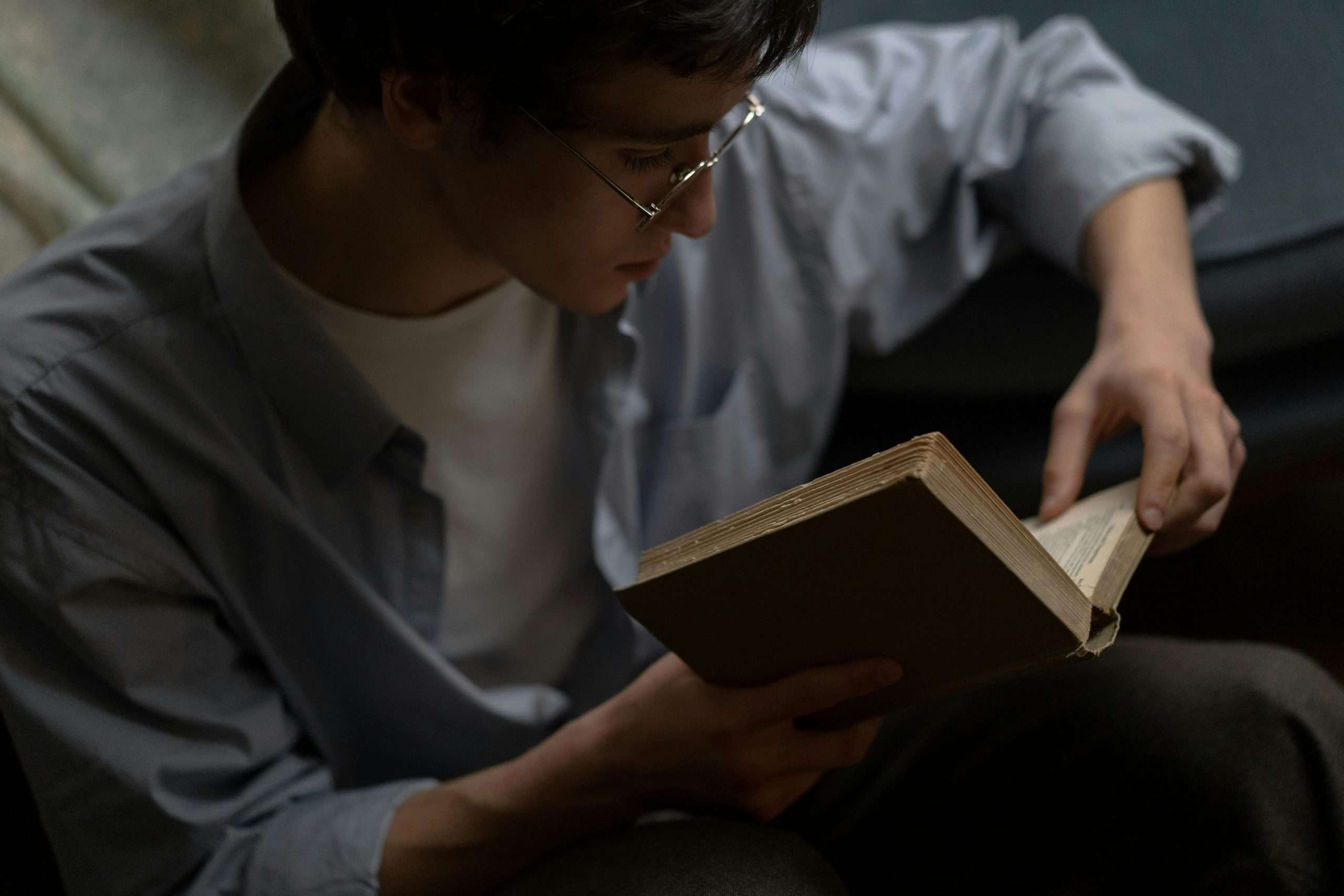
For introverts and highly sensitive people, this matters enormously. The connection between physical environment and internal state is not abstract. It’s physiological. A space with too many competing visual elements, too many objects with undefined purpose, or too much sensory input keeps the nervous system in a low-grade alert state. That state is exhausting to maintain over hours and days.
The practices outlined in HSP self-care daily practices consistently point back to environment as a foundational variable. You can’t layer restorative habits onto a space that’s working against you.
Judd’s approach to space offers a practical framework. Start with function. Identify what each element in a room actually does. If it doesn’t serve a clear purpose, either practical or genuinely meaningful to you personally, question its presence. Reduce visual competition. Allow surfaces to breathe. Prioritize natural light over artificial brightness. These aren’t aesthetic preferences in the superficial sense. They’re environmental decisions with real consequences for how you feel and think.
After I sold my last agency and started working from home full-time, I redesigned my office with these principles in mind. I removed about 60 percent of what was in the room. The difference in my daily energy was immediate and significant. I hadn’t realized how much mental processing I was spending on visual management of that space.
How Does Minimalism Support the Introvert’s Need for Deep Solitude?
Solitude for introverts isn’t simply about being alone. It’s about having the internal space to process, to think without interruption, and to reconnect with your own perspective after the constant negotiation of social environments. A cluttered or visually demanding space can undermine that even when no other people are present.
Judd understood solitude as a condition for serious work. His writings make clear that he believed the integrity of an artwork depended on the artist’s ability to think without compromise, and that required protecting the conditions for that thinking. Marfa wasn’t just a home. It was a structure built around the requirements of a particular kind of mind.
The need for genuine solitude, not just physical aloneness but the deeper quiet that allows real restoration, is something HSP solitude research addresses directly. The quality of alone time matters as much as the quantity, and environment is one of the most significant factors in that quality.
There’s also something worth noting about what Berkeley’s Greater Good Science Center has explored regarding solitude and creativity. Voluntary solitude, chosen and structured rather than imposed, is consistently associated with deeper creative processing. Judd’s entire career was built on that premise.
One of the more honest things I can say about my years in agency life is that I almost never had genuine solitude during the working day. There was always another meeting, another call, another person at my door with something urgent. I got good at simulating productivity in those conditions, but my best thinking, the ideas that actually moved clients’ businesses, came from the early mornings before anyone else arrived, or the long drives I took alone on weekends. Judd would have recognized that pattern immediately.
Is There a Connection Between Minimalism and Introvert Mental Health?
The relationship between environment and mental wellbeing is well-established. What’s less often discussed is how that relationship is amplified for people who process sensory information more intensely, whether through introversion, high sensitivity, or both.
Judd’s minimalism, applied as a living philosophy rather than just an aesthetic, creates conditions that reduce the cognitive load of existing in a space. When your environment isn’t constantly demanding attention, your nervous system can operate at a lower baseline of arousal. Sleep improves. Concentration deepens. Emotional regulation becomes less effortful.
The strategies covered in HSP sleep and recovery strategies frequently circle back to this point. The transition from waking to rest is significantly harder in environments with sensory complexity. Minimizing that complexity isn’t a design choice. It’s a health practice.
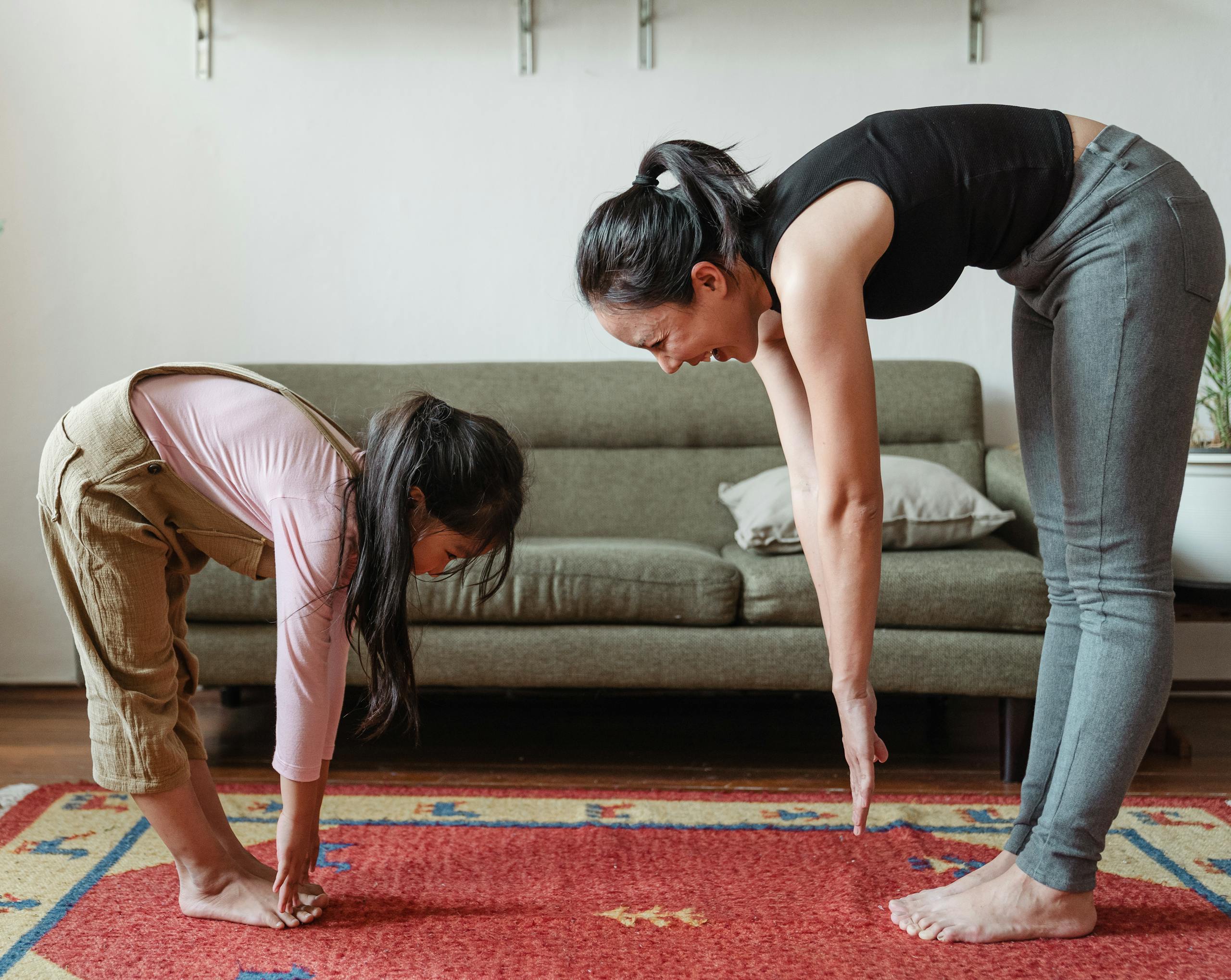
There’s also the question of what chronic overstimulation does over time. Frontiers in Psychology has published work on the psychological costs of sustained environmental noise and complexity, including effects on mood, decision-making quality, and stress hormone levels. These aren’t trivial concerns. They accumulate.
Judd’s choice to remove excess from his environment wasn’t neurotic minimalism for its own sake. It was a rational response to an understanding of his own needs. That’s worth sitting with. Knowing what your mind requires and building your life around those requirements isn’t self-indulgence. It’s good design.
I had a creative director on one of my agency teams, an INFJ, who was visibly affected by the chaos of our open studio. She did her best work when she had a quiet corner and a clean desk. I didn’t understand that well enough early on, and I watched her produce mediocre work for months before I finally gave her a separate workspace. Her output changed within two weeks. The environment had been the variable all along.
How Does Judd’s Relationship With Nature Inform the Minimalist Philosophy?
Marfa sits in a landscape that is itself profoundly minimalist. The Chihuahuan Desert offers vast horizontal space, clean light, and a visual field largely free of human-made complexity. Judd’s large-scale works at the Chinati Foundation were designed to be experienced in relationship with that landscape, with the quality of light changing throughout the day and across seasons.
This connection between minimalism and the natural world is not incidental. Judd was drawn to environments where the essential qualities of light, space, and material could be perceived without competition. The desert provided that at a scale no interior could match.
For introverts, nature serves a similar restorative function. The sensory environment of natural settings, particularly open landscapes, forests, or water, tends to be what psychologists call “softly fascinating,” engaging attention gently without demanding focused cognitive effort. That quality allows the mind to wander, process, and recover in ways that built environments rarely permit.
The piece on HSP nature connection and the healing power of outdoors explores this in depth. What Judd intuited through art and architecture, many introverts discover through their own relationship with natural spaces.
My own version of this was a cabin I rented for two weeks every year during my agency years. No client calls, no team check-ins, just a lake and enough quiet to remember what my own thinking actually sounded like. I came back from those two weeks more strategically clear than I was after any conference or corporate retreat. The environment did something that no structured program could replicate.
What Does “Specific Objects” Mean for How Introverts Curate Their Lives?
Judd’s concept of “specific objects” was a rejection of ambiguity. He wanted things that were exactly what they were, with no pretense or borrowed meaning. A box was a box. Its value came from its precise existence in space, not from what it represented.
Applied to how introverts build their lives, this idea becomes genuinely useful. Many of us carry obligations, relationships, commitments, and possessions that are there through accumulation rather than intention. They arrived gradually, and we never stopped to ask whether they belonged. Over time, that accumulation creates the same kind of cognitive noise that a cluttered room does.
Judd’s approach asks a clarifying question: does this thing earn its place? Not sentimentally, not out of obligation, but actually. Does it serve a real function in your life? Does it align with what you genuinely value?
That’s a more demanding question than it sounds. My agency years were full of commitments I’d accumulated without ever consciously choosing. Industry associations, networking events, client entertainment obligations. Each one was individually defensible. Together, they constituted a schedule that left almost no room for the kind of deep work and genuine recovery that I actually needed to perform at my best.
Applying Judd’s logic to that calendar would have meant asking, honestly, which of these commitments actually serves the work and the life I’m trying to build? The answer would have been uncomfortable. But it would have been clarifying.
There’s something in how Mac approaches alone time that captures this same spirit of intentional simplicity, choosing what genuinely restores rather than filling every available space with activity.

How Can Introverts Apply Donald Judd’s Principles Practically?
You don’t need to move to the West Texas desert or commission custom furniture to apply what Judd understood. The principles translate into practical decisions at any scale.
Start with your primary workspace. Identify every object on your desk or in your immediate visual field. For each one, ask whether it serves a current, active function. Not a potential function, not a sentimental one. An active function. Remove what doesn’t qualify, even temporarily, and notice what changes in how you feel in that space.
Extend that thinking to your schedule. Judd was ruthless about protecting his time and attention. He declined most social obligations that didn’t serve his work or his genuine relationships. That wasn’t misanthropy. It was precision. He understood that his capacity for deep work depended on not fragmenting his days with low-value interactions.
Consider the quality of light in your primary spaces. Judd was obsessive about natural light because it changes and breathes in ways that artificial light doesn’t. A space with good natural light and minimal artificial supplementation tends to feel calmer and more alive. That’s not mysticism. It’s a physiological response to a more natural sensory environment.
Think about sound in the same way. Judd’s spaces in Marfa were quiet in a way that urban environments almost never are. You may not be able to replicate that entirely, but you can identify the sources of ambient noise in your environment and address the ones within your control. That might mean different hours, a different room, or simple acoustic changes.
The Psychology Today piece on embracing solitude for health makes a related point about the difference between solitude that restores and isolation that depletes. Judd’s minimalism was never about deprivation. It was about creating the conditions for genuine presence and deep work. That distinction matters.
Finally, approach your social commitments with the same intentionality. Not every invitation requires acceptance. Not every relationship that began passively needs to be maintained actively. Judd chose his collaborators, his location, and his community with deliberate care. Introverts who apply that same intentionality to their social lives often find that their relationships become both fewer and significantly more meaningful.
The Psychology Today exploration of solo experience as a chosen approach touches on this same principle, that deliberate choices about how and with whom we spend our time are markers of self-knowledge, not social failure.
And if you’re wondering whether this kind of intentional withdrawal carries any social risk, Harvard Health’s distinction between loneliness and isolation is worth reading carefully. Chosen solitude and structured simplicity are not the same as disconnection. Judd had deep friendships and professional relationships throughout his life. He simply protected the conditions that allowed him to show up fully in those relationships.
There’s more to explore on these themes across our Solitude, Self-Care and Recharging hub, which brings together perspectives on rest, environment, and the particular needs of introverts who are building lives that actually fit them.
About the Author
Keith Lacy is an introvert who’s learned to embrace his true self later in life. After 20 years in advertising and marketing leadership, including running agencies and managing Fortune 500 accounts, Keith now channels his experience into helping fellow introverts understand their strengths and build fulfilling careers. As an INTJ, he brings analytical depth and authentic perspective to every article, drawing from both professional expertise and personal growth.
Frequently Asked Questions
What is Donald Judd minimalism and why does it appeal to introverts?
Donald Judd minimalism is an art and design philosophy centered on the idea that objects and spaces should be exactly what they are, without symbolic layering, decorative excess, or visual competition. Judd called his works “specific objects” and extended this thinking to architecture, furniture, and how he structured his entire life. Introverts are drawn to this philosophy because it creates environments that reduce sensory and cognitive load, allowing the kind of deep reflection and internal processing that introverts depend on for both creativity and restoration.
Why did Donald Judd move to Marfa, Texas?
Judd moved to Marfa in the early 1970s primarily to escape the noise, social obligations, and commercial pressures of the New York art world. He wanted to own land and buildings outright, to design his environment entirely on his own terms, and to work in a landscape that offered clean light, vast space, and minimal sensory competition. He established the Chinati Foundation there, a permanent installation of his large-scale works designed to be experienced in relationship with the desert landscape and its changing light.
How can introverts apply minimalist principles to their daily environments?
Introverts can apply Judd’s minimalist principles by auditing their primary spaces and removing objects that don’t serve an active, genuine function. Beyond physical space, this extends to schedules, social commitments, and digital environments. The goal isn’t deprivation but reduction of friction, creating conditions where the mind can settle, process deeply, and recover from overstimulation. Prioritizing natural light, reducing ambient noise, and being intentional about which relationships and commitments receive active energy are all practical applications of this philosophy.
Is minimalism the same as being antisocial or isolating yourself?
No. Judd maintained meaningful friendships and professional relationships throughout his life. Minimalism, in his practice, was about protecting the conditions for deep work and genuine presence, not about avoiding human connection. The distinction between chosen solitude and loneliness is important here. Deliberately simplifying your environment and social commitments is an act of self-knowledge. It allows you to show up more fully in the relationships and activities you do choose, rather than spreading your energy thinly across obligations that don’t genuinely serve you.
What is the Chinati Foundation and why is it significant to Judd’s legacy?
The Chinati Foundation is a contemporary art museum in Marfa, Texas, established by Judd in the early 1980s on a former military base. It houses permanent large-scale installations by Judd and a small number of other artists he selected personally. The foundation represents the fullest expression of Judd’s belief that art should exist permanently in spaces designed specifically for it, experienced in relationship with natural light and the surrounding landscape. It remains one of the most distinctive artistic environments in the world and continues to draw visitors seeking the particular quality of attention and stillness that Judd’s work demands.