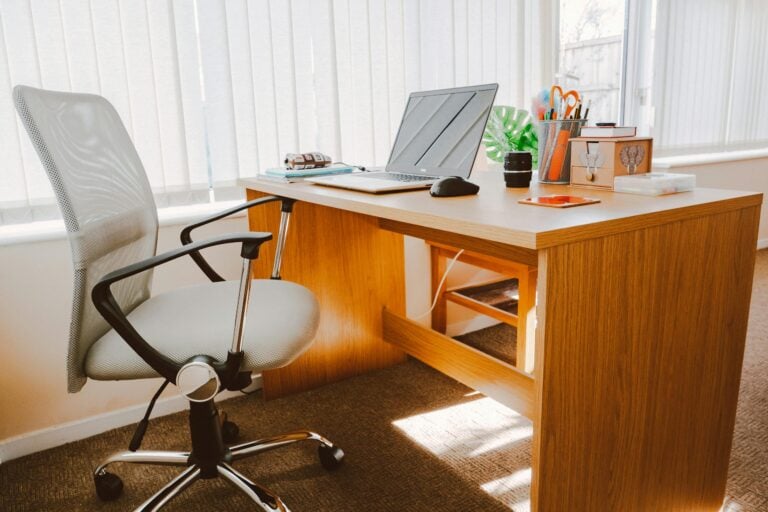

John Adams’ post-minimalist style sits at a fascinating crossroads: the stripped-back clarity of minimalism meeting the warmth and emotional depth that pure minimalism often denies itself. In his later compositional work, Adams layers just enough texture, repetition, and harmonic color to create something that breathes, something that rewards the kind of patient, inward listening that introverts do naturally. For anyone who has ever found a quiet room and a piece of music to be the most restorative combination imaginable, Adams’ aesthetic offers more than entertainment. It offers a model for how to live.
What Adams figured out in music, many introverts are still working out in their daily lives: that stripping away the unnecessary isn’t about deprivation. It’s about creating space for what actually matters.
Much of what I’ve come to understand about solitude and self-care as an introvert connects to a broader set of practices worth exploring. Our Solitude, Self-Care and Recharging hub pulls together the full range of those conversations, from sensory sensitivity to the science of rest, and this piece adds another layer: what a composer’s aesthetic philosophy can teach us about designing a quieter, more intentional life.
What Exactly Is Post-Minimalism, and Why Does It Matter to Introverts?
Pure minimalism, in music as in design, can feel almost aggressive in its austerity. Philip Glass at his most stripped-back, or a completely bare white room with a single chair, makes a statement. But that statement sometimes shuts the listener or the inhabitant out rather than drawing them in. Post-minimalism corrects this. It takes the foundational principles of minimalism, repetition, simplicity, the removal of excess, and allows human warmth to reenter the equation.
What’s your personality type?
Take our free 40-question assessment and get a detailed personality profile with dimension breakdowns, context analysis, and personalised insights.
Discover Your Type8-12 minutes · 40 questions · Free
Adams himself described his evolution away from strict minimalism as a response to emotional necessity. His orchestral works from the 1980s onward began incorporating romantic harmonics, lush orchestration, and a kind of yearning that pure minimalism would have rejected as indulgent. The result was music that felt spacious and complex at the same time. Quiet on the surface, rich underneath.
Sound familiar? That’s the interior life of most introverts I know, including my own. Calm on the outside, a great deal happening beneath the surface.
During my years running advertising agencies, I was often the quietest person in a room full of creatives who performed loudly. Account managers who could pitch with theatrical energy, art directors who filled whiteboards with bold declarations. I processed differently. I’d sit with a brief for longer than felt comfortable, let it settle, and come back with something that had layers to it. Clients sometimes mistook my quietness for disengagement. What they were actually getting was post-minimalist thinking: not empty, not cluttered, just carefully edited.
How Does Minimalism as a Lifestyle Philosophy Serve the Introvert Mind?
Minimalism as a lifestyle has had its cultural moment, and some of the discourse around it has felt prescriptive in ways that don’t serve everyone. The idea that you should own fewer than 100 possessions, or that a capsule wardrobe will solve your anxiety, misses the point almost entirely. What minimalism actually offers introverts isn’t a checklist. It’s permission to reduce sensory and social load.
Introverts, and particularly those who are highly sensitive, tend to process environmental stimuli more deeply than others. A cluttered desk isn’t just visually untidy. It competes for attention. A packed social calendar isn’t just tiring. It actively depletes the cognitive and emotional resources needed for the kind of deep thinking that introverts do best. Minimalism, applied thoughtfully, addresses both of these realities.
Adams’ post-minimalist approach is instructive here because it doesn’t advocate for emptiness. It advocates for intentional selection. What stays in the composition stays because it earns its place. What gets removed gets removed because its absence makes everything else clearer. Applied to daily life, that principle becomes something genuinely useful: not fewer things for the sake of fewer things, but fewer things that drain you, and more of what genuinely restores you.
For highly sensitive people, this kind of intentional curation becomes almost a health practice. The essential daily practices for HSP self-care often center on exactly this: reducing unnecessary stimulation and protecting the conditions that allow for genuine restoration. Adams’ aesthetic philosophy, translated into daily living, maps almost perfectly onto those practices.
What Does Solitude Have to Do With Compositional Thinking?
Adams has spoken about the role of solitude in his creative process with a frankness that most public figures avoid. Composition, for him, requires extended periods of uninterrupted internal work. The music exists in his mind long before it exists on paper, and that interior incubation requires protection from external noise. He has described his studio practice in terms that would resonate with any introvert who has ever tried to do deep work in an open-plan office: the environment shapes the output, and the environment must be defended.
There’s something important in this that goes beyond productivity advice. Solitude isn’t just useful for creative work. It’s a psychological need for many introverts, and the absence of it creates real costs. Anyone who has experienced the particular exhaustion of being “on” for too long knows what I mean. It’s not tiredness exactly. It’s a kind of hollowing out. What happens when introverts don’t get enough alone time goes deeper than feeling drained: it affects mood, cognition, and the ability to connect authentically with others when connection is actually wanted.
I managed a creative director at one of my agencies who was extraordinarily talented and also deeply introverted in a way she hadn’t fully made peace with yet. She would push through back-to-back client meetings, team reviews, and new business pitches for weeks at a time, and then she’d go quiet in a way that her team read as withdrawal or disengagement. What was actually happening was that she’d run out of the interior resource that made her work exceptional. The well had gone dry. We restructured her schedule to build in what I started calling “composition time,” uninterrupted blocks where she could think without performing. Her output improved significantly, and so did her relationship with the team.
Adams’ creative practice essentially models what that looks like at a professional level. The solitude isn’t a luxury or a preference. It’s the condition under which the actual work becomes possible. Research from the Greater Good Science Center at Berkeley supports this, noting that voluntary solitude can enhance creative thinking by allowing the mind to move beyond conventional associations and explore more original connections.
How Does Post-Minimalism Reframe the Introvert Relationship With Simplicity?
One of the persistent misreadings of introversion is that introverts prefer simplicity because they lack the appetite for complexity. The opposite is usually true. Introverts tend to seek simplicity on the surface precisely because they’re managing a great deal of complexity internally. The quiet room isn’t empty. It’s the container for a rich interior life that needs space to operate.
Adams’ post-minimalism captures this dynamic beautifully. A piece like “Shaker Loops” or “Harmonielehre” sounds, in places, almost meditative. The surface is calm and repetitive. But listen closely and you’ll notice the harmonic landscape shifting underneath, small variations accumulating into something emotionally vast. The simplicity is structural, not intellectual. It’s a container, not a conclusion.
That distinction matters for introverts trying to build lives that actually fit them. A minimalist home, a quieter social life, a career that doesn’t require constant performance: these aren’t signs of a small life. They’re the structural simplicity that makes a rich interior life possible. The depth is still there. It just doesn’t need an audience.
Sleep is one area where this plays out in ways that are often underestimated. Highly sensitive people in particular tend to carry the day’s sensory and emotional input into the night, and without proper conditions for rest, that processing never fully completes. The connection between environmental simplicity and genuine recovery is well documented in work on HSP sleep and recovery strategies. A quiet, uncluttered sleep environment isn’t an aesthetic preference. It’s a functional requirement for the kind of deep rest that allows the mind to process and reset.
Can an Aesthetic Philosophy Actually Function as a Self-Care Framework?
This is where the conversation gets genuinely interesting, and where I think Adams’ work offers something that conventional self-care discourse often misses. Most self-care advice is prescriptive: do this practice, follow this routine, add this habit. Adams’ post-minimalist philosophy works differently. It’s a principle, not a prescription. And principles scale in ways that prescriptions don’t.
The principle, stated simply: keep what earns its place, remove what competes for attention without contributing to the whole, and allow the resulting space to be genuinely inhabited rather than anxiously filled. Applied to a morning routine, that might mean two or three practices that actually restore you rather than a ten-step ritual that creates its own pressure. Applied to a social life, it might mean fewer commitments with more depth rather than a packed calendar of shallow obligations. Applied to a physical space, it means an environment that supports the interior life rather than cluttering it.
There’s a psychological dimension to this that connects to what some researchers describe as the restorative effects of environments that allow for “soft fascination,” spaces and experiences that engage attention gently without demanding it. A study published in PubMed Central examining attention restoration found that low-demand environments support cognitive recovery more effectively than stimulating ones, which aligns with what introverts often report anecdotally about what actually helps them recharge.
Nature tends to function this way for many introverts. The outdoor environment offers stimulation that is complex but not demanding, rich but not aggressive. It’s post-minimalist in the same sense that Adams’ music is: layered, but not overwhelming. The healing power of nature connection for highly sensitive people reflects this dynamic. A walk in a forest or along a shoreline provides sensory input that restores rather than depletes, in part because it doesn’t require performance or response.
I started taking long walks alone during the most demanding periods of running my agencies. Not as exercise, though that was a side benefit, but as a form of cognitive reset. The pattern of trees, the variable light, the absence of anyone wanting something from me: it was the closest I could get, in the middle of a working week, to the compositional solitude that Adams describes. I’d come back with clearer thinking and better instincts than any amount of coffee or team brainstorming had produced.
How Does the Post-Minimalist Approach Handle the Tension Between Solitude and Connection?
One of the things that distinguishes post-minimalism from pure minimalism is its willingness to hold tension rather than resolve it. Adams’ music doesn’t pretend that the desire for simplicity and the desire for richness are contradictory. It holds both at once. That’s a more honest position than most aesthetic philosophies manage, and it maps onto something real about introvert experience.
Introverts are not, by definition, antisocial. Most introverts I know, and I count myself in this, want genuine connection. What they don’t want is the performance of connection, the social rituals that generate the appearance of closeness without the substance. The post-minimalist principle applied here would say: keep the connection that earns its place. Remove the social obligation that competes for energy without contributing to genuine relationship.
That’s a harder principle to apply than it sounds, because social obligations come with real costs for declining them. Saying no to the networking event, the team happy hour, the extended family gathering: these choices carry social weight. But the alternative, a life structured around other people’s definitions of adequate sociability, carries a different and arguably higher cost. Writing in Psychology Today, Dr. Sybil Cummin makes the case that chosen solitude is not only psychologically healthy but actively beneficial, distinct from loneliness in both its nature and its effects.
The distinction between chosen solitude and imposed isolation matters enormously here. Harvard Health’s analysis of loneliness versus isolation clarifies that the psychological harm associated with being alone is tied to unwanted isolation, not to voluntary solitude. Introverts who choose time alone are not at greater risk of the harms associated with loneliness. They’re exercising a preference that, when honored, tends to improve rather than undermine their capacity for connection.
For highly sensitive introverts, the need for genuine solitude is particularly acute. The essential need for alone time among HSPs isn’t a quirk or a limitation. It’s a feature of a nervous system that processes experience more deeply and therefore requires more recovery time between inputs. Post-minimalism, as a philosophy, validates this need rather than pathologizing it.

What Does a Post-Minimalist Daily Life Actually Look Like in Practice?
Abstract principles are only useful if they translate into something livable. So what does a post-minimalist approach to daily life actually look like for an introvert trying to design an existence that fits them?
Start with environment. A post-minimalist space isn’t bare. It contains what you’ve chosen deliberately: objects that carry meaning, books you actually return to, art that rewards sustained attention. What it doesn’t contain is accumulation by default, the things that arrived and stayed because removing them required a decision. The difference between a minimalist space and a post-minimalist one is warmth. Both are edited. Only one feels inhabited.
Move to schedule. A post-minimalist calendar has white space in it, not as a luxury but as a structural necessity. The white space is where processing happens, where the interior life does its work, where the next genuinely good idea incubates. I spent years filling every gap in my schedule because empty time felt like wasted time. What I eventually understood, later than I should have, is that the empty time was doing work I couldn’t see. The thinking that happened in those gaps was what made the scheduled time productive.
Then consider relationships. Post-minimalism applied to social life means depth over breadth. A few relationships that carry real weight, where the conversation goes somewhere, where you’re known rather than performed at. This is where the concept of Mac alone time becomes relevant: the idea of protecting specific, personal time that belongs entirely to you, not as avoidance but as the foundation from which genuine engagement with others becomes possible.
Finally, consider information and stimulation. A post-minimalist approach to media, news, and digital input means choosing what you consume rather than consuming by default. The algorithm wants to fill every available moment of attention. The post-minimalist response is to decide in advance what earns that attention and to let the rest scroll past without engagement. This is harder than it sounds in practice, but the cognitive benefit of reducing passive consumption is real and fairly immediate.
Some of the most compelling evidence for this kind of intentional reduction comes from work on attention and cognitive load. A paper in Frontiers in Psychology examining solitude and its psychological functions found that voluntary alone time supports self-reflection, emotional regulation, and identity development in ways that constant social and media engagement tends to suppress. The introvert who guards their solitude isn’t being antisocial. They’re protecting a cognitive environment that allows them to function at their best.
Why Does the “Post” in Post-Minimalism Matter So Much?
There’s a version of minimalism that becomes its own kind of performance. The perfectly curated Instagram apartment with its thirty objects and its single succulent. The capsule wardrobe as identity statement. The conspicuous absence of stuff as a form of status signaling. This is minimalism that has forgotten its own point.
Adams’ post-minimalism sidesteps this trap because it’s oriented toward something beyond the aesthetic. The simplicity serves the music, not the other way around. What stays in the composition stays because it contributes to the emotional and intellectual experience of the listener. The principle is functional, not decorative.
For introverts, the equivalent distinction is between simplicity as performance and simplicity as function. A quieter life isn’t something to display or justify. It’s a structural choice that makes the life you actually want to live more possible. The “post” matters because it acknowledges that you’re not rejecting warmth, complexity, or connection. You’re just being deliberate about where they come from and what conditions allow them to thrive.
I’ve watched colleagues spend entire careers trying to perform extroversion convincingly enough that no one would notice the cost. The cost was always visible, just not to them. What Adams models, and what the best introvert self-care frameworks reflect, is that the sustainable path isn’t performance. It’s design. Build the life around what actually restores you, and the performance problem largely solves itself.
There’s also a social permission dimension here that shouldn’t be underestimated. Research published in PubMed Central on solitude and well-being suggests that the stigma around choosing to be alone, particularly in cultures that prize sociability, can itself become a source of psychological stress for introverts. Having a framework, whether it’s Adams’ compositional philosophy or a more explicitly psychological model, that validates the choice can reduce that stigma-related stress meaningfully.

What Can Introverts Take From Adams’ Compositional Philosophy Right Now?
The practical takeaway from Adams’ post-minimalist approach isn’t a to-do list. It’s a question to carry: does this earn its place? Applied to your schedule, your environment, your social commitments, your information diet, the question cuts through a remarkable amount of noise. Not everything that demands your attention deserves it. Not everything that could fill your time should.
Adams built a body of work that is both formally disciplined and emotionally generous. The discipline creates the space. The generosity fills it. For introverts designing lives that actually fit them, that combination is the model: enough structure to protect the interior life, enough warmth to make it worth protecting.
The composer didn’t arrive at post-minimalism by rejecting what came before. He built on it, kept what worked, added what was missing, and arrived somewhere more honest than either pure minimalism or the maximalism it was reacting against. That’s a reasonable template for an introvert who has spent years trying to fit into someone else’s definition of how a person should move through the world.
You don’t have to choose between depth and simplicity. Adams proved you don’t. The post-minimalist life, like the post-minimalist composition, holds both at once. It just requires the willingness to edit ruthlessly, protect the conditions that make depth possible, and trust that the white space is doing work you can’t always see.
If these ideas resonate with you, there’s much more to explore. The full range of practices, frameworks, and perspectives around introvert self-care and restoration lives in our Solitude, Self-Care and Recharging hub, and it’s worth spending time there if you’re building a life that genuinely fits how you’re wired.
About the Author
Keith Lacy is an introvert who’s learned to embrace his true self later in life. After 20 years in advertising and marketing leadership, including running agencies and managing Fortune 500 accounts, Keith now channels his experience into helping fellow introverts understand their strengths and build fulfilling careers. As an INTJ, he brings analytical depth and authentic perspective to every article, drawing from both professional expertise and personal growth.
Frequently Asked Questions
What is John Adams’ post-minimalist style?
John Adams’ post-minimalist style builds on the structural simplicity and repetition of minimalist composition while reintroducing emotional warmth, harmonic complexity, and expressive depth. Where strict minimalism strips music down to its barest elements, Adams’ post-minimalism keeps that formal discipline but allows the human, emotional dimension back in. Works like “Harmonielehre” and “Shaker Loops” are characteristic examples: calm and repetitive on the surface, emotionally layered underneath.
How does minimalism as a lifestyle benefit introverts specifically?
Introverts, particularly those who are highly sensitive, tend to process environmental stimuli more deeply than others. A minimalist environment reduces the sensory and cognitive load that competes for attention, creating conditions where deep thinking, genuine rest, and creative work become more possible. The benefit isn’t aesthetic. It’s functional. Fewer inputs competing for attention means more resources available for the interior life that introverts depend on for their best thinking and most authentic engagement with others.
Is choosing solitude bad for your mental health?
Chosen solitude and unwanted isolation are psychologically distinct experiences with very different effects. Voluntary alone time, particularly for introverts who seek it intentionally, tends to support emotional regulation, self-reflection, and cognitive restoration. The harm associated with being alone is tied to loneliness, which is the experience of unwanted disconnection, not to the deliberate choice to spend time alone. Introverts who protect their solitude are generally exercising a preference that improves rather than undermines their capacity for connection when they seek it.
How can introverts apply post-minimalist principles to their daily lives?
The core post-minimalist principle, keeping what earns its place and removing what competes for attention without contributing to the whole, applies across multiple dimensions of daily life. In environment, it means curating your space for warmth and function rather than accumulation. In schedule, it means protecting white space for processing and recovery rather than filling every gap. In relationships, it means prioritizing depth over breadth. In information and media, it means choosing what you consume rather than consuming by default. The principle scales across all of these areas without requiring a rigid prescription.
What is the difference between minimalism and post-minimalism as lifestyle philosophies?
Pure minimalism, applied as a lifestyle philosophy, can become its own form of performance: the pursuit of fewer possessions or obligations as an end in itself. Post-minimalism, as modeled in Adams’ compositional work, treats simplicity as a means rather than an end. success doesn’t mean have less. The goal is to create the conditions under which what matters most can thrive. Post-minimalism keeps the discipline of minimalism but adds back the warmth and intentionality that pure minimalism sometimes sacrifices. For introverts, the distinction matters because the goal is a life that genuinely fits, not a life that merely looks uncluttered.