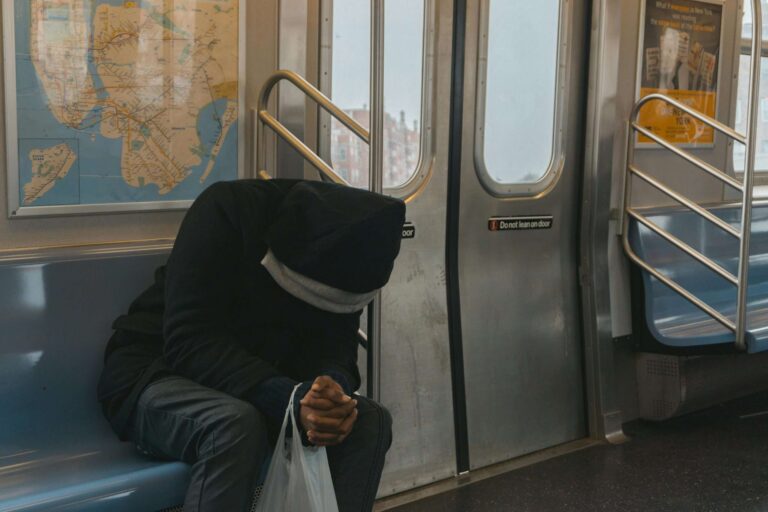

Procrastination means deliberately delaying a task you intend to complete, even when you know the delay will cost you. It is not laziness, and it is not a character flaw. At its core, procrastination is an emotional regulation problem: we avoid tasks not because we lack the time or ability, but because something about that task triggers discomfort we would rather not sit with right now.
For people who process the world at depth, that discomfort often runs deeper than most productivity advice accounts for. A simple example: you have a client proposal due Friday. You open the document, feel a wave of uncertainty about whether your ideas are good enough, and suddenly find yourself reorganizing your desk, checking email, or doing anything that feels productive without requiring you to be vulnerable on the page. That is procrastination in action, and it happens to thoughtful, capable people constantly.
What makes it complicated is that the avoidance rarely feels like avoidance in the moment. It feels like preparation, like caution, like waiting for the right conditions. And for introverts and highly sensitive people, those rationalizations can be remarkably convincing.
Procrastination sits at an interesting intersection with mental health, particularly for people whose inner lives are rich and sometimes overwhelming. Our Introvert Mental Health hub covers the full landscape of emotional challenges that show up differently for introverts, and procrastination belongs squarely in that conversation.

What Does Procrastination Actually Mean, Beyond the Dictionary Definition?
Most definitions of procrastination stop at the behavior: you delay, you avoid, you put things off. But that description misses the psychological machinery underneath. Procrastination is better understood as a cycle. Something triggers an uncomfortable emotion, avoidance provides temporary relief, and that relief reinforces the avoidance behavior. Over time, the cycle becomes harder to interrupt because the relief is immediate while the consequences are distant.
I spent more than two decades running advertising agencies, and I watched this cycle play out in every corner of creative and strategic work. Talented writers who would spend three hours “researching” before touching a brief. Account managers who would delay a difficult client call until the situation had quietly escalated. Senior strategists who would wait for the perfect insight before committing anything to paper. None of these people were lazy. Every single one of them was managing discomfort.
As an INTJ, my own procrastination pattern was specific and, frankly, embarrassing to admit: I would delay decisions that involved interpersonal risk. Give me a complex business problem and I would work on it obsessively. Ask me to have a conversation that might damage a relationship, and I would find seventeen other urgent things to attend to first. That is procrastination rooted in emotional avoidance, not time management failure.
Psychologists sometimes distinguish between two broad types. Arousal procrastinators delay until the pressure of a deadline creates enough adrenaline to push through. Avoidance procrastinators delay to sidestep the fear of failure or judgment. Most people are some combination of both, and the mix shifts depending on the type of task. Understanding which pattern you are running helps enormously, because the solution looks different for each.
Why Do Deeply Feeling People Procrastinate More Intensely?
Highly sensitive people and introverts do not have a monopoly on procrastination, but they often experience it with a particular intensity that standard advice does not address. When your nervous system is finely tuned to pick up on subtle signals, the emotional weight of a task gets amplified in ways that can feel disproportionate to outside observers.
Consider what happens when someone who processes emotion at depth faces a task tied to potential criticism. The anticipation of that criticism is not abstract. It arrives with texture and specificity. They can already hear the tone of the feedback, already feel the flush of embarrassment, already replay the moment in their mind before it has even happened. That is not catastrophizing as a character flaw. That is a sensitive nervous system doing what it does: processing ahead of time, in full emotional detail.
This connects directly to the experience of HSP emotional processing, where feelings arrive not as quick flickers but as sustained, layered experiences that require time and space to move through. When a task is emotionally loaded, the processing happens before, during, and after the work itself. That takes energy. And when energy feels limited, avoidance becomes a form of conservation.
There is also the question of sensory and cognitive load. Highly sensitive people often find that overstimulating environments make focused work genuinely harder. An open-plan office, a noisy home, a schedule packed with interactions can leave the nervous system so activated that sitting down to concentrate feels impossible. What looks like procrastination from the outside is sometimes the result of genuine HSP overwhelm, where the system is already at capacity before the task even begins.

What Are Real-World Examples of Procrastination That Introverts Recognize?
Abstract definitions only go so far. Sometimes what you need is to see your own pattern reflected back at you clearly enough to name it. These examples are drawn from the kinds of situations I encountered repeatedly across two decades of agency work, and from my own experience as someone who had to learn, slowly, to notice when I was avoiding rather than preparing.
The Endless Preparation Loop
You need to write a report, send a proposal, or prepare a presentation. You gather information, create outlines, read related articles, organize your notes. Hours pass. The actual work has not started. Preparation is real and necessary, but at some point it becomes a way to stay in the comfortable zone of “getting ready” without ever having to commit to a finished product that someone might judge.
I ran into this constantly when pitching new business. The research phase was genuinely enjoyable. The moment of actually drafting the pitch, knowing a room full of clients would evaluate it, was where avoidance crept in. I would tell myself I needed one more data point, one more competitive analysis. What I actually needed was to tolerate the discomfort of imperfection and start anyway.
The Delayed Difficult Conversation
A team member’s performance has been slipping. A client relationship has become strained. A boundary has been crossed and needs to be addressed. You know the conversation needs to happen. You rehearse it mentally, sometimes for days. And yet you keep finding reasons why today is not quite the right time.
This is one of the most common procrastination patterns in leadership, and it is particularly acute for people with strong empathic sensitivity. The weight of empathy can make conflict avoidance feel like kindness, when it is actually a way of protecting yourself from the discomfort of someone else’s emotional reaction. I delayed more than one hard conversation in my agency years, and every single time, the delay made the eventual conversation harder, not easier.
The Perfectionism Stall
You have started the work, but you cannot seem to move it forward because it is not good enough yet. Each draft feels inadequate. Each version reveals new flaws. You keep returning to the beginning instead of pushing through to completion. This is perfectionism operating as procrastination, and it is extraordinarily common among people with high internal standards.
The relationship between perfectionism and procrastination is well-documented in psychological literature, and it is particularly relevant for highly sensitive people who have a finely calibrated sense of quality. The HSP perfectionism trap is real: the same sensitivity that makes you notice what is excellent also makes you acutely aware of every gap between your work and your ideal. That awareness, without the right coping tools, becomes paralysis.
The Social Task Avoidance
Returning a phone call. Scheduling a networking coffee. Following up on an email that requires a nuanced response. Sending a message to someone you have lost touch with. These tasks sit undone for days, sometimes weeks, not because they are complex but because they carry social weight. The anticipation of the interaction, the uncertainty about how it will go, the energy cost of engaging, all of that adds up to avoidance.
Many introverts will recognize this pattern immediately. The task is not hard. The emotional preparation required to do it feels enormous. And when anxiety compounds the picture, as it often does, the avoidance can spiral into something that affects relationships and professional standing in ways that feel deeply unfair given how much genuine care the person actually has for the people involved.
How Does Anxiety Fuel the Procrastination Cycle?
Anxiety and procrastination have a reinforcing relationship that can be difficult to untangle. Anxiety about a task makes avoidance more appealing. Avoidance provides short-term relief that reduces anxiety temporarily. But the unfinished task does not go away. It sits in the background, generating a low hum of dread that accumulates over time. By the time you finally face the task, the anxiety has often grown significantly larger than it would have been if you had started earlier.
The National Institute of Mental Health describes generalized anxiety as involving persistent worry that is difficult to control, often accompanied by physical symptoms like restlessness and difficulty concentrating. These are also symptoms that make focused work harder, which is why people dealing with anxiety often find themselves in a particularly vicious procrastination loop: the anxiety makes it hard to start, the not-starting increases the anxiety, and the cycle tightens.
For highly sensitive people, this loop has an additional layer. HSP anxiety often involves a heightened awareness of potential negative outcomes, a tendency to process worst-case scenarios in detail, and a nervous system that stays activated longer after a stressful trigger. All of that makes the avoidance response feel not just tempting but genuinely necessary for self-protection.
What helped me most was learning to distinguish between anxiety that was informative and anxiety that was noise. Some of my pre-task dread contained useful signals: this approach needs more thought, this relationship needs care before the conversation, this strategy has a flaw worth addressing. That kind of discomfort is worth sitting with. Other anxiety was simply the nervous system catastrophizing about outcomes that were unlikely. Learning to tell the difference took years, and I am still not perfect at it.
What Does the Psychology of Procrastination Actually Tell Us?
Psychological research on procrastination has shifted significantly over the past few decades. Earlier models treated it primarily as a time management problem, something to be solved with better planning tools, tighter deadlines, and stronger willpower. More recent thinking, grounded in emotional regulation research, treats it as a mood management strategy that happens to be counterproductive in the long run.
A study published in PMC explored the relationship between procrastination and emotional regulation, finding that difficulty managing negative emotions plays a central role in why people delay. This framing is important because it shifts the intervention away from “try harder” and toward “address the emotional experience that makes avoidance feel necessary.”
Additional research available through PMC has examined how self-compassion affects procrastination, with findings suggesting that harsh self-criticism after a delay tends to increase future avoidance rather than reduce it. The person who beats themselves up for procrastinating is not more likely to stop. They are more likely to feel worse about themselves and find the task even more emotionally loaded the next time they approach it.
That finding landed hard for me personally. My INTJ instinct when I failed to meet my own standards was to analyze the failure, identify what went wrong, and apply pressure to do better. What I was slower to recognize was that pressure applied to an already avoidance-prone situation often backfired. The self-criticism became part of the emotional weight of the task itself, making it harder to approach, not easier.
Academic work on the subject, including research from the University of Northern Iowa, has also examined how trait procrastination differs from situational procrastination. Some people have a consistent tendency to delay across many areas of life, while others procrastinate selectively in domains tied to their particular emotional vulnerabilities. Knowing which pattern applies to you matters for how you approach change.
How Does Fear of Rejection Shape Avoidance Behavior?
One of the most underexamined drivers of procrastination is fear of rejection. Not rejection in the dramatic sense, but the everyday, low-grade fear that what you produce will be found wanting, that your effort will be dismissed, that the version of yourself you put into the work will be evaluated and come up short.
Sensitive people often carry a particularly acute relationship with rejection. The experience of being dismissed or criticized does not pass quickly. It tends to linger, to be replayed, to be processed from multiple angles over time. Understanding how HSP rejection processing works helps explain why the anticipation of potential rejection can be enough to trigger significant avoidance, even when the actual probability of rejection is low.
In an agency context, this showed up most visibly in creative work. I managed creative teams for years, and the pattern was consistent: the most sensitive creatives, often the ones doing the most interesting and original work, were also the ones most likely to delay presenting their ideas. Not because the ideas were weak. Often because the ideas were deeply personal, and the thought of having something personal dismissed in a conference room felt genuinely threatening.
One of the most effective things I found as a leader was to create low-stakes intermediate checkpoints, moments where work could be shared in an early, explicitly unfinished state. Removing the high-stakes presentation as the first moment of exposure reduced the emotional weight enough that people could actually start. That is not a trick. It is an acknowledgment that the fear of rejection is real and that smart process design can reduce its grip.

What Actually Helps When You Are Stuck in Avoidance?
Productivity advice tends to focus on systems: time-blocking, the Pomodoro method, accountability partners, breaking tasks into smaller steps. These tools have genuine value. But they work better when the emotional layer underneath has been addressed, because a procrastinator with a beautiful task management system will find ways to avoid the system too.
Start by naming the emotion, not the task. When you find yourself avoiding something, pause and ask what feeling you are actually avoiding. Boredom? Uncertainty? The possibility of failure? The discomfort of conflict? Getting specific about the emotion makes it easier to address directly rather than just pushing harder against the avoidance.
Reduce the stakes of the first action. The barrier is almost never the work itself. It is the imagined weight of the entire task sitting on the first action. Giving yourself explicit permission to produce something rough, incomplete, or genuinely bad removes a significant amount of that weight. I started telling myself that first drafts were not drafts, they were thinking out loud on paper. That small reframe made starting substantially easier.
Address the environment before addressing the task. If your nervous system is already overwhelmed before you sit down, the task will feel harder than it is. For highly sensitive people, the state of the physical and emotional environment at the moment of starting matters enormously. A few minutes of quiet, a reduction in sensory input, or even a brief walk can shift the nervous system enough to make engagement possible. This is not indulgence. It is preparation that actually works.
Practice self-compassion after a delay rather than self-criticism. This one runs counter to the instinct of many high-achievers, but the evidence is consistent: treating yourself with the same understanding you would offer a friend who had struggled tends to reduce future avoidance, while self-criticism tends to increase it. The American Psychological Association’s work on resilience emphasizes that self-compassion is not softness. It is a foundation for sustainable effort over time.
Build in recovery time after completion. Sensitive people often find that completing a high-stakes task leaves them feeling depleted even when it went well. If you know that finishing something will cost you energy, and you have not planned for recovery, your unconscious mind may resist finishing because it knows what comes next. Accounting for the full emotional cost of a task, including the recovery, makes the whole cycle more sustainable.
Is Procrastination Ever a Signal Worth Listening To?
Not all avoidance is dysfunction. Sometimes persistent resistance to a task is the mind’s way of flagging something important: that the approach is wrong, that the goal does not actually align with your values, that the relationship driving the task is unhealthy, or that you need information you do not yet have. The challenge is distinguishing between avoidance that is protecting you from necessary discomfort and avoidance that is protecting you from something genuinely worth reconsidering.
A useful question to ask: if all fear of judgment were removed, would you still want to do this task? If the answer is yes, the avoidance is almost certainly emotional regulation and the path forward involves working through the discomfort. If the answer is no, the procrastination may be pointing to a misalignment worth examining honestly.
There were projects in my agency years that I dragged my feet on for weeks, and when I finally forced myself to examine why, the honest answer was that I did not believe in the approach. The client wanted something I thought was strategically wrong, and my resistance to working on it was partly a signal about that misalignment. The solution was not to push through the avoidance. It was to have the harder conversation about the strategy.
Introverts and highly sensitive people often have access to this kind of internal signal with more clarity than they give themselves credit for. The problem is that avoidance-as-signal and avoidance-as-fear can look identical from the outside, and sometimes from the inside too. Sitting quietly with the question, without rushing to resolve it, tends to produce more honest answers than forcing a decision under pressure.
Some of the most useful frameworks for understanding how emotional experience shapes behavior and decision-making are gathered in our Introvert Mental Health hub, where procrastination, anxiety, perfectionism, and emotional processing are all explored in the context of how introverts actually experience them.

What Does Healthy Progress Look Like for a Chronic Avoider?
Progress with procrastination rarely looks like a clean before-and-after. It looks more like a gradual shift in the ratio of avoidance to engagement, with longer stretches of productive work and shorter recovery times after a delay. Expecting to eliminate avoidance entirely sets up a standard that will generate the same self-criticism cycle that feeds the problem in the first place.
What sustainable progress tends to involve is a growing ability to notice the avoidance earlier in the cycle, name the emotion driving it more accurately, and choose a response that is slightly less avoidant than the previous default. That is not dramatic. It is also not nothing. Over time, those small shifts compound into significantly different patterns.
It also involves building a more honest relationship with your own capacity. Highly sensitive people and introverts often operate with an internal expectation that they should be able to perform at the same level regardless of their emotional and energetic state. That expectation is not realistic for anyone, and it is particularly misaligned with how sensitive nervous systems actually function. Acknowledging that some days you will have more capacity than others, and planning accordingly, reduces the shame that tends to spiral into deeper avoidance.
Information from clinical resources on behavioral patterns reinforces that lasting change in avoidance behavior comes through gradual exposure and emotional processing, not willpower alone. The person who learns to tolerate the discomfort of starting, repeatedly and with self-compassion, is the one who shifts the pattern over time.
I think about this in terms of what I eventually learned about my own leadership style. For years, I tried to perform a version of decisiveness that did not match how I actually process information. I would rush to conclusions to appear confident, then quietly second-guess myself and delay implementation. When I stopped performing decisiveness and started working with my actual processing style, including the time I needed to think things through thoroughly before committing, my follow-through improved dramatically. The avoidance was partly a symptom of trying to operate in a mode that did not fit.
About the Author
Keith Lacy is an introvert who’s learned to embrace his true self later in life. After 20 years in advertising and marketing leadership, including running agencies and managing Fortune 500 accounts, Keith now channels his experience into helping fellow introverts understand their strengths and build fulfilling careers. As an INTJ, he brings analytical depth and authentic perspective to every article, drawing from both professional expertise and personal growth.
Frequently Asked Questions
What is the simplest way to explain procrastination to someone who has never heard the term?
Procrastination means choosing to delay a task you plan to do, even when you know the delay will likely make things harder. It is not the same as deciding a task is not worth doing. The procrastinator intends to complete the task, and that intention is part of what makes the pattern distressing. The delay is driven by an uncomfortable emotion connected to the task, and avoidance provides short-term relief at the cost of longer-term difficulty.
Are introverts more prone to procrastination than extroverts?
Procrastination is not exclusive to any personality type, but introverts and highly sensitive people may experience certain forms of it more intensely. Avoidance driven by fear of judgment, social task avoidance, and perfectionism-related stalling are all patterns that tend to show up with particular force in people who process emotion at depth and whose nervous systems are sensitive to potential criticism or conflict. The experience of procrastination may be similar across personality types, but the emotional texture and the most effective interventions can differ significantly.
Can procrastination be a symptom of something more serious, like anxiety or depression?
Yes, persistent and distressing procrastination can be a symptom of anxiety, depression, ADHD, or other conditions that affect motivation, emotional regulation, and executive function. When procrastination is severe enough to significantly affect your work, relationships, or wellbeing, it is worth speaking with a mental health professional rather than treating it purely as a productivity problem. Addressing the underlying condition often makes the procrastination much more manageable as a secondary effect.
What is a concrete example of procrastination that most people would recognize?
A widely recognizable example is the student who has a major paper due in two weeks. They are aware of the deadline, they intend to write the paper, and yet they spend the first ten days doing everything except writing: cleaning their room, watching videos, reading loosely related material, reorganizing their notes. The avoidance is not random. It is driven by anxiety about the quality of the paper and the fear of being evaluated. By day eleven, the anxiety about the deadline has overtaken the anxiety about quality, and they finally begin, often producing something far below what they were capable of with more time.
How is procrastination different from simply being busy or prioritizing other tasks?
The distinction lies in intention and emotion. Choosing to work on Task A before Task B because Task A is genuinely more urgent or important is prioritization, not procrastination. Choosing to work on Task A before Task B because Task B triggers anxiety and Task A feels safer is procrastination, even if Task A is also legitimate work. The tell is usually the emotional relationship to the delayed task: a sense of dread, guilt, or relief when something else comes up that provides an excuse to delay. Genuine prioritization does not typically produce those feelings.