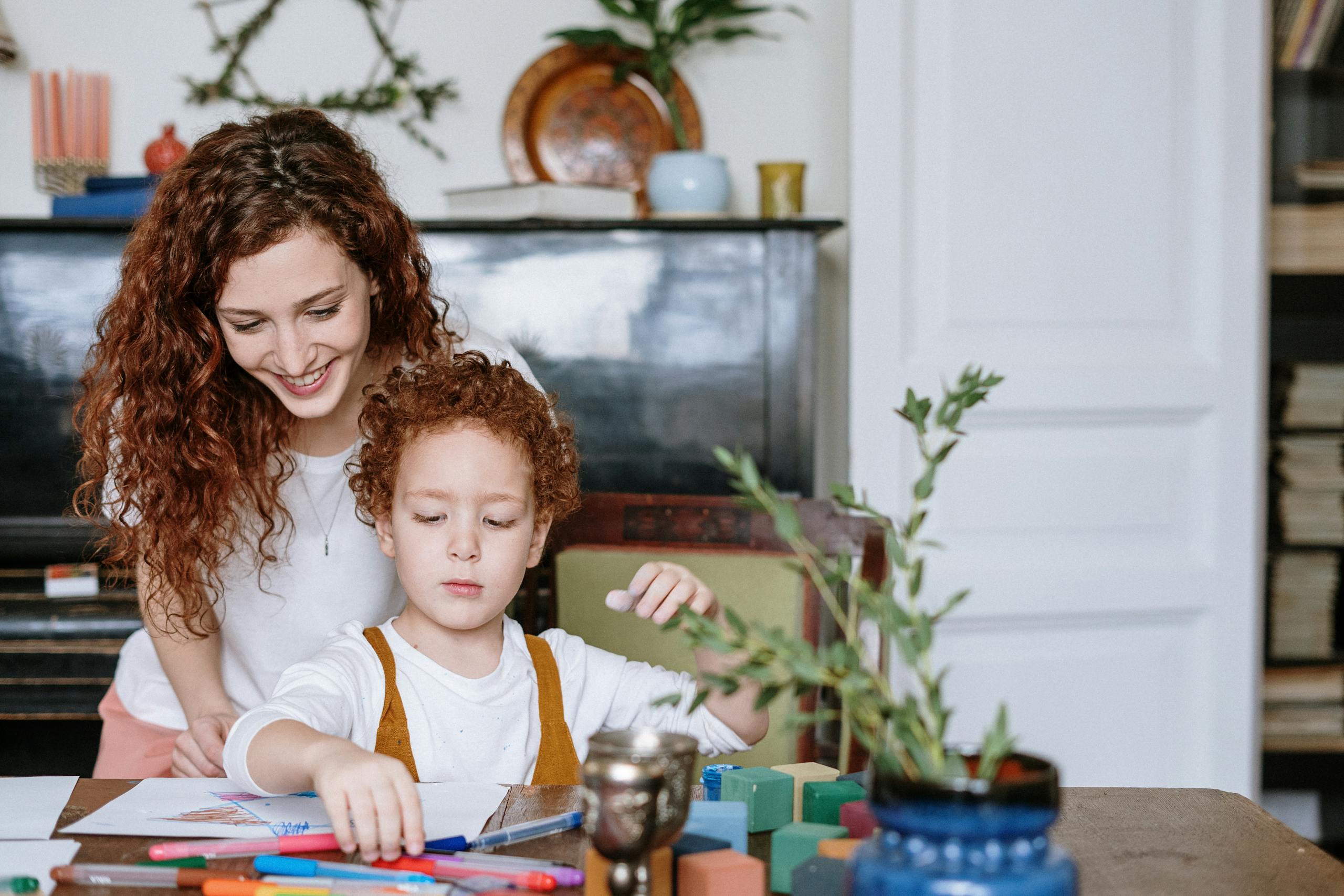

Orphans and vulnerable children carry wounds that don’t always announce themselves loudly. They arrive in new homes, new families, and new relationships with layers of loss, uncertainty, and unspoken need that require something most parenting advice never addresses: the capacity to sit with silence, to notice what isn’t being said, and to offer presence without pressure. Introverted caregivers, often dismissed as too reserved or emotionally contained for the demands of foster care or adoption, may actually be wired in ways that serve these children deeply.
That doesn’t mean it’s easy. Parenting any child stretches you. Parenting a child who has experienced abandonment, institutional care, or chronic instability stretches you in directions you didn’t know existed.

If you’re an introverted person considering foster care, adoption, or a caregiving role with vulnerable children, or if you’re already in one of those roles and wondering whether your quieter nature is an asset or a liability, this is worth thinking through carefully. The Introvert Family Dynamics and Parenting hub explores how introversion shapes every corner of family life, and the specific context of orphans and vulnerable children adds a layer that deserves its own honest conversation.
What Do Orphans and Vulnerable Children Actually Need From a Caregiver?
Children who’ve experienced early loss, whether through parental death, abandonment, neglect, or institutional care, often develop what attachment researchers describe as disorganized or anxious attachment patterns. They’ve learned, sometimes very early, that the adults in their lives are unpredictable. Some become hypervigilant, scanning constantly for signs of rejection. Others shut down entirely, appearing detached when they’re actually terrified.
What these children need isn’t performance. They don’t need a caregiver who fills every silence with cheerful noise or orchestrates elaborate activities to prove love. What they often need, especially in the early stages of placement or adoption, is consistency, calm, and a caregiver who can tolerate ambiguity without panicking. The American Psychological Association’s resources on trauma make clear that recovery from early relational trauma is slow, nonlinear, and deeply dependent on the quality of the caregiving environment over time.
I’ve thought about this a lot in the context of my own wiring. As an INTJ, I process everything internally first. When a situation is charged or uncertain, my instinct isn’t to react outwardly. It’s to observe, to hold the complexity, and to respond from a considered place rather than an emotional reflex. That’s not coldness. It’s a different kind of steadiness. And for a child who’s been burned by unpredictable adults, a caregiver who doesn’t overreact to every behavioral spike might actually feel safer, over time, than one who matches their emotional intensity.
Are Introverts Emotionally Equipped for the Demands of Trauma-Informed Parenting?
This is a question worth sitting with honestly, because the honest answer is: sometimes yes, sometimes no, and it depends on the specific introvert.
Introversion isn’t a single trait. It exists on a spectrum, and it intersects with other dimensions of personality in ways that matter enormously in caregiving contexts. Someone who scores high on agreeableness and openness in addition to introversion may bring extraordinary empathic attunement to a vulnerable child. Someone whose introversion is paired with high rigidity or low emotional tolerance may struggle with the chaos and unpredictability that traumatized children often bring into a home.
If you want a clearer picture of where you actually land across these dimensions, the Big Five Personality Traits Test can give you a useful framework. The Big Five measures openness, conscientiousness, extraversion, agreeableness, and neuroticism, and understanding your profile honestly is far more useful than simply identifying as an introvert and assuming that tells the whole story.
In my advertising years, I managed a creative director who was deeply introverted and also one of the most emotionally attuned people I’ve ever worked with. She picked up on client anxiety before anyone else in the room had registered it. She noticed when junior staff were struggling without them ever saying a word. Her introversion wasn’t a barrier to emotional intelligence. It was, in many ways, the source of it. That kind of perceptive quietness, when it’s paired with genuine warmth, can be exactly what a wounded child needs from a caregiver.
That said, trauma-informed parenting is genuinely demanding. Children who’ve experienced significant early adversity can exhibit behaviors that are confusing, provocative, and exhausting. They may push caregivers away precisely because connection feels dangerous. They may test boundaries relentlessly. They may have sensory sensitivities, emotional dysregulation, or developmental delays that require patience and professional support. No personality type gets a free pass on those realities.
How Does Introvert Overstimulation Affect Caregiving for Vulnerable Children?
One of the most honest challenges introverted caregivers face is the energy equation. Introverts recharge in solitude. Parenting, by its nature, reduces solitude dramatically. Parenting a child with trauma history often eliminates it almost entirely, at least in the early stages, because these children frequently need more contact, more reassurance, and more active presence than neurotypically developing children in stable families.
What happens when an introvert’s battery runs down in the middle of a parenting demand? The risk isn’t cruelty. It’s withdrawal. And for a child who’s already experienced abandonment, a caregiver who goes emotionally quiet when overwhelmed can inadvertently trigger exactly the fear the child most needs to heal from.
This is where self-knowledge becomes not just useful but essential. Highly sensitive introverts, in particular, may find that the emotional weight of caregiving for a traumatized child activates their own nervous system in ways they didn’t anticipate. The intersection of high sensitivity and parenting is something I’ve written about in depth, and if this resonates, the piece on HSP parenting and raising children as a highly sensitive parent explores that specific terrain with care.
The practical implication is this: introverted caregivers of vulnerable children need to build support structures that protect their capacity to show up. That means co-caregivers when possible, respite care, therapy for the caregiver as well as the child, and a community of people who understand what they’re doing. It also means being honest with themselves about their limits before those limits become crises.
What Does Attachment Theory Tell Us About Quiet Caregiving Styles?
Attachment theory, developed through decades of research following the foundational work of John Bowlby and Mary Ainsworth, identifies sensitive responsiveness as the core of secure attachment. Sensitive responsiveness means noticing a child’s signals, interpreting them accurately, and responding appropriately and promptly. It doesn’t mean being loud, effusive, or constantly engaged. It means being attuned.
Quieter caregiving styles, when they’re grounded in genuine attentiveness, align well with what secure attachment actually requires. A caregiver who observes carefully before reacting, who responds to a child’s actual emotional state rather than performing a script of what parenting is supposed to look like, can build the kind of consistent, predictable relationship that helps a traumatized child begin to trust.
A piece of relevant research published through PubMed Central examines how early caregiving environments shape children’s long-term developmental outcomes, reinforcing what practitioners in trauma-informed care have observed for years: quality of presence matters more than quantity of stimulation.

Where introverted caregivers sometimes struggle is in the expressive dimension. Children, especially those who’ve experienced neglect, need caregivers to verbalize warmth explicitly. Thinking warm thoughts about a child isn’t enough. The child needs to hear it, see it on a face, feel it in physical warmth. Introverts who are comfortable with internal experience but less practiced at expressing it outwardly may need to consciously build habits of verbal and physical affirmation, not because their love is insufficient, but because a child who has been hurt needs proof that’s legible to them.
How Should Introverted Caregivers Think About Building Trust With a Traumatized Child?
Trust with a traumatized child is built in the smallest moments, not the grand ones. It’s built in the predictable cup of warm milk at the same time every evening. It’s built in the caregiver who says what they mean and means what they say, every time. It’s built in the adult who stays calm when the child does something designed to provoke rejection, who doesn’t disappear when things get hard, who shows up again and again without requiring the child to perform gratitude or progress.
For introverts, this kind of slow, consistent trust-building often feels more natural than the performative warmth that extroverted parenting culture sometimes celebrates. I’m not suggesting introversion makes anyone a better caregiver by default. But the preference for depth over breadth, for sustained attention over scattered stimulation, can serve these children well when it’s channeled consciously.
Something worth considering is how you come across to others in low-stakes interactions, because children pick up on social ease. The Likeable Person Test offers a way to reflect on the qualities that make people feel welcome and at ease in your presence. For caregivers of vulnerable children, this isn’t about being popular. It’s about whether a child who’s learned to fear adults can read safety in your face and body language.
Early in my career, I managed a client relationship with a Fortune 500 brand whose internal team had been burned by three previous agencies. They came in guarded, skeptical, and ready to find fault. My instinct, as an INTJ, was to let the work speak rather than to charm them. What I learned, slowly, was that they needed both. They needed the substance, yes, but they also needed to feel that I saw them as people, not just as accounts. Children who’ve been hurt by adults need the same thing. Competence is necessary but not sufficient. Warmth has to be visible, even when it doesn’t come naturally to your personality.
What Role Do Professional Support Systems Play for Introverted Caregivers?
No caregiver, introverted or otherwise, should be parenting a traumatized child without professional support. This is not a weakness. It’s a structural reality of what trauma-informed care requires.
For introverted caregivers, the support landscape matters in specific ways. Therapy for the child is essential, and many children who’ve experienced early adversity benefit from specialized approaches like EMDR, play therapy, or dyadic developmental psychotherapy. But the caregiver’s own mental health support is equally important and often overlooked.
Some introverted caregivers find that they need support people who are trained to work with complex family situations. If you’re exploring whether you have the temperament and capacity for a caregiving role, tools like the Personal Care Assistant Test Online can offer a starting point for reflecting on your natural caregiving strengths and areas that might need development.
Physical health also matters more than people admit. Caregiving is physically demanding, and the stress of parenting a child with significant needs can accumulate in the body. If you’re a caregiver who’s been neglecting your own physical wellbeing, resources like the Certified Personal Trainer Test can help you think about whether professional fitness guidance might support your overall resilience. A caregiver who’s running on empty physically cannot sustain the emotional presence these children need.

The Psychology Today overview of family dynamics is a useful starting point for understanding how complex family structures, including adoptive and foster families, function differently from biological family systems and what those differences mean for everyone involved.
How Does Introversion Intersect With the Specific Challenges of Blended and Adoptive Families?
Many vulnerable children who come into new families don’t arrive alone. They arrive with histories, sometimes with siblings, sometimes with ongoing contact arrangements with biological family members, and always with a story that predates the new family’s chapter. For introverted caregivers, managing the complexity of blended or adoptive family dynamics can feel genuinely overwhelming.
Blended families require a particular kind of social negotiation that doesn’t always come easily to people who prefer depth over breadth in their relationships. The Psychology Today resource on blended families outlines some of the specific adjustment challenges these family structures present, including loyalty conflicts, boundary confusion, and the time it takes for genuine attachment to develop.
What I’ve observed in my own life, and in watching colleagues manage complex organizational changes at the agency level, is that introverts often handle structural complexity better than social complexity. Give me a complicated system to analyze and I’m comfortable. Put me in a room full of competing emotional agendas and I have to work harder. Blended family life is often both at once, which means introverted caregivers need to be honest about where they need support and build it in deliberately.
One thing worth naming is that some introverted caregivers carry their own unresolved relational wounds into these family structures. Parenting a child with trauma history can activate old material in unexpected ways. If you’ve ever wondered whether your own emotional patterns might be more complex than ordinary introversion, the Borderline Personality Disorder Test is one resource for beginning to understand emotional reactivity patterns, though any real assessment should always be done with a qualified clinician.
What Does the Research Say About Temperament and Caregiving Capacity?
Temperament is not destiny, but it is a real factor in caregiving. The NIH has documented that temperamental traits observed in infancy show meaningful continuity into adulthood, which tells us something important: the children we’re caring for arrived with their own temperamental wiring, and so did we. The fit between a caregiver’s temperament and a child’s temperament matters.
A highly sensitive introverted caregiver paired with a highly reactive, sensory-seeking child may find the mismatch genuinely exhausting. That doesn’t mean the relationship can’t work. It means both parties need more support, more intentional strategies, and more patience with the adjustment period. Conversely, an introverted caregiver who thrives in quiet environments may be exactly right for a child who’s been overwhelmed by institutional noise and chaos and is ready, finally, for stillness.
Additional research through PubMed Central supports the understanding that caregiver sensitivity and responsiveness, rather than any particular personality profile, predict better outcomes for children in care. What matters is not whether you’re introverted or extroverted, but whether you can be consistently present, attuned, and reliable.

What Practical Strategies Help Introverted Caregivers Sustain Themselves Over Time?
Sustainability is the word I keep coming back to when I think about introverted caregivers of vulnerable children. The work is long. The progress is slow. The emotional demands are real. And the caregiver who burns out in year two cannot give a child the stability that child needs in year five.
A few things I’ve found genuinely useful, both in my own life and in watching others manage high-demand roles with introvert wiring:
Protect micro-recovery moments. You may not get two hours of solitude each day. But fifteen minutes of genuine quiet, without a screen and without demands, can reset something important in an introverted nervous system. Treat these moments as non-negotiable, not indulgent.
Name your limits before you hit them. In my agency years, I learned that the worst time to tell a client you’re at capacity is when you’re already past it. The same principle applies in caregiving. Knowing your warning signs, the internal signals that tell you you’re approaching your edge, and communicating them to a co-caregiver or support person before you crash is a skill worth developing.
Build a small, deep support circle rather than a large, shallow one. Introverts don’t need twelve friends in the caregiving community. They need two or three people who genuinely understand what they’re doing and can be honest with them. Quality of support matters more than quantity.
Don’t confuse your quietness with inadequacy. One of the most corrosive things introverted caregivers do is compare themselves to louder, more visibly enthusiastic caregivers and conclude that they’re doing it wrong. A child doesn’t need a caregiver who performs joy constantly. A child needs a caregiver who is actually there, actually present, actually reliable. Quiet caregiving, done with intention, is real caregiving.
If you want to explore more of the terrain around introversion and family life, the full range of resources in our Introvert Family Dynamics and Parenting hub covers everything from parenting styles to relationship dynamics through an introvert lens.
About the Author
Keith Lacy is an introvert who’s learned to embrace his true self later in life. After 20 years in advertising and marketing leadership, including running agencies and managing Fortune 500 accounts, Keith now channels his experience into helping fellow introverts understand their strengths and build fulfilling careers. As an INTJ, he brings analytical depth and authentic perspective to every article, drawing from both professional expertise and personal growth.
Frequently Asked Questions
Can introverts be effective foster or adoptive parents for children with trauma histories?
Yes, and in some ways introverted caregivers bring specific strengths to this role. Their capacity for calm, consistent presence, careful observation, and depth of attention aligns well with what traumatized children need most. The most important factors are not personality type but caregiver sensitivity, reliability, and access to adequate professional support.
How does introvert overstimulation affect the ability to care for vulnerable children?
Introvert overstimulation is a real risk in high-demand caregiving contexts. When an introverted caregiver’s energy is depleted, they may become emotionally withdrawn, which can inadvertently trigger abandonment fears in children who’ve experienced early relational trauma. Building in deliberate recovery time, co-caregiving arrangements, and professional support helps introverted caregivers sustain their capacity over time.
What attachment styles are most common in orphans and children who’ve experienced institutional care?
Children who’ve experienced institutional care or early parental loss frequently develop anxious, avoidant, or disorganized attachment patterns. These aren’t permanent, but they require patient, consistent caregiving over extended periods to shift. Caregivers who can tolerate slow progress without withdrawing or escalating are best positioned to support these children’s healing.
How can introverted caregivers make sure their warmth is visible to children who need explicit reassurance?
Introverts who are comfortable with internal warmth but less practiced at expressing it outwardly may need to consciously build habits of verbal affirmation, physical warmth, and direct eye contact. This isn’t about changing your personality. It’s about making your genuine care legible to a child who has learned to read adults carefully for signs of safety or danger. Consistent small gestures, repeated over time, build the trust that grand gestures cannot manufacture.
What professional support should introverted caregivers of vulnerable children seek out?
Introverted caregivers benefit from a combination of specialized therapy for the child (such as trauma-focused approaches), their own individual therapy or counseling, respite care arrangements, and connection with a small but reliable community of people who understand the specific demands of foster or adoptive parenting. Physical health support is also important, as caregiving stress accumulates in the body and sustained physical wellbeing underpins emotional capacity.