

Vulnerability in family relationships isn’t a weakness to manage or a risk to minimize. It’s the connective tissue that holds honest relationships together, and for introverts especially, learning to offer it intentionally can reshape the entire emotional climate of a home. When you understand how to be genuinely open with the people closest to you, security follows, not despite the exposure, but because of it.
I spent the better part of two decades running advertising agencies where emotional armor was practically a job requirement. You projected confidence, managed optics, and kept your internal processing invisible. By the time I came home at night, I had almost nothing left to offer my family in terms of real emotional presence. I was physically there, but the walls were still up. What I didn’t understand then was that my introversion wasn’t the problem. The performance I’d layered over it was.

If you’re exploring the broader patterns of how introverts show up within their families, our Introvert Family Dynamics and Parenting Hub covers the full landscape, from parenting styles to sibling dynamics to the specific pressures that come with being the quiet one in a loud household. This article adds another layer to that conversation by focusing specifically on what it means to be genuinely open in family life, and why that openness can feel both terrifying and necessary for introverts.
Why Does Vulnerability Feel Riskier for Introverts in Family Settings?
There’s a particular kind of exposure that comes with being vulnerable inside your own family. With colleagues or acquaintances, you can manage the dosage. You share what’s useful, keep the rest private, and move on. But family doesn’t work that way. The people who live with you, or who raised you, or who you’re raising, see the unguarded version whether you offer it consciously or not.
For introverts, whose default mode involves internal processing before external expression, this creates a specific kind of friction. We tend to work through emotions privately before we’re ready to articulate them. That’s not avoidance. It’s just how our minds function. But families often interpret silence as distance, and distance as rejection. The gap between “I’m still processing” and “I don’t care” can cause real damage when it isn’t named.
What makes this even more layered is the personality dimension. The National Institutes of Health has noted that temperament traits observable in infancy show meaningful continuity into adulthood, which means the introvert in your family isn’t choosing to be reserved. They arrived that way. Understanding that distinction changes how you interpret the silences.
I managed a team of account directors at one of my agencies, and one of them was an INFJ who had a remarkable ability to absorb the emotional undercurrents in any room. I watched her carry the weight of every interpersonal conflict on our floor while never once naming what she was experiencing. She was deeply empathetic but almost completely closed off about her own needs. Her family, I later learned, had the same experience of her. Endlessly caring, genuinely present, but somehow unreachable. That pattern is common in introverts who were taught early that their inner world was either too much or not welcome.
What Does Genuine Openness Actually Look Like in a Family?
Genuine openness in family life isn’t about emotional performance. It’s not crying at the dinner table or narrating your internal state in real time. For introverts, it often looks quieter and more deliberate than that.
It might look like telling your teenager, “I don’t have an answer for that yet, but I want to think about it with you.” It might look like admitting to your partner that a particular interaction drained you instead of pretending you’re fine. It might look like letting your children see you sit with uncertainty instead of projecting false confidence about outcomes you can’t control.
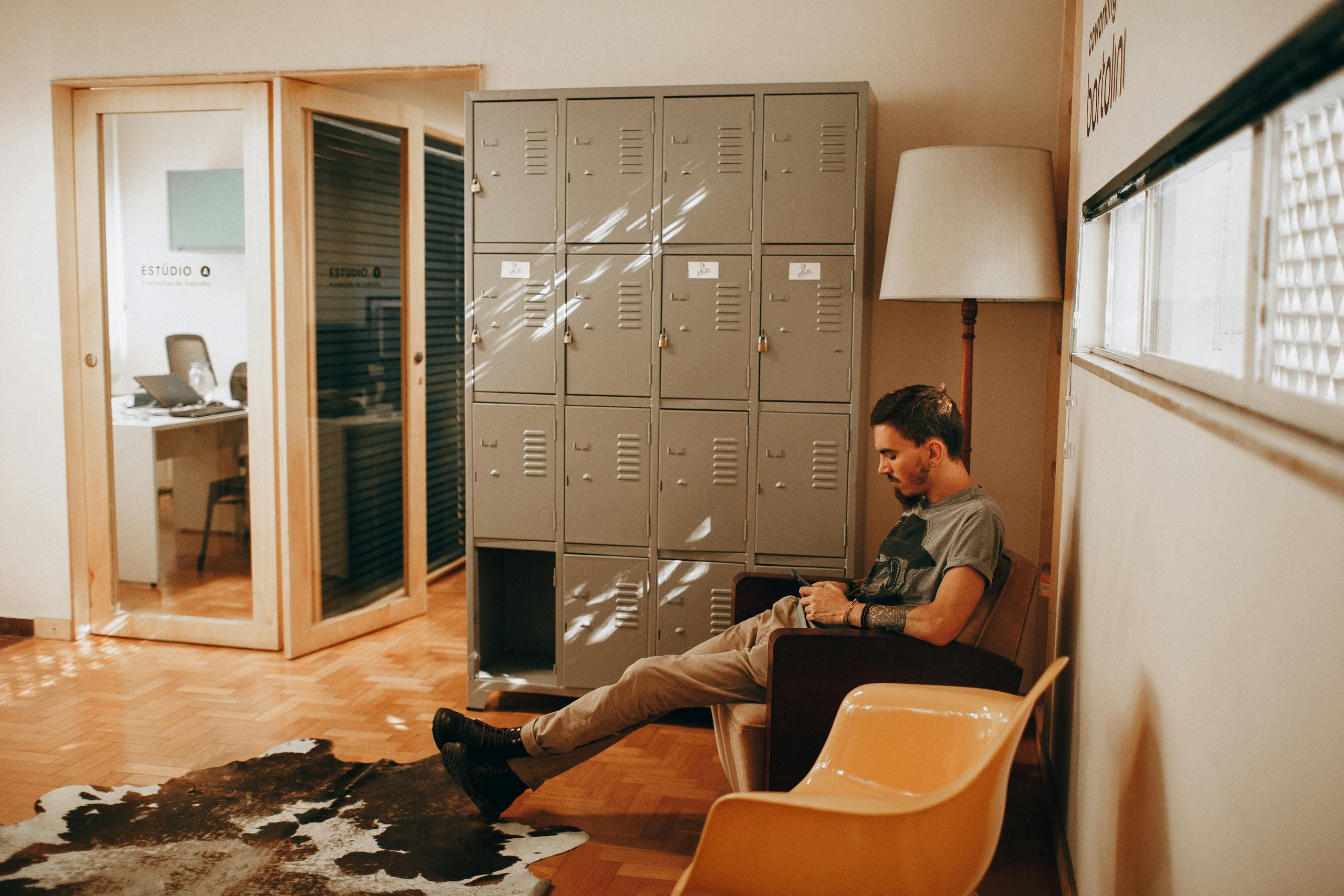
One of the most significant shifts in my own family relationships came when I stopped treating my need for solitude as something to apologize for and started explaining it plainly. “I need about an hour of quiet when I get home before I can really be present” is a vulnerable statement. It reveals a need. It invites the other person into your reality rather than leaving them to interpret your behavior on their own. My family didn’t need me to become more extroverted. They needed me to stop being opaque.
This kind of intentional self-disclosure is especially relevant for parents who identify as highly sensitive. If you’re raising children while managing your own sensory and emotional depth, the HSP Parenting guide on this site is worth reading alongside this piece. The intersection of high sensitivity and introversion creates a specific parenting experience that deserves its own honest conversation.
Understanding your own personality architecture helps here too. If you haven’t mapped your own traits in a structured way, the Big Five Personality Traits Test offers a framework that goes beyond type categories to show you where you actually land on dimensions like openness, agreeableness, and neuroticism. Knowing your specific profile makes it easier to explain yourself to others, not as an excuse, but as context.
How Does Emotional Armor Develop in Introverted Family Members?
Emotional armor doesn’t appear overnight. It accumulates in layers, usually starting in childhood, often in response to environments where vulnerability was met with dismissal, ridicule, or simply silence. For introverts who grew up in extrovert-dominant families, the message was often implicit: your way of processing is too slow, too internal, too much trouble.
The American Psychological Association’s framework on trauma is helpful here, because not all emotional armor comes from dramatic events. Chronic misattunement, repeated experiences of not being understood or having your needs met with confusion, creates its own kind of defensive patterning. For introverts, this often means learning to perform extroversion as a survival strategy while keeping the real interior life completely private.
I did this for years. In client meetings, I was animated, quick, decisive. I’d learned to mirror the energy in the room because that’s what the work demanded. But the cost was significant. I was essentially running two operating systems simultaneously, the external performance and the quiet internal processing that was actually doing the real thinking. By the time I got home, the performance was exhausted and the internal system was overwhelmed. My family got whatever was left, which wasn’t much.
What’s worth examining is whether some of what looks like introversion in your family members might actually be a protective response rather than a natural preference. The Borderline Personality Disorder Test on this site can help clarify whether emotional dysregulation patterns are at play, since BPD and introversion can sometimes be misread as each other, particularly when emotional withdrawal is the presenting behavior. Accurate self-understanding matters before you draw conclusions about why someone in your family goes quiet.

Can Being Likeable and Being Vulnerable Coexist for Introverts?
There’s a common assumption that likeability requires warmth in its most extroverted form: big energy, easy laughter, constant availability. Introverts often feel they’re failing some social test because they don’t naturally project that version of warmth. But likeability is more nuanced than that, and in family contexts especially, it has very little to do with extroverted performance.
The Likeable Person Test explores what actually makes someone easy to connect with, and the findings are often surprising for introverts who’ve assumed they’re at a disadvantage. Qualities like genuine listening, consistency, and the ability to make others feel seen tend to rank high, and these are areas where introverts often naturally excel. The issue isn’t likeability. It’s visibility. Introverts tend to be genuinely likeable in close relationships while being underestimated in broader ones because their warmth doesn’t broadcast.
In family life, this matters because the people closest to you need to feel your warmth, not just observe it from a distance. Vulnerability is one of the primary ways warmth gets communicated in intimate relationships. When you share something real, something uncertain or unresolved, you’re essentially saying: I trust you with my actual self. That message lands differently than any performance could.
One of my longest-running client relationships was built almost entirely on this principle. I managed a Fortune 500 account for nearly seven years, and what kept that relationship intact through multiple rounds of budget cuts and leadership changes wasn’t my agency’s creative output, though that helped. It was that I had been consistently honest with the client about what we didn’t know, what we were uncertain about, what we thought might not work. That honesty created a kind of trust that polished confidence never could have. The same principle applies at home.
How Do Introverts Build Emotional Safety in Their Families Without Losing Themselves?
Emotional safety in a family isn’t built through grand gestures or scheduled vulnerability exercises. It’s built through accumulated small moments of honesty, consistency, and the willingness to show up as yourself rather than as the version of yourself you think is most acceptable.
For introverts, the challenge is that this kind of consistent presence requires energy management. You can’t give what you don’t have, and trying to be emotionally available when you’re depleted doesn’t create safety. It creates resentment, or worse, a kind of hollow performance that your family can feel even if they can’t name it.
What I’ve found more useful is building what I think of as structured openness. This means creating specific contexts where real conversation can happen rather than trying to maintain a constant state of emotional availability. A regular walk with a family member. A standing dinner where phones stay away. A check-in ritual before bed with a partner. These structures give introverts a predictable container for connection, which reduces the anxiety of being caught off guard and increases the quality of the sharing that happens.
There’s also a professional parallel worth considering. Some introverts find that their natural capacity for care and attentiveness makes them genuinely suited for roles that involve supporting others. The Personal Care Assistant Test Online reflects qualities, patience, attentiveness, calm presence, that show up in good caregiving both professionally and within families. Introverts often underestimate how much of what they naturally offer maps onto what families actually need.

The physical health dimension of this is worth acknowledging too. Chronic emotional suppression has real physiological effects. Research published in PubMed Central has examined how emotional regulation patterns connect to broader health outcomes, and the picture that emerges is consistent: people who habitually suppress internal states rather than processing and expressing them tend to carry that suppression in their bodies. For introverts who already process intensely, adding suppression on top of that creates a significant load.
Movement and physical wellness practices can be part of how introverts regulate the internal pressure that builds up. The Certified Personal Trainer Test on this site is worth mentioning here because many introverts find that structured physical practice, often solo or in small groups, becomes one of their most reliable tools for emotional regulation. When the body is well-managed, the emotional system has more capacity for the kind of openness that families need.
What Happens When Vulnerability Is Met With Misunderstanding?
Not every attempt at openness lands well. This is one of the real risks that keeps introverts from trying, and it’s worth being honest about rather than glossing over with reassurance.
Sometimes you share something real and the other person doesn’t know what to do with it. Sometimes your vulnerability is met with advice when you needed acknowledgment, or with dismissal when you needed presence. In family systems especially, where old patterns run deep, a newly open introvert can disrupt the established dynamic in ways that create friction before they create connection.
According to Psychology Today’s overview of family dynamics, the relational patterns within families tend to be remarkably stable over time, which means changing your own behavior within those patterns takes patience. You’re not just changing yourself. You’re changing your role in a system that has been organized around your previous behavior.
I saw this play out clearly when I finally started being honest at home about what running an agency was actually costing me. My family had organized themselves around the version of me that came home already composed. When I started naming the exhaustion, the uncertainty, the moments where I genuinely didn’t know if we were making the right decisions, there was an adjustment period. Some of what I shared was received with confusion because it didn’t match the character they’d been relating to. That adjustment was worth it, but it wasn’t immediate.
The research on interpersonal emotion regulation available through PubMed Central suggests that how we share emotions within close relationships affects not just our own wellbeing but the emotional climate of the whole system. Families where members can express and receive emotional content without it becoming destabilizing tend to be more resilient overall. Building that capacity takes time, especially if the baseline has been emotional distance.
What helps in these moments is lowering the stakes of any single exchange. Vulnerability doesn’t have to mean a major revelation. It can be as small as saying “that was harder than I expected” after a difficult event, or “I’m not sure I handled that well” after a conflict. Small, honest statements build the same trust as larger ones, just more gradually and with less risk of overwhelming a system that isn’t yet equipped to receive the full weight of your interior life.
How Does Introvert Vulnerability Shape the Next Generation?
There’s a generational dimension to this that introverted parents often don’t fully consider. The way you model emotional openness, or its absence, becomes a template for your children’s own relationship with vulnerability.
Children who grow up watching a parent process everything silently, never name uncertainty, and project constant composure often absorb one of two lessons. Either they learn that emotions are private and should stay that way, or they learn that the adults in their lives aren’t fully accessible and they need to manage their own emotional world without much support. Neither outcome serves them well.

Introverted parents who learn to be appropriately open, not burdening their children with adult-level complexity, but honest about the fact that they have feelings and those feelings are manageable, give their children something genuinely valuable. They model that internal depth is not something to be hidden. They show that quiet people can also be emotionally present. And they demonstrate that asking for what you need is not weakness but communication.
The 16Personalities piece on introvert-introvert relationships touches on something relevant here: when two introverts are in relationship, whether as partners or parent and child, the risk isn’t conflict. It’s mutual withdrawal. Both people retreat into their internal worlds and the connection slowly starves. The antidote isn’t becoming more extroverted. It’s becoming more intentionally expressive within the introvert’s natural register.
What I wish I had understood earlier in my parenting is that my children didn’t need me to be a different kind of person. They needed me to let them see the person I actually was. An INTJ who thought carefully before speaking, who found large social gatherings exhausting, who did his best thinking alone, who cared deeply but expressed it in specific and sometimes unexpected ways. That person, shown clearly, would have been enough. The performance was what created distance.
Personality typing can be a useful bridge here, both for understanding yourself and for helping children understand their own temperament. Truity’s exploration of personality type distribution is a good reminder that some types are genuinely rare, and children who are wired differently from most of their peers benefit enormously from parents who can name and validate that difference rather than treating it as a problem to solve.
Family security, the real kind, isn’t built on the absence of vulnerability. It’s built on the presence of people who are willing to be known. For introverts, that’s a practice rather than a natural state. It requires intention, repetition, and a willingness to tolerate the discomfort of being seen. But the families that form around that kind of honesty tend to be more connected, more resilient, and more genuinely safe than the ones built on polished performance.
Explore more resources on how introverts show up in their closest relationships in our complete Introvert Family Dynamics and Parenting Hub, where we cover everything from parenting as a sensitive introvert to handling multigenerational family systems.
About the Author
Keith Lacy is an introvert who’s learned to embrace his true self later in life. After 20 years in advertising and marketing leadership, including running agencies and managing Fortune 500 accounts, Keith now channels his experience into helping fellow introverts understand their strengths and build fulfilling careers. As an INTJ, he brings analytical depth and authentic perspective to every article, drawing from both professional expertise and personal growth.
Frequently Asked Questions
Why do introverts struggle with vulnerability in family relationships?
Introverts tend to process emotions internally before expressing them, which families can misread as distance or disinterest. Many introverts also learned early that their quiet, reflective style didn’t fit the emotional culture of their family, leading them to build protective habits around their inner world. The result is often genuine care paired with limited emotional visibility, which creates connection gaps even in loving families.
How can an introvert be more emotionally open without feeling overwhelmed?
Structured openness tends to work better than trying to maintain constant emotional availability. Creating specific contexts for real conversation, like a regular walk or a standing check-in, gives introverts a predictable container for connection. Small, honest statements made consistently build the same trust as larger disclosures, just more gradually and with less risk of depletion.
Does introversion affect how children experience their parents?
Yes, significantly. Children with introverted parents who model emotional composure without ever naming their internal experience can absorb the message that feelings should stay private. Introverted parents who learn to be appropriately open, honest about having feelings without burdening children with adult complexity, give their children a valuable model of emotional depth as something manageable and expressible rather than something to hide.
What is the difference between healthy introvert privacy and emotional withdrawal?
Healthy introvert privacy involves processing internally before expressing, needing solitude to recharge, and communicating those needs clearly to family members. Emotional withdrawal involves avoiding connection, suppressing rather than processing feelings, and leaving family members without access to your actual emotional state. The difference lies in whether the introvert eventually shares what they’ve processed and whether they communicate their needs rather than disappearing without explanation.
How does vulnerability build security in a family system?
When family members are willing to be genuinely known, including their uncertainties, needs, and limitations, it creates a relational environment where others feel safe doing the same. Security in families isn’t built on the absence of difficulty but on the presence of honest communication about it. For introverts, offering vulnerability intentionally, even in small doses, signals to family members that they have access to your real self, which is the foundation of genuine trust.