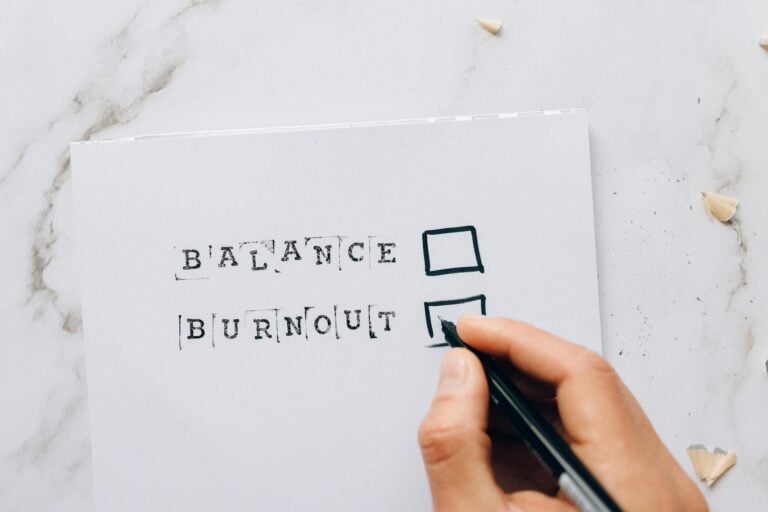

Chronic stress is stress associated with long-term problems, meaning it persists for weeks, months, or even years rather than resolving once a situation passes. Unlike the short burst of tension before a big presentation, chronic stress keeps your nervous system in a state of low-level alarm, quietly eroding your health, your focus, and your sense of self. For introverts, who already process the world at a deeper, more exhausting frequency, this kind of prolonged stress carries particular weight.
This article contains affiliate links. If you purchase through these links, we may earn a small commission at no extra cost to you.
My name is Keith Lacy, and I ran advertising agencies for over two decades. I was good at the work. I was less good at recognizing what that work was doing to me over time. There were years when I thought the constant mental static was just ambition. It wasn’t. It was chronic stress, and it had been accumulating long before I had a name for it.

If you’ve been feeling worn down in a way that doesn’t quite lift even on good days, you’re not imagining it. What you’re experiencing may be more than ordinary stress. This topic sits at the center of everything we explore in the Burnout and Stress Management hub, where we look honestly at what sustained pressure does to introverts and how to find your way back to steadier ground.
What Makes Chronic Stress Different From Everyday Stress?
Most people understand stress as a reaction to something difficult. A deadline. A conflict. A health scare. That kind of stress has a beginning and an end. Your body tightens up, you handle the situation, and things return to baseline. That’s the stress response working exactly as it should.
Chronic stress is something else entirely. It’s what happens when the stressor doesn’t go away, or when stressors pile on top of each other faster than you can recover. Your nervous system, designed to handle short-term threats, gets stuck in an activated state. The alarm bells keep ringing even when the immediate danger has passed.
During the years I was scaling my agency, I operated under sustained pressure that I treated as background noise. Client demands, staff turnover, pitch cycles that never really ended, the constant performance of extroverted leadership. None of those things were temporary problems. They were structural features of the work. And because none of them resolved, my stress never resolved either. I just adapted around it, which is not the same as recovering from it.
Physiologically, the difference matters enormously. Research published in PubMed Central has documented how prolonged activation of the body’s stress response affects cardiovascular health, immune function, and even cognitive performance over time. The body was built to sprint, not to run at a sustained elevated pace indefinitely. When it has to, things start to break down in ways that are subtle at first and significant later.
Why Are Introverts Particularly Vulnerable to Long-Term Stress?
Introversion is not a disorder, and it’s not a weakness. But it does mean that certain environments and demands cost more energy than they do for extroverts. When those environments are the ones you work and live in every day, the cumulative drain is real.
Introverts tend to process experiences more deeply. That’s a genuine strength in many contexts. You notice things others miss. You think before you speak. You bring a quality of attention to problems that produces better solutions. But depth of processing also means that stressful experiences don’t just pass through you. They get examined, turned over, felt fully. A difficult meeting that an extroverted colleague forgets by lunch might still be running in your mind three days later.
As Psychology Today’s introvert energy research has explored, introverts and extroverts genuinely differ in how they generate and spend mental energy. Social interaction, noise, and constant stimulation drain introverts in ways that don’t fully register until the deficit becomes impossible to ignore.
I managed a team of about thirty people at the height of my agency years. Open floor plan, constant meetings, client calls stacked back to back. I watched my introverted team members, several of them INFJs and ISFPs, absorb the ambient stress of that environment in a way my more extroverted colleagues simply didn’t. As an INTJ, I had my own version of the same problem, though I expressed it differently. Where some of them went quiet and withdrew, I went cold and strategic. Both responses were the nervous system trying to protect itself from sustained overload.
Worth noting: highly sensitive introverts carry an additional layer of vulnerability. If you identify as an HSP, the experience of chronic stress can be even more intense. The HSP burnout recognition and recovery guide on this site goes into that specific experience in depth, and it’s worth reading if you suspect your sensitivity is amplifying your stress response.

What Does Chronic Stress Actually Do to Your Body and Mind?
The effects of long-term stress are not just psychological. They’re physical, cognitive, and behavioral, and they tend to compound in ways that make the original stress harder to address.
Physically, sustained stress keeps cortisol elevated. Over time, elevated cortisol disrupts sleep, affects digestion, weakens immune response, and contributes to inflammation. You may notice you get sick more easily, that your sleep feels shallow even when you get enough hours, or that physical tension in your neck and shoulders has become your default state.
Cognitively, chronic stress narrows your thinking. The prefrontal cortex, the part of the brain responsible for nuanced reasoning and decision-making, becomes less effective when stress hormones stay elevated for extended periods. You may find yourself reactive in ways that feel out of character, or struggling to access the kind of deep, clear thinking that usually comes naturally to you.
For an INTJ like me, that cognitive narrowing was one of the most disorienting symptoms. My ability to think through complex problems from multiple angles was something I relied on professionally. When chronic stress started degrading that capacity, I initially attributed it to laziness or distraction. It took me longer than I’d like to admit to recognize that my brain was simply running on depleted resources.
Behaviorally, chronic stress often produces a paradox: the things most likely to help, rest, connection, physical movement, feel least accessible. You pull back from relationships. You lose interest in activities that used to restore you. You push harder at work because productivity feels like the only thing you can control, which adds more stress rather than relieving it.
A study in Frontiers in Psychology examining stress and personality factors found meaningful connections between sustained psychological stress and the depletion of coping resources over time. The longer stress goes unaddressed, the harder it becomes to address.
How Does Chronic Stress Show Up Differently in Introverts?
One of the more complicated aspects of chronic stress in introverts is that its signs can look like introversion itself. Withdrawing socially, needing more alone time, feeling drained by interaction, preferring quiet. These are normal introvert traits. They’re also stress symptoms. That overlap makes it easy to miss what’s actually happening.
The difference tends to show up in quality. An introvert who needs solitude to recharge feels restored after time alone. An introvert experiencing chronic stress feels exhausted regardless of whether they’ve had solitude or not. The alone time stops working the way it used to. That’s a signal worth paying attention to.
Social situations become harder in specific ways, too. What might ordinarily feel like mild discomfort can tip into something sharper. If you’ve noticed that even low-stakes social interactions are producing anxiety rather than just mild fatigue, chronic stress may be amplifying your baseline sensitivity. The piece on stress reduction skills for social anxiety addresses exactly this intersection, and the techniques there are practical rather than theoretical.
There’s also a particular kind of internal noise that chronic stress creates for introverts. Because we process internally, that processing doesn’t stop when we’re stressed. It accelerates. The mind keeps working the problem, cycling through scenarios, replaying conversations, anticipating future difficulties. That mental loop is exhausting in a way that’s hard to explain to people who don’t experience it.
I had a period during a major agency transition where I was waking up at 3 AM most nights with my mind already running through client scenarios. Not anxious exactly, just active. Like my brain had decided sleep was optional and analysis was urgent. That’s chronic stress doing something specific: it keeps the threat-detection system on even when you’re supposed to be resting.
Even something as seemingly minor as a workplace icebreaker can feel genuinely stressful when you’re already running on empty. The question of whether icebreakers are stressful for introverts might sound trivial, but in the context of chronic stress, small demands add up in ways that matter.

What Are the Long-Term Health Consequences Worth Understanding?
Chronic stress isn’t just about feeling bad. Left unaddressed, it contributes to a range of health outcomes that are well-documented and serious.
Cardiovascular health is one of the most studied areas. Sustained stress keeps blood pressure elevated and increases inflammatory markers associated with heart disease. This isn’t a distant theoretical risk. It’s a physiological process that begins relatively quickly and compounds over years.
Mental health consequences are equally significant. Chronic stress is closely linked to the development and persistence of anxiety disorders and depression. The research available through PubMed Central on stress and mental health outcomes makes clear that the relationship between sustained stress and clinical mental health conditions is bidirectional. Stress worsens mental health, and compromised mental health makes stress harder to manage.
Immune function declines under chronic stress in measurable ways. People under sustained stress get sick more often and recover more slowly. For introverts who rely on periods of quiet recovery to maintain their equilibrium, illness adds another layer of depletion to an already taxed system.
Cognitive aging is an area that doesn’t get discussed enough. There’s meaningful evidence that chronic stress accelerates certain aspects of cognitive aging, affecting memory consolidation and executive function over time. For people whose professional and personal identity is tied to their mental acuity, this is worth taking seriously.
None of this is meant to frighten you. It’s meant to make the case that chronic stress deserves the same serious attention you’d give any other long-term health concern. Because it is one.
How Do You Know When Stress Has Become Chronic?
Recognizing chronic stress is harder than it sounds, partly because it develops gradually and partly because many of its symptoms have other plausible explanations. You’re not sleeping well because you’re busy. You’re irritable because of a specific situation. You’re withdrawing because you need introvert time. Each explanation feels reasonable in isolation.
A few markers tend to distinguish chronic stress from ordinary fatigue or situational difficulty.
Persistence across contexts is one. If you feel stressed at work, that’s situational. If you feel stressed at work, at home, during leisure time, and even during activities that used to restore you, that pattern suggests something more systemic.
Physical symptoms that don’t have a clear medical cause are another signal. Persistent headaches, digestive disruption, chronic muscle tension, and frequent illness can all have stress as a contributing factor. If you’ve had those symptoms checked and nothing specific shows up, stress is worth examining as a root cause.
Emotional flatness is one I personally recognize. There’s a particular quality to chronic stress where you stop feeling much of anything clearly. Not acutely sad or anxious, just muted. Decisions that should feel meaningful feel mechanical. Things that used to bring genuine satisfaction feel hollow. That emotional dulling is the nervous system protecting itself by turning down the signal, and it’s a sign that something needs to change.
One practical step is simply asking yourself honestly. That might sound obvious, but many introverts have developed a sophisticated capacity for self-concealment, including from themselves. The resource on asking an introvert if they’re feeling stressed explores why that question is harder to answer than it seems, and why it matters to answer it anyway.
What Actually Helps Introverts Manage Chronic Stress?
Managing chronic stress isn’t about eliminating difficulty from your life. It’s about changing your relationship to sustained pressure so that it doesn’t accumulate unchecked. For introverts, that means approaches that work with your wiring rather than against it.
Protecting genuine rest is foundational. Not passive scrolling or background television, but actual restoration. For introverts, that usually means solitude with low stimulation. Reading. Walking without earbuds. Sitting quietly. The activities that feel indulgent or unproductive are often precisely the ones your nervous system needs most.
The American Psychological Association’s guidance on relaxation techniques outlines several evidence-supported approaches including progressive muscle relaxation, deep breathing, and mindfulness practices. These aren’t soft suggestions. They’re documented physiological interventions that reduce cortisol and activate the parasympathetic nervous system. For introverts, who tend to be comfortable with internal practices, many of these methods are a natural fit.
Grounding techniques are particularly useful during acute stress spikes. The 5-4-3-2-1 technique from the University of Rochester Medical Center is one I’ve returned to more than once. It works by anchoring attention to immediate sensory experience, which interrupts the mental cycling that introverts are prone to under stress. Simple, quiet, and something you can do anywhere without anyone knowing you’re doing it.
Reducing structural stressors matters as much as building coping skills. If your work environment is the primary source of chronic stress, coping techniques can help you manage the symptoms, but they won’t address the cause. I spent years getting better at managing stress without ever questioning whether the environment producing it was actually sustainable. Eventually I had to ask that harder question.
For some introverts, that question leads to reconsidering their income structure entirely. Exploring stress-free side hustles designed for introverts isn’t about abandoning your career. It’s about creating financial breathing room that reduces the pressure of being entirely dependent on a high-stress work environment. That optionality changes how stress feels.
Self-care is another area where introverts often overcomplicate things or add pressure by trying to implement too many changes at once. The guide to self-care for introverts without added stress is worth bookmarking specifically because it approaches the topic realistically. Self-care that creates its own stress load is not actually care.

What Does Recovery From Chronic Stress Actually Look Like?
Recovery from chronic stress is not a single event. It’s a gradual recalibration that happens over time, often with setbacks, and rarely in a straight line. Understanding that from the start makes the process more manageable.
One of the most important shifts is learning to recognize your own early warning signs before stress becomes chronic again. After going through a period of significant burnout in my early fifties, I spent time mapping what the early stages had looked like. The 3 AM waking. The emotional flatness. The way I’d started canceling personal commitments to protect work time. None of those were dramatic symptoms. They were quiet signals I’d trained myself to ignore. Knowing them now means I can respond earlier.
Recovery also requires accepting that some of what felt like productivity was actually avoidance. Staying busy is a very effective way to not feel what chronic stress is doing to you. Slowing down enough to actually recover means tolerating the discomfort of stillness, which can feel counterintuitive when you’ve been running on adrenaline for years.
Social connection plays a role even for introverts, maybe especially for introverts who have been isolating under stress. The connection doesn’t need to be broad. It needs to be genuine. One or two relationships where you can be honest about how you’re actually doing are more restorative than a dozen surface-level interactions. That’s something introverts often already know intuitively, but chronic stress can make even those close relationships feel like effort.
Professional support is worth naming directly. Therapy, particularly approaches that address the cognitive patterns that sustain chronic stress, can accelerate recovery in meaningful ways. There’s no version of this where acknowledging that is a sign of weakness. It’s a pragmatic recognition that some problems benefit from skilled outside perspective.
The Psychology Today piece on the weight of small talk for introverts touches on something relevant here: even seemingly minor social demands carry real cognitive and emotional cost when your reserves are depleted. Recovery means protecting your energy budget with more intentionality than you might have before chronic stress made the stakes clear.
Finally, some of the most useful work in recovery involves examining the beliefs that made chronic stress possible in the first place. The belief that rest is earned rather than necessary. The belief that your value is tied to your output. The belief that needing recovery time makes you less capable than people who seem to handle more. Those beliefs are common among high-achieving introverts, and they’re worth examining with real honesty.
There’s also compelling evidence from academic work on stress and coping strategies that the way people interpret and respond to stressors matters as much as the stressors themselves. Cognitive reframing, building realistic expectations, and developing a more compassionate internal narrative are not soft skills. They’re core components of sustained stress management.

If this topic resonates with you, the full Burnout and Stress Management hub covers everything from early recognition to long-term recovery strategies, with an honest focus on what this experience looks like for introverts specifically.
About the Author
Keith Lacy is an introvert who’s learned to embrace his true self later in life. After 20 years in advertising and marketing leadership, including running agencies and managing Fortune 500 accounts, Keith now channels his experience into helping fellow introverts understand their strengths and build fulfilling careers. As an INTJ, he brings analytical depth and authentic perspective to every article, drawing from both professional expertise and personal growth.
Frequently Asked Questions
What is the main difference between acute stress and chronic stress?
Acute stress is a short-term response to a specific challenge that resolves once the situation passes. Chronic stress is stress associated with long-term problems that persists over weeks, months, or years, keeping the nervous system in a sustained state of activation. While acute stress can actually sharpen focus and performance temporarily, chronic stress depletes physical and cognitive resources over time and contributes to serious health consequences.
Why do introverts seem to experience chronic stress differently than extroverts?
Introverts process experiences more deeply and tend to be more sensitive to environmental stimulation, which means stressors don’t just pass through them quickly. They get examined and felt fully. Introverts also spend more energy in high-stimulation environments like open offices or frequent social demands, which creates a cumulative energy deficit that accelerates stress accumulation. Additionally, the signs of chronic stress in introverts can closely resemble normal introvert behavior, making it harder to recognize when something has shifted from preference to problem.
What are the most common physical symptoms of chronic stress?
Common physical symptoms include persistent sleep disruption, frequent illness or slow recovery from illness, chronic muscle tension particularly in the neck and shoulders, digestive problems, and elevated blood pressure. Over longer periods, chronic stress contributes to inflammation and cardiovascular strain. Many people experiencing these symptoms attribute them to aging or unrelated causes before recognizing stress as a contributing factor.
How can introverts tell whether they’re experiencing chronic stress or just normal introvert fatigue?
The most reliable distinction is whether solitude and rest are actually restorative. Normal introvert fatigue responds to quiet time alone. Chronic stress produces exhaustion that persists regardless of rest. If you’re getting adequate sleep and solitude but still feel depleted, emotionally flat, or unable to access the kind of deep thinking that usually comes naturally to you, chronic stress is worth examining as the cause rather than simply your introvert wiring.
What are the most effective strategies for introverts managing chronic stress?
Effective strategies for introverts include protecting genuine restorative rest rather than passive distraction, using grounding techniques like the 5-4-3-2-1 method during acute stress spikes, addressing structural stressors in work or life rather than only managing symptoms, building a small number of genuinely honest relationships rather than broad social connection, and examining the beliefs about productivity and worth that may be sustaining unsustainable patterns. Professional support through therapy is also a practical option that can meaningfully accelerate recovery.