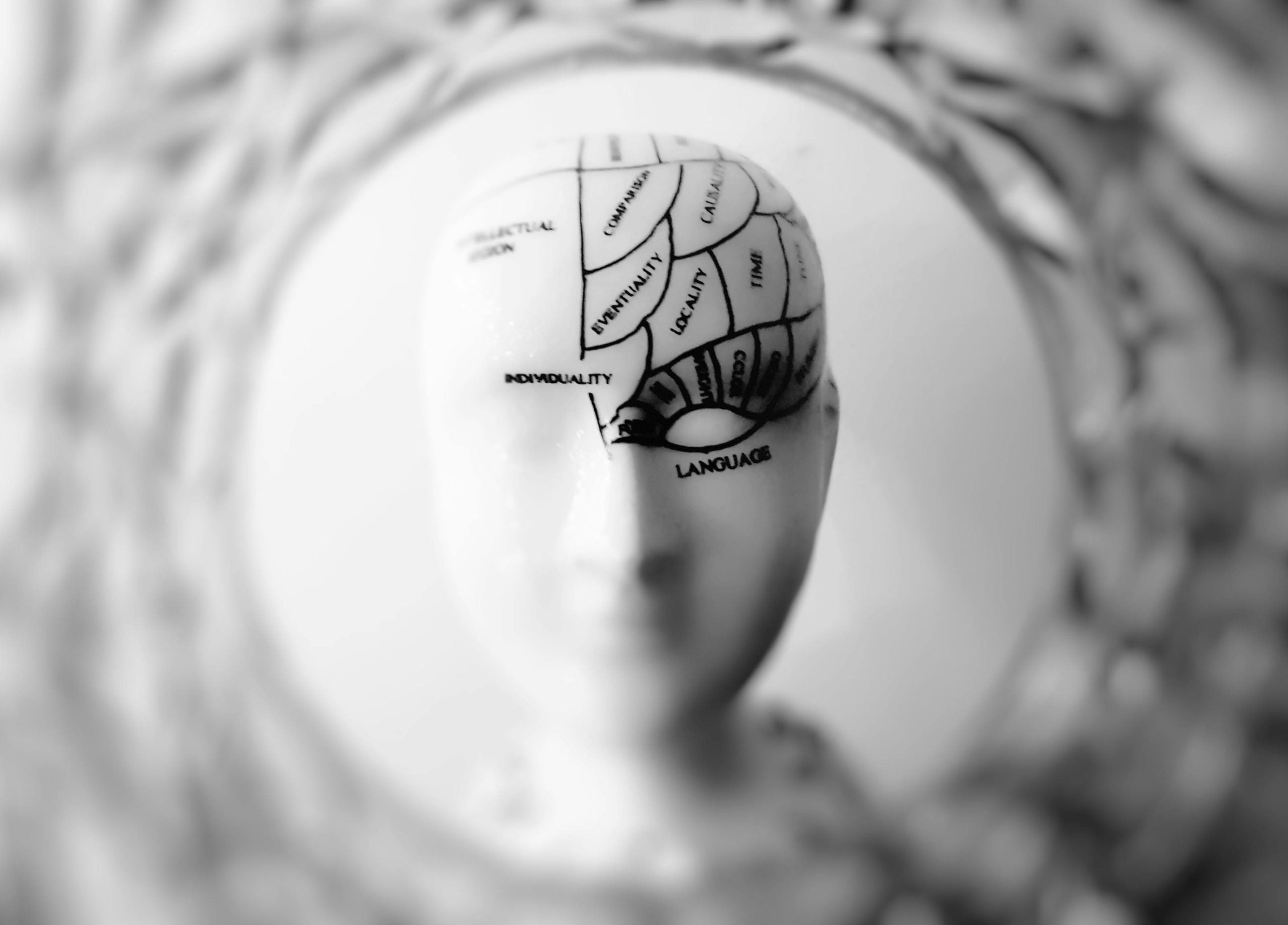

Self-reflection works a lot like computer code: your brain receives input, runs it through a set of internal rules and filters, and produces an output, usually a feeling, a decision, or a behavior. The difference is that most of us never stop to examine the code itself. We just live with the outputs, wondering why we keep getting the same results.
For introverts especially, learning to control self-reflection rather than be controlled by it can change everything. It shifts you from passive observer of your own mental loops to active editor of the patterns driving them.
Self-reflection, when practiced with intention, becomes one of the most powerful tools an introvert can develop. And like any code worth running, it needs structure, debugging, and the occasional rewrite.

Before we get into the mechanics of how this works, it’s worth noting that this topic sits at the intersection of personality, behavior, and emotional intelligence. Our Introvert Social Skills and Human Behavior hub covers a wide range of these themes, and this article goes deeper into the internal architecture that shapes how introverts process experience and relate to others.
What Does It Mean to “Control” Self-Reflection?
Control is a loaded word. When I use it here, I don’t mean suppression or rigid self-management. What I mean is intentionality. The ability to choose when you reflect, what you reflect on, and how long you stay in that reflective state before you act or move on.
Most introverts I know, myself included, are natural reflectors. We process internally before we speak. We replay conversations after they end. We analyze decisions long after they’ve been made. The American Psychological Association defines introversion partly as a preference for internal mental life, which means self-reflection isn’t something we have to cultivate from scratch. It’s already there. What we need is a better relationship with it.
The problem isn’t the reflection itself. The problem is when reflection becomes a loop with no exit condition. In programming terms, that’s an infinite loop: a process that keeps running because no termination point was ever defined. Without a break statement, the code just spins.
I spent years running advertising agencies, managing teams of 30 to 60 people, pitching Fortune 500 clients, and making high-stakes decisions on tight timelines. My INTJ wiring meant I was constantly processing. After every major pitch, I’d run a full internal debrief. After every difficult client conversation, I’d replay it frame by frame. Some of that was useful. A lot of it wasn’t. The productive reflection helped me sharpen my instincts. The unproductive kind just kept me awake at 2 AM, rewriting conversations that were already over.
Controlled self-reflection is the practice of making that distinction in real time.
Why the Computer Code Metaphor Actually Works
I’m not a programmer, but I’ve worked with enough developers over the years to appreciate how they think. Good code is modular, testable, and readable. Bad code is tangled, recursive, and hard to debug. Human thought patterns work the same way.
When you reflect on an experience, you’re essentially running a program. The inputs are the raw data of the experience: what was said, what happened, how it felt. The processing layer is your interpretation, your internal rules about what things mean, what they say about you, and what they predict about the future. The output is how you feel and what you decide to do next.
Most people never examine the processing layer. They just accept the outputs as truth. But if your internal code contains bugs, which it almost certainly does because everyone’s does, then your outputs will be distorted no matter how accurate your inputs are.
A classic bug in introvert mental code looks something like this: “I was quiet in that meeting, therefore people think I have nothing valuable to contribute, therefore I should have spoken more, therefore I’m bad at my job.” Each line of that logic follows from the previous one, but the whole program is running on a flawed assumption in line two. The output, shame and self-doubt, feels real and logical, but it was generated by broken code.
Controlled self-reflection is the process of reading your own code, finding the bugs, and deciding which lines to keep and which ones to rewrite.

How Introverts Get Caught in Reflection Loops
Overthinking is the most common form of uncontrolled self-reflection. And it’s genuinely exhausting. Not just mentally, but physically. When your brain keeps processing the same material without resolution, it consumes real cognitive and emotional resources.
There’s a meaningful difference between reflection and rumination. Reflection is purposeful. You examine an experience, extract what’s useful, and move forward. Rumination is circular. You examine the same experience repeatedly, extract the same pain each time, and stay stuck. If you’ve ever found yourself in that spiral, the work at overthinking therapy offers some grounded approaches to breaking the cycle.
One of my senior account directors at the agency was an INFJ. Brilliant, perceptive, deeply empathetic with clients. She was also one of the most relentless ruminators I’ve ever managed. After a difficult client call, she’d spend the next three days mentally reconstructing everything she’d said and everything she should have said instead. The reflection was real and sincere. But it was costing her more than it was giving her. As her manager and as an INTJ who recognized the pattern from my own experience, I had to help her find a way to close the loop.
What we worked out together was a simple debrief ritual. After a hard call or meeting, she’d give herself 20 minutes to write down what happened, what she’d do differently, and what she’d done well. Then she’d close the notebook and consciously move on. It sounds almost too simple. But defining a deliberate end point changed everything for her. She stopped the loop by building a break statement into her process.
That’s controlled self-reflection in practice.
What Does Healthy Self-Reflection Actually Look Like?
Healthy self-reflection has a few consistent qualities. It’s time-bounded, meaning you enter it with intention and exit it with purpose. It’s oriented toward learning rather than judgment. And it produces something actionable, even if that action is simply deciding to let something go.
A study published in PubMed Central on self-awareness and emotional regulation highlights how metacognition, thinking about your own thinking, plays a central role in emotional health. Introverts tend to have a natural capacity for this kind of meta-level awareness. The challenge is directing it productively rather than letting it run unchecked.
One practice that genuinely changed my relationship with self-reflection was meditation. Not the kind where you try to empty your mind, which never worked for me, but the kind where you observe your thoughts without attaching to them. You watch the code run without getting pulled into the output. Over time, that observational distance gives you more choice about which thoughts to engage and which ones to let pass through. The connection between meditation and self-awareness runs deeper than most people realize, and for introverts, it’s a particularly natural pairing.
Healthy reflection also involves asking better questions. Most reflective loops are triggered by questions like “Why did I say that?” or “What must they think of me?” Those questions point inward and backward, which makes them prone to shame spirals. Better questions point forward: “What would I do differently?” or “What does this tell me about what I actually value?” Those questions generate useful data rather than just emotional noise.

The MBTI Connection: Why Certain Types Reflect Differently
Not all introverts reflect the same way, and personality type plays a real role in how self-reflection operates for different people. If you haven’t yet identified your type, our free MBTI personality test is a solid starting point for understanding your own cognitive wiring.
As an INTJ, my self-reflection tends to be analytical and strategic. I’m naturally looking for patterns, inefficiencies, and improvements. That’s useful in a lot of contexts. In my agency days, it made me a strong systems thinker. But it also meant my self-reflection could become cold and overly critical, stripping out the emotional context that matters. I’d diagnose a problem with precision but miss the human dimension entirely.
INFPs and INFJs, on the other hand, tend to reflect through a values and meaning lens. I managed several INFPs on my creative team over the years, and their self-reflection was rich and emotionally textured. They were asking not just “what happened?” but “what does this mean about who I am?” That depth is a real strength. It produces empathy, authenticity, and genuine insight. But it can also make self-reflection feel existentially heavy, because every experience gets filtered through identity and purpose.
ISTJs and ISFJs tend toward more concrete reflection, focused on what was done, what the standard was, and whether they met it. That’s grounding and reliable. The risk is that it can become overly self-critical when the standard wasn’t met, with less room for contextual nuance.
Understanding your type doesn’t excuse the patterns. It just helps you recognize them faster. And faster recognition means faster course correction.
How Controlled Self-Reflection Improves Your Social Skills
Here’s where this gets practically interesting. Most introverts assume social skills are about external behavior: how you speak, how you listen, how you show up in a room. And yes, those things matter. But the foundation of genuine social skill is internal. It’s your ability to understand your own reactions, regulate your responses, and stay present with another person rather than disappearing into your own head.
When you’re not managing your self-reflection well, social interactions suffer. You’re half-present because part of your brain is already running a post-game analysis of the last thing you said. You hold back because you’re anticipating the reflection loop that will follow if you say something imperfect. You leave conversations feeling drained not by the interaction itself but by the mental commentary running alongside it.
Controlled self-reflection creates space for genuine presence. When you know you have a reliable process for processing experiences after the fact, you don’t need to do it during the conversation. You can actually be there. That shift, from self-monitoring to genuine engagement, is what makes the difference between interactions that feel effortful and ones that feel real. If you’re actively working on this dimension, the resources on how to improve social skills as an introvert connect directly to this internal work.
I noticed this most clearly in client pitches. In my early years running the agency, I’d be in a pitch and simultaneously analyzing how it was going, which meant I wasn’t fully present for either the pitch or the analysis. Once I developed a post-pitch debrief practice, I could actually be in the room. My listening improved. My responses felt more natural. Clients noticed, even if they couldn’t name what had changed.
The same principle applies to everyday conversations. When you’re not afraid of your own reflection process because you’ve learned to manage it, you become a better conversationalist almost automatically. The internal noise quiets enough for you to actually hear the person in front of you. For practical tools on this, the work around how to be a better conversationalist as an introvert is worth exploring alongside this internal framework.
Emotional Intelligence and the Code That Runs Between People
Self-reflection doesn’t happen in isolation. Every reflective loop you run is shaped by your emotional intelligence, your ability to recognize, understand, and manage emotions in yourself and others. And emotional intelligence, in turn, is sharpened by quality self-reflection. They feed each other.
As Psychology Today notes in their piece on the introvert advantage, introverts often bring a particular depth of emotional observation to their interactions. They notice what’s not being said. They pick up on shifts in tone and energy. That perceptiveness is a genuine asset, but only if you’ve developed the emotional intelligence to interpret what you’re noticing accurately rather than projecting your own internal state onto it.
I’ve sat in rooms with people who were clearly emotionally intelligent speakers, people who could read a room, adjust in real time, and make everyone feel genuinely heard. What struck me was that their skill wasn’t about performance. It was about self-awareness. They knew their own triggers, their own blind spots, and their own tendencies well enough that they could set them aside when someone else needed their full attention. The work of an emotional intelligence speaker often comes down to exactly this: teaching people to read their own code before trying to interpret someone else’s.
According to research from the National Institutes of Health, self-awareness is foundational to emotional regulation, which in turn affects how we manage stress, relationships, and decision-making. For introverts, who already have a natural orientation toward internal processing, developing this self-awareness isn’t about building something new. It’s about refining something that’s already running.

When Self-Reflection Becomes a Defense Against Vulnerability
There’s a version of self-reflection that looks productive but is actually avoidance. You analyze the situation instead of feeling it. You build a framework around the pain instead of sitting with it. You turn vulnerability into a problem to be solved rather than an experience to be had.
I’ve done this more times than I can count. After a significant professional failure, my instinct was always to run an analysis. What went wrong? What were the contributing factors? What’s the corrective action? All of that is genuinely useful. But sometimes what was actually needed was just to feel the disappointment, acknowledge it, and let it move through. The analysis was real work, but it was also a way of staying in my head and out of my heart.
This pattern shows up in personal relationships too. After a painful betrayal or loss, the temptation to over-analyze can be overwhelming, especially for introverts who are wired to process internally. The mental loop of trying to make sense of what happened can become its own kind of suffering. The work on how to stop overthinking after being cheated on addresses this specific pattern with real honesty, and the principles apply far beyond that particular context.
Controlled self-reflection means knowing when to think and when to feel. When to analyze and when to simply acknowledge. That discernment is one of the harder things to develop, but it’s also one of the most freeing.
Practical Ways to Build a Healthier Reflection Practice
Changing how you reflect isn’t about willpower. It’s about building structure that supports a different kind of process. A few approaches that have worked for me and for people I’ve worked with over the years:
Define a reflection window. Instead of letting reflection happen whenever your brain decides to launch it, schedule it. Give yourself 15 to 20 minutes at the end of the day to process what happened. Outside that window, when the loop starts, you can acknowledge it and redirect: “I’ll think about that at 9 PM.” Over time, your brain learns the pattern.
Write it down. Externalizing your thoughts changes their quality. When you write out what you’re reflecting on, you move it from your internal processing loop into a form you can actually examine. You can see the logic (or lack of it) more clearly. You can spot the bugs. Journaling doesn’t have to be elaborate. Even a few sentences is enough to create that useful distance.
Separate observation from interpretation. One of the most useful habits I developed was learning to distinguish between what actually happened and what I made it mean. “I was quiet in the meeting” is an observation. “People think I have nothing to contribute” is an interpretation, and a questionable one. Keeping those two layers separate is the beginning of debugging your own code.
Ask a closing question. End each reflection session with a single forward-facing question: “What’s one thing I want to do differently next time?” or “What’s one thing I did well that I want to remember?” This creates a natural exit point and anchors the reflection in something useful.
As Harvard Health notes, introverts who develop intentional social and self-management strategies tend to experience better outcomes across both professional and personal domains. Structure isn’t a constraint on authenticity. It’s what makes authentic engagement sustainable.
The Difference Between Reflection and Self-Criticism
A lot of what passes for self-reflection is actually self-criticism in a more sophisticated costume. It has the vocabulary of growth and learning, but the emotional tone of judgment and shame. And that distinction matters enormously, because self-criticism tends to produce paralysis, while genuine reflection produces movement.
Self-criticism asks: “What’s wrong with me?” Reflection asks: “What can I learn from this?” Self-criticism is retrospective and punitive. Reflection is retrospective and generative. The difference in outcome is significant.
As research from the National Library of Medicine on emotional regulation suggests, self-compassion, treating yourself with the same basic decency you’d extend to someone you care about, is not a soft skill. It’s a functional component of psychological resilience. And it’s directly relevant to how you practice self-reflection. You can be rigorous and honest in your self-examination without being cruel about it.
For introverts who have spent years feeling like their quietness was a deficiency rather than a trait, the internal critic can be particularly loud. Learning to distinguish its voice from the voice of genuine reflection is some of the most important inner work available.

Reflection as a Leadership Tool
One of the most underrated aspects of introvert leadership is the capacity for deep self-examination. Extroverted leadership models often emphasize presence, energy, and external charisma. But some of the most effective leaders I’ve worked with or observed were people who had developed an unusually clear picture of themselves: their biases, their blind spots, their default reactions under pressure.
That clarity doesn’t come from personality. It comes from practice. Specifically, from the practice of controlled, honest self-reflection over time.
In my agency, I made some of my best strategic decisions not in the moment but in the quiet after the moment. After a difficult conversation with a client, I’d reflect on what I’d heard beneath what they said. After a team conflict, I’d examine my own role in it before addressing theirs. That reflective habit made me a more measured, more accurate, and in the end more trusted leader. Not because I had all the answers, but because I was genuinely willing to examine my own assumptions.
As Healthline points out, the inward orientation of introverts, when it doesn’t tip into social anxiety, can be a significant advantage in contexts requiring careful observation and considered response. Leadership is one of those contexts. So is any relationship that matters to you.
The code metaphor holds here too. Good leaders are good debuggers. They’re not afraid to look at their own code, find the errors, and make the changes. That willingness to examine and revise is what separates leaders who grow from leaders who stagnate.
If you’re exploring more of these themes around how introverts relate to themselves and others, the full range of resources in our Introvert Social Skills and Human Behavior hub covers everything from emotional intelligence to conversation skills to the deeper psychology of how introverts move through the world.
About the Author
Keith Lacy is an introvert who’s learned to embrace his true self later in life. After 20 years in advertising and marketing leadership, including running agencies and managing Fortune 500 accounts, Keith now channels his experience into helping fellow introverts understand their strengths and build fulfilling careers. As an INTJ, he brings analytical depth and authentic perspective to every article, drawing from both professional expertise and personal growth.
Frequently Asked Questions
What is controlled self-reflection and why does it matter for introverts?
Controlled self-reflection is the intentional practice of examining your thoughts, feelings, and behaviors with purpose and structure, rather than letting your mind run unguided loops. For introverts, who naturally gravitate toward internal processing, the challenge isn’t developing the capacity to reflect but learning to direct it productively. Controlled self-reflection helps you extract genuine insight from experience without getting trapped in rumination or self-criticism. It matters because the quality of your self-reflection directly shapes the quality of your decisions, relationships, and emotional wellbeing.
How is self-reflection like computer code?
The comparison works because both involve inputs, processing rules, and outputs. When you experience something, your brain processes it through a set of internal rules, assumptions, beliefs, and interpretations, and produces an output in the form of a feeling or decision. Just like computer code, if those internal rules contain errors, the outputs will be distorted even when the inputs are accurate. Controlled self-reflection is the process of examining that processing layer, identifying the bugs, and rewriting the lines of logic that aren’t serving you.
What’s the difference between healthy self-reflection and rumination?
Healthy self-reflection is purposeful, time-bounded, and oriented toward learning. You examine an experience, identify what’s useful, and move forward with something actionable. Rumination is circular and unresolved. You revisit the same material repeatedly without reaching new understanding, often reinforcing negative feelings rather than processing them. The practical difference lies in whether your reflection has an exit point. Building deliberate closing rituals, like writing a brief debrief or asking a single forward-facing question, creates the structure that separates reflection from rumination.
How does self-reflection connect to emotional intelligence?
Self-reflection and emotional intelligence are mutually reinforcing. Quality self-reflection sharpens your ability to recognize and interpret your own emotional responses, which is the foundation of emotional intelligence. And higher emotional intelligence improves the quality of your self-reflection by giving you more accurate tools for interpreting what you observe. For introverts, developing this connection is particularly powerful because the natural inward orientation already provides a strong starting point. The goal is to make that internal processing more accurate and more compassionate over time.
Can self-reflection become a way of avoiding vulnerability?
Yes, and this is one of the more subtle patterns to watch for. Analysis can function as a protective layer that keeps you in your head and away from the emotional reality of an experience. When reflection becomes a way of managing pain rather than processing it, it loses its value and can actually extend suffering. Recognizing this pattern requires a degree of honest self-observation: are you reflecting to learn, or reflecting to avoid? Healthy self-reflection includes knowing when to set the analysis aside and simply acknowledge what you’re feeling without immediately trying to solve it.