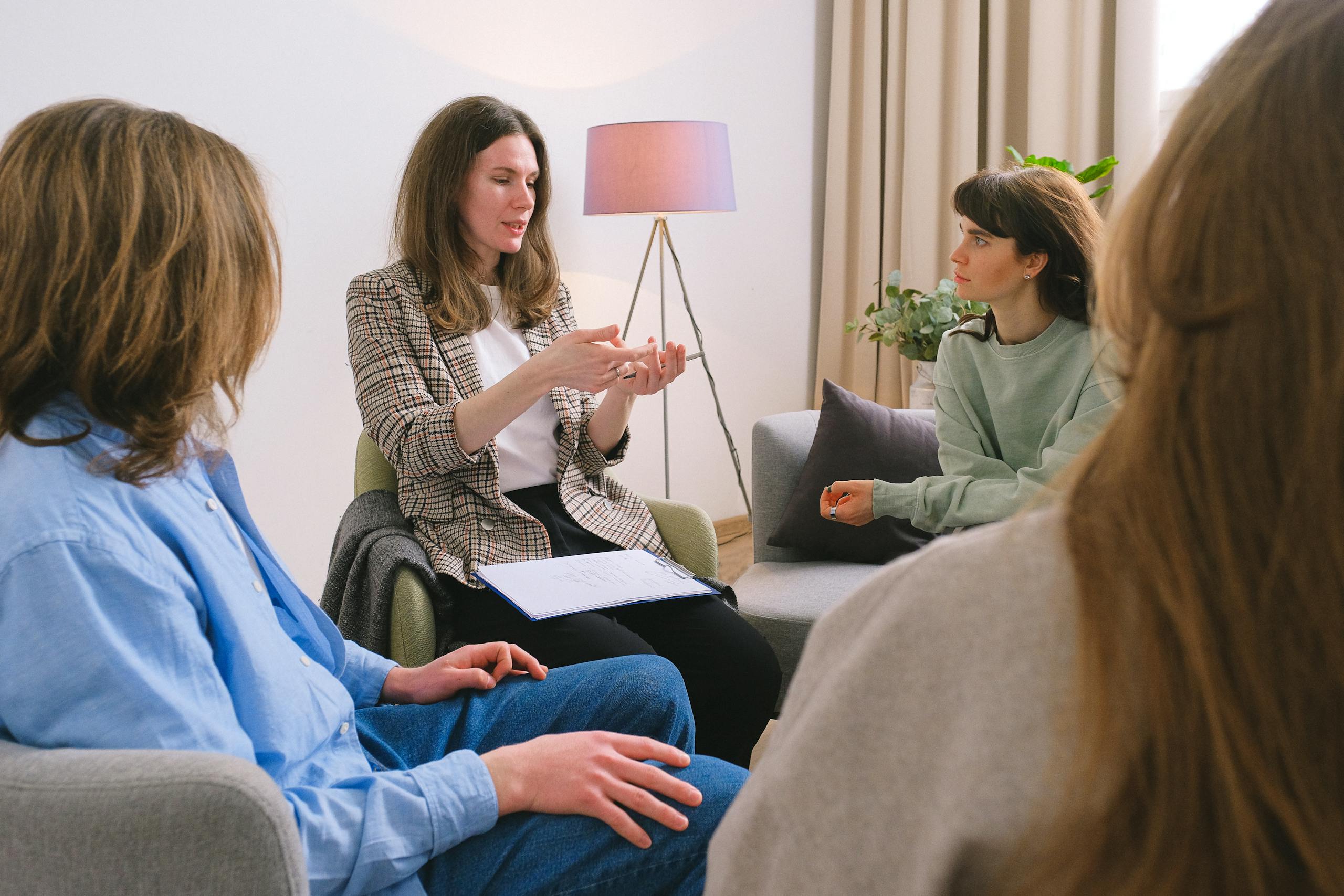

A group exercise for introverts and extroverts works best when it’s designed to draw on how each personality type actually processes information, rather than assuming everyone engages the same way. Introverts tend to think before they speak, prefer depth over speed, and produce their best ideas after quiet reflection. Extroverts often think out loud, energize through interaction, and generate momentum through spontaneous exchange. A well-structured group activity makes room for both.
Getting this balance right isn’t just a nice idea. It changes the quality of what a group produces together.
If you’ve ever sat in a brainstorming session watching the loudest voices dominate while quieter colleagues stared at the table, you already know what a poorly designed group exercise looks like. And if you’ve ever been one of those quiet people with a fully formed idea that never made it out of your head because the conversation moved too fast, you know exactly what gets lost when group dynamics aren’t considered thoughtfully.

Before we get into specific formats and techniques, it helps to understand the broader landscape of personality and energy. Our Introversion vs. Extroversion hub covers the full spectrum of how people relate to social energy, from deeply introverted to highly extroverted and everything in between. The dynamics that shape group exercises live right at the heart of that conversation.
Why Do Standard Group Exercises Often Fail Introverts?
Most group exercises are built around extroverted defaults. Open-floor brainstorming. Rapid-fire idea sharing. “Whoever talks first sets the agenda” dynamics. These formats aren’t intentionally exclusionary, but they consistently produce the same result: extroverts dominate, introverts disengage, and the group ends up with a narrower pool of ideas than it could have had.
Career Coaching for Introverts
One-on-one career strategy sessions with Keith Lacy. 20 years of Fortune 500 leadership as an introvert, now helping others build careers that work with their wiring.
Learn More50-minute Zoom session · $175
I watched this play out for years running advertising agencies. We’d pull the creative team into a conference room, throw a brief on the whiteboard, and say “okay, let’s go.” Within two minutes, three extroverted account leads were building on each other’s energy and the room had a direction. The quieter strategists and designers, many of whom had been thinking about the problem for days, couldn’t find a foothold in the conversation. Their ideas surfaced later, in hallways, in emails, sometimes never.
What I eventually figured out was that the problem wasn’t the people. The problem was the format. Once I started structuring sessions differently, the quality of what we produced changed noticeably.
Part of what makes this complicated is that not everyone fits neatly into “introvert” or “extrovert.” Some people on my teams were what I’d describe as middle-ground types, drawing energy from both solitude and social interaction depending on context. If you’re curious where you fall on that spectrum, the Introvert Extrovert Ambivert Omnivert Test is a useful starting point for understanding your own tendencies before you try to design exercises for a group.
What Makes a Group Exercise Actually Work for Both Types?
The short answer is structure. Not rigid, suffocating structure, but intentional design that creates multiple entry points into the conversation.
Extroverts thrive when they can talk through ideas in real time. They often don’t know exactly what they think until they say it out loud and hear themselves say it. That’s not a flaw, it’s how their minds work. Introverts, on the other hand, typically arrive at their clearest thinking through internal processing first. They need time to sit with a question before they’re ready to articulate an answer. A group exercise that accommodates both of these realities will almost always outperform one that only accommodates one.
There’s a meaningful distinction worth understanding here between people who are fairly introverted versus extremely introverted. Someone who leans mildly introverted might need just a few minutes of quiet thinking before they’re ready to engage in group discussion. Someone who is deeply introverted may need the option to contribute in writing, or to have questions shared in advance so they can prepare. Designing a group exercise means accounting for this range, not just the average.

Some practical elements that consistently help:
Pre-work or advance prompts. Sharing the exercise question or scenario before the session gives introverts time to process. Extroverts won’t be harmed by this. They’ll still generate ideas in the moment, but they’ll also arrive with more depth than they’d have had otherwise.
Individual reflection time built into the session. Even five minutes of quiet individual writing before group discussion changes who contributes. I started doing this in client presentations after noticing that the first voice in the room often set a direction that was hard to redirect, even when better ideas existed. Giving everyone a moment to write down their initial thoughts before anyone spoke leveled the field.
Small group breakouts before full-group sharing. Introverts often speak more freely in groups of two or three than in a room of ten. Breaking into pairs or triads first, then reporting back to the full group, gives quieter participants a lower-stakes entry point.
Multiple contribution formats. Written, verbal, visual. Not everyone’s best thinking comes out in spoken words under time pressure. Offering sticky notes, shared documents, or even a simple whiteboard where people can add ideas anonymously creates more pathways into the conversation.
How Do You Design a Specific Group Exercise That Balances Both?
Let me walk through a format I developed over time that worked reliably across different team compositions. I called it the “think, pair, share, expand” model, though the name matters less than the structure.
Phase one: Individual reflection (5-10 minutes). Everyone receives the same prompt and works silently. They write down their initial responses, questions, or ideas without discussing them with anyone. This is the phase that introverts need and that extroverts often resist at first. Hold the line on the silence. It’s worth it.
Phase two: Paired conversation (5-7 minutes). Each person shares what they wrote with one partner. Extroverts get to talk through their thinking. Introverts get a low-pressure audience. Both parties refine their ideas through the exchange. The conversation is contained enough that quieter voices aren’t drowned out.
Phase three: Full group sharing (10-15 minutes). Each pair reports their key insight or idea to the group. Because both people have already talked through the idea together, the introvert in the pair often feels more confident presenting it at this stage. The idea has been tested once already.
Phase four: Group expansion (10-15 minutes). Now the group builds on what’s been shared. Extroverts can do what they do naturally, connecting ideas, building momentum, finding patterns. Introverts, having already contributed in phases one through three, can choose to engage verbally or continue contributing through written additions.
This structure doesn’t suppress extroverts. It simply delays the open-floor portion until there’s already a richer pool of ideas on the table. The conversations that happen in phase four are genuinely better because of what came before them.
Understanding what it means to be extroverted, specifically how extroverts draw energy from social interaction and external stimulation, helps explain why they sometimes resist the quiet phases of structured exercises. It’s not impatience or disrespect. It’s that silence genuinely feels less productive to them. If you want a clearer picture of how extroversion actually functions, what does extroverted mean breaks down the core traits in a way that’s useful for anyone designing mixed-personality group activities.

What Role Does Personality Type Complexity Play in Group Dynamics?
One thing that complicated my thinking for years was assuming that everyone on a team was clearly one thing or the other. In practice, personality is more layered than a binary. Some people behave like extroverts in familiar settings and like introverts in new ones. Others shift depending on energy levels, stress, or the specific topic being discussed.
The distinction between an omnivert and an ambivert is worth understanding here. Ambiverts tend to sit comfortably in the middle of the introvert-extrovert spectrum most of the time. Omniverts swing more dramatically between the two poles depending on context. Both types exist on teams, and both can be misread. An omnivert who’s in a quiet phase might be mistaken for disengaged when they’re actually processing intensely.
I had a senior copywriter at one of my agencies who was like this. In client presentations, she was animated, quick, verbally sharp. In internal brainstorms, she’d go almost completely silent, filling notebooks with ideas that she’d share only after the session. Her colleagues sometimes read her silence as indifference. Once I understood what was actually happening, I started giving her a specific role in sessions: she’d review everyone’s written contributions during phase one and synthesize themes, which she’d present in phase three. That structure fit how she actually worked, and her contributions became some of the most valuable in the room.
The challenge with group exercises is that you’re often designing for people whose personality nuances you don’t fully know. That’s why building in multiple modes of participation, rather than optimizing for one type, is the more reliable approach.
Conflict is another dimension worth addressing. Mixed-personality groups don’t just produce different thinking styles, they sometimes produce friction when those styles collide. An extrovert who talks over a quieter colleague isn’t necessarily being aggressive. An introvert who doesn’t respond immediately to an idea isn’t necessarily being dismissive. Understanding the communication patterns of each type reduces misinterpretation. A piece from Psychology Today on introvert-extrovert conflict resolution offers a practical framework for when those tensions do surface in group settings.
How Does Conversation Depth Affect Group Exercise Quality?
One of the consistent frustrations I heard from introverted team members over the years was that group exercises felt shallow. Too much surface-level idea generation, not enough real examination of what those ideas actually meant or whether they’d hold up.
Introverts tend to gravitate toward depth. They’re often more comfortable with a conversation that goes somewhere meaningful than with one that covers a lot of ground quickly. Extroverts, in many cases, find breadth energizing. They like generating options, making connections, keeping things moving. Both tendencies have value. The tension between them is actually productive if the exercise is structured to use both.
One way to do this is to separate the generative phase from the evaluative phase explicitly. Use the extroverted energy to generate a wide range of ideas without judgment. Then shift into a more analytical mode where the introvert’s tendency toward depth becomes an asset. Evaluation, critique, and refinement are areas where introverts often shine, and designing exercises that include a dedicated evaluation phase gives them a moment where their natural inclinations are exactly what the group needs.
There’s real value in the kind of depth that introverts bring to conversation. A piece from Psychology Today on why deeper conversations matter speaks to why surface-level interaction often leaves introverts feeling like the exchange wasn’t worth the energy it cost them. In a group exercise context, building in depth isn’t just about accommodating introverts. It produces better outcomes for everyone.

What Does the Research Say About Mixed-Personality Teams?
The evidence on personality diversity in teams points in a consistent direction: groups that include a range of personality types tend to make better decisions than homogeneous groups, provided the group structure allows different types to contribute meaningfully. The operative phrase is “provided the structure allows it.” Diversity of personality doesn’t automatically produce better outcomes. It only does so when the group’s process is designed to draw on that diversity.
Work published in PubMed Central on personality and group performance supports the idea that individual personality traits interact with group context in ways that affect collective output. The structure of the group activity, including how ideas are solicited, how decisions are made, and how participation is distributed, shapes whether individual strengths get expressed or suppressed.
Additional work on group cognition and individual differences, including research available through PubMed Central on cognitive diversity, suggests that the way groups process information collectively is shaped by the range of individual processing styles present. Groups that include both reflective and expressive thinkers tend to catch more errors and generate more complete analyses, again, when the structure supports both modes.
What this means practically is that the instinct to build diverse teams is sound. The execution is where most groups fall short. You can assemble a room full of introverts and extroverts and still end up with a process that only draws on half the room’s capacity.
How Can You Tell If Your Group Exercise Design Is Actually Working?
There are a few signals worth watching for. The first is participation distribution. After a session, ask yourself honestly: who contributed ideas that made it into the final output? If it’s consistently the same three people, and they’re consistently the most extroverted people in the room, your exercise design has a problem.
The second signal is post-session feedback. Introverts often have more to say after a group exercise than they were able to contribute during it. If you’re consistently hearing “I thought of this later” or “I didn’t get a chance to mention” from quieter team members, that’s a sign the format isn’t creating enough space for them in real time.
The third signal is idea quality over time. Groups that consistently draw on the full range of their members’ thinking tend to produce more durable ideas. If your team’s outputs feel like they’re missing something, like there’s a critical perspective that never quite surfaces, it’s worth examining whether your process is structurally excluding certain types of thinkers.
One thing I started doing in my agencies was a brief written reflection at the end of every major group session. Each person answered two questions: what idea from today do you think has the most potential, and what idea do you wish had gotten more attention? The answers were revealing. The ideas that introverted team members wished had gotten more attention were often the ones with the most strategic depth. Giving them a written channel to surface those ideas after the fact was better than losing them entirely, but it also showed me that my in-session design still needed work.
Not everyone in a group exercise will know their own personality type well enough to articulate what they need. If you’re working with a team that hasn’t explored this territory, encouraging people to take an introverted extrovert quiz before a major session can surface useful self-awareness. People who understand their own tendencies are better equipped to advocate for what they need in a group setting, and better equipped to understand why their colleagues engage differently.
What About Virtual and Hybrid Group Exercises?
Remote and hybrid settings have changed the group exercise landscape in ways that are genuinely interesting from a personality perspective. Many introverts find virtual formats less draining than in-person ones. The physical distance reduces some of the sensory intensity of group interaction. Written chat functions give introverts a parallel contribution channel that doesn’t require interrupting the verbal flow of conversation.
Extroverts, on the other hand, often find virtual formats frustrating. The energy that comes from physical presence, reading body language, feeding off the room’s momentum, is harder to access through a screen. This creates an interesting inversion of the usual dynamic. Virtual group exercises can inadvertently disadvantage extroverts while creating more space for introverts.
The best hybrid approaches I’ve seen acknowledge both realities. They use the written chat as a legitimate contribution channel, not just a side conversation. They build in breakout rooms for small-group discussion. They share prompts in advance so everyone arrives prepared. And they rotate who speaks first so the same voices don’t always set the agenda.
There’s also something worth noting about the different subtypes that can appear in virtual group settings. Someone who seems like a classic extrovert in person might behave quite differently on a video call. The distinction between an otrovert and an ambivert captures some of this nuance, specifically the idea that social context shapes how personality traits actually express themselves. A group exercise designed for a room may need real adjustment to work well on a screen.

How Do You Facilitate a Group Exercise Without Favoring One Type?
Facilitation style matters as much as exercise structure. A facilitator who naturally calls on people who raise their hands will consistently favor extroverts. One who defaults to open-floor discussion will do the same. Intentional facilitation means actively creating space for quieter voices without putting them on the spot.
Some techniques that work:
Round-robin sharing. Going around the room and giving each person a turn to share one idea removes the pressure of having to compete for airtime. It also signals that everyone’s contribution is expected, which can actually reduce anxiety for introverts who worry about whether it’s appropriate to speak.
Explicit think time before open discussion. Announcing “let’s take two minutes to think before we start sharing” normalizes the pause. It stops extroverts from filling silence immediately and gives introverts permission to use the time they need.
Written input before verbal discussion. Shared documents, sticky note walls, or digital whiteboards where people add ideas before the verbal conversation begins create a record of thinking that doesn’t get lost when the loudest voice in the room takes over.
Redirecting and summarizing. A good facilitator actively draws attention to ideas that were mentioned quietly or in writing but haven’t been fully explored. “I noticed someone wrote this earlier, can we spend a minute on it?” is a powerful move that doesn’t require the introverted contributor to re-advocate for their own idea.
As an INTJ, I’ve always found facilitation more natural than many people expect from someone with my personality type. My preference for systems and structure meant I was drawn to designing processes that worked, even if the social energy of running them cost me something. What I had to learn was that good facilitation isn’t about performing extroversion. It’s about creating conditions where the best thinking can surface, regardless of whose it is.
The broader dynamics of how introverts and extroverts interact, including the different ways they communicate, process conflict, and contribute to shared goals, are explored across our Introversion vs. Extroversion hub. If you’re designing group exercises for a team or organization, that full collection of resources is worth spending time with.
About the Author
Keith Lacy is an introvert who’s learned to embrace his true self later in life. After 20 years in advertising and marketing leadership, including running agencies and managing Fortune 500 accounts, Keith now channels his experience into helping fellow introverts understand their strengths and build fulfilling careers. As an INTJ, he brings analytical depth and authentic perspective to every article, drawing from both professional expertise and personal growth.
Frequently Asked Questions
What is the best group exercise format for a team with both introverts and extroverts?
A structured format that separates individual reflection from group discussion works well for mixed-personality teams. Starting with silent individual writing, moving into paired conversation, then expanding to full-group sharing gives introverts time to process while still creating space for extroverts to engage verbally. what matters is building in multiple modes of contribution rather than relying on open-floor discussion alone.
Why do introverts struggle in traditional group brainstorming sessions?
Traditional brainstorming sessions favor people who think out loud and generate ideas quickly under social pressure. Introverts typically produce their best thinking through internal reflection first, and they often need more time before they’re ready to articulate an idea verbally. Open-floor formats with no quiet processing time create conditions that consistently disadvantage introverted thinkers, even when those thinkers have valuable contributions to make.
How can facilitators create space for introverts without putting them on the spot?
Round-robin sharing, advance prompts, and written contribution channels all help introverts engage without the pressure of competing for airtime. Facilitators can also actively draw attention to written ideas that haven’t been verbally explored, which surfaces introverted contributions without requiring the contributor to re-advocate for their own thinking. Announcing explicit think time before open discussion also normalizes the pause that introverts need.
Do virtual group exercises work better or worse for introverts?
Many introverts find virtual formats less draining than in-person group exercises because the physical intensity of group interaction is reduced. Written chat functions also give introverts a parallel contribution channel that doesn’t require interrupting verbal conversation. That said, virtual formats can disadvantage extroverts who draw energy from physical presence and real-time social momentum. The most effective virtual exercises acknowledge both realities and build in multiple participation modes.
How does personality type complexity affect group exercise design?
Not everyone falls neatly into “introvert” or “extrovert.” Ambiverts and omniverts bring additional complexity to group dynamics, and people’s behavior often shifts depending on context, energy levels, or topic familiarity. Designing group exercises that offer multiple entry points into participation, rather than optimizing for a single personality type, is more reliable than trying to predict exactly how each person will engage. Structure that works for a range of types tends to produce better outcomes than structure designed for the assumed average.