

A critical care med journal is not what most people think of when they want to understand the inner world of a highly sensitive person. Yet the intersection of intensive medical documentation, emotional weight, and the psychology of sensitivity offers something genuinely useful: a framework for understanding why sensitive, introspective people carry so much, and what that cost looks like over time. For introverts and highly sensitive people who work in high-stakes environments, or who simply live with high internal pressure, the lessons embedded in critical care medicine translate in surprising and clarifying ways.
My own experience with this kind of pressure did not come from a hospital. It came from running advertising agencies under Fortune 500 contracts where every campaign launch felt like a code blue. The stakes were financial and reputational, the emotional load was constant, and I processed all of it quietly, internally, the way INTJs tend to do. What I eventually understood is that the same psychological dynamics that affect sensitive professionals in critical care settings affect sensitive people everywhere. The environment changes. The internal experience does not.
If you want to go deeper on the mental health dimensions of introversion and sensitivity, the Introvert Mental Health Hub covers the full range of what sensitive, introspective people carry and how to work through it with honesty and self-awareness.
What Does a Critical Care Med Journal Actually Document?
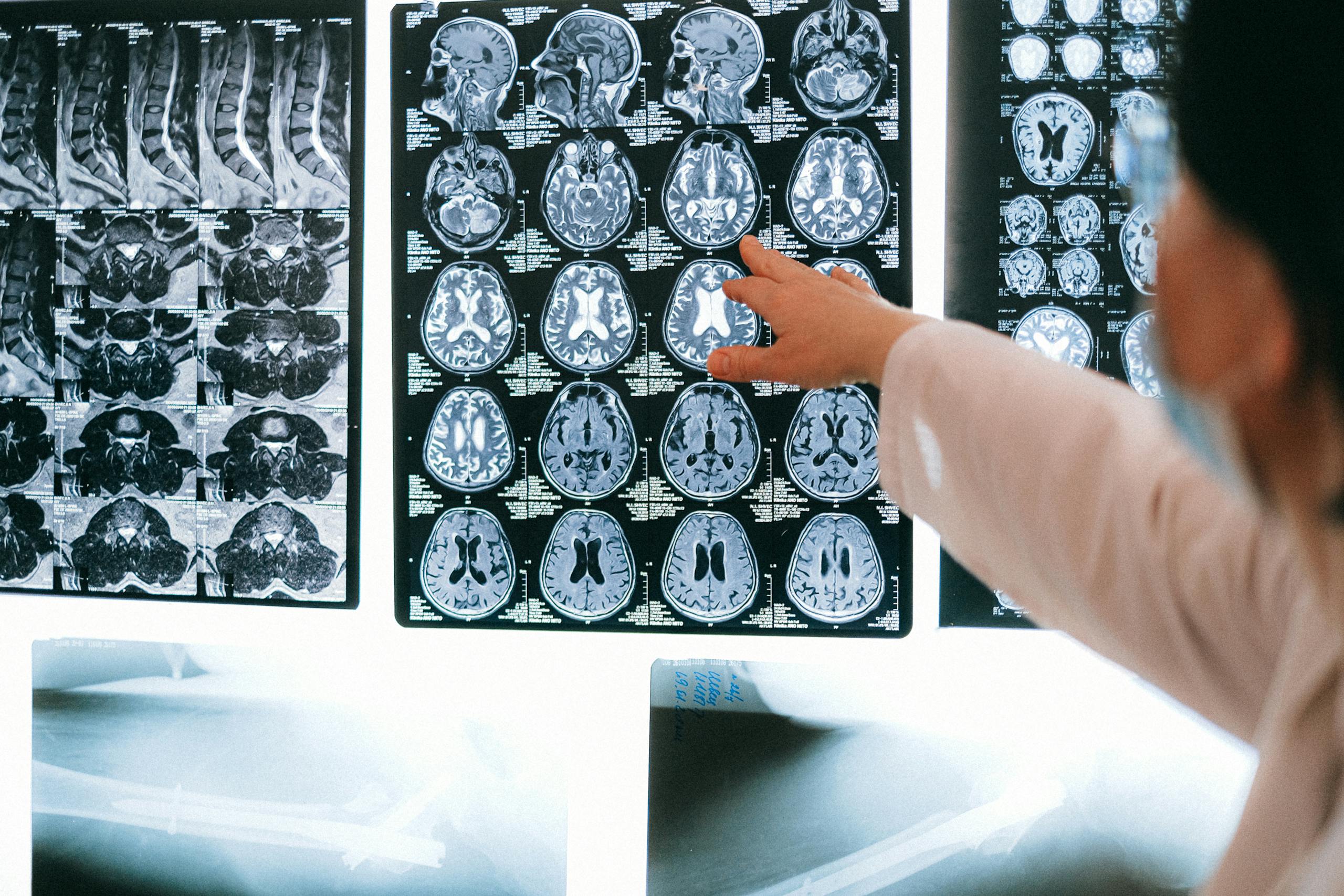
In clinical settings, a critical care med journal tracks the most acute, high-acuity patient cases. It records interventions, deteriorations, moments of crisis, and the decisions made under pressure. What it rarely captures, at least not directly, is the psychological experience of the people doing the documenting. Nurses, physicians, and support staff who work in intensive care environments carry an invisible secondary record alongside the clinical one: the emotional residue of witnessing suffering, making impossible calls, and absorbing the grief of families in crisis.
What’s your personality type?
Take our free 40-question assessment and get a detailed personality profile with dimension breakdowns, context analysis, and personalised insights.
Discover Your Type8-12 minutes · 40 questions · Free
For highly sensitive people working in those environments, that secondary record is not invisible at all. It is vivid, persistent, and exhausting. The research documented in PubMed Central on emotional labor in healthcare settings points toward something that sensitive professionals already know from lived experience: the gap between what you feel and what you are permitted to express at work creates a specific kind of internal pressure that compounds over time.
I watched this dynamic play out in my own agencies, not in critical care, but in the pressure cooker of a major product launch. One of my most talented account directors was an HSP. She absorbed client anxiety the way a sponge absorbs water. After a difficult client call, she would need twenty minutes alone before she could think clearly again. I did not always understand that at the time. I thought she was struggling with confidence. What she was actually doing was processing, and that processing was a feature, not a flaw. She caught things the rest of the team missed entirely.
Why Do Sensitive People Struggle Specifically in High-Acuity Environments?
High-acuity environments, whether a hospital ICU or a high-pressure agency boardroom, share a common architecture: constant stimulation, compressed decision timelines, emotional intensity, and very little space for internal processing. For people who are wired to process deeply, that architecture is fundamentally misaligned with how their minds work best.
The concept of sensory and emotional overload is central here. HSP overwhelm and sensory overload describe what happens when the nervous system of a highly sensitive person reaches its threshold. In a critical care environment, that threshold gets tested constantly. Alarms, urgent conversations, fluorescent lighting, the emotional weight of patient outcomes, all of it arrives simultaneously and without pause.
What makes this particularly difficult is that sensitive people are often drawn to exactly these kinds of environments. The desire to help, to matter, to contribute meaningfully pulls them toward work that carries real weight. And then the very sensitivity that makes them exceptional caregivers or communicators becomes the thing that wears them down fastest.

I ran a campaign team for a pharmaceutical client once, a major consumer health brand with a tight regulatory window and a launch date that could not move. The team was small, the pressure was enormous, and two of my senior creatives were clearly HSPs. They produced the most thoughtful, resonant work of anyone on the team. They also needed more recovery time between high-intensity sprints. When I finally stopped scheduling back-to-back review sessions and built in processing time, the quality of their output improved noticeably. What the project plan called inefficiency was actually the engine of their best thinking.
How Does Anxiety Show Up Differently for Sensitive People Under Sustained Pressure?
Anxiety in high-pressure environments is not uniform. For highly sensitive people, it tends to arrive earlier, stay longer, and embed itself more deeply in the body and the mind than it does for people with less sensitive nervous systems. The National Institute of Mental Health’s overview of generalized anxiety disorder outlines the clinical dimensions of sustained anxiety, but the lived experience for sensitive people often precedes any clinical threshold. It exists in the space between normal stress and diagnosable disorder, and that space is where most sensitive people spend a significant amount of their working lives.
What I have noticed in myself, and in the sensitive people I have managed and worked alongside, is that this anxiety often masquerades as conscientiousness. You think you are being thorough. You think you are being responsible. What is actually happening is that your nervous system is running a continuous risk assessment, scanning for what might go wrong, who might be disappointed, what detail you might have missed. HSP anxiety has its own texture, distinct from general anxiety, and recognizing that texture is the first step toward managing it with any real effectiveness.
In my own experience, the anxiety showed up most clearly in the hours before a major client presentation. Not as panic, but as a kind of hypervigilant preparation that went well past what was necessary. I would review decks I had already reviewed three times. I would mentally rehearse conversations that had not happened yet. My INTJ tendency to anticipate and strategize was running in overdrive, fueled by an underlying sensitivity I had not yet learned to name or work with consciously.
What Role Does Emotional Processing Play in Sensitive People’s Long-Term Wellbeing?
One of the most important things a critical care med journal documents, even if only implicitly, is the cumulative emotional load of sustained high-stakes work. For sensitive people, emotional processing is not optional. It is physiological. When it does not happen, the backlog creates real psychological consequences.
The depth of HSP emotional processing is one of the most misunderstood aspects of high sensitivity. It is not melodrama. It is not weakness. It is a fundamentally different relationship with emotional information, one that requires time, space, and often solitude to complete. When those conditions are absent, as they frequently are in high-acuity environments, the processing does not stop. It just goes underground, where it accumulates.

I spent a long stretch of my agency years not processing at all, at least not in any intentional way. I was moving too fast. There was always another client, another pitch, another crisis that needed my analytical attention. What I eventually realized, after a particularly brutal stretch involving a major account loss and a team restructuring, was that I had been carrying a significant emotional backlog without acknowledging it. The processing that should have happened in real time had been deferred for months, and the interest on that deferral was steep.
For sensitive people in critical care environments, this dynamic is amplified considerably. The PubMed Central research on burnout and emotional exhaustion in healthcare workers reflects what many sensitive professionals already know: sustained emotional labor without adequate processing time is not sustainable. The documentation in clinical journals captures the medical outcomes. The psychological journals that sensitive workers carry internally capture everything else.
How Does Empathy Function as Both Asset and Liability in High-Stakes Settings?
Empathy is the quality that makes sensitive people exceptional in caring professions and in any role that requires genuine human connection. It is also the quality that makes those same roles most costly to sustain over time. HSP empathy operates like a high-resolution antenna, picking up emotional signals that others miss entirely. In a critical care environment, that means sensing a patient’s fear before they articulate it, reading a family’s grief in a single glance, or feeling the weight of a colleague’s exhaustion without a word being exchanged.
That same antenna, when it cannot be switched off, becomes a source of chronic depletion. The boundary between feeling with someone and being consumed by what they feel is one that sensitive people have to learn, often through difficult experience, to maintain consciously.
In my advertising work, empathy was one of my most valuable professional tools. As an INTJ, my empathy tends to be more analytical than emotional, more about understanding motivations than absorbing feelings. But I managed several team members whose empathy was far more visceral than mine. One creative director I worked with for nearly four years had an extraordinary ability to understand what a consumer was feeling and translate that into campaign work that genuinely moved people. She was also the person most likely to be emotionally wrecked after a difficult client meeting. The same capacity that produced her best work was the one that made certain interactions genuinely painful for her.
What I learned from watching her, and from conversations we had about it over the years, is that empathy without boundaries is not sustainable empathy. It is eventual collapse. The most effective sensitive people I have known are not the ones who feel less. They are the ones who have learned to feel deeply without losing themselves in what they feel.
What Does Perfectionism Cost Sensitive People in Demanding Professions?
Perfectionism and high sensitivity frequently travel together. In a critical care context, the stakes make perfectionism feel not just reasonable but morally necessary. How could you not check everything twice when the consequences of error are so severe? The problem is that perfectionism, even when it is motivated by genuine care, carries a psychological cost that compounds over time.
HSP perfectionism is particularly insidious because it is so often rewarded externally before it destroys internally. The perfectionist gets praised for thoroughness, for catching errors, for producing flawless work. What does not get seen is the cost of producing that work: the sleepless nights, the self-criticism, the inability to feel satisfaction even after genuine achievement.
A study from Ohio State University’s College of Nursing examined perfectionism in caregiving contexts and found that the drive for flawless performance, while producing high-quality outcomes in the short term, correlates with significantly higher rates of burnout and emotional exhaustion over time. That finding resonates with everything I observed across two decades of managing high-performing, sensitive people in demanding agency environments.

My own perfectionism as an INTJ showed up differently than it did in my more sensitive team members. Mine was architectural: I wanted systems to be right, strategies to be airtight, presentations to be logically unassailable. Theirs was more relational and emotional: they wanted the work to feel right, to resonate, to honor the people it was meant to reach. Both forms of perfectionism were costly in their own ways. Both needed to be managed consciously rather than simply indulged.
How Does Rejection Land Differently for Highly Sensitive People?
In any high-stakes professional environment, rejection is a constant. Pitches get rejected. Diagnoses get second-guessed. Recommendations get overruled. For most people, rejection is uncomfortable but manageable. For highly sensitive people, it registers at a different depth entirely.
Understanding HSP rejection and the healing process matters because the way sensitive people process professional setbacks is often misread by those around them. What looks like oversensitivity or fragility is frequently a deeper form of investment. Sensitive people do not just work on projects. They pour themselves into them. When that work is rejected or criticized, the wound is not just professional. It is personal, even when it was never meant to be.
One of the most painful periods of my agency career involved losing a major account we had held for six years. The client’s decision was business-driven and had nothing to do with the quality of our work. I knew that intellectually. Even so, the team members who had been most emotionally invested in that account took weeks to recover in a way that went beyond normal disappointment. They were not being dramatic. They were processing a genuine loss, one that required the same kind of intentional attention that any significant loss requires.
What the clinical literature on resilience, including the American Psychological Association’s framework on resilience, consistently points toward is that recovery from setback is not about feeling less. It is about developing the capacity to feel fully and still move forward. For sensitive people, that distinction matters enormously. The goal is not to become less sensitive. It is to build the psychological infrastructure that allows sensitivity to be an asset rather than a liability.
What Can Introverts and HSPs Take From the Critical Care Model of Documentation?
There is something worth borrowing from the way critical care medicine approaches documentation. Not the clinical format, but the underlying principle: what gets recorded gets examined, and what gets examined can be understood and improved. For sensitive, introspective people, the internal record of emotional experience is extraordinarily detailed. The problem is that it rarely gets externalized in a way that makes it useful.
Personal journaling, reflective writing, and intentional emotional documentation serve a function for sensitive people that is genuinely analogous to what clinical documentation serves in a critical care setting. They create a record that can be reviewed, patterns that can be identified, and a basis for understanding what your own system needs in order to function well. PubMed Central’s reference on expressive writing and psychological health supports what many sensitive people discover on their own: putting internal experience into words changes its relationship to the nervous system.
I started keeping a professional journal during one of the most demanding stretches of my agency years. Not a diary in the traditional sense, more a running record of what I was observing, what was working, what was costing me energy, and what I was learning. What I found was that the act of writing clarified things that had been murky when they lived only in my head. Patterns became visible. The same kinds of situations kept producing the same kinds of internal responses, and once I could see that clearly, I could start making different choices.
For sensitive people in any high-pressure environment, this kind of intentional documentation is not a luxury. It is a maintenance practice, the psychological equivalent of the clinical record that keeps a critical care unit functioning with clarity and accountability.
How Should Sensitive People Build Sustainable Practices in High-Demand Roles?
Sustainability for sensitive people in demanding roles requires a different architecture than it does for people with less reactive nervous systems. What works for someone who processes stimulation quickly and recovers fast does not work for someone whose system needs more time, more quiet, and more intentional decompression.
The academic research on introversion and workplace functioning from the University of Northern Iowa points toward something that many introverts and sensitive people discover through trial and error: the environments and rhythms that allow sensitive people to perform at their highest level are often structurally different from what standard workplace culture provides. Building sustainability means understanding those differences clearly enough to advocate for them.
What that looked like practically in my agencies was learning to structure the workday differently for different people. Not because some people were weaker or needed special treatment, but because different nervous systems have different optimal conditions. My most sensitive team members did their best work in longer, uninterrupted blocks with clear boundaries around when they were available for collaboration. My more extroverted team members thrived on constant interaction and spontaneous problem-solving. Both approaches produced excellent work. The mistake would have been insisting that everyone operate the same way.
For sensitive people managing their own schedules, the same principle applies. Building in genuine recovery time between high-intensity interactions is not self-indulgence. It is operational intelligence. Psychology Today’s work on introvert communication preferences touches on the broader pattern: introverts and sensitive people are not avoiding engagement when they protect their recovery time. They are preserving the capacity for genuine engagement when it matters most.
There is a version of this conversation that gets framed as self-care, and while that framing is not wrong, it sometimes undersells what is actually at stake. For sensitive people in high-demand roles, managing your internal environment is a professional competency, not a personal indulgence. The people who do it well are not the ones who feel less. They are the ones who have learned to feel accurately and act wisely.
The full range of what sensitive, introspective people carry in demanding environments, and the tools for working through it honestly, is something the Introvert Mental Health Hub addresses across many angles. If any part of this conversation resonates, that is a good place to keep exploring.
About the Author
Keith Lacy is an introvert who’s learned to embrace his true self later in life. After 20 years in advertising and marketing leadership, including running agencies and managing Fortune 500 accounts, Keith now channels his experience into helping fellow introverts understand their strengths and build fulfilling careers. As an INTJ, he brings analytical depth and authentic perspective to every article, drawing from both professional expertise and personal growth.
Frequently Asked Questions
What is a critical care med journal and why does it matter for sensitive people?
A critical care med journal is a clinical publication or documentation system that records high-acuity patient cases, interventions, and outcomes in intensive care settings. For sensitive people, the relevance extends beyond the clinical: the psychological dynamics of working in high-pressure, emotionally intense environments described in that literature mirror what sensitive and highly sensitive people experience in many demanding professional contexts. Understanding those dynamics helps sensitive people recognize their own patterns and build more sustainable approaches to high-stakes work.
Why do highly sensitive people struggle more in high-pressure environments?
Highly sensitive people have nervous systems that process stimulation more deeply and thoroughly than average. In high-pressure environments characterized by constant stimulation, compressed timelines, and emotional intensity, that depth of processing becomes a source of depletion rather than strength. The same capacity that makes sensitive people perceptive, empathetic, and thorough also means they absorb more from their environment and require more time and space to process what they have absorbed. Without adequate recovery conditions, that absorption accumulates into overwhelm and burnout.
How can sensitive people manage emotional overload in demanding roles?
Managing emotional overload for sensitive people requires intentional structural changes rather than simply trying harder to cope. Building genuine recovery time between high-intensity interactions, creating regular space for emotional processing through writing or reflection, setting clear boundaries around availability, and designing work rhythms that include uninterrupted deep-work blocks all contribute meaningfully. The goal is not to reduce sensitivity but to create conditions where the nervous system can process experience fully rather than accumulating an unmanageable backlog.
Is perfectionism more common in highly sensitive people?
Perfectionism and high sensitivity frequently occur together, though they are not the same trait. Sensitive people tend to notice more details, feel more acutely the consequences of errors, and invest more of themselves emotionally in their work, all of which can fuel perfectionist tendencies. In high-stakes environments, this combination can produce exceptional work in the short term while creating significant psychological costs over time. Recognizing perfectionism as a pattern driven by sensitivity rather than purely by ambition opens up more effective ways of managing it.
What role does journaling play in supporting sensitive people’s mental health?
Journaling serves a meaningful function for sensitive people because it externalizes the detailed internal record that sensitive nervous systems generate continuously. Writing about emotional experience changes its relationship to the nervous system, making patterns visible and reducing the psychological weight of carrying everything internally. For sensitive people in demanding roles, reflective writing functions as a maintenance practice that supports clearer thinking, emotional processing, and self-awareness. It is not a replacement for professional mental health support when that is needed, but it is a genuinely effective tool for ongoing psychological maintenance.