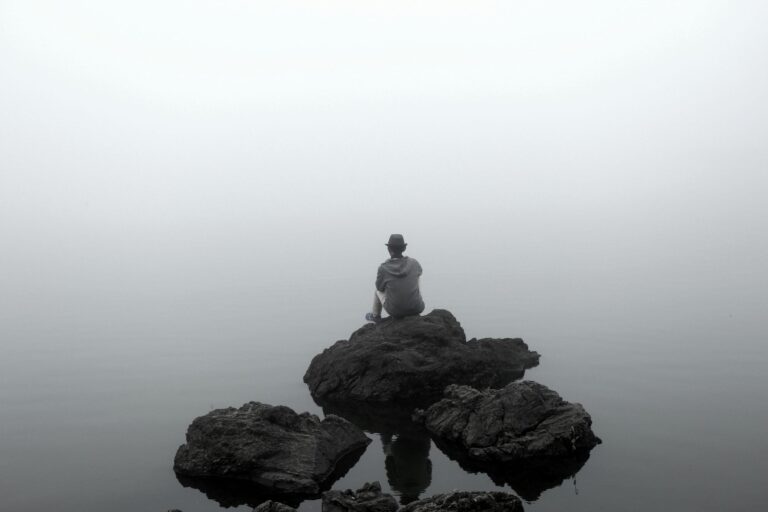

A Shenandoah journal is more than a travel record. For introverts, it becomes a private conversation between the mind and the mountains, a place where the noise of daily life finally quiets enough to hear your own thoughts clearly. The Shenandoah Valley, with its layered ridgelines and unhurried pace, has a way of meeting reflective people exactly where they are.
What follows is honest. Parts of it surprised me when I wrote them down. That, I’ve come to believe, is exactly the point.

Mental health and introversion are more tangled together than most people acknowledge. The same wiring that makes solitude feel restorative can also make anxiety feel inescapable, and the same depth of inner life that gives introverts their richness can become a place they get lost in. Our Introvert Mental Health hub explores that full range, but this particular piece sits in a different corner of it: the corner where nature, silence, and the act of writing things down become genuine tools for wellbeing.
Why Did I Start Keeping a Shenandoah Journal in the First Place?
Advertising agencies are loud places, even when nobody is talking. The ambient pressure of deadlines, client expectations, and creative egos fills every room. I ran agencies for over two decades, and for most of that time, I believed the noise was the price of doing serious work. You absorbed it, managed it, and pushed through.
What I didn’t understand until much later was that I was paying a different price. Not in productivity, but in something quieter and harder to measure: my ability to know what I actually thought about anything.
An INTJ’s inner world is already complex. We process information in layers, running parallel threads of analysis, intuition, and pattern recognition almost constantly. Add twenty years of external noise to that, and the internal signal gets harder to find. I’d sit in strategy meetings with Fortune 500 clients, delivering confident recommendations, and only later realize I’d been performing certainty rather than feeling it.
The first time I drove into the Shenandoah Valley with a blank notebook on the passenger seat, I told myself it was just a weekend away. That was not entirely honest. Something in me was looking for a place to stop performing and start listening.
The journal started because the valley gave me something I hadn’t had in years: enough quiet to notice what was happening inside my own head. Once I noticed it, I needed somewhere to put it.
What Does Writing in Nature Actually Do to an Introverted Mind?
There’s a particular quality to writing outdoors that’s different from writing at a desk. The desk carries associations. It knows about deadlines and deliverables. A flat rock overlooking a river bend doesn’t know anything about your quarterly targets, and that ignorance is a gift.
When I write in the valley, my handwriting changes. It gets slower, looser. The sentences come out differently than they do when I’m at a keyboard. They meander more, which used to bother me until I realized the meandering was the point. My mind was following its own thread instead of a predetermined structure.
For introverts who process deeply, this matters enormously. We’re not wired for surface-level reflection. We need to follow thoughts to their actual source, not just their first visible expression. Journaling in a place like Shenandoah creates the conditions for that kind of depth, because the environment itself is slow and layered. The mountains don’t rush. The river doesn’t apologize for taking the long way around.
There’s real support for this in how we understand nature’s effect on psychological recovery. The research published in PubMed Central examining nature exposure and mental restoration points to something introverts often sense before they can articulate it: natural environments reduce the cognitive load that depletes us, creating space for the kind of reflective processing that actually restores rather than merely distracts.

What I’ve found personally is that the writing itself acts as a form of emotional translation. Something happens in the body, a tightness in the chest, a vague restlessness, and the journal becomes the place where I figure out what that something actually is. That process is what emotional processing for deeply feeling people often looks like in practice: not dramatic, not linear, but quiet and persistent.
How Did Journaling Help Me Recognize What I Was Actually Carrying?
There was a period in my agency years when I managed a team of twelve, several of whom were highly sensitive people, though none of us had that language at the time. One creative director in particular absorbed the emotional weather of every client meeting and brought it back to the studio like weather she’d caught. I watched her carry weight that wasn’t hers to carry, and I didn’t fully recognize that I was doing a version of the same thing.
INTJs aren’t typically described as emotionally porous, and in many ways that’s accurate. But we do absorb patterns, and when those patterns include stress, conflict, and sustained pressure, they don’t disappear just because we don’t talk about them. They compress. They become background noise in the system.
My Shenandoah journal became the place where that compression finally had somewhere to go. I’d write about a client meeting from three weeks earlier and realize, mid-sentence, that I was still angry about it. Or I’d describe a conversation with a colleague and notice, in the writing, that I’d felt dismissed and had filed it away without processing it at all.
That kind of delayed recognition is common among people who feel things deeply. The National Institute of Mental Health notes that unprocessed emotional material can contribute to anxiety patterns that feel disproportionate to their apparent triggers, because the trigger isn’t really the source. The source is older, buried, waiting.
Journaling in a quiet place gave me enough distance from the daily noise to find those older things. Not always comfortably. Sometimes I’d close the notebook and walk for a while before I could come back to what I’d written. But finding them was better than not finding them.
If you’ve ever felt like your anxiety arrives without a clear address, it might be worth exploring what HSP anxiety can look like beneath the surface. The patterns often have more history than they appear to.
What Happens When the Valley Becomes a Mirror?
Somewhere around my third or fourth trip to Shenandoah with a journal, I noticed something strange. The landscape was starting to show up in my writing as a character, not as background. I’d describe the way fog sat in the hollows at dawn and find myself writing about the parts of myself I kept in low light. I’d write about the ridgeline that only became visible as you got closer, and realize I was writing about something I’d been avoiding looking at directly.
This is what I mean when I say the valley became a mirror. Not in a mystical sense, but in a very practical one: the natural world offered me images for interior experiences I didn’t yet have words for. That’s not unique to me. Writers and thinkers across centuries have used landscape as a vocabulary for the inner life, because sometimes the outer world gives us the language the inner world is still searching for.
One entry I still remember clearly came after a long hike on a trail I’d underestimated. I was tired, a little annoyed at myself for misjudging the distance, and I sat down at an overlook and wrote for forty minutes without stopping. What came out wasn’t about the hike. It was about a business decision I’d made two years earlier that I’d told myself was fine and had never actually examined. The physical tiredness had lowered my defenses enough for the real material to surface.
That kind of vulnerability, the kind that arrives sideways, through exhaustion or beauty or unexpected quiet, is worth paying attention to. It’s where identity actually shifts. Not in the moments we plan for growth, but in the unguarded ones.

How Does Sensory Experience Shape What Gets Written?
Shenandoah is not a subtle place in terms of sensory input. The smell of rain on dry limestone, the sound of a hawk working a thermal, the particular quality of light in late afternoon when it comes through oak canopy at a low angle. These things land differently on people who are wired for depth.
I’ve always been someone who notices what others seem to walk past. In agency settings, this showed up as an ability to catch the detail in a brief that everyone else had glossed over, or to sense the undercurrent in a client relationship before it became a problem. In the valley, it shows up as a kind of sensory fullness that can be overwhelming and also extraordinary.
That intensity of sensory experience is something many introverts share with highly sensitive people. The line between introversion and high sensitivity isn’t always clear, and for those who live at that intersection, nature can be both deeply nourishing and genuinely overstimulating. Understanding how sensory overload builds is important before you head into an environment as rich as Shenandoah, because the goal is restoration, not another form of depletion.
What I’ve learned is to pace the sensory intake deliberately. I don’t try to hike and journal at the same time. I walk first, let the environment come in, and then find a place to be still before I write. The stillness is the transition between receiving and processing, and skipping it produces writing that feels rushed, surface-level, like a list of observations rather than an actual conversation with myself.
The findings on mindfulness and emotional regulation from PubMed Central support what I’ve experienced informally: the quality of reflective processing improves when we allow a period of non-directed attention before engaging in deliberate introspection. Sitting quietly by water for twenty minutes before opening the notebook isn’t wasted time. It’s preparation.
What Did the Journal Reveal About My Relationship With Achievement?
This is the section I almost didn’t write. Not because it’s dramatic, but because it’s a little uncomfortable to admit.
Running agencies taught me to measure everything. Billings, margins, client retention rates, award submissions. I was good at measuring, and I was good at meeting the numbers I set. What the journal eventually surfaced was that I’d applied the same measurement framework to myself in ways that had nothing to do with professional performance.
I was measuring my worth against a set of standards I’d absorbed so gradually I didn’t know they were there. Standards about what a successful person looked like, how they spent their time, what they found easy. Most of those standards were built for extroverts, and I’d been quietly failing them for years without understanding why the failure felt so persistent.
One journal entry from a rainy afternoon in the valley, when I was stuck inside a small cabin with nothing to do but write, went on for twelve pages. By the end of it, I’d traced a pattern of self-criticism that had been running underneath my professional confidence for most of my adult life. The Ohio State research on perfectionism and its costs resonates with what I found in those pages: the standards we hold ourselves to often have less to do with genuine values and more to do with fear of being found inadequate.
That kind of perfectionism is something many introverts struggle with quietly. The internal standards are high, the self-evaluation is relentless, and the gap between the two can become a source of chronic low-grade suffering. Breaking the perfectionism cycle isn’t about lowering your standards. It’s about understanding where those standards actually came from and whether they’re actually yours.

How Did Writing Through Rejection Change the Way I Processed It?
Advertising is a business of rejection. Pitches you lose, campaigns the client kills, creative work that never sees daylight. I got good at the professional version of moving on, the clean handoff from disappointment to the next project. What I was less good at was the interior version.
Introverts tend to process rejection more thoroughly than they let on. The external presentation might be composed, even philosophical. Internally, the replay loops run longer. I’ve sat across from clients who chose a competitor’s agency and delivered a gracious concession speech while something in me was already running a detailed post-mortem that would continue for weeks.
The journal gave me a place to run those post-mortems consciously rather than letting them run on their own. There’s a difference. When the replay happens unconsciously, it tends to drift toward self-blame, toward the moments you could have done differently, toward a narrative where the rejection was primarily about your inadequacy. When you write it out deliberately, you can see the fuller picture: the client who was always going to choose the incumbent agency, the brief that was poorly defined from the start, the relationship that had been cooling for months before the pitch.
That shift from unconscious replay to conscious examination is at the heart of what processing rejection in healthy ways actually looks like. It doesn’t mean dismissing the hurt. It means giving the hurt enough space and structure to move through rather than settle in.
The American Psychological Association’s framework on resilience describes something similar: the ability to work through difficult emotional experiences rather than around them is what builds genuine psychological durability over time. The valley, with its unhurried presence, has been one of the better places I’ve found to do that work.
What Role Does Empathy Play in a Solitary Practice?
This surprised me when I first noticed it. Journaling alone in a quiet place was making me better at understanding other people.
The connection, once I saw it, made sense. When I’m genuinely quiet and not performing or managing or presenting, I have access to a fuller version of my own emotional experience. And when I understand my own experience more completely, I have more capacity to recognize it in others.
In my agency years, I managed people across a wide range of personalities. Some were highly empathic, to the point where it complicated their professional functioning. I watched team members take on the stress of colleagues as if it were their own, watched them struggle to maintain boundaries in collaborative environments, watched them burn out in ways that looked inexplicable from the outside but made complete sense once you understood how they were wired.
At the time, I didn’t have the language for what I was observing. Now I’d recognize it as the complicated reality that empathy as a trait presents: it’s genuinely valuable and genuinely costly, often at the same time. The journal helped me understand my own version of that equation, which in turn helped me be a more useful manager to people who were handling theirs.
The research on introverted leadership styles from the University of Northern Iowa touches on something relevant here: introverted leaders often develop deeper individual understanding of their team members precisely because they invest more in observation and reflection than in social performance. The Shenandoah journal has been, among other things, a training ground for that kind of attention.
What Does a Shenandoah Journal Practice Actually Look Like Over Time?
I want to be practical here, because I think there’s a version of this that sounds more romantic than it is, and I’d rather be honest about what it actually involves.
A consistent Shenandoah journal practice, for me, looks like this: two or three trips a year, each lasting two to four days. I bring a physical notebook, not a laptop or phone. I have no agenda for what I’ll write. Some entries are mundane observations about weather and trail conditions. Some go twelve pages deep into something I didn’t know I needed to examine. Most are somewhere in between.
Between trips, I sometimes write at home with the valley in mind, returning in imagination to a particular spot or a particular quality of light, and finding that the mental return has some of the same effect as the physical one. Not all of it, but enough to be useful.
The clinical literature on expressive writing suggests that the benefits of journaling are real and measurable, particularly for emotional processing and stress regulation. What it also suggests is that consistency matters more than intensity. A brief, honest entry written regularly does more than an occasional marathon session.
That’s been my experience. The trips to Shenandoah are the deep dives, but the practice is sustained by smaller, quieter moments of writing throughout the year. The valley doesn’t have to be the only place you access this. It’s just the place where I first found it.
Something worth noting: the practice works best when I’m not trying to produce anything. The moment I approach the journal as a content-creation exercise, it stops working. The writing has to be genuinely private, genuinely exploratory, genuinely allowed to go nowhere in particular. That’s harder than it sounds for someone who spent twenty years producing work for external audiences. But it’s the condition that makes the practice actually restorative rather than just another form of output.

What Has the Practice Changed, Honestly?
I’m more patient with myself than I used to be. That sounds small, but it isn’t. For most of my professional life, I ran a fairly harsh internal commentary that I’d mistaken for high standards. The journal helped me see that the commentary wasn’t serving my standards. It was just noise, inherited from environments that valued a particular kind of performance over a particular kind of person.
I’m also more willing to sit with uncertainty. As an INTJ, my default is to resolve ambiguity quickly, to form a position and defend it. The journal has taught me that some things don’t resolve quickly, and that the attempt to force resolution can be its own form of avoidance. Sitting with a question across multiple entries, returning to it from different angles, letting the answer arrive in its own time, that’s a different relationship with uncertainty than I had before.
And I’m better at recognizing when I’m depleted versus when I’m genuinely processing. Those two states can look similar from the outside, and they used to feel similar from the inside. Now I can usually tell the difference, which means I can respond to them differently rather than applying the same solution to both.
None of this happened quickly or cleanly. The journal is full of entries where I circled the same territory without making progress, entries where I was clearly performing introspection rather than doing it, entries that were just complaints dressed up as reflection. That’s part of the practice too. The Psychology Today piece on introvert communication patterns captures something true about how we process: we often need to work through the surface material before we reach what’s actually there. The journal is where I do that working through.
If you’re an introvert who’s been looking for a mental health practice that fits your actual wiring rather than asking you to perform extroversion in a new setting, a nature journal might be worth trying. Not because it fixes anything, but because it creates the conditions where you can actually hear yourself think.
There’s more on the intersection of introversion and mental wellbeing across the full range of experiences we cover in the Introvert Mental Health hub. What I’ve shared here is one piece of a much larger picture.
About the Author
Keith Lacy is an introvert who’s learned to embrace his true self later in life. After 20 years in advertising and marketing leadership, including running agencies and managing Fortune 500 accounts, Keith now channels his experience into helping fellow introverts understand their strengths and build fulfilling careers. As an INTJ, he brings analytical depth and authentic perspective to every article, drawing from both professional expertise and personal growth.
Frequently Asked Questions
What is a Shenandoah journal and why is it particularly suited to introverts?
A Shenandoah journal is a personal writing practice conducted in or inspired by the Shenandoah Valley, using the natural environment as a backdrop for reflective introspection. Introverts tend to process experience internally and in depth, and the valley’s quietness, sensory richness, and unhurried pace create conditions that support that kind of processing. Unlike journaling at a desk, writing in a natural setting reduces the cognitive associations tied to productivity and performance, making it easier to access genuine reflection rather than rehearsed self-presentation.
Do I need to visit Shenandoah physically to benefit from this kind of practice?
Physical visits to the valley offer something that’s difficult to replicate fully, particularly the sensory environment and the removal from daily routine. That said, the core practice, writing reflectively in a natural setting with no agenda for output, can be adapted to any quiet outdoor space. Many people find that even a local park or a garden, approached with the same intentional stillness, produces meaningful results. The Shenandoah Valley is a particularly powerful setting, but the principles of the practice travel.
How is nature journaling different from regular journaling for mental health purposes?
Regular journaling can happen anywhere, and its benefits are well-documented for emotional processing and stress regulation. Nature journaling adds an environmental layer: the natural world provides sensory input that shifts the nervous system toward a more receptive state before writing begins. The landscape also offers a vocabulary of images and metaphors that can help people access interior experiences they don’t yet have direct language for. For introverts who process in layers, this indirect approach often reaches deeper material than direct introspection alone.
What should I actually write about in a Shenandoah journal?
Nothing in particular, and that’s the honest answer. The most useful entries often begin with simple observation: what you see, hear, or notice in the environment around you. From there, the writing tends to find its own direction. Some entries stay descriptive. Others move into emotional territory without any deliberate intention to go there. success doesn’t mean produce insight. The goal is to create enough space and honesty on the page that insight can arrive on its own terms. Approaching the journal with a specific agenda often produces the least useful writing.
Can a journaling practice in nature help with anxiety and emotional overwhelm?
Many people find it genuinely helpful, though it works differently than structured therapeutic interventions. Nature exposure supports nervous system regulation, and expressive writing helps externalize and examine emotional material that might otherwise circulate internally without resolution. For introverts who are prone to rumination, getting thoughts onto a page in a calm environment can interrupt the loop and create some distance from the content. It’s not a replacement for professional support when anxiety is significant, but as a regular practice it can contribute meaningfully to overall emotional regulation and self-awareness.