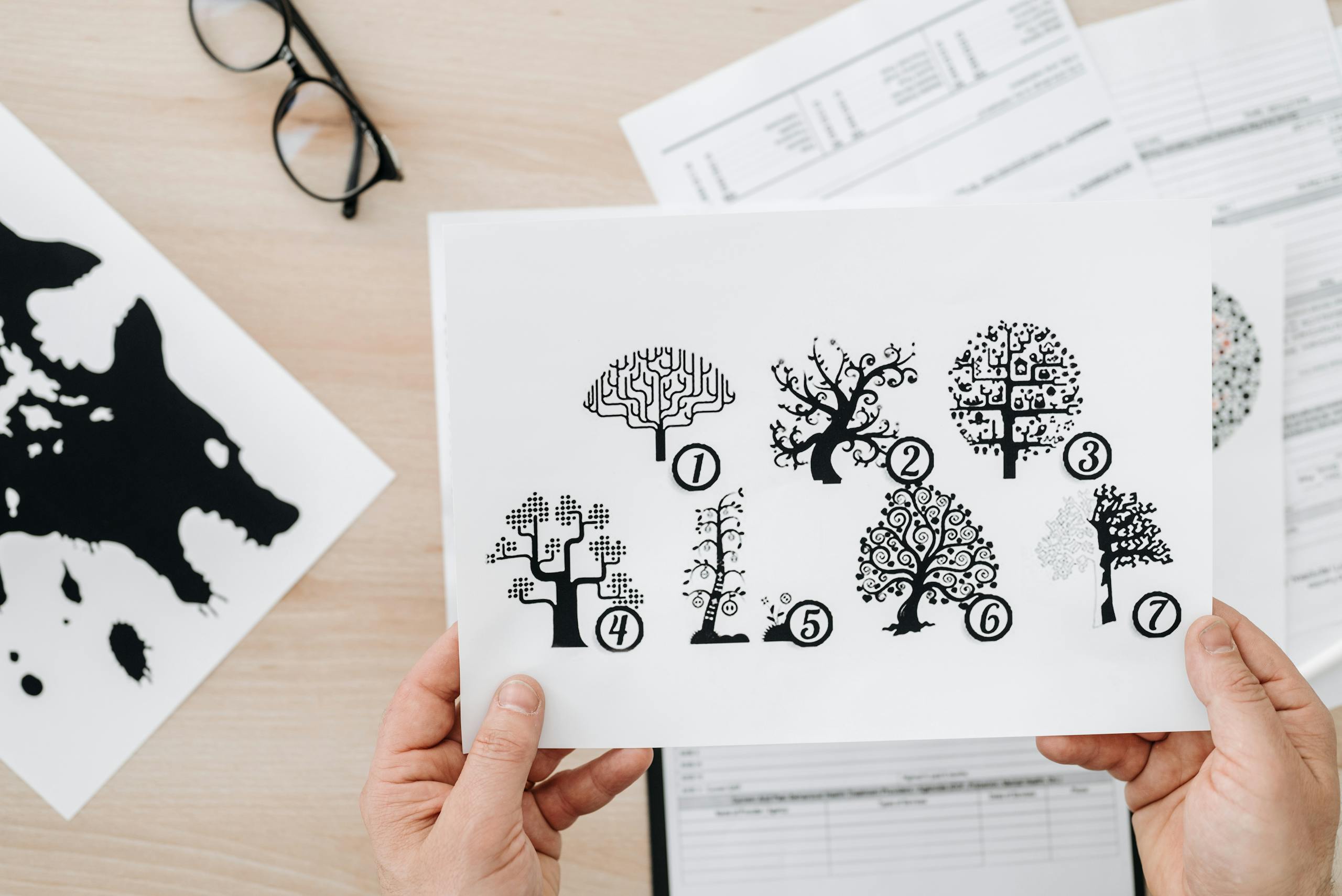

A widget personality test is a short, embeddable personality assessment designed to give you a quick read on your psychological type, often based on frameworks like MBTI, without requiring you to sit through a lengthy formal questionnaire. These compact tools typically take two to five minutes, deliver an immediate result, and can be embedded directly into websites, apps, or social platforms.
What surprises most people is how much a well-constructed widget can actually reveal, not just about your personality type, but about the cognitive preferences that shape how you think, decide, and interact with the world around you.
Personality typing has been part of my life for a long time, though I came to it late as a serious practice. I spent the first decade of my agency career assuming personality frameworks were HR novelties, the kind of thing you did at a team offsite and promptly forgot. Then I hit a wall in my mid-forties, managing a team of twelve people across two offices, and realized I had no real language for why certain people drained me and others energized me. A colleague suggested I take a proper MBTI assessment. I came back INTJ. Everything clicked.

If you’re curious about where you fall on the personality spectrum, our MBTI General and Personality Theory hub covers the full cognitive framework in depth, from function stacks to type dynamics, and gives you the context to make sense of whatever a quick widget assessment surfaces for you.
What Makes a Widget Personality Test Different From a Full Assessment?
Most people encounter personality typing through a widget first. You’re scrolling through a site, you see a “What’s Your Personality Type?” prompt, and you click it on impulse. Within a few minutes, you have a four-letter result and a paragraph describing you with unsettling accuracy.
A widget personality test differs from a full MBTI assessment in scope and depth, not necessarily in the quality of the underlying framework. A formal MBTI instrument involves 93 to 222 questions depending on the version, is often administered by a certified practitioner, and produces a detailed report covering all four preference pairs. A widget compresses that process dramatically, usually to 10 to 20 questions, and delivers a type result without the layered interpretation.
What a good widget does well is surface your dominant preferences quickly. What it can’t do is capture the nuance of cognitive function development, the way your auxiliary function moderates your dominant, or the degree to which you’ve built behavioral flexibility over time. Those subtleties matter enormously in practice, which is why a widget result is best treated as an entry point rather than a final verdict.
At my agency, we used a widget-style assessment as part of our onboarding process for junior creatives. It wasn’t meant to box anyone in. It was meant to start a conversation. I’d sit down with each new hire after they got their result and ask what resonated and what didn’t. That twenty-minute conversation was always more valuable than the result itself, because it gave people permission to reflect on how they actually functioned rather than how they thought they were supposed to function.
How Do Widget Tests Actually Measure Personality?
Most widget personality tests built around the MBTI framework measure four preference pairs: Extraversion versus Introversion, Sensing versus Intuition, Thinking versus Feeling, and Judging versus Perceiving. Each question is designed to pull toward one pole or the other, and your aggregate responses across each pair determine your type.
A critical point worth understanding: in MBTI, Extraversion and Introversion don’t measure sociability. They describe the orientation of your dominant cognitive function. An introverted type has a dominant function that points inward, toward internal frameworks, subjective impressions, or personal values. An extraverted type has a dominant function that points outward, toward external data, other people, or the environment. Many introverts are socially confident and engaging. Many extraverts prefer solitude at times. The E/I distinction in MBTI is about cognitive orientation, not social behavior.
Similarly, Thinking and Feeling in MBTI don’t describe emotional capacity. Thinking types feel deeply. Feeling types can be analytically rigorous. The distinction is about what you prioritize in decision-making: logical consistency and objective criteria, or personal values and interpersonal impact. Getting this wrong is one of the most common misreadings I see when people interpret their widget results.
The Sensing versus Intuition axis describes how you gather and process information. Sensing types attend to concrete, present-moment data and direct sensory experience. Intuitive types tend toward patterns, connections, and possibilities that aren’t immediately visible in the data. Neither is more intelligent than the other. They’re genuinely different information-gathering styles, and both are necessary in any functional team.
Understanding the difference between introverted and extraverted intuition adds another layer to this. My series on Ni vs Ne: Introverted vs Extraverted Intuition Part 3 gets into how these two forms of intuition operate differently in practice, which matters a lot when you’re trying to interpret an intuition result from a widget test accurately.

Can a Short Test Really Capture Your Cognitive Type?
This is the question I get most often from skeptics, and it’s a fair one. The honest answer is: partially, and with important caveats.
A well-designed widget can reliably surface your strongest preferences, the ones where you have a clear lean rather than a borderline result. If you’re a strong introvert with pronounced intuitive preferences, a ten-question widget will almost certainly identify you correctly. Where widgets struggle is with people who sit near the middle of any preference pair, or whose behavior has been shaped by years of adapting to environments that rewarded a different style.
I’m a good example of the latter. Spend twenty years running client-facing advertising agencies, presenting to Fortune 500 marketing directors, pitching in competitive reviews, and managing large teams, and your behavior starts to look pretty extraverted on the surface. A widget might have mistyped me as an ENTJ in my peak agency years because I’d built so many extraverted behaviors out of professional necessity. A longer, more nuanced assessment, combined with reflection on what actually energized versus depleted me, revealed the INTJ underneath.
The American Psychological Association has noted that self-perception and actual behavior don’t always align, particularly when people have spent years in environments that reward certain traits. Widget tests measure self-report, which means they’re only as accurate as your self-awareness in the moment you’re taking them.
That said, many people find widget results startlingly accurate on first attempt. The cognitive preferences that MBTI measures tend to be stable across contexts, even when behavior varies. You might act extraverted at a networking event and still find it exhausting afterward. Your dominant function orientation doesn’t change just because your behavior adapts to circumstance.
If you want a more thorough baseline, our free MBTI personality test goes deeper than a standard widget and gives you a result you can actually work with over time.
What Does Your Widget Result Actually Tell You About Your Thinking Style?
One of the most practically useful things a widget personality test can surface is your thinking preference, specifically whether you lean toward introverted or extraverted thinking. This distinction has real consequences for how you work, how you communicate, and how you’re perceived by others.
Introverted thinking (Ti) operates through internal logical frameworks. People with strong Ti build elaborate internal models of how things work, and they evaluate new information against those models. They’re often precise, skeptical, and reluctant to commit to a conclusion until their internal framework supports it. Extraverted thinking (Te) operates through external systems and measurable outcomes. People with strong Te organize the external world, create processes, set benchmarks, and move toward results efficiently.
As an INTJ, my dominant function is introverted intuition with extraverted thinking as my auxiliary. In practice, that meant I was excellent at seeing where a client’s brand strategy needed to go long-term, and reasonably good at building the external systems to get there, but I had to work hard to communicate my internal reasoning in ways that landed with clients who operated through feeling or sensing preferences. My Ti vs Te: Internal vs External Logic Part 1 series breaks down this distinction in a way that makes the practical differences concrete.
Understanding whether you’re a Ti or Te user changes how you interpret your widget result significantly. Two people can both test as “Thinking” types and function very differently in practice. One might be meticulous and framework-driven, the other action-oriented and systems-focused. Knowing which side of that divide you’re on helps you make sense of patterns that might otherwise feel contradictory.
My piece on Ti vs Te Part 2 goes deeper into how these two thinking orientations show up in communication and decision-making, which is where most of the practical friction between types actually lives.

How Should You Use Your Widget Result at Work?
Getting a four-letter type from a widget is the beginning of something useful, not the conclusion. The question is what you do with it.
At my agencies, I eventually built a practice of using personality type results, including widget-level assessments, as conversation starters rather than labels. When a creative director on my team got a result that surprised her, we’d spend time exploring why. Was the result accurate? Was it capturing how she functioned in her best state, or how she’d learned to function under pressure? Those conversations revealed things that performance reviews never would have.
One account manager I worked with for years tested consistently as an ISFJ. Patient, detail-oriented, loyal, excellent at maintaining client relationships over time. He struggled when we asked him to lead new business pitches, which required a more assertive, speculative style. Rather than pushing him toward a role that didn’t fit, we restructured so he handled relationship depth and I handled the pitch front end. His retention numbers were extraordinary. That’s personality insight being used practically rather than theoretically.
The research on team dynamics and personality type suggests that diverse cognitive styles, when understood and respected, produce stronger collaborative outcomes. A piece from 16Personalities on team collaboration and personality explores how different types contribute distinct strengths that complement each other when teams are self-aware enough to use them.
Practically, consider this I’d suggest after getting a widget result. First, read the description carefully and note what resonates and what doesn’t. Second, consider whether your result reflects how you naturally function or how you’ve learned to adapt. Third, share it with someone who knows you well and ask for their honest reaction. Fourth, use it to identify one or two patterns worth examining more closely, not as a complete portrait of who you are.
A widget result is most valuable when it prompts reflection rather than confirmation. If you read your type description and just nod along, you’re probably not getting full value from it. The more interesting question is always: where does this description miss me, and what does that gap tell me about how I’ve developed?
What Are the Limits of Quick Personality Assessments?
Honest engagement with personality typing requires acknowledging what these tools can’t do, and widget assessments have real limits worth naming clearly.
First, a widget can’t capture cognitive function development. MBTI type isn’t just about which four letters you get. It’s about the relative development of eight cognitive functions across your lifetime. A 22-year-old INTJ and a 52-year-old INTJ share the same type but have vastly different function profiles. The younger version may be heavily dominant-function-driven, intense and narrowly focused. The older version, if they’ve done the developmental work, has typically built meaningful access to their tertiary and inferior functions. A widget can’t distinguish between these two people.
Second, widgets measure self-report under current conditions. Stress, fatigue, recent emotional experiences, and even the context in which you’re taking the test can shift your responses. Someone in a high-pressure work environment might test differently than the same person on a relaxed weekend. Neither result is wrong exactly, but neither is the complete picture either.
Third, widgets can’t account for the difference between your natural type and your adapted behavior. Many introverts, particularly those in leadership roles, have built extensive extraverted behavioral repertoires out of professional necessity. A widget measuring current behavior might miss the underlying introversion entirely. I’ve seen this happen repeatedly with introverted leaders who’ve spent decades in client-facing roles.
The distinction between introverted and extraverted intuition is a good example of where widget-level nuance breaks down. Ni vs Ne Part 4 explores how these two intuitive orientations can look similar on the surface but operate through fundamentally different cognitive mechanisms, a distinction that a ten-question widget simply can’t capture with precision.
None of this means widget tests are useless. It means they’re most valuable when you approach them with calibrated expectations. They’re a starting point, a prompt for self-examination, and a useful common language for teams and relationships. They’re not a substitute for deeper self-knowledge built through experience, reflection, and honest feedback from people who know you well.
Personality psychology itself is a field with ongoing debate about what these assessments measure and how stable those measurements are. A PubMed Central review of personality assessment methodology highlights how self-report instruments are most reliable when respondents have high self-awareness and are answering in a low-stakes context, both conditions worth considering when you sit down with a widget.

How Does Intuition Type Affect What You Get From a Personality Widget?
Your intuition preference, and specifically whether you lean toward introverted intuition (Ni) or extraverted intuition (Ne), shapes how you engage with personality typing tools in the first place.
Ni users tend to approach a widget result with convergent focus. They’re looking for the insight that clicks, the single interpretation that synthesizes everything into a coherent picture. As an Ni-dominant INTJ, I remember reading my first proper type description and feeling something settle into place. The framework gave me language for something I’d already sensed internally but couldn’t articulate. That’s very characteristic of how Ni engages with new information.
Ne users, by contrast, tend to engage with personality typing more expansively. They see multiple possible interpretations, explore adjacent types, wonder if they might be several things at once, and often find themselves reading five different type descriptions before settling on one. Ne is generative and branching where Ni is focused and convergent. Both are valid ways of processing the same information, and both produce genuine insight, just through different routes.
Understanding this distinction matters when you’re evaluating your widget result. If you’re an Ne user who tested as ENFP but feels drawn to INFP, ENTP, and ENFJ descriptions simultaneously, that’s not necessarily a sign the test was wrong. It might be Ne doing what Ne does: generating multiple possibilities and resisting premature closure. My article on Ti vs Te Part 3 touches on how thinking preferences interact with intuition type in ways that can make type identification more or less straightforward.
The practical upshot is that your relationship with a widget result will be shaped partly by your type itself. Intuitive types often find personality frameworks deeply compelling. Sensing types sometimes find them abstract or imprecise. Thinking types may approach the result skeptically and want to verify it against behavioral evidence. Feeling types may connect immediately with the values-based descriptions. None of these responses is more valid than the others. They’re all the framework working as intended, revealing something about how you process and evaluate information.
Why Introverts Often Find Widget Tests Surprisingly Clarifying
There’s something particular about how introverts tend to respond to personality typing tools, and I’ve noticed it in myself and in the introverted people I’ve worked with over the years.
Many introverts spend significant portions of their lives wondering if something is wrong with them. They prefer depth over breadth in relationships. They find large social gatherings draining rather than energizing. They need substantial alone time to process and recover. In environments that reward extraverted behavior, these traits can feel like deficits rather than differences.
A widget personality test, even a simple one, often provides the first external validation that these traits aren’t deficits. They’re a coherent cognitive orientation shared by a significant portion of the population. Seeing “introverted” as a legitimate category rather than a euphemism for “shy” or “antisocial” can be quietly significant. Truity’s piece on what it means to be a deep thinker captures some of the cognitive patterns that many introverts recognize in themselves, the kind of internal processing depth that doesn’t always show up as visible activity but represents genuine cognitive engagement.
I remember the first time I described myself as an introvert without immediately adding a qualifier. No “but I can be social when I need to be.” No “though you’d never know it from how I present.” Just: I’m an introvert, and consider this that means for how I work best. It took a proper type assessment to get there, but the widget I’d taken a few months earlier had planted the seed.
For introverts who process information deeply and quietly, personality typing frameworks also provide a useful shared vocabulary for explaining their preferences to others. Rather than saying “I need to think about this before I respond,” an introvert can say “I’m an introverted thinker, so I process internally before I verbalize.” That framing shifts the dynamic from seeming disengaged to being understood as differently engaged.
The cognitive function distinctions that underpin MBTI also help introverts understand why certain environments are more taxing than others. Ti vs Te Part 4 explores how thinking orientation affects communication style in ways that particularly matter for introverted thinkers who’ve been told their communication style needs work when really it just needs context.
Globally, introversion is distributed across cultures and geographies in varying proportions. Data from 16Personalities’ global personality profiles gives a sense of how personality type distribution varies worldwide, which adds useful context when you’re thinking about why certain environments felt more or less natural to you depending on where you’ve lived and worked.

How to Get the Most From Any Personality Widget
After years of using personality frameworks both personally and professionally, consider this I’d tell anyone approaching a widget personality test for the first time or the tenth time.
Answer based on your natural inclinations, not your aspirational self or your professional role. The most common source of inaccurate widget results is people answering based on who they think they should be rather than who they actually are. If you’re an introvert who’s learned to present confidently, answer based on what feels natural when the pressure’s off, not on how you perform under it.
Pay attention to the questions that feel genuinely difficult. Those borderline questions, the ones where you could honestly answer either way, are often more revealing than the easy ones. They point toward areas where your preferences are less fixed, which is useful information about your cognitive flexibility and development.
Take the result seriously but not literally. A widget that types you as INFP is telling you something real about your preference orientation. It’s not telling you that you’re exactly like every other INFP, or that the description captures every dimension of who you are. Type is a starting point for self-understanding, not a ceiling on it.
Consider retaking it in different contexts. Take it when you’re relaxed and take it when you’re under pressure. Compare the results. The differences will tell you something about how much your behavior adapts to circumstance and where your core preferences sit underneath that adaptation.
Use it as a prompt for deeper exploration. A widget result that says you’re an introverted intuitive type should send you toward resources that explain what introverted intuition actually is, how it operates, and what its strengths and blind spots look like in practice. That deeper engagement is where the real value lives. Personality type research has grown substantially as a field, and there’s meaningful work on how cognitive preferences relate to wellbeing, career satisfaction, and relationship quality, including work published through sources like PubMed Central on personality and psychological outcomes.
The widget is a door. What matters is whether you walk through it.
There’s much more to explore about how cognitive functions shape personality across all sixteen types. Our complete MBTI General and Personality Theory hub is the place to go deeper, with articles covering function stacks, type dynamics, and the nuances that quick assessments can only hint at.
About the Author
Keith Lacy is an introvert who’s learned to embrace his true self later in life. After 20 years in advertising and marketing leadership, including running agencies and managing Fortune 500 accounts, Keith now channels his experience into helping fellow introverts understand their strengths and build fulfilling careers. As an INTJ, he brings analytical depth and authentic perspective to every article, drawing from both professional expertise and personal growth.
Frequently Asked Questions
What is a widget personality test?
A widget personality test is a short, embeddable assessment, typically ten to twenty questions, that delivers a quick personality type result based on frameworks like MBTI. These tools are designed to be embedded in websites or apps and completed in a few minutes. They provide an accessible entry point into personality typing without requiring the time commitment of a full formal assessment. Results are best used as starting points for self-reflection rather than definitive personality portraits.
How accurate are widget personality tests compared to full MBTI assessments?
Widget personality tests are reasonably accurate for people with strong, clear preferences but less reliable for those who sit near the middle of any preference pair or whose behavior has been significantly shaped by environmental adaptation. Full MBTI assessments involve more questions, more nuanced scoring, and often practitioner interpretation, which produces more reliable results especially for borderline types. A widget result is most useful when it’s treated as a hypothesis to explore rather than a confirmed diagnosis.
Can my personality type change between widget tests?
Core MBTI type is considered stable across time. What changes is the development of your cognitive functions, particularly your tertiary and inferior functions, and the behavioral flexibility you build through experience. If you get different results across widget tests, it’s more likely due to situational factors affecting your self-report, stress, context, or how you were interpreting the questions, rather than your actual type having changed. Taking the same widget in different emotional states can be a useful experiment for understanding where your stable preferences sit.
Do introverts and extraverts use personality widgets differently?
Anecdotally, yes. Introverts often find personality typing frameworks particularly resonant because the tools provide language for internal experiences that are difficult to articulate otherwise. Many introverts report that getting a clear type result was clarifying in a way that felt almost like relief. Extraverts tend to engage with the social and relational dimensions of type more immediately, focusing on how their type interacts with others. Both responses are valid and reflect the cognitive orientation each type brings to new information.
What should I do after getting my widget personality test result?
Start by reading the type description carefully and noting both what resonates and what doesn’t. Share the result with someone who knows you well and ask for their honest reaction. Explore the cognitive functions associated with your type rather than stopping at the four-letter label. Consider whether your result reflects your natural preferences or your adapted behavior. Use the result as a prompt for deeper self-examination rather than a final answer. A widget is most valuable when it opens questions rather than closing them.