
Minimalism in visual art resonates with introverts and highly sensitive people in ways that go beyond aesthetic preference. When a canvas holds only what’s necessary, when negative space does as much work as the painted surface, something in the introverted mind exhales. Minimalist art doesn’t demand that you perform a reaction. It invites you to be still with what’s there.
My relationship with minimalist art started in a conference room, of all places. We were pitching a rebranding campaign to a Fortune 500 client, and one of my designers had stripped the concept down to almost nothing: a single color field, one line of type, a deliberate emptiness that felt radical in a room full of people who expected spectacle. The client was unsettled. I was quietly moved. That gap between my reaction and the room’s reaction told me something important about how I process visual information.
If you find yourself drawn to open space, clean lines, and images that ask more than they tell, many introverts share this in that pull. Many introverts find that minimalist visual art functions as a form of genuine restoration, not just something pretty to hang on a wall.
Our Solitude, Self-Care and Recharging hub covers the full range of practices that help introverts restore themselves, and minimalism in visual art fits naturally into that conversation. It’s a quieter entry point than meditation or nature retreats, but it works on the same internal register.
Why Does Minimalist Visual Art Appeal to the Introverted Mind?
There’s a particular exhaustion that comes from processing too much visual information too quickly. Walk through a busy city, scroll through a packed social media feed, or sit in a meeting where every slide is dense with data, and you start to understand why the introverted nervous system craves the opposite. Minimalist art offers that opposite.
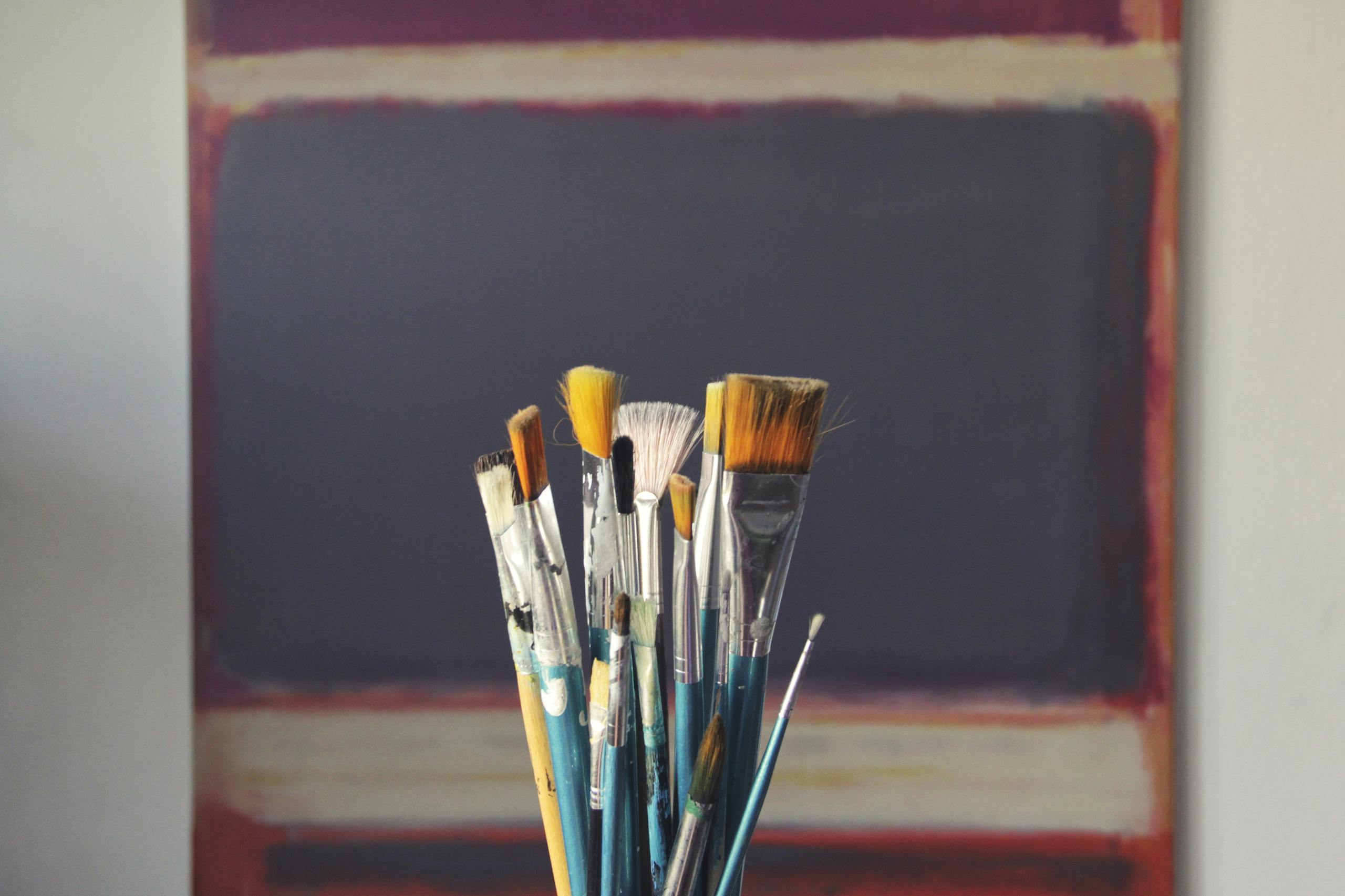
Introverts tend to process experience more deeply than they process it quickly. The mind lingers, turns things over, finds layers in what others might skim past. Minimalist art rewards exactly that kind of looking. A Mark Rothko color field doesn’t give you everything at once. A Agnes Martin grid invites you to notice your own shifting attention. A Donald Judd stack of metal boxes asks you to think about space as a material. These aren’t passive experiences. They’re invitations to go inward while looking outward.
Running an ad agency for two decades meant I was surrounded by visual noise as a professional obligation. Campaigns needed to grab attention, to shout louder than the competition, to compress meaning into three seconds of someone’s scrolling thumb. My team was brilliant at that work. Yet I noticed that the pieces I kept in my own office were almost aggressively spare. A small Hiroshi Sugimoto photograph. A plain ceramic bowl on the windowsill. My creative directors would walk in and joke that my office looked like a waiting room. What they didn’t realize was that I needed it that way to think clearly.
The appeal of minimalism for introverts isn’t about coldness or emotional distance. It’s about signal clarity. When there’s less visual noise, the signal you’re actually receiving becomes more vivid. Emotion doesn’t get diluted by decoration. Meaning isn’t buried under technique.
What Is It About Negative Space That Feels So Restorative?
Negative space is the area in a composition that isn’t occupied by the subject. In minimalist art, negative space isn’t background. It’s an active element. It breathes. It creates pressure and release. And for people who spend a lot of time in their own heads, that breathing room in a visual field can feel genuinely physical.
There’s a useful parallel here with what happens when introverts don’t get enough time alone. The internal pressure builds. Processing slows. Irritability creeps in. You can read more about that specific dynamic in this piece on what happens when introverts don’t get alone time, but the short version is that the introverted nervous system needs space the way lungs need air. Negative space in visual art operates on a similar principle. It’s not emptiness. It’s room to breathe.
I started paying attention to this during a particularly brutal new business period at my agency. We were pitching four major accounts in six weeks, which meant I was in rooms full of people, managing energy I didn’t have, performing enthusiasm I was generating from reserves I couldn’t see. On one of those evenings, I wandered into a gallery showing early work by Ellsworth Kelly. The paintings were enormous and almost completely empty of incident: hard edges, flat color, nothing to decode. I stood in front of one for about twenty minutes without thinking about anything in particular. When I left, something had loosened.
That experience wasn’t mystical. What I think happened was simpler: my visual processing system, which had been working overtime on dense information all day, finally got to rest. Negative space gave it permission to stop searching for the next thing.
There’s growing interest in how aesthetic experiences affect psychological restoration, and the concept of attention restoration, developed in environmental psychology, suggests that certain kinds of environments and stimuli allow directed attention to recover. Minimalist art, with its low complexity and high coherence, seems to function in a similar way for many people who find overstimulating environments draining.
How Does Engaging With Minimalist Art Connect to Solitude and Self-Care?
Solitude isn’t just the absence of other people. It’s the presence of yourself. Minimalist art creates conditions for that kind of presence. When a painting doesn’t give you a story to follow or a puzzle to solve, you’re left with your own response to it. That’s a form of solitude even in a public gallery.
For highly sensitive people in particular, the self-care dimension of engaging with art is worth taking seriously. The practices that restore HSPs tend to share certain qualities: low sensory intensity, room for internal processing, a pace that doesn’t demand performance. You can find a thorough breakdown of those principles in this guide to HSP self-care and essential daily practices. Minimalist art fits within that framework as a practice rather than just a pastime.
Making a regular habit of spending time with minimalist art, whether that means visiting galleries, keeping particular prints in your home, or even spending time with minimalist photography online, functions differently from passive consumption. It’s an active orientation toward stillness. You’re choosing to put your attention somewhere that doesn’t fight for it.
One thing I’ve noticed in my own life is that the spaces where I keep minimalist art become the spaces where I think most clearly. My home office has one small framed print above my desk: a black square on a cream ground, nothing else. People who visit often find it odd. What I know is that when I look up from a difficult problem and rest my eyes on that print, something resets. My thinking becomes less tangled. That’s not coincidence. It’s a designed environment that supports the way my mind works.
The connection between visual environment and cognitive state is something I wish I’d understood earlier in my career. When I finally started designing my physical spaces around my actual needs rather than what I thought a successful agency leader’s office should look like, my work improved noticeably. Less decoration. More air. The minimalist principle applied to the room itself.
Can Creating Minimalist Art Be a Form of Recharging?
Viewing minimalist art is one thing. Making it is another experience entirely, and for many introverts, the creative practice of working in a minimalist mode can be one of the more effective forms of recharging available.
What’s interesting about minimalist creation is that it demands a kind of ruthless editing that suits the introverted tendency toward depth over breadth. You’re not adding elements. You’re removing them. You’re asking, over and over, what’s actually necessary here. That process of reduction mirrors what many introverts do internally all the time: filtering, distilling, cutting through to what actually matters.
There’s also something about solitary creative work that functions as genuine psychological restoration. Research from UC Berkeley’s Greater Good Science Center explores the relationship between solitude and creative thinking, and the connection makes intuitive sense to anyone who’s noticed that their best ideas arrive when they’re alone and quiet, not in a brainstorming session.
I’ve watched this play out with creative people on my teams over the years. The introverted designers and art directors consistently produced their strongest conceptual work in conditions of quiet independence, not in group ideation sessions. One of my best art directors, a deeply introverted woman who was also the most gifted visual thinker I’ve ever worked with, would disappear for hours with a sketchbook and come back with something fully formed. Her work had a spare, considered quality that was unmistakably hers. She wasn’t working minimally because she lacked ideas. She was working minimally because she understood that restraint is its own form of precision.
If you’re drawn to creating as well as viewing, minimalist approaches are accessible without specialized training. Ink on paper, photography with deliberate framing, collage that removes rather than adds, even digital design with a strict constraint on elements. The form matters less than the orientation: what can I take away and still have something true?
How Does Minimalist Art Relate to the HSP Experience of Overstimulation?
Highly sensitive people process sensory and emotional information more deeply than most, which means overstimulation isn’t just an inconvenience. It’s a genuine physiological state that requires recovery. The environment around an HSP matters enormously, and visual environment is part of that equation.
A cluttered, visually busy environment keeps the HSP nervous system in a low-grade state of processing. There’s always something else to register, another detail to integrate. Minimalist visual art, and more broadly a minimalist visual environment, offers a different kind of input: coherent, low-intensity, and paced by the viewer rather than imposed on them.
Sleep is another dimension of HSP recovery that connects to visual environment in ways that aren’t always obvious. A bedroom with too much visual complexity can interfere with the psychological winding-down that precedes sleep. The principles behind HSP sleep and rest strategies often include environmental design as a key element, and minimalism in that space serves the same function it does in art: reducing the demand on a nervous system that’s already done a lot of work.
There’s also a temporal dimension to this. Minimalist art doesn’t expire. You can return to the same piece over months and years and find it different each time, not because the work has changed but because you have. That kind of slow, renewable engagement suits the HSP and introvert experience of depth processing. You’re not consuming it. You’re in relationship with it.
One of the more surprising things I’ve discovered is that the minimalist art I’ve lived with longest has become a kind of marker for my own internal states. A print I’ve had for twelve years looks different to me when I’m depleted than when I’m restored. When I’m running on empty, I notice the edges more, the hard boundaries between color and ground. When I’m well-rested and centered, I notice the interior of the color field, the subtle variations within what looks like flatness. The art hasn’t changed. My capacity to receive it has.
What Role Does Solitude Play in Experiencing Minimalist Art Fully?
There’s a reason that some of the most powerful experiences people report with minimalist art happen when they’re alone in front of a work. Rothko specifically designed his chapel in Houston to be experienced in quiet, and the architecture of that space, stripped of everything decorative, creates conditions for a particular kind of inward attention that’s difficult to access in social contexts.
Solitude isn’t a prerequisite for appreciating art, but for introverts and HSPs, it often deepens the experience considerably. When you’re not managing social dynamics, not monitoring how your reaction compares to the person beside you, not performing appreciation or suppressing confusion, you’re free to have your actual response. And with minimalist art, your actual response is often the entire content of the experience.
The need for that kind of unmediated solitude is something many sensitive people struggle to honor, especially when the culture around them treats alone time as either a symptom of something wrong or a luxury for the uncommitted. The piece on HSP solitude and the essential need for alone time addresses this directly, and the framing there resonates with what I’ve found in my own experience: solitude isn’t withdrawal. It’s a condition for genuine presence.
Visiting galleries alone was something I did for years before I understood why it mattered so much. I’d feel vaguely guilty about it, as though I should be sharing the experience with someone. What I eventually realized was that the solitude wasn’t incidental to the experience. It was the experience. The art required my full attention, and my full attention required not having to split it.
There’s something worth noting here about the relationship between solitude and creativity that goes beyond personal preference. A study published in PubMed Central examining solitude and psychological wellbeing found that voluntary solitude, chosen rather than imposed, correlates with positive outcomes including improved mood and greater self-awareness. Choosing to be alone with art is a specific form of that voluntary solitude, one that combines aesthetic engagement with internal reflection.

How Can Introverts Build Minimalist Art Into Their Recharging Routines?
Treating minimalist art as a genuine recharging practice rather than an occasional cultural outing requires some intentionality. fortunately that it doesn’t require gallery access, significant expense, or a particular level of art education. What it requires is a willingness to create conditions for slow, attentive looking.
A few approaches that have worked for me and for introverts I’ve talked with over the years:
Curate your visual environment deliberately. The art you live with affects your daily baseline more than the art you see occasionally. A single minimalist print in a frequently occupied room does more restorative work than a museum visit once a year. Think about what you’re asking your visual system to process every day.
Schedule alone time in galleries or museums. Not just visits, but specifically alone visits. Many museums have quiet morning hours or less-trafficked weekday times. Treating these as appointments with the same seriousness you’d give a medical appointment changes your relationship to them.
Pair minimalist art with nature. There’s a natural resonance between the spare visual language of minimalism and the restorative qualities of natural environments. The healing power of nature for HSPs is well-documented, and many introverts find that pairing time outdoors with time spent with minimalist art, whether that means landscape photography, natural materials in art, or simply the minimalism of a clear sky, compounds the restorative effect.
Use minimalist art as a transition ritual. One thing I started doing during particularly heavy agency periods was spending five minutes looking at a specific print before starting my workday and five minutes after ending it. That bookending created a psychological boundary between work and not-work that I’d been missing. The art became a signal to my nervous system: this is the transition point.
Consider the digital dimension. Screensavers, desktop backgrounds, and phone wallpapers are visual environments too. Swapping a cluttered or stimulating image for a minimalist one is a small change with a cumulative effect. My phone wallpaper has been a photograph of a single stone in still water for three years. Every time I pick up my phone, there’s a half-second of calm before whatever notification I’m checking. That half-second adds up.
There’s also something to be said for the way minimalist art practices connect to the broader rhythms of introvert self-care. The concept of Mac alone time captures something real about the quality of solitude that matters: it’s not just physical isolation but a particular quality of presence with yourself. Minimalist art can anchor that kind of presence in a concrete, repeatable way.
What Does Minimalism in Art Teach Us About the Introvert’s Relationship to Meaning?
Minimalist art operates on a principle that introverts often live by instinctively: less is more precise. When you strip away everything that isn’t essential, what remains is more clearly itself. That’s true of a painting. It’s also true of a conversation, a relationship, a life.
One of the persistent misreadings of introversion is that it’s about preferring less. Less social contact, less stimulation, less engagement with the world. What it’s actually about is depth over breadth. Introverts don’t want less. They want what they engage with to mean more. Minimalist art is built on exactly that principle. It refuses the accumulation of elements in favor of the intensification of a few.
Spending twenty years in advertising taught me a version of this that I didn’t fully appreciate until later. The campaigns that lasted, the ones that clients remembered years after the contracts ended, were almost always the spare ones. Not the ones with the most production value or the most visual complexity, but the ones with the clearest idea expressed in the fewest elements. The minimalist instinct, it turns out, is also a strategic one. Clarity cuts through noise. Restraint commands attention in ways that spectacle can’t sustain.
That lesson from advertising maps directly onto the introvert experience of meaning-making. Depth of engagement, not breadth of exposure. A few things known well rather than many things known superficially. Minimalist art doesn’t just appeal to introverts aesthetically. It confirms something they already believe about how meaning works.
There’s also a dimension of psychological health here worth naming. Psychology Today’s writing on solitude and health touches on the ways that chosen withdrawal and quiet engagement support emotional regulation and self-awareness. Minimalist art, as a practice of quiet engagement, sits within that larger picture of what it means to take care of yourself as someone wired for interiority.
And there’s the social dimension to consider. The CDC’s research on social connectedness identifies isolation as a genuine health risk, which is worth holding alongside the introvert’s need for solitude. The distinction matters: choosing solitude for restoration is categorically different from social disconnection driven by avoidance or circumstance. Minimalist art practices, when they’re part of a broader self-care orientation, support the former without sliding into the latter. You’re not retreating from the world. You’re building the internal resources to engage with it well.
There’s also emerging work on how aesthetic engagement affects stress physiology. Research published in PubMed Central examining the psychophysiological effects of art viewing suggests that engagement with visual art can have measurable effects on stress markers. Minimalist art, with its low complexity and invitation to slow looking, seems particularly suited to that kind of physiological settling.
Finally, there’s the question of what minimalist art asks of us over time. Most forms of entertainment are designed for single use: you watch the film, you finish the book, you move on. Minimalist art resists that. A spare painting doesn’t give you everything in one viewing. It gives you a different experience each time you come to it with different eyes. For introverts who value depth of engagement over novelty, that renewable quality is part of the appeal. You’re not consuming something. You’re in an ongoing conversation with it.
That ongoing conversation, quiet and internal and entirely your own, is perhaps the truest expression of what minimalist art offers the introverted mind. Not escape. Not entertainment. Something closer to recognition.
If this kind of restorative practice resonates with you, there’s much more to explore. Our complete Solitude, Self-Care and Recharging hub brings together everything we’ve written about the practices that help introverts and sensitive people sustain themselves, from daily routines to deeper questions about what restoration actually means for people wired the way we are.
About the Author
Keith Lacy is an introvert who’s learned to embrace his true self later in life. After 20 years in advertising and marketing leadership, including running agencies and managing Fortune 500 accounts, Keith now channels his experience into helping fellow introverts understand their strengths and build fulfilling careers. As an INTJ, he brings analytical depth and authentic perspective to every article, drawing from both professional expertise and personal growth.
Frequently Asked Questions
Why do introverts tend to prefer minimalist visual art over more complex styles?
Introverts tend to process experience deeply rather than broadly, which means they often find high-complexity visual environments tiring rather than stimulating. Minimalist art, with its emphasis on negative space, restraint, and a small number of carefully chosen elements, gives the introverted mind room to engage at its own pace. There’s no pressure to decode a crowded composition or track multiple competing elements. The work invites slow, deep looking, which aligns naturally with how introverts prefer to engage with the world.
Can engaging with minimalist art actually help with introvert recharging?
Yes, and in ways that go beyond simple relaxation. Minimalist art creates conditions for a particular kind of inward attention that functions similarly to other restorative practices like meditation or time in nature. When your visual system isn’t being asked to process dense information, directed attention gets a chance to recover. Many introverts report that time spent with minimalist art, especially in solitude, leaves them feeling more centered and less depleted than before. Treating it as a deliberate practice rather than an occasional treat amplifies that effect.
Do you need to understand art history to benefit from minimalist art?
Not at all. One of the qualities that makes minimalist art particularly accessible is that it doesn’t require contextual knowledge to have a genuine response to it. The experience of standing in front of a large color field painting or a spare geometric composition is available to anyone willing to slow down and look. Art historical context can add layers of meaning if you’re interested in that dimension, but the restorative and reflective qualities of minimalist art are available without any background knowledge. Your honest response to what’s in front of you is the entire starting point.
How can introverts incorporate minimalist art into their self-care routines without access to galleries?
Gallery access helps but isn’t necessary. Curating your home environment with minimalist prints or photographs is one of the most effective approaches because you’re shaping the visual space you inhabit daily. Digital environments matter too: desktop backgrounds, phone wallpapers, and screensavers all constitute visual input. Many museums also offer high-resolution digital archives of their collections, including minimalist works, that can be viewed at home. The practice is less about where you encounter the art and more about the quality of attention you bring to it: slow, solitary, and without an agenda.
Is there a connection between minimalism in visual art and the broader minimalist lifestyle movement?
There’s a meaningful overlap, though they’re distinct things. Both minimalism in art and minimalism as a lifestyle philosophy share an orientation toward reduction, toward asking what’s actually necessary and removing what isn’t. For introverts, both can serve similar psychological functions: reducing the cognitive and sensory load of daily life, creating space for depth of engagement over breadth, and aligning external environment with internal needs. Many introverts find that an interest in minimalist art naturally extends into thinking about their physical spaces, their schedules, and their social commitments in similar terms. The visual practice can become a kind of gateway to a broader philosophy of intentional reduction.