

Highly sensitive people carry a particular kind of vulnerability that most people never see. It’s not weakness. It’s more like running an operating system with no firewall, where every emotional signal, every shift in tone, every unspoken tension in a room gets processed at full volume. Testing for that vulnerability, understanding where your emotional defenses are exposed, is one of the most practical things a sensitive person can do for their mental health.
If you’ve ever wondered why certain environments drain you completely while others feel safe enough to breathe, the answer often lives in how your nervous system processes threat. Identifying your personal stress triggers, your overwhelm patterns, and your emotional breaking points isn’t pessimistic. It’s strategic. And for highly sensitive people, that kind of self-knowledge can be genuinely life-changing.
Our Introvert Mental Health hub covers the full landscape of emotional wellbeing for introverts and sensitive people, but this particular piece focuses on something more specific: how to actually assess where you’re vulnerable, what conditions expose those vulnerabilities, and what you can do once you know.

What Does It Mean to Test Your Emotional Vulnerabilities as a Sensitive Person?
Most people treat emotional pain reactively. Something bad happens, they feel terrible, they try to recover. Sensitive people, particularly those who identify as highly sensitive persons (HSPs), often don’t have that luxury. By the time the bad thing happens, the nervous system is already overwhelmed, already flooded, already in a state that makes clear thinking nearly impossible.
What’s your personality type?
Take our free 40-question assessment and get a detailed personality profile with dimension breakdowns, context analysis, and personalised insights.
Discover Your Type8-12 minutes · 40 questions · Free
Testing your emotional vulnerabilities means doing the work before the flood. It means asking: what conditions make me most susceptible to overwhelm? Where are the gaps in my self-care that leave me exposed? What emotional environments consistently compromise my ability to function? And perhaps most importantly, what patterns keep repeating that I haven’t yet named?
I spent the better part of two decades running advertising agencies without ever asking those questions. As an INTJ, I was wired to analyze systems, spot inefficiencies, and optimize processes. I applied that thinking to client campaigns, to team structures, to revenue models. It never occurred to me to apply it to my own nervous system until the cost of not doing so became impossible to ignore.
There was a stretch during a particularly brutal new business push, probably 2011 or 2012, when I was running back-to-back client pitches across three time zones. I was sleeping four hours a night, eating at my desk, and managing a team of twelve people who all needed things from me constantly. I didn’t recognize what was happening until I found myself sitting in an airport terminal in Dallas, completely unable to remember which flight I was supposed to be on. Not anxious about it. Just blank. That blankness scared me more than anything else had in years.
What I didn’t have language for at the time was that I’d been running at maximum capacity without any systematic way of knowing how close to the edge I was. I had no early warning system. No way to test where my vulnerabilities were before they became failures.
Why Do HSPs Need a Different Framework for Assessing Stress?
Highly sensitive people process sensory and emotional information more deeply than most. This isn’t a metaphor. It reflects genuine neurological differences in how the brain processes stimuli. The same social situation that barely registers for someone with a less reactive nervous system can be genuinely exhausting for an HSP, not because they’re fragile, but because they’re processing more of it.
That depth of processing is also what makes HSPs perceptive, empathetic, and often extraordinarily capable in roles that require reading between the lines. But it comes with a cost. HSP overwhelm and sensory overload aren’t just about loud noises or bright lights. They’re about the cumulative weight of processing everything at a higher resolution than most people do.
Standard stress assessments weren’t designed with this in mind. A checklist that asks “do you feel overwhelmed at work?” doesn’t capture the difference between ordinary work stress and the specific kind of depletion that comes from spending eight hours in an open-plan office where every conversation, every footstep, every fluorescent flicker is being processed in real time.
HSPs need a more granular framework. One that distinguishes between types of overwhelm, identifies specific triggers rather than general categories, and accounts for the cumulative nature of sensitive-person fatigue. You can feel completely fine on Monday and be in crisis by Thursday, not because anything catastrophic happened, but because the load accumulated faster than your recovery could keep pace with.
The National Institute of Mental Health notes that anxiety disorders are among the most common mental health conditions, and while high sensitivity is not itself a disorder, the nervous system characteristics that define it can make people more susceptible to anxiety when their coping resources are depleted. Knowing where you’re depleted before you’re depleted is the entire point of this kind of self-assessment.

How Do You Identify Your Personal Emotional Trigger Points?
Trigger identification is not about cataloguing everything that upsets you. That list would be long and in the end not very useful. What you’re looking for instead are patterns: the specific conditions, combinations of factors, or environmental features that consistently push you past your threshold.
Start with retrospective analysis. Think back over the last three to six months and identify the five or six moments when you felt most overwhelmed, most depleted, or most emotionally reactive. Don’t just note what happened. Note what led up to it. How much sleep had you gotten in the preceding days? What was your social load like? Were you dealing with any unresolved conflict? Had you had adequate time alone?
One of the HSPs I worked with at my agency, a brilliant creative director who produced some of the best work I’d seen in twenty years, had a pattern she couldn’t initially articulate. She would be fine through weeks of intense project work and then suddenly become unable to function. We eventually traced it to a specific combination: three or more consecutive days of back-to-back meetings plus any unresolved interpersonal tension on the team. Either factor alone she could manage. Together, they were her breaking point every single time.
That kind of specificity is what you’re after. Not “meetings are hard” but “three consecutive days of meetings combined with unresolved conflict depletes me completely within 72 hours.”
Pay particular attention to HSP anxiety patterns that emerge under specific conditions. Anxiety for sensitive people often functions as an early warning signal, a sign that the system is approaching overload before the overload actually hits. Learning to read that signal accurately, rather than dismissing it or catastrophizing it, is one of the most valuable skills a sensitive person can develop.
Some useful questions to work through in your trigger mapping:
- What types of social interactions leave me most depleted? (Conflict, large groups, one-on-one with certain personalities, performance situations)
- What sensory environments consistently wear me down? (Noise, crowds, visual clutter, temperature extremes)
- What emotional labor drains me fastest? (Holding space for others, managing others’ emotions, suppressing my own reactions)
- What recovery conditions do I need most and how often am I actually getting them?
- Where in my life am I regularly tolerating conditions that exceed my threshold?
What Role Does Emotional Processing Play in Your Vulnerability Profile?
Sensitive people don’t just feel things more intensely. They process emotions more thoroughly, which means the emotional residue of an experience can linger long after the event itself has passed. A difficult conversation on Monday can still be affecting your sleep on Thursday. A moment of public criticism can replay in your mind for days, not because you’re weak but because your brain is still working through it.
Understanding your emotional processing patterns as an HSP is central to assessing your vulnerabilities accurately. Some people process primarily through thought, turning experiences over in their minds until they’ve found the meaning in them. Others process through conversation, needing to talk through what happened before they can release it. Still others process somatically, through the body, through movement, rest, or physical sensation.
Knowing your processing style tells you something important: what you need to recover, not just from big events but from the ordinary accumulation of daily experience. If you’re a somatic processor who sits at a desk for ten hours a day with no physical outlet, you’re not just tired at the end of the week. You’re carrying unprocessed emotional material in your body, and that creates vulnerability.
I’m primarily a cognitive processor. I need to think things through to completion before I can let them go. This served me well in the analytical demands of agency leadership, but it also meant that when I was too busy to think, when the pace of the work was faster than my processing could keep up with, things started to back up in ways I didn’t immediately recognize. The stress wasn’t visible in the moment. It showed up two weeks later as irritability, poor decision-making, and an inability to be present in conversations that required genuine attention.
A study published in PubMed Central examining emotional processing and stress response found meaningful connections between how individuals process emotional information and their overall resilience under sustained pressure. For sensitive people, the processing depth that creates vulnerability also creates capacity for recovery, but only when adequate time and conditions for that processing are available.

How Does Empathy Exposure Create Specific Vulnerabilities for Sensitive People?
One of the most underexamined vulnerability points for HSPs is what happens when their empathy is consistently engaged without adequate recovery. Empathy is not a passive experience for sensitive people. It’s active, often involuntary, and genuinely costly in terms of emotional energy.
The capacity that makes HSPs extraordinary listeners, insightful colleagues, and deeply caring friends is the same capacity that leaves them depleted after sustained exposure to others’ emotional states. As the double-edged nature of HSP empathy reveals, the gift and the liability are inseparable. You can’t turn down the empathy without also losing the perceptiveness.
What you can do is monitor your empathy exposure and build in deliberate recovery. Testing your vulnerability in this area means honestly assessing: how much of my daily energy is being spent absorbing and processing other people’s emotional states? And how much of that is voluntary versus involuntary?
During my agency years, I managed a team that included several people I’d now recognize as HSPs. They were my best performers in roles that required deep client relationships, but they also burned out faster than anyone else on the team. At the time, I attributed this to the demands of the work. With more understanding, I can see what was actually happening: they were spending enormous amounts of energy empathically engaging with clients, managing the emotional climate of their teams, and processing the interpersonal complexity of agency life, with no systematic recovery built in.
The vulnerability test here is simple but confronting: track your empathy exposure for two weeks. Note every interaction where you found yourself absorbing someone else’s emotional state, managing someone else’s distress, or suppressing your own reactions to maintain another person’s comfort. Then look at what recovery you had. The gap between those two numbers is your empathy exposure vulnerability.
Where Does Perfectionism Fit Into Your Vulnerability Assessment?
Perfectionism is one of the most common and least examined vulnerabilities in sensitive people. It shows up not just as high standards but as a particular relationship with failure, criticism, and the gap between what you produced and what you imagined you could produce.
For HSPs, perfectionism often has an emotional rather than purely achievement-based root. The fear isn’t just of doing something badly. It’s of the emotional experience of having done something badly, the shame, the self-criticism, the replaying of what went wrong. That anticipatory dread can be more paralyzing than the actual failure would be.
Research from Ohio State University examining perfectionism and emotional wellbeing found that the self-critical dimension of perfectionism, rather than high standards themselves, is most strongly associated with anxiety and burnout. This distinction matters enormously for HSPs, because many sensitive people have genuinely high standards that serve them well. The vulnerability isn’t the standards. It’s the self-punishment when those standards aren’t met.
Assessing your perfectionism vulnerability means looking honestly at how high standards become a trap for HSPs rather than a strength. Ask yourself: when I don’t meet my own expectations, what happens internally? How long does the self-criticism last? Does it affect my willingness to attempt similar things in the future? Does it spread, contaminating my sense of competence in areas unrelated to the original shortfall?
My own perfectionism showed up most visibly in client presentations. I’d spend days preparing material that was genuinely excellent, then spend the night before the presentation convinced it wasn’t good enough. The anxiety wasn’t about the work. The work was fine. It was about my inability to tolerate the possibility of falling short in front of people whose opinions mattered to me. That’s a vulnerability. And naming it as such, rather than calling it “high standards,” changed how I managed it.

How Does Rejection Sensitivity Amplify Emotional Exposure?
Sensitive people often experience rejection, real or perceived, with an intensity that can seem disproportionate to observers who don’t share that sensitivity. A colleague who doesn’t respond to an email, a friend who cancels plans, a client who chooses a different agency: these can register as genuine emotional pain rather than minor inconveniences.
This isn’t irrationality. It’s a function of the same depth of processing that makes HSPs perceptive and empathetic. When you invest deeply in relationships and interactions, the withdrawal of connection or approval carries real weight. Understanding how HSPs process rejection and find healing is part of mapping your complete vulnerability profile.
The vulnerability test for rejection sensitivity involves two questions. First: how quickly do I interpret ambiguous social signals as rejection? A late reply, a brief response, a neutral tone in an email, do these consistently read as negative to me even when there’s no clear evidence they are? Second: how long does the experience of rejection, even minor rejection, stay with me? Hours? Days? Weeks?
High scores on both questions suggest that rejection sensitivity is a significant vulnerability point, one that’s worth building specific coping strategies around rather than simply trying to be less sensitive about it. The American Psychological Association’s research on resilience consistently points to self-awareness as a foundational element of emotional recovery. Knowing that rejection hits you hard is not a reason for shame. It’s information that helps you build appropriate support structures.
I lost a significant piece of business in 2015, a Fortune 500 account we’d held for seven years. The client left for a larger agency, which was a reasonable business decision on their part and had nothing to do with the quality of our work. I knew that intellectually. Emotionally, I spent three months processing it as a personal failure. The distinction between “we lost a client” and “I failed” wasn’t available to me for a long time. That’s rejection sensitivity doing what rejection sensitivity does.
What Practical Assessment Tools Actually Work for Sensitive People?
Generic stress inventories have limited value for HSPs because they weren’t designed with sensory and emotional depth processing in mind. More useful are assessment approaches that account for the specific features of sensitive-person experience.
One practical framework is what I think of as a weekly capacity audit. At the end of each week, rate yourself on five dimensions: sensory load (how much environmental stimulation you absorbed), emotional labor (how much you spent managing others’ feelings or suppressing your own), processing backlog (how much unresolved emotional material you’re still carrying), recovery quality (how restorative your downtime actually was), and social drain versus gain (whether your interactions this week left you more or less resourced).
Rate each on a simple one-to-ten scale. Don’t overthink the numbers. The value isn’t in the precise score but in the pattern over time. After four to six weeks, you’ll start to see which dimensions consistently run high, which recovery strategies actually move the needle, and what combinations of factors predict your worst weeks.
A complementary approach is the environment audit. Systematically assess the environments where you spend the most time, your workspace, your home, your social contexts, and evaluate each against your known sensory and emotional needs. Where are the gaps? Where are you regularly tolerating conditions that exceed what your nervous system can comfortably sustain?
Research published in PubMed Central examining the relationship between environmental factors and psychological wellbeing suggests that for people with higher sensory sensitivity, environmental conditions have a meaningfully larger impact on stress levels and cognitive performance than they do for less sensitive individuals. This validates what many HSPs already know intuitively: environment isn’t background. It’s a primary variable in how you function.
A third useful tool is the relationship energy map. List the ten people you interact with most regularly, then note whether each interaction typically leaves you more energized or more depleted. This isn’t about judging those people or cutting them out of your life. It’s about understanding your relational energy economy and making conscious choices about where you invest your most limited resource.
How Do You Build Recovery Into Your Life Once You Know Where You’re Vulnerable?
Assessment without action is just a more detailed picture of your suffering. Once you’ve mapped your vulnerabilities, the work shifts to building systems that address them proactively rather than reactively.
Recovery for sensitive people is not optional and it’s not a reward for getting through a hard week. It’s maintenance, the same way sleep is maintenance rather than a treat. The question isn’t whether you need recovery. You do. The question is what form of recovery actually works for you and whether you’re getting enough of it.
Some HSPs recover through solitude and silence. Others need movement. Some need creative expression. Some need the specific kind of connection that feels safe and low-demand, a close friend, a pet, a walk in nature. The clinical literature on stress and burnout consistently identifies individualized coping strategies as more effective than generic prescriptions, which is particularly relevant for sensitive people whose recovery needs are often quite specific.
What I eventually built for myself, after that blank moment in the Dallas airport and several more like it, was a set of non-negotiables. Not aspirational self-care goals. Actual non-negotiables that I protected the way I protected client deadlines. Two hours of genuine solitude every day. No work email after 8 PM. A weekly half-day with no scheduled obligations. These weren’t luxuries. They were the minimum conditions under which I could function at the level my work required.
The University of Northern Iowa’s research on reflective practice points to the value of structured self-reflection in building sustainable performance over time. For sensitive people, that reflection isn’t just professionally useful. It’s a core recovery mechanism, the way the nervous system makes meaning of what it’s been through and prepares for what comes next.
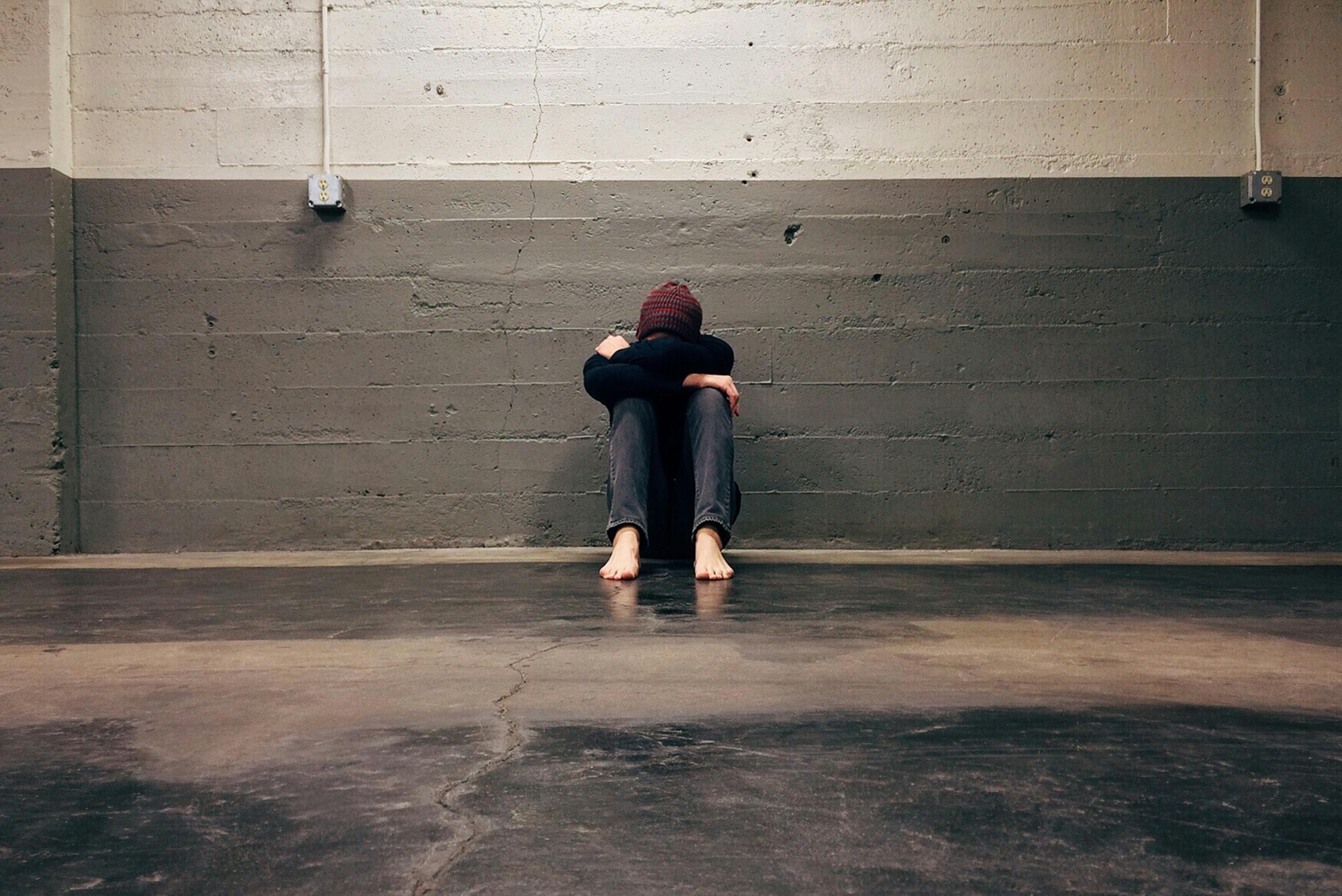
Building recovery into your life also means getting honest about the conditions you’ve been tolerating that you don’t have to. Many sensitive people accept environments, relationships, and workloads that consistently exceed their capacity because they’ve internalized the message that their needs are excessive. They aren’t. They’re specific. And specificity is something you can work with.
The Psychology Today Introvert’s Corner has long documented how introverts and sensitive people often find themselves managing social and environmental expectations that simply weren’t designed with their needs in mind. Recognizing this as a structural problem rather than a personal failing is part of building a sustainable relationship with your own sensitivity.
If you want to continue exploring these themes, the full range of resources on emotional wellbeing for sensitive people is available in our Introvert Mental Health hub. It’s worth spending time there if any of this resonates.
About the Author
Keith Lacy is an introvert who’s learned to embrace his true self later in life. After 20 years in advertising and marketing leadership, including running agencies and managing Fortune 500 accounts, Keith now channels his experience into helping fellow introverts understand their strengths and build fulfilling careers. As an INTJ, he brings analytical depth and authentic perspective to every article, drawing from both professional expertise and personal growth.
Frequently Asked Questions
What does it mean to test for emotional vulnerability as a highly sensitive person?
Testing for emotional vulnerability means systematically identifying the specific conditions, environments, and combinations of factors that consistently push you past your capacity. For HSPs, this involves mapping sensory triggers, emotional labor demands, empathy exposure, and recovery deficits rather than relying on generic stress assessments that weren’t designed with sensitive nervous systems in mind.
How is HSP overwhelm different from ordinary stress?
HSP overwhelm differs from ordinary stress in both depth and duration. Sensitive people process sensory and emotional information more thoroughly, which means stimulation that barely registers for others can be genuinely exhausting for an HSP. The overwhelm also tends to be cumulative, building across days or weeks rather than spiking and resolving quickly, which makes it harder to identify and easier to underestimate until it becomes a crisis.
Can perfectionism make emotional vulnerability worse for sensitive people?
Yes, significantly. For HSPs, perfectionism often has an emotional root rather than a purely achievement-based one. The fear of falling short is amplified by the anticipation of the emotional experience of failure, including shame, self-criticism, and the tendency to replay what went wrong. This creates a vulnerability loop where the dread of imperfection can be more depleting than the actual imperfection would be.
What recovery strategies work best for highly sensitive people?
Effective recovery for HSPs is highly individual, but common elements include genuine solitude (not just being alone while still mentally engaged with others), sensory rest in low-stimulation environments, physical movement that allows somatic processing, creative expression, and close connection with people who feel emotionally safe. The most important factor is identifying what actually restores you versus what merely distracts you, and then protecting that recovery time as a non-negotiable rather than an optional reward.
How do you know if rejection sensitivity is a significant vulnerability for you?
Two indicators suggest rejection sensitivity is a meaningful vulnerability: first, a consistent tendency to interpret ambiguous social signals as negative even without clear evidence, and second, an extended recovery time after experiences of rejection or perceived rejection. If minor social friction, a brief email reply, a cancelled plan, or a neutral tone in conversation regularly produces significant emotional pain that lingers for days, rejection sensitivity is likely playing a substantial role in your overall vulnerability profile.