Stonewall riot art captures something that purely historical accounts often miss: the interior lives of people who fought back not because they were loud by nature, but because silence had finally become unbearable. The art born from and inspired by the Stonewall uprising tells a story about queer identity, resistance, and the particular kind of courage that comes from people who process the world deeply, who feel everything fully, and who choose connection over self-protection when the stakes are high enough.
What strikes me most about this body of work is how much of it is intimate rather than bombastic. It whispers before it shouts. And that quality, that inward turn before the outward expression, resonates with something I recognize in myself and in many of the introverts I write for.

Art rooted in the Stonewall uprising offers a window into how marginalized people build connection, sustain love, and protect their sense of self under pressure. Those themes extend well beyond LGBTQ+ history. They speak directly to anyone who has ever felt the tension between who they are privately and who the world demands they be publicly. If you’re exploring how introversion shapes your relationships and romantic life, our Introvert Dating and Attraction hub examines these dynamics from many angles, including how quiet people find and sustain deep connection.
What Does Stonewall Riot Art Actually Look Like?
Stonewall riot art is not a single style or movement. It encompasses protest posters, murals, painted portraits, illustration, photography, and more recently digital work that references the 1969 uprising at the Stonewall Inn in Greenwich Village. Some of it is confrontational and graphic. Some of it is tender and elegiac. A significant portion of it centers on faces, on individual people rendered with enough specificity that you feel you know them.
That emphasis on the individual face matters. The Stonewall uprising involved people who had spent years hiding, suppressing, and compartmentalizing their identities. The art that emerged from that history often insists on visibility as its central act. To paint a face clearly, to refuse to obscure or soften it, became a form of political statement.
Artists like Keith Haring, who came of age in the decades after Stonewall and whose work was deeply shaped by queer activism, used bold lines and repeating figures to suggest community and solidarity. Other artists working closer to the event itself, including those involved in the Gay Liberation Front’s early visual culture, produced work that was rawer and more urgent, photocopied flyers and hand-lettered signs that carried the energy of something made under pressure.
What connects all of it is an insistence on emotional truth. These weren’t images designed to be comfortable. They were designed to be felt.
Why Do Introverts Connect So Deeply With Art About Resistance?
I’ve spent a lot of time thinking about why certain kinds of art land so differently for introverts than for others. Running advertising agencies for two decades, I worked with creative teams constantly, and I noticed something consistent: my introverted designers and art directors responded most powerfully to work that carried emotional weight beneath its surface. They weren’t drawn to spectacle for its own sake. They wanted to find something when they looked closely.
Stonewall riot art operates exactly that way. The surface may be bold, but the depth is where the real content lives. The grief, the defiance, the tenderness, the humor, none of it is handed to you immediately. You have to sit with it.
Introverts tend to process emotion and information in layers. We notice what’s underneath. We’re drawn to things that reward sustained attention rather than quick consumption. Art that came out of a movement built on survival and solidarity, on people protecting each other and insisting on their right to exist, offers exactly that kind of layered experience.
There’s also something specific about the theme of hidden identity that resonates. Many introverts, regardless of sexual orientation or gender identity, have experience with the gap between their interior life and what they present to the world. We know what it feels like to hold something carefully inside, to be selective about who sees the real version of us. Stonewall riot art speaks to that experience directly, even for people whose reasons for concealment are entirely different.
Psychology Today has written about how romantic introverts experience connection as something deeply personal and often difficult to express outwardly. That internal richness, that full emotional life that doesn’t always show on the surface, is exactly what Stonewall art tends to honor. It makes space for people whose inner world is vast even when their outer presentation is quiet.
How Does Art About Queer Resistance Illuminate Introvert Relationship Patterns?
One of the things I find most compelling about Stonewall riot art is how much of it is about relationship rather than solitude. The uprising itself was a collective act. The art that documents and honors it is full of people reaching toward each other, protecting each other, standing together in doorways and on sidewalks and in the streets.
That relational quality offers something worth sitting with if you’re an introvert thinking about your own patterns in love and friendship. Introverts are sometimes characterized as preferring solitude to connection, but that framing misses something important. Most introverts I know, and most of what I’ve observed in myself, want deep connection intensely. What we resist is shallow connection, performance, the exhausting requirement to be “on” constantly.
The people depicted in Stonewall riot art weren’t performing for anyone. They were being themselves, often for the first time in public, in a context where that authenticity carried real risk. That’s a different kind of courage than extroverted visibility. It’s the courage of the person who has spent years knowing who they are privately and finally refusing to let that self be invisible.
Understanding how introverts fall in love and form relationship patterns helps explain why this kind of art resonates so specifically. Introverts tend to build connection slowly, carefully, with a lot of internal processing happening before anything becomes visible externally. The people at Stonewall had been doing exactly that kind of internal work for years before that night in June 1969.
What Can Queer Art History Teach Introverts About Expressing Love?
One of the most striking features of the visual culture that grew from the Stonewall era is how it developed its own vocabulary for expressing love and care. Because mainstream culture didn’t offer queer people many images of their relationships, artists had to build those images themselves. The result was a body of work that is often extraordinarily tender, portraits of partners together, images of community care during the AIDS crisis, illustrations of the small domestic moments that constitute a life shared with someone.
That tenderness is instructive. When you can’t rely on conventional scripts for how love should look, you have to pay attention to what love actually does. You have to notice the specific gestures, the particular ways one person shows up for another, the small acts that accumulate into something substantial.
Introverts often express love in exactly this way. Not through grand declarations or constant verbal affirmation, but through presence, through attention, through remembering the details. The way introverts show affection tends to be specific and considered rather than broad and performative. Stonewall riot art, at its best, captures that same quality of specificity. It shows love in the particular rather than the general.
During my agency years, I managed a creative director who identified as queer and who brought an extraordinary sensitivity to every campaign brief we worked on together. She had an ability to find the emotional core of a story and render it visually in a way that felt true rather than manufactured. What I understood only later was that she had spent years developing that skill in her personal life, learning to see and honor what others overlooked, because her own experience had taught her that the overlooked things are often the most important.
That kind of attention, trained by the necessity of finding meaning in spaces that weren’t built for you, is something many introverts share. We develop it differently, but the underlying orientation is similar: look closely, feel deeply, express carefully.
How Does Collective Vulnerability in Art Mirror Introvert Intimacy?
Vulnerability is a complicated subject for introverts. We often have rich emotional lives that we share selectively, with people who have earned that access. The idea of being vulnerable in public, of exposing the interior self to an audience that might not handle it carefully, can feel genuinely threatening rather than liberating.
Stonewall riot art navigates this tension in interesting ways. Some of it is confrontational and deliberately exposed, refusing to let viewers look away from pain or desire or anger. But much of it creates a kind of protected intimacy, images that feel like they’re meant for people who will understand them, not for a general audience that needs everything explained.
That selective vulnerability, the art that speaks clearly to those who are ready to receive it while remaining somewhat opaque to others, mirrors how many introverts experience emotional intimacy. We don’t hide our feelings because we don’t have them. We share them with people who have demonstrated they can hold them.
When two people with this orientation find each other, something specific happens. When two introverts fall in love, the relationship often develops through a series of careful disclosures, each one testing whether the other person can be trusted with something real. It’s slow, and it can feel precarious, but the connections that form through that process tend to be extraordinarily solid.
The queer artists who built the visual culture around Stonewall understood this instinctively. They were making work for communities that had learned to read carefully, to look for the signals that indicated safety, to trust slowly and love fiercely once trust was established.
What Role Does Emotional Sensitivity Play in Both Art and Introvert Relationships?
Many of the artists who contributed to the visual legacy of Stonewall and the broader queer liberation movement were what we might now recognize as highly sensitive people. They were attuned to emotional nuance in ways that made their work resonate deeply, and they were also often more vulnerable to the emotional weight of the environments they were documenting.
Highly sensitive people, whether or not they identify as introverts, share some of the same relational challenges. They feel things intensely. They process conflict carefully and often painfully. They need partners who understand that sensitivity isn’t weakness, it’s a different way of being in the world. If you’re in a relationship where emotional sensitivity is a central dynamic, the guidance in our complete HSP relationships dating guide offers practical frameworks for making that work.
The art that came from the Stonewall era is often saturated with this kind of sensitivity. It doesn’t smooth over grief or anger. It holds them together, acknowledging that love and loss and rage and tenderness can coexist in the same moment, in the same image, in the same relationship.
One study published through PubMed Central examined how emotional processing differences affect relationship satisfaction, finding that people who process emotions more deeply tend to form stronger attachments when they find partners who can match that depth. That pattern shows up vividly in queer relationship history, where people who had been denied conventional relationship scripts often built connections of remarkable depth and durability.
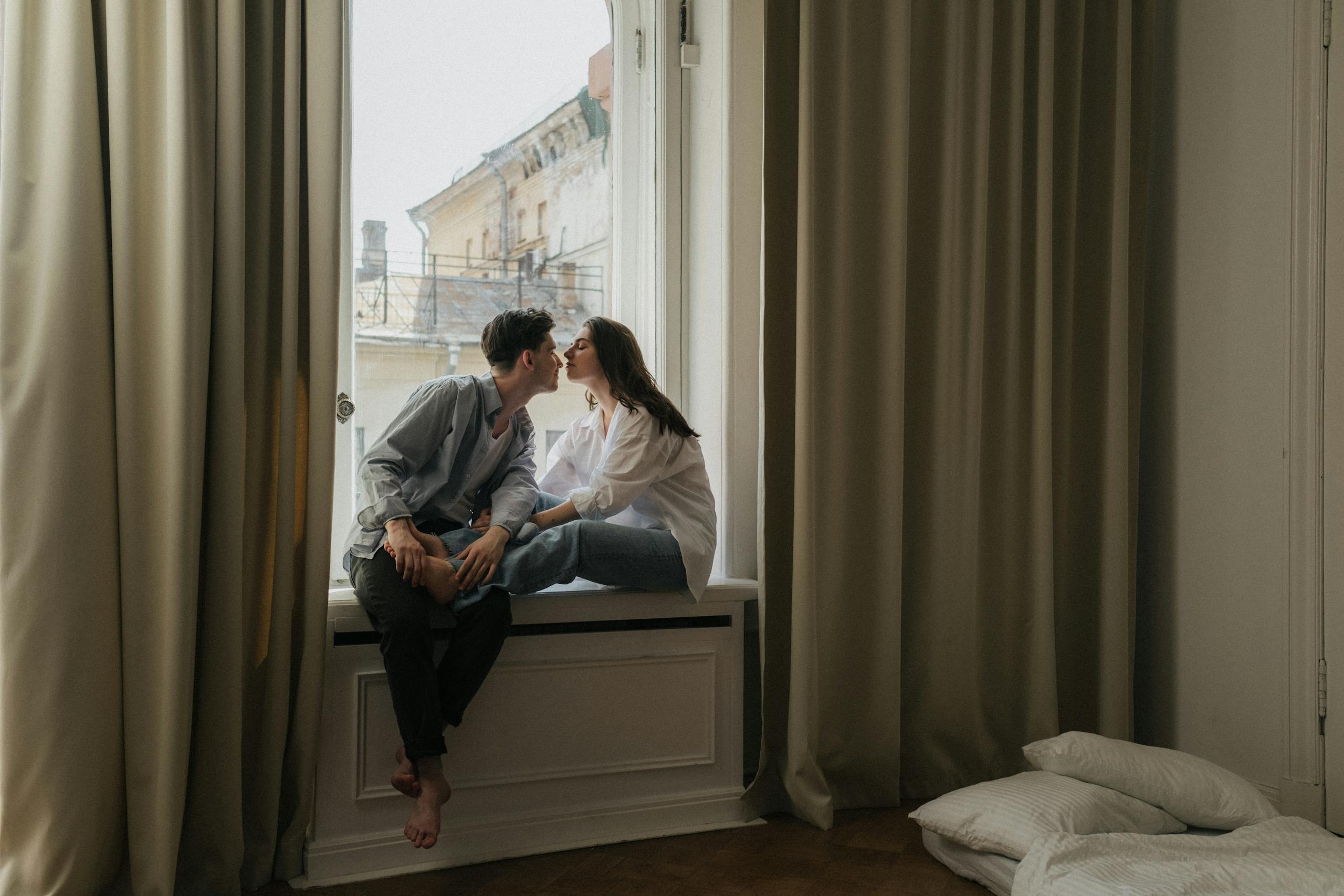
I saw this dynamic play out in my own professional life. The most sensitive people on my creative teams, the ones who felt client feedback most acutely and who needed more recovery time after difficult presentations, were also consistently the ones whose work connected most powerfully with audiences. Their sensitivity wasn’t a liability. It was the source of their insight.
How Does Art About Identity Help Introverts Process Their Own Emotional Lives?
Art has always served a processing function. Long before anyone had language for what we now call emotional intelligence or psychological integration, people were making images that helped them understand their own interior experiences. Stonewall riot art does this work in a particularly concentrated way.
Looking at a portrait of someone who faced the same tension you face, between an authentic self and a world that wants something different from you, can be profoundly organizing. It gives external form to something that has been living only internally. It says: this is real, this is worth depicting, this deserves to exist in the world as an image.
For introverts, who often do a great deal of their processing internally and who can sometimes feel isolated by the depth of their own inner lives, art that externalizes complex emotional experience can be genuinely helpful. It’s not therapy, but it performs some of the same functions: it names things, it makes the invisible visible, it creates a sense of being understood.
Understanding how introverts experience and handle love feelings often requires exactly this kind of external reference point. Many introverts find it easier to understand their own emotional experience when they encounter it reflected somewhere outside themselves, in a book, in a conversation, or in a piece of art that captures something they’ve felt but haven’t been able to articulate.
Healthline has noted that common myths about introverts often mischaracterize us as emotionally limited or socially indifferent, when the reality is nearly the opposite. Introverts typically feel things deeply; what varies is how and with whom we express those feelings. Art gives us a medium for that expression that doesn’t require the same kind of real-time social performance that conversation demands.
What Does Stonewall Art Reveal About Conflict, Repair, and Resilience in Relationships?
Not all Stonewall riot art is celebratory. Some of it is raw with grief, particularly the work that emerged during the AIDS crisis of the 1980s, which decimated the communities that had built themselves in the years after Stonewall. That art, ACT UP posters, the Names Project quilt, the photographs of people caring for dying partners, documents what happens when love is tested by forces completely outside the relationship itself.
What strikes me about that body of work is how clearly it shows that love isn’t just about connection during good times. It’s about the capacity to stay present during difficulty, to handle conflict and loss without retreating into self-protection, to repair rather than abandon.
Introverts can struggle with conflict in relationships. Not because we don’t care, but because conflict is often loud and immediate and requires real-time emotional processing that doesn’t suit how we’re wired. We tend to need time to think before we respond. We process internally before we can speak clearly. That can look like withdrawal to a partner who interprets silence as indifference.
The practical tools for handling this are worth knowing. Handling conflict peacefully when you’re highly sensitive requires specific strategies, including how to communicate your need for processing time without making your partner feel shut out. The queer couples depicted in post-Stonewall art had to develop similar strategies, working out how to stay connected across differences in emotional expression and processing style.
Additional research available through PubMed Central on relationship resilience suggests that couples who develop explicit communication strategies for handling disagreement tend to sustain connection better over time than those who rely on implicit understanding. That finding has particular relevance for introverts, whose implicit communication style can be misread by partners who haven’t learned to interpret it.
How Can Engaging With Stonewall Art Deepen an Introvert’s Sense of Self?
There’s a particular kind of self-recognition that happens when you encounter art that was made for people who live the way you live. Not art that describes you from the outside, but art that seems to come from somewhere close to your own interior experience.
I had this experience unexpectedly at a gallery show in New York during my agency years. I was there for a client event, not particularly focused on the work itself, when I stopped in front of a large photograph from the early 1970s. It showed two people sitting together in what looked like a small apartment, not looking at the camera, not performing for anyone, just present with each other in a way that felt completely private. The image had been taken without their awareness, or at least it felt that way.
Something about it stopped me. I stood there longer than I’d stopped anywhere else that evening, trying to understand what I was responding to. What I eventually recognized was that the image showed a kind of intimacy I understood: the intimacy of two people who don’t need to perform for each other, who can simply exist together in the same space. That’s the kind of connection I’d always wanted and had struggled to articulate.
Art that comes from communities that have had to define their own terms for love and connection often captures this quality. It shows us what intimacy looks like when it’s built from scratch rather than inherited from convention. For introverts who have sometimes felt that conventional relationship scripts don’t quite fit them, that can be clarifying in ways that are hard to overstate.

Psychology Today’s exploration of how to connect with an introvert in dating contexts touches on this need for authentic rather than performative connection. The visual language of Stonewall riot art, with its insistence on showing people as they actually are rather than as they’re supposed to appear, models exactly the kind of authenticity that introverts tend to crave in their relationships.
The 16Personalities resource on introvert-introvert relationship dynamics is worth reading alongside any engagement with this kind of art. Both the art and the relationship research point toward the same truth: depth requires risk, and the people who build the most meaningful connections are usually those who have learned to take that risk deliberately rather than waiting until it feels completely safe.
Stonewall riot art doesn’t let you stay comfortable. It asks you to feel something, to recognize something, to carry something away with you. That’s not a passive experience. It’s a form of engagement that suits introverts well, because it happens at our own pace, in our own interior space, and produces insights that are genuinely ours rather than borrowed from someone else’s louder processing.
If you’re exploring how your introversion shapes the way you love, attract, and connect with others, the full range of resources in our Introvert Dating and Attraction hub covers everything from first connections to long-term partnership, all through the lens of what actually works for people wired the way we are.
About the Author
Keith Lacy is an introvert who’s learned to embrace his true self later in life. After 20 years in advertising and marketing leadership, including running agencies and managing Fortune 500 accounts, Keith now channels his experience into helping fellow introverts understand their strengths and build fulfilling careers. As an INTJ, he brings analytical depth and authentic perspective to every article, drawing from both professional expertise and personal growth.
Frequently Asked Questions
What is Stonewall riot art and why does it matter today?
Stonewall riot art refers to the visual art, protest imagery, murals, photography, and illustration created in response to or inspired by the 1969 Stonewall uprising in New York City. It matters today because it preserves the emotional and political experience of a pivotal moment in LGBTQ+ history, and because its themes of identity, resistance, and authentic connection continue to resonate with anyone who has felt pressure to hide or suppress who they truly are.
Why might introverts feel a particular connection to art from the Stonewall era?
Introverts often have rich interior lives that don’t map neatly onto external expectations, and many have experience with the gap between their private self and their public presentation. Stonewall riot art speaks directly to that tension, honoring the courage it takes to be authentic when authenticity carries risk. The art also tends to reward sustained, careful attention rather than quick consumption, which suits how many introverts prefer to engage with meaningful material.
How does queer art history relate to introvert relationship patterns?
Queer art history, particularly the visual culture that grew from the Stonewall era, documents communities that built their own definitions of love, intimacy, and partnership outside conventional scripts. Introverts often find that conventional relationship scripts don’t quite fit their experience either, and the art that came from queer communities offers alternative models: relationships built on careful trust, specific tenderness, and deep rather than broad connection. These patterns align closely with how many introverts naturally approach love.
Can engaging with Stonewall art help introverts understand their own emotional lives better?
Art has long served a processing function, helping people give external form to interior experiences that are difficult to articulate. For introverts, who often process emotion internally and can feel isolated by the depth of their inner lives, art that externalizes complex emotional experience can be genuinely organizing. Stonewall riot art, which deals honestly with love, loss, anger, tenderness, and resilience, offers introverts a mirror for experiences they may have felt but struggled to name.
What lessons about conflict and repair in relationships does Stonewall art offer?
The art that emerged from the Stonewall era, particularly the work produced during the AIDS crisis, documents love under extreme pressure. It shows relationships tested by forces outside the partnership itself, and it depicts the repair work, the staying present, the continuing to care, that sustains connection through difficulty. For introverts who tend to struggle with real-time conflict because they need time to process before responding, this art models a kind of resilient love that doesn’t require constant verbal expression to remain solid.