
Interview meditation is a focused mindfulness practice done before a job interview to calm the nervous system, sharpen mental clarity, and help you access your natural strengths rather than performing under pressure. For introverts especially, a short meditation session before walking into an interview room can shift the entire experience from reactive to intentional.
Most interview prep advice focuses on what to say. This focuses on how to arrive, centered, grounded, and genuinely yourself.

If you’ve ever walked into an interview feeling like you left your best self in the parking lot, many introverts share this in that experience. Many introverts describe the same thing: they rehearsed every answer, knew the company inside out, had genuine enthusiasm for the role, and then something happened between the car and the conference room. The noise of the building, the receptionist’s small talk, the fluorescent lights, the ambient stress of other candidates in the waiting area. By the time they sat down, they were already running on adrenaline instead of insight.
That’s not a character flaw. That’s an introvert’s nervous system doing exactly what it’s designed to do: process everything.
Our Career Skills and Professional Development hub covers a wide range of topics for introverts building careers on their own terms, and interview preparation sits right at the heart of that work. What I want to add here is something most career coaches skip entirely: the inner preparation that happens before you say a single word.
Why Do Introverts Feel So Drained Before Interviews Even Begin?
There’s a specific kind of exhaustion that comes from anticipatory social performance. I know it well. Running advertising agencies for over two decades meant I was constantly preparing for high-stakes presentations, new business pitches, and client reviews. Some of those felt like interviews in all but name. You’re selling yourself and your thinking to people who are evaluating you in real time.
What I noticed, especially in my earlier years when I was still trying to perform extroversion, was that I’d burn through enormous mental energy before the meeting even started. I’d be rehearsing in my head, monitoring my body language in the elevator reflection, calculating how enthusiastic I should sound. By the time I sat across from a client, I was already depleted.
As an INTJ, my natural mode is internal and strategic. I do my best thinking when I’ve had time to process quietly, not when I’m reacting in real time to social stimulation. The pre-interview environment, with its noise and unpredictability and ambient performance pressure, runs directly counter to that wiring. And I suspect many introverts reading this recognize exactly what I’m describing.
What Psychology Today notes about how introverts think reinforces something I’ve observed firsthand: introverts tend to process information more thoroughly and through longer pathways than extroverts. That depth is a genuine strength in an interview context. The challenge is that it requires a calmer internal environment to function well. When the nervous system is flooded, that processing capacity gets hijacked by threat-response instead.
Interview meditation addresses exactly that. It’s not about becoming someone different. It’s about clearing the static so the real you can actually show up.
What Does Interview Meditation Actually Look Like in Practice?

Let me be direct about something: interview meditation doesn’t require a meditation cushion, an app subscription, or twenty minutes of silence in a lotus position. What it requires is a few intentional minutes of redirecting your attention before you walk into a high-pressure situation.
consider this I’ve found actually works, both from my own experience and from watching how the quieter, more reflective people on my teams handled pressure over the years.
The Breath Anchor Technique
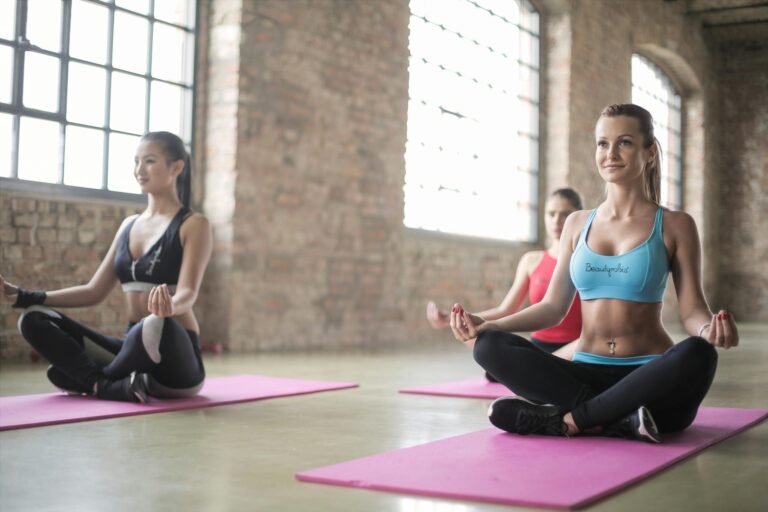
Find a quiet spot, your car, a bathroom stall, a corner of a lobby, anywhere you can have two minutes without being interrupted. Set a gentle timer if that helps. Then simply count your exhales from one to ten, and repeat. That’s it. When your mind wanders to what you’re going to say about your five-year plan, you notice it, and return to the count.
The physiological mechanism here is real. Slow, deliberate breathing activates the parasympathetic nervous system, which counteracts the fight-or-flight response that gets triggered by social evaluation. Research published in PubMed Central has documented the relationship between controlled breathing and reduced anxiety markers, which supports what many mindfulness practitioners have observed anecdotally for decades.
The Intention Setting Practice
After you’ve settled your breath, take thirty seconds to set a single intention for the conversation ahead. Not a goal like “get the job” or “impress the hiring manager.” An intention more like: “I want to be genuinely curious about this role” or “I want to listen well and respond from what I actually think.”
This matters because it reframes the interview from a performance to a conversation. Introverts tend to do better in genuine conversations than in performances, and that shift in framing can change everything about how you carry yourself in the room.
The Strengths Recall
Spend one minute deliberately recalling a moment when you were genuinely effective. Not a rehearsed answer for the interview, but a real memory. A time you solved something difficult, communicated clearly, or contributed something meaningful. Let yourself feel the specificity of it.
This isn’t positive thinking in the fluffy sense. It’s priming your memory with evidence of your actual capability, so that when you’re asked about your strengths, you’re drawing from lived experience rather than scrambling for something impressive-sounding.
How Does This Differ for Highly Sensitive Introverts?
Not every introvert is a highly sensitive person, and not every HSP is an introvert, but there’s significant overlap. And for those who carry both traits, the pre-interview environment can feel genuinely overwhelming in a way that goes beyond typical nerves.
I managed a creative director once, an INFJ and clearly a highly sensitive person, who was exceptional at her work and absolutely brilliant in small client meetings. Put her in a formal panel interview with four people firing questions across a conference table, and she’d come out looking like a fraction of herself. She knew it too. It wasn’t lack of preparation. It was sensory and emotional overload that her system simply hadn’t been given tools to manage.
If you recognize yourself in that description, the meditation practices above still apply, but you may need to extend your buffer time significantly. Getting to the location early enough to sit quietly for ten to fifteen minutes before going inside can be the difference between arriving dysregulated and arriving present.
There’s a lot more to explore on this topic. My piece on HSP job interviews and showcasing sensitive strengths goes deeper into how highly sensitive people can reframe their traits as assets in the hiring process, which pairs naturally with what we’re covering here about internal preparation.
One specific addition for HSPs: consider doing a sensory check-in during your pre-interview meditation. Notice what’s tight, what’s loud, what’s uncomfortable. You’re not trying to fix it, just acknowledge it. That simple act of naming your sensory experience can reduce its grip on your attention, freeing up mental bandwidth for the conversation ahead.

Can Meditation Actually Help You Think More Clearly During the Interview?
Yes, and the reason connects directly to how introvert cognition works under pressure.
When your nervous system is activated, your working memory takes a hit. That’s not a weakness specific to introverts. It’s basic human neuroscience. What makes it particularly relevant for introverts is that our natural interview strengths, depth of thought, careful listening, nuanced response, all depend heavily on that working memory functioning well.
An extrovert who’s nervous might still be able to talk energetically and fill the silence. An introvert who’s nervous often goes quiet, loses the thread of what they were saying, or gives answers that feel thin compared to what they actually know. The knowledge is there. The access to it is what gets blocked.
Meditation, even briefly practiced, helps restore that access. The Frontiers in Human Neuroscience journal has published extensively on how mindfulness practices affect attention regulation and cognitive flexibility, both of which are directly relevant to performing well in an interview context.
I’ll share something personal here. Later in my agency career, I started doing a version of this before major new business pitches. Not a formal meditation, but a deliberate quiet period where I’d sit in my car and just breathe and think about what I genuinely believed about the work we were presenting. Not what I wanted the client to think. What I actually thought. That shift made me a more confident presenter, not because I was more polished, but because I was more grounded. The ideas came from somewhere real.
What About the Productivity and Procrastination Side of Interview Prep?
There’s a version of interview preparation that never quite gets done. You tell yourself you’ll research the company tonight, practice your answers tomorrow, prepare your questions by the weekend. And somehow the interview arrives and you’re less ready than you wanted to be.
For many introverts, especially those with perfectionist tendencies, the preparation phase carries its own anxiety. If you can’t do it perfectly, there’s a pull to delay it. And the more important the interview, the stronger that pull can be.
My article on HSP procrastination and understanding the block addresses the emotional roots of this pattern in detail. What I want to add here is that meditation can actually help with the preparation phase too, not just the day-of nerves.
A short meditation before a preparation session, five minutes of breath-focused quiet before you open your notes, can reduce the background anxiety that makes preparation feel so heavy. When your nervous system is calmer, the work feels more manageable. You’re less likely to avoid it.
Separately, thinking about how you work best, what conditions support your focus and output, is part of a broader self-awareness that helps in interviews too. Understanding your own productivity patterns makes you a more articulate self-advocate in the room. My piece on HSP productivity and working with your sensitivity explores this from a workplace angle that applies directly to how you present yourself as a candidate.
How Do You Handle Feedback and Criticism After an Interview Doesn’t Go Well?
Not every interview goes the way you hoped. And for introverts, especially those who process deeply and take things personally, a difficult interview experience can linger in ways that affect the next one.
I’ve seen this pattern in people I’ve hired and mentored over the years. Someone has a rough interview, replays it obsessively, and carries that self-criticism into subsequent opportunities. The meditation practice that helps before an interview can also help after one, giving you a way to process the experience without being consumed by it.
Sit with what happened. Breathe through it. Separate what you’d genuinely do differently from the story your inner critic is constructing about what it means about you as a person. Those are very different things, and meditation creates enough mental space to tell them apart.
There’s also a broader skill worth developing here. Handling critical feedback without collapsing under it is something many sensitive people find genuinely difficult. My article on HSP criticism and handling feedback sensitively offers a framework for processing that kind of input in a way that’s constructive rather than destabilizing.

Does Knowing Your Personality Type Change How You Prepare?
Significantly, yes. And not just in the abstract sense of knowing you’re introverted. Understanding your specific type, your tendencies around communication, your stress responses, your natural strengths in conversation, gives you something concrete to work with in both your preparation and your meditation practice.
As an INTJ, I know that my natural interview strength is strategic thinking and confident conviction about ideas I’ve had time to develop. My natural challenge is small talk and the expectation of spontaneous warmth. Knowing that lets me prepare differently. I don’t try to become someone who loves small talk. I prepare the substance of my thinking deeply enough that my conviction carries the conversation past the awkward opening.
Your type shapes what you need from a meditation practice too. An INFP might use the quiet time to reconnect with their values and why this particular role matters to them. An ISTP might use it to mentally review the logical structure of their key talking points. An ENFJ who leans introverted might use it to recover from the social stimulation of the commute. There’s no single script.
If you haven’t done a thorough personality assessment in a professional context, the employee personality profile test resource I’ve put together walks through what these assessments actually measure and how to use the results practically. Understanding your profile isn’t just useful for self-reflection. It shapes how you present yourself authentically in interviews.
There’s also the matter of what kinds of roles actually suit your wiring. Introverts sometimes interview for positions that sound impressive but will drain them within six months. Knowing your type can help you evaluate fit more honestly, not just whether you can do the job, but whether the environment will support you doing it well over time. My article on medical careers for introverts is a good example of how specific career paths can align with introvert strengths in ways that aren’t always obvious from the outside.
What Should the Meditation Sound Like If You Use a Guided Version?
Some introverts do better with a voice to follow, especially when anxiety makes self-directed focus difficult. If that’s you, consider this to look for in a guided meditation specifically suited to interview preparation.
Avoid anything that’s too cheerleader-ish. Phrases like “you’re amazing and everyone will love you” tend to ring hollow when you’re genuinely nervous, and they can actually increase pressure by raising the stakes of performance. What you want is something grounding, not hype.
Good guided options will typically include a body scan to release physical tension, breath regulation to calm the nervous system, and some form of visualization that’s realistic rather than fantastical. Visualizing yourself speaking clearly and thoughtfully is useful. Visualizing a standing ovation is not.
Many meditation apps have specific tracks for performance anxiety or professional situations. Even a general five-minute breathing meditation is more useful than nothing. The format matters less than the consistency of practice. Using the same short routine before every interview creates a kind of ritual signal to your nervous system that it’s time to settle.
One note on timing: don’t meditate and then immediately walk into the building. Give yourself a few minutes of gentle transition, a slow walk from the car, a quiet moment in the lobby. The meditation creates a calm state, and you want to carry that into the room, not jolt yourself out of it by rushing.
How Do You Stay Grounded When the Interview Takes an Unexpected Turn?
Every introvert who’s interviewed enough has had this experience. You prepared thoroughly for a standard interview and walked into a case study exercise, a panel of eight people, or a hiring manager who spent the first fifteen minutes talking about themselves and then asked you to summarize your entire career in sixty seconds.
Unexpected formats are disorienting for anyone, but they can be especially destabilizing for introverts who prepared carefully for a specific kind of conversation. The mental flexibility required to adapt quickly is exactly the kind of cognitive resource that gets depleted by pre-interview anxiety.
This is where the meditation practice pays dividends beyond what you might expect. When you’ve spent even five minutes in a genuinely grounded state before the interview, you have a reference point to return to when things get unpredictable. Your breath is always available. A single slow exhale in the middle of a curveball question can reset your thinking enough to respond from your actual intelligence rather than your panic.
I remember pitching a Fortune 500 client once where the decision-maker walked in twenty minutes late, clearly hadn’t read our brief, and opened by asking us to scrap our presentation and “just talk.” Fifteen years earlier, that would have wrecked me. By that point, I’d developed enough of an internal anchor that I could actually see it as an opportunity. A conversation suited my strengths far better than a formal presentation anyway. But I had to be grounded enough to recognize that in the moment.
That kind of adaptability is something you can build deliberately. Walden University’s overview of introvert strengths highlights the capacity for careful listening and thoughtful response as genuine advantages in professional conversations, and those qualities become accessible when you’re not running on adrenaline.

What’s the Long-Term Practice That Makes This Stick?
One meditation before one interview is better than nothing. A consistent practice that you return to regularly is what actually changes your relationship with high-pressure professional situations.
The reason is simple: you can’t build a reliable internal anchor in a crisis. You build it in the quiet ordinary moments, and then it’s there when you need it. Introverts who meditate regularly, even briefly, report that they feel more like themselves in social and professional situations because they’ve spent more time with themselves outside of those situations.
That self-familiarity is actually a competitive advantage in interviews. When you know what you think, what you value, and what you’re genuinely good at, those answers come from a different place than when you’re constructing them under pressure. Interviewers can feel the difference, even if they can’t articulate why.
There’s also a confidence dimension worth naming. Not the performed confidence that looks like aggressive eye contact and a firm handshake, but the quieter confidence of someone who has spent time with their own mind and trusts what they find there. Academic work exploring introversion and professional performance suggests that introverts’ tendency toward self-reflection can support stronger self-awareness, which translates directly into more authentic self-presentation in interviews.
Start small. Five minutes in your car before the interview. Three minutes of breath counting in a bathroom. A single slow walk around the block before you go inside. Build from there. The practice doesn’t need to be elaborate to be effective. It needs to be consistent enough that your nervous system starts to recognize it as a signal: this is the moment to settle.
And if you’re at the stage of building broader career skills alongside this kind of inner work, the full range of topics we cover in our Career Skills and Professional Development hub offers practical guidance across everything from workplace communication to salary conversations to finding the right fit for your personality.
About the Author
Keith Lacy is an introvert who’s learned to embrace his true self later in life. After 20 years in advertising and marketing leadership, including running agencies and managing Fortune 500 accounts, Keith now channels his experience into helping fellow introverts understand their strengths and build fulfilling careers. As an INTJ, he brings analytical depth and authentic perspective to every article, drawing from both professional expertise and personal growth.
Frequently Asked Questions
How long should interview meditation last?
Even five minutes is enough to meaningfully shift your nervous system state before an interview. The goal isn’t a deep meditative trance but a brief, intentional reset that helps you access your natural strengths rather than reacting from anxiety. If you have more time, ten to fifteen minutes offers a more thorough settling effect, particularly for highly sensitive introverts who need longer to decompress from the stimulation of travel and new environments.
What if I’ve never meditated before? Can I still do this before an interview?
Absolutely. You don’t need prior experience. The simplest version, counting slow exhales from one to ten and repeating, requires no training and produces real results. If you want more structure, a basic guided meditation app can walk you through it. what matters isn’t technique. It’s the intention to pause and settle before walking into a high-pressure situation, and that’s available to anyone regardless of experience.
Does interview meditation work for virtual interviews too?
Yes, and in some ways virtual interviews make it easier to practice. You can meditate in your own space, close your laptop, sit quietly for five minutes, and then open it again when you’re centered. The challenge with virtual interviews for many introverts is the odd social dynamic of performing on camera in a familiar space, which can feel disorienting. A brief meditation beforehand helps establish a clear mental transition between “home mode” and “interview mode.”
Can meditation help me give better answers, or just feel calmer?
Both, and they’re connected. When your nervous system is less activated, your working memory functions better, which means you can access your knowledge, experiences, and ideas more fluidly. Introverts often know more than they can demonstrate under pressure. Meditation doesn’t add information to your mind. It removes the interference that blocks access to what’s already there. The result tends to be answers that feel more genuine and more complete than what you might produce while running on adrenaline.
What’s the difference between interview meditation and just sitting quietly?
Sitting quietly can help, but meditation adds intentional direction to that quiet. Without a focus point, a quiet mind can easily drift into anxious rehearsal, worst-case scenarios, or obsessive review of your resume bullet points. Meditation gives your attention something specific to anchor to, your breath, a count, a physical sensation, which interrupts that anxious loop and produces a genuinely different mental state. The intention matters as much as the silence.