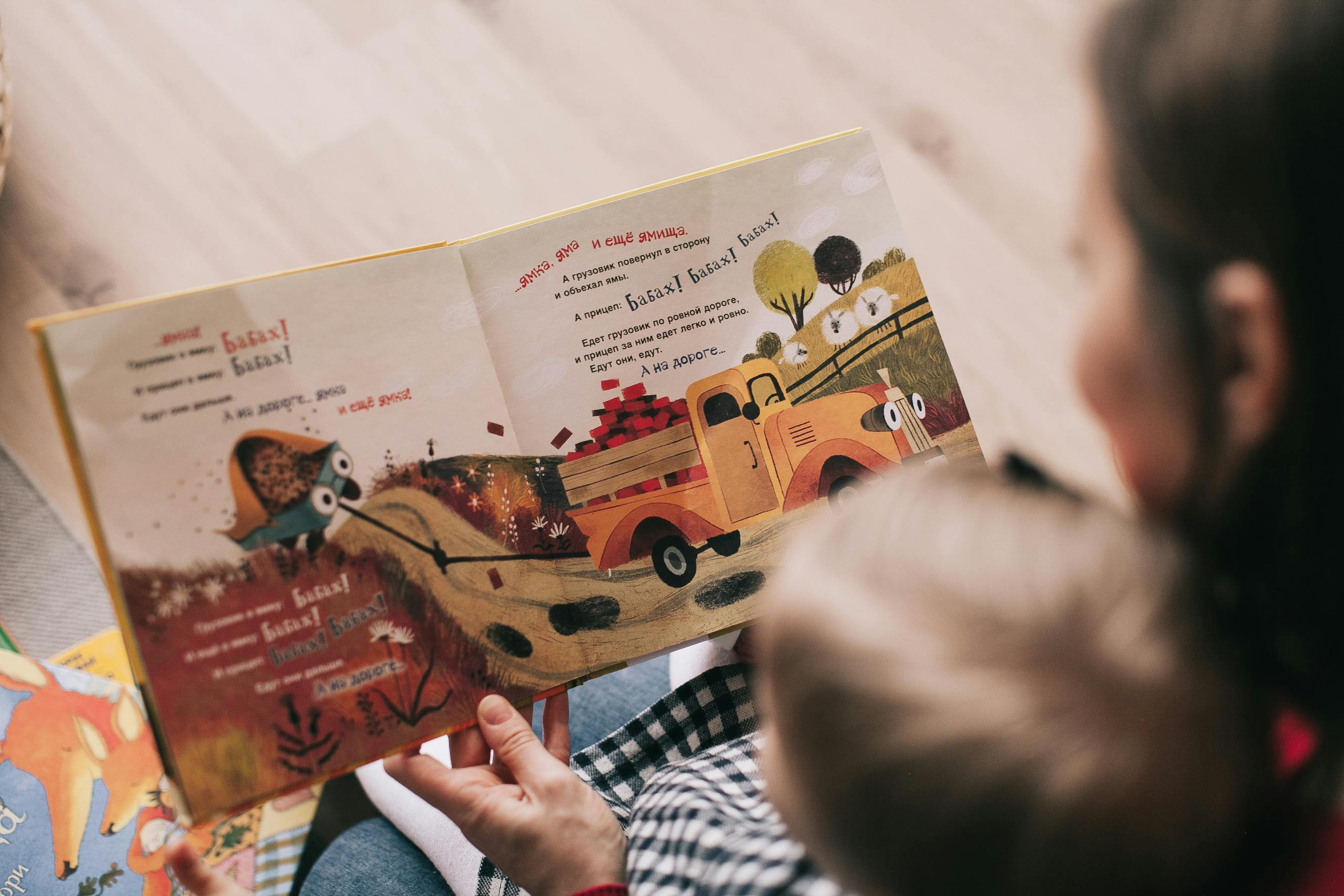

An early childhood education journal is more than a record of developmental milestones. For introverted parents, it becomes a private space to process the overwhelming sensory and emotional weight of raising small children, to notice what others miss, and to make sense of a season of life that rarely slows down long enough for quiet reflection.
Keeping one changed how I showed up as a parent. Not because I suddenly had answers, but because writing things down gave my introverted mind the processing room it needed to stop reacting and start observing.

If you’re an introverted parent trying to be present in the chaos of early childhood without losing yourself completely, you’ll find a lot to explore in our Introvert Family Dynamics and Parenting hub, where we cover the full range of challenges and strengths that introverted parents bring to family life.
What Does an Early Childhood Education Journal Actually Do for Parents?
Most people think of childhood journals as scrapbooks with dates. Baby’s first steps. First words. A pressed flower from a Sunday walk. Those things matter, but they’re not what I mean when I talk about an early childhood education journal as a tool for introverted parents.
What’s your personality type?
Take our free 40-question assessment and get a detailed personality profile with dimension breakdowns, context analysis, and personalised insights.
Discover Your Type8-12 minutes · 40 questions · Free
What I mean is something more deliberate. A structured, ongoing record of how your child is developing, how you’re responding to that development, and what patterns you’re beginning to notice. It’s part observation log, part emotional processing space, part educational roadmap.
Early childhood, roughly defined as birth through age eight, is when the foundations of language, emotional regulation, social behavior, and cognitive development are being laid. The National Institutes of Health has documented how infant temperament in these early years can predict personality traits that persist into adulthood, including introversion itself. What happens in these years matters deeply, and a journal helps you pay attention to it in real time.
For introverted parents specifically, journaling creates something essential: a private channel for processing the relentless stimulation of parenting young children. I ran advertising agencies for over twenty years, managing teams, clients, and deadlines at a pace that never really stopped. Even in that environment, I found ways to carve out quiet processing time. As a parent, that felt almost impossible. Young children don’t schedule their crises. They don’t wait for you to decompress before needing something else. A journal became one of the few places where I could catch up with myself.
Why Do Introverted Parents Feel So Overwhelmed in the Early Years?
There’s a particular kind of exhaustion that introverted parents know well. It’s not just physical tiredness from interrupted sleep and constant movement. It’s the depletion that comes from being needed without pause, from a world that has suddenly become very loud, very tactile, and very immediate.
As an INTJ, my natural mode is internal. I process information by turning it inward, examining it from multiple angles before responding. Young children don’t allow for that. They want a response now, a reaction now, a face that mirrors their excitement or distress now. That constant demand for external engagement is draining in a way that’s hard to explain to parents who are naturally energized by interaction.
This is compounded for parents who are also highly sensitive. If you recognize yourself in that description, the piece on HSP parenting and raising children as a highly sensitive parent speaks directly to this overlap between introversion and sensory sensitivity in the parenting context.
The Psychology Today overview of family dynamics points out that parenting styles are shaped significantly by personality, temperament, and how parents experienced their own childhoods. For introverted parents, the early years can trigger a kind of identity confusion: you love your child completely, and you also desperately need quiet. Those two things feel contradictory even when they aren’t.
Keeping a journal doesn’t solve the exhaustion. But it gives it a container. When I started writing down what was happening with my child, and what was happening inside me in response, I stopped carrying everything in my head. That alone reduced a significant amount of mental pressure.

What Should an Introverted Parent Actually Write in an Early Childhood Education Journal?
There’s no single correct format, but certain categories of observation tend to be most useful when you look back on them later. I’d organize them into four areas.
Developmental Observations
Note what your child is doing, not just milestones but patterns. How do they respond to new people? Do they need time to warm up before engaging, or do they move toward novelty immediately? Do they play alone contentedly, or do they seek constant interaction? These observations matter because they help you understand your child’s temperament early, before anyone starts labeling it as shyness or antisocial behavior.
Understanding temperament is connected to broader personality frameworks. If you’re curious about how personality traits are measured and categorized beyond MBTI, the Big Five Personality Traits test offers a different lens, one that’s widely used in developmental psychology and can help parents understand both their own and their child’s natural tendencies.
Your Emotional Responses
This is the part most parents skip, and it’s the most valuable. Write down how you felt during difficult moments. Not just what happened, but what it triggered in you. When my child had a meltdown in a grocery store, my instinct was shame and overstimulation in roughly equal measure. Writing that down helped me separate my child’s experience from my own reaction to it.
For introverted parents, emotional responses often arrive delayed. We process internally, which means we might not fully register what we felt in a given moment until hours later. A journal captures that delayed processing. You can write in the evening what you couldn’t access in the afternoon.
Patterns Over Time
Single entries are useful. A year of entries is something else entirely. Patterns emerge that you’d never notice in real time. A child who consistently struggles on Mondays might be processing the transition from weekend to weekday. A child who acts out after playdates might be overstimulated rather than misbehaving. You only see these things when you have a record to look back on.
I used a version of this approach in my agency work. When we were managing large accounts for Fortune 500 clients, I kept detailed notes on client communication patterns, not because anyone asked me to, but because I noticed that problems rarely came from nowhere. They had precursors. The same is true in parenting. Behavior that seems sudden almost always has a pattern behind it.
Questions and Intentions
End each entry with a question or an intention. What do you want to try differently? What are you curious about? What do you want to pay attention to next week? This forward-facing element keeps the journal from becoming purely retrospective and turns it into a living document you’re actively working with.
How Does Journaling Help Introverted Parents Communicate Better With Their Children?
One of the quieter benefits of keeping an early childhood education journal is what it does to your attunement. Attunement is the ability to read and respond to your child’s emotional state accurately. It’s not about being expressive or effusive. It’s about noticing.
Introverted parents are often naturally good observers. We notice things. The problem is that in the daily rush of parenting, those observations don’t always translate into action because we haven’t had time to process them. Writing creates that translation layer.
There’s also something worth acknowledging about how introverted parents can sometimes be perceived. The likeable person test touches on this: warmth and likeability are often measured by external expressiveness, and introverted parents who are internally warm but externally quiet can be misread by their children as distant or uninterested. Journaling helps you become more conscious of the gap between what you feel and what you’re showing, and gives you a chance to close it intentionally.
A study published in PubMed Central examining parental reflective functioning found that parents who actively reflect on their children’s inner experiences tend to raise children with stronger emotional regulation. Reflective functioning doesn’t require extroversion. It requires attention and honesty, both of which introverted parents often have in abundance when given the right conditions.

What Happens When You Ignore Your Own Needs While Journaling for Your Child?
Here’s a trap I fell into early on. I started keeping detailed observations about my child’s development, and I was thorough about it. What I wasn’t doing was tracking my own state. I was treating myself as the neutral observer, the constant, the one who didn’t need monitoring.
That’s a mistake introverted parents make more often than we realize. We’re so accustomed to processing internally that we forget to check in on what’s actually accumulating. Burnout in parenting doesn’t announce itself. It builds quietly, the same way it did for me in the agency years, until one day you’re sitting in a meeting or at a dinner table and you realize you have nothing left.
The American Psychological Association’s resources on trauma are relevant here in a broader sense: chronic stress and emotional depletion, even without a single traumatic event, can have real effects on how we parent and how we connect. Introverted parents who are running on empty often withdraw further, which children can experience as rejection even when it isn’t.
Adding a brief self-check to your journal entries, even just a sentence or two about your own energy level and emotional state, changes the whole dynamic. You start seeing correlations. Days when you had some restorative time, even thirty minutes alone, you show up differently. Days when you had none, the journal reflects it in how you describe interactions with your child.
Some parents find it useful to also reflect on their own mental health patterns during this period. If you’re noticing emotional responses that feel disproportionate or difficult to understand, tools like the Borderline Personality Disorder test can offer a starting point for self-understanding, though any clinical concerns should always be followed up with a qualified professional.
How Can an Early Childhood Education Journal Support Your Child’s Learning at Home?
Beyond the emotional and relational dimensions, an early childhood education journal has a genuinely practical educational function. Early childhood, particularly ages two through six, is a period of extraordinary cognitive development. Language acquisition, number sense, spatial reasoning, and social cognition are all developing rapidly. Parents who observe and document this development are better positioned to support it.
Introverted parents often have a natural advantage here. We tend toward depth rather than breadth. We’re more likely to spend forty-five minutes exploring one interesting question with a child than to rush through a dozen activities. That’s not a limitation. That’s a pedagogical strength.
In my agency work, I noticed that the most effective creative teams weren’t the loudest ones. They were the ones that went deep on a problem before presenting solutions. The same principle applies to early childhood learning. Depth of engagement matters more than volume of activity.
Your journal can track what genuinely captures your child’s attention. What questions do they ask repeatedly? What books do they want read again and again? What play scenarios do they return to? These patterns reveal a child’s emerging interests and cognitive style. If your child consistently gravitates toward building and spatial play, that tells you something. If they’re drawn to narrative and character, that tells you something different.
For parents who are considering more structured roles in early childhood education or care, either as parents or professionals, it’s worth noting that the skills developed through careful observation and documentation are directly relevant. The personal care assistant test online covers some of the foundational competencies involved in supporting children’s development in more formal contexts.

What Does the Research Tell Us About Journaling and Child Development?
Parent observation and documentation have a long history in early childhood education theory. Educators working in traditions like Reggio Emilia have placed parent and teacher documentation at the center of learning for decades, not as assessment tools but as ways of making children’s thinking visible.
The broader developmental literature supports the value of parental attentiveness. A PubMed Central paper examining parent-child interaction quality found that consistent, attuned parental responsiveness in early childhood is associated with better outcomes across social, emotional, and cognitive domains. Journaling supports attunement by making observation a habit rather than an accident.
What’s worth noting is that attunement doesn’t require constant physical presence or high-energy engagement. It requires accuracy: the ability to read your child’s signals correctly and respond in ways that feel resonant to them. Introverted parents who are naturally inclined toward careful observation can develop strong attunement even if their style is quieter than average.
Personality also plays a role in how parents approach education at home. If you want a broader framework for understanding your own educational style and how it shapes your parenting, the certified personal trainer test offers an interesting parallel: both parenting and coaching require you to understand how your own personality shapes the way you teach, motivate, and support others.
How Do You Keep a Journal Consistently When Life With Small Children Is Relentless?
Consistency is the hardest part. Not because introverted parents lack discipline, but because the conditions for quiet reflection are genuinely scarce when you have young children.
A few things helped me maintain the habit without making it feel like another obligation.
First, I lowered the bar dramatically. Three sentences count. A single observation counts. The goal isn’t a polished document. It’s a record. On the hardest days, I wrote one thing I noticed and one thing I felt. That was enough to maintain the thread.
Second, I stopped trying to write in the morning. Mornings with young children are chaotic, and I’m not a morning processor anyway. My best thinking happens late, after the house is quiet. That’s when I wrote. Find the window that matches your natural rhythm, not the one that looks most virtuous.
Third, I kept the journal accessible. Not in a drawer. Not on a shelf. On the kitchen counter, where I’d see it. The friction of finding it was enough to stop me on tired evenings. Removing that friction made a real difference.
Some parents find digital formats work better. Voice memos while driving, a notes app while waiting at pickup. The medium matters less than the consistency. What you’re building over months and years is a record of your child’s development and your own growth as a parent, and that record is worth protecting.
Personality type shapes how you’ll sustain this habit. The 16Personalities piece on introvert dynamics is a useful reminder that introversion isn’t monolithic: some introverted parents will thrive with structured journal prompts, others will find that constraining. Know which you are and set up your practice accordingly.
What an Early Childhood Education Journal Reveals About You, Not Just Your Child
After a year of keeping a journal, something unexpected happened. I started reading back through old entries and realized the journal had documented my own development as much as my child’s.
I could see where I’d been reactive and where I’d been present. I could see the entries from weeks when I’d had no time alone, and I could see exactly how that showed up in my parenting. I could also see genuine growth: moments where I’d handled something with more patience than I would have a year earlier, where I’d read my child’s needs accurately and responded well.
That kind of self-knowledge is rare in parenting. The daily work of it is so consuming that there’s almost no space for reflection on how you’re doing. A journal creates that space artificially, and for introverted parents who process through reflection, it becomes something genuinely sustaining.
I spent years in advertising trying to perform a version of leadership that didn’t fit me. Loud, spontaneous, always on. When I finally stopped performing and started leading from my actual strengths, including the capacity for deep observation and careful analysis, everything got better. Parenting asked me to make the same shift. The journal was part of how I did it.
Personality frameworks like the Truity overview of rare personality types remind us that how we’re wired shapes everything, including how we parent. Understanding your own type isn’t self-indulgence. It’s the foundation of showing up authentically for the people who need you most.

There’s much more to explore about how introverted parents can build family lives that honor both their children’s needs and their own. The full range of these topics lives in our Introvert Family Dynamics and Parenting hub, and it’s worth spending time there if this article resonated with you.
About the Author
Keith Lacy is an introvert who’s learned to embrace his true self later in life. After 20 years in advertising and marketing leadership, including running agencies and managing Fortune 500 accounts, Keith now channels his experience into helping fellow introverts understand their strengths and build fulfilling careers. As an INTJ, he brings analytical depth and authentic perspective to every article, drawing from both professional expertise and personal growth.
Frequently Asked Questions
What is an early childhood education journal?
An early childhood education journal is a structured record that parents or educators keep to document a young child’s developmental progress, behavioral patterns, and learning experiences from birth through approximately age eight. For introverted parents, it also serves as a personal processing space for the emotional and sensory demands of raising young children.
How often should I write in an early childhood education journal?
Consistency matters more than frequency. Even three to four entries per week, kept brief, will build a meaningful record over time. Many introverted parents find that writing in the evening, after children are in bed, fits their natural processing rhythm better than trying to journal during the day. The goal is a sustainable habit, not a perfect document.
Can an early childhood education journal help with parenting burnout?
Yes, particularly for introverted parents. Writing regularly about both your child’s experiences and your own emotional state creates a feedback loop that helps you identify when your reserves are depleted before you reach a breaking point. Many parents report that the act of writing itself provides a small but meaningful window of quiet processing that reduces cumulative stress.
What should I include in an early childhood education journal?
Useful categories include developmental observations such as language, social behavior, and play patterns; your own emotional responses to challenging or meaningful moments; patterns you notice over time; and forward-facing questions or intentions for the coming week. Including your own state alongside your child’s observations makes the journal significantly more useful for understanding the parent-child dynamic.
Are introverted parents at a disadvantage in early childhood parenting?
Not at all. Introverted parents often bring genuine strengths to early childhood parenting: deep observation, comfort with quiet play, preference for meaningful one-on-one connection, and the capacity for patient, sustained attention. The challenges introverted parents face tend to center on energy management and the mismatch between their need for solitude and the constant availability that young children require, not on any deficit in warmth or capability.