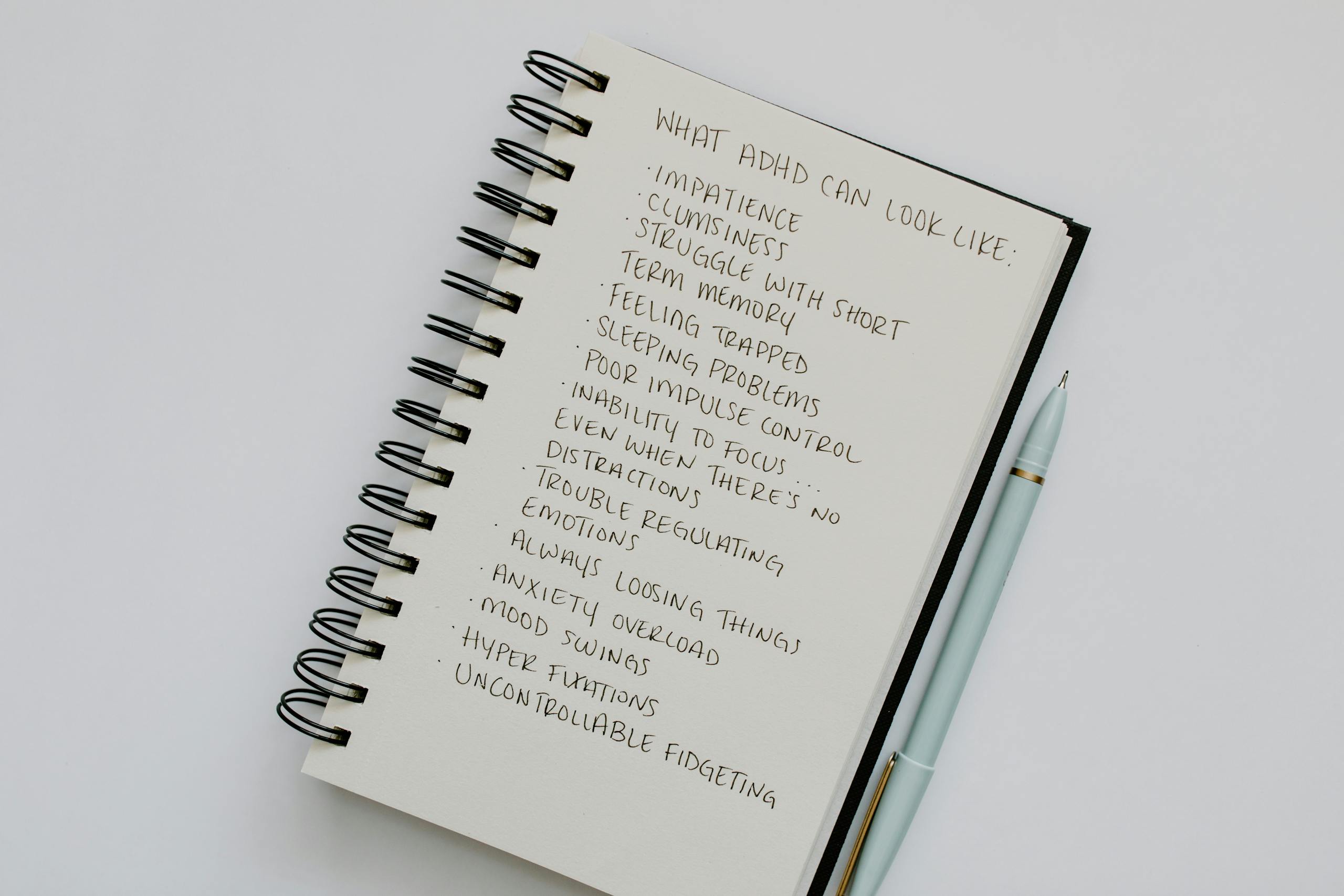

An AN journal, short for automatic negative thoughts journal, is a structured writing practice where you record the intrusive, self-critical thoughts that surface throughout your day, examine what triggered them, and challenge whether they actually hold up to scrutiny. At its core, it gives your inner critic a page to speak on, so you can finally talk back. For anyone who processes the world internally, this kind of written dialogue can be one of the most clarifying mental health tools available.
My own relationship with journaling started out of necessity, not intention. Running an advertising agency meant carrying a constant mental load: client expectations, staff dynamics, creative deadlines, and the particular pressure of being a quiet person in a loud industry. I didn’t know then that what I was doing in my late-night notebooks had a name. I was cataloguing my automatic negative thoughts without realizing it was a recognized psychological practice.
If you’ve ever stared at a blank page wondering what to actually write, or wondered whether journaling is doing anything at all, this article walks through real examples of AN journal entries, what they reveal about our inner lives, and why this practice can be especially powerful for those of us wired for deep internal reflection.

Mental health for introverts is a layered topic, and AN journaling is just one piece of it. Our Introvert Mental Health hub covers the full spectrum of what affects us emotionally, from sensory overload to anxiety to the way we process rejection, and this practice fits naturally into that broader picture of self-understanding.
What Exactly Is an AN Journal and Where Does It Come From?
The concept of automatic negative thoughts originates from cognitive behavioral therapy, developed in large part through the work of Aaron Beck in the 1960s. Beck observed that his patients experienced rapid, involuntary thoughts that shaped their emotional state, thoughts they often didn’t even recognize as thoughts. They felt like facts. The foundational principles of CBT are built around identifying these cognitive distortions and replacing them with more accurate, balanced thinking.
What’s your personality type?
Take our free 40-question assessment and get a detailed personality profile with dimension breakdowns, context analysis, and personalised insights.
Discover Your Type8-12 minutes · 40 questions · Free
An AN journal is the written application of that process. You capture the thought, note the situation that triggered it, rate how strongly you believe it, identify what cognitive distortion it represents (catastrophizing, mind reading, all-or-nothing thinking), and then write a more realistic response. Over time, the journal becomes a record of your mental patterns, a kind of map of where your mind habitually goes under pressure.
What struck me when I first encountered this framework formally was how precisely it described what I’d been doing instinctively. As an INTJ, my mind is always running analysis in the background. After a difficult client presentation, I’d go home and mentally replay every moment, every facial expression, every pause. I was doing a version of thought examination, but without the structure to actually challenge what I was finding. The journal gave that process somewhere to land.
What Does a Real AN Journal Entry Actually Look Like?
Most people who start AN journaling get stuck because they don’t know what the entries should look like in practice. Templates help, but seeing real examples matters more. Below are several authentic examples drawn from the kinds of situations introverts, and particularly those of us with highly sensitive tendencies, encounter most often.
Example One: After a Meeting Where You Stayed Quiet
Situation: Team meeting, ten people present. A colleague proposed an idea I thought had a significant flaw. I didn’t say anything. Afterward, my manager mentioned the idea would move forward.
Automatic Negative Thought: “I’m useless in group settings. I should have spoken up. Everyone must think I have nothing to contribute.”
Emotion and Intensity: Shame, about 80 out of 100.
Cognitive Distortion: Mind reading (assuming others’ opinions), overgeneralization (“useless in group settings”).
Balanced Response: “I process information more carefully before speaking. That’s not a flaw, it’s how I’m built. I could share my concern with my manager in writing, which is where I actually communicate best. One quiet moment in one meeting doesn’t define my contribution.”
I lived this exact scenario more times than I can count during my agency years. The conference room was never my arena. My arena was the follow-up email, the one-on-one conversation, the written strategy brief. The AN journal helped me stop pathologizing my communication style and start working with it.

Example Two: After Receiving Critical Feedback
Situation: A client sent a terse email saying the campaign concept “missed the mark” and asked for a complete rethink.
Automatic Negative Thought: “I’ve lost their trust. They’re going to pull the account. I’m not good enough for clients at this level.”
Emotion and Intensity: Dread and inadequacy, about 85 out of 100.
Cognitive Distortion: Catastrophizing, fortune-telling, personalization.
Balanced Response: “Feedback like this is part of the creative process. This client has pushed back before and we’ve always come back stronger. One email doesn’t mean the relationship is broken. I need more information before I can assess what actually happened.”
For those who identify as highly sensitive, critical feedback can trigger something that goes well beyond professional disappointment. The emotional processing that follows can be intense and prolonged. If you’ve noticed that feedback hits you harder than it seems to hit others, that’s worth exploring. HSP emotional processing involves a depth of feeling that most people simply don’t experience at the same volume, and the AN journal can help you separate the emotional reaction from the factual content of what was actually said.
Example Three: When You Cancelled Plans and Felt Guilty
Situation: Cancelled dinner with a friend because I was completely depleted after a week of back-to-back client calls. They responded with a short “okay, no worries” that felt cold.
Automatic Negative Thought: “They’re angry with me. I’m a bad friend. I always let people down when it counts.”
Emotion and Intensity: Guilt and anxiety, about 75 out of 100.
Cognitive Distortion: Mind reading, all-or-nothing thinking (“always let people down”).
Balanced Response: “I don’t actually know how they feel. A short text doesn’t tell me their emotional state. I need rest to function. Protecting my energy is not the same as being a bad friend. I can reach out tomorrow and check in properly.”
This kind of guilt spiral is particularly common for introverts who are also empathic. The worry about how others are feeling, combined with the need for solitude, creates a tension that can feel impossible to resolve. HSP empathy is genuinely a double-edged experience: the same sensitivity that makes you a caring friend can also make you vulnerable to guilt that isn’t yours to carry.
Why Introverts and Highly Sensitive People Benefit Especially From This Practice
There’s something worth naming here about the relationship between introversion, high sensitivity, and the inner critic. Those of us who spend a significant amount of time in our own heads are also more likely to encounter our automatic negative thoughts at high volume. The internal world is rich, detailed, and sometimes relentless.
Many introverts I’ve spoken with over the years describe the same experience: a quiet external life that masks an extraordinarily loud internal one. The mind is always working, always processing, always finding the thread that might unravel. That’s a gift in many contexts. In the context of self-criticism, it can be exhausting.
The AN journal works precisely because it externalizes that internal process. When you write a thought down, it stops being the weather you’re living inside and becomes something you can look at from a distance. Cognitive restructuring through written reflection has been associated with meaningful reductions in distress, particularly when practiced consistently over time.
There’s also the anxiety dimension. Many introverts carry a low-level hum of worry that rarely gets examined directly. It just runs. Generalized anxiety, as described by the National Institute of Mental Health, often involves exactly this kind of persistent, hard-to-pin-down worry. The AN journal gives that anxiety a concrete form. You’re not just anxious, you’re anxious about a specific thought, in response to a specific trigger, and that thought can be examined and challenged.
For those who find that sensory overload compounds their anxiety, the journaling practice can also serve as a decompression ritual. Writing after an overstimulating day creates a buffer between the experience and the emotional aftermath. If you’re familiar with how HSP overwhelm and sensory overload can spiral into negative self-talk, having a structured outlet for that spiral makes a real difference.

How Does the AN Journal Handle Perfectionism and Self-Criticism?
One of the most common automatic negative thought patterns I see among introverts, and that I’ve lived personally, is the perfectionism loop. You set a high standard, you fall short of it in some way, and your inner critic treats that shortfall as evidence of fundamental inadequacy rather than normal human limitation.
consider this that looks like in journal form:
Situation: Delivered a presentation to a Fortune 500 client. It went well overall, but I stumbled on one section and lost my train of thought for about twenty seconds.
Automatic Negative Thought: “That pause ruined the whole thing. They’re going to think I’m not prepared. I should have practiced more. I always choke under pressure.”
Cognitive Distortion: Mental filter (focusing only on the stumble), overgeneralization, catastrophizing.
Balanced Response: “One twenty-second pause in a forty-minute presentation is not a catastrophe. The client asked thoughtful follow-up questions, which suggests they were engaged. My preparation was thorough. Perfection was never the standard, and I know that.”
The perfectionism trap is particularly insidious because it masquerades as high standards. There’s a difference between caring about quality and measuring your worth by whether you achieved flawless execution. HSP perfectionism often runs deeper than the professional version, touching on core beliefs about whether you are enough as a person. The AN journal can help you see where quality standards end and self-punishment begins.
A piece of research worth noting here: Ohio State University research on perfectionism found that the internal pressure to be perfect often has more to do with fear of judgment than genuine commitment to excellence. That distinction matters enormously when you’re trying to challenge a thought in your journal. You’re not questioning whether quality matters. You’re questioning whether your worth depends on achieving it.
What About Journaling Through Rejection and Social Pain?
Rejection is one of the most painful human experiences, and for those of us who are wired for depth and connection, it can land with unusual force. Social rejection, professional rejection, creative rejection, they all activate similar neural pathways, and the automatic thoughts that follow tend to be some of the most distorted and damaging we experience.
I remember losing a major account during my agency years. We’d held that relationship for six years. The client moved to a larger agency, citing “strategic alignment,” which is corporate language for “we want someone with a bigger footprint.” My automatic thoughts were immediate and brutal: “You built something too small. You never scaled properly. You’ve been pretending to play at this level.”
Writing those thoughts down was uncomfortable. Seeing them on paper made them feel more real for a moment. But it also made them examinable. I could look at “you’ve been pretending” and ask: what’s the actual evidence? Six years of retained business, multiple award-winning campaigns, a client who said in their final meeting that our work was the best they’d seen. The evidence didn’t support the thought. The thought was grief wearing the costume of fact.
Processing rejection through writing is something introverts often do naturally, in unsystematic ways. The AN journal makes it structured and intentional. HSP rejection processing can involve a prolonged emotional response that feels disproportionate to outside observers, but is entirely understandable given how deeply sensitive people experience relational pain. The journal doesn’t rush that process. It gives it form.

How Do You Build a Sustainable AN Journaling Habit?
The most common reason people abandon journaling is that they treat it as a daily obligation rather than an as-needed tool. AN journaling works best when you use it in response to distress, not on a rigid schedule that makes it feel like homework.
That said, some structure helps. Here’s a format that works well and doesn’t require a lot of time:
Step one: Describe the situation in two or three sentences. Just the facts, not the interpretation.
Step two: Write the automatic thought exactly as it appeared in your mind. Don’t edit it for politeness.
Step three: Name the emotion and rate its intensity on a scale of one to one hundred.
Step four: Identify the cognitive distortion. Common ones include catastrophizing, mind reading, personalization, all-or-nothing thinking, and emotional reasoning.
Step five: Write a more balanced, evidence-based response. Not a positive affirmation, but an honest reappraisal.
Step six: Re-rate your emotional intensity. Most people find it drops meaningfully after completing the process.
The whole process can take ten minutes. On harder days, it might take thirty. Written emotional disclosure has been studied as a tool for reducing psychological distress, and the evidence suggests that even brief, structured writing sessions can shift how we experience difficult emotions over time.
One thing I’d add from personal experience: don’t journal immediately after an upsetting event if you’re still in the middle of the emotional spike. Give yourself twenty minutes to breathe first. The goal is reflection, not transcription of raw pain. You want enough distance to actually examine the thought, not just feel it again on paper.
When AN Journaling Surfaces Something Bigger
There are times when the AN journal will surface a pattern that goes beyond what a writing practice can address on its own. If you notice the same thought returning repeatedly despite your best efforts to challenge it, or if the emotional intensity of your entries stays consistently high over weeks, that’s worth paying attention to.
Journaling is a powerful complement to professional support, not a replacement for it. The American Psychological Association’s resources on resilience consistently point to the value of combining self-directed practices with professional guidance, particularly for those dealing with persistent anxiety or depression.
There’s also the anxiety piece that’s worth naming directly. Many introverts carry what I’d describe as a background hum of worry, the kind that doesn’t attach to anything specific but colors everything. AN journaling can help you identify when that hum is actually a collection of specific thoughts that can be challenged. HSP anxiety often works this way, presenting as a general state of unease that, when examined, turns out to be several distinct automatic thoughts running simultaneously.
The relationship between expressive writing and emotional health has been explored across multiple academic contexts, and the consistent finding is that writing about difficult experiences, particularly in a structured way that involves meaning-making, tends to reduce their psychological weight over time. The AN journal is that kind of writing.
What it won’t do is resolve trauma, treat clinical depression, or substitute for medication when medication is warranted. It’s a tool, a genuinely useful one, but it works best as part of a broader approach to mental health that includes whatever professional support you need.

What Makes This Practice Different From Regular Journaling?
Free-form journaling has real value. Writing without structure can help you access emotions you didn’t know were there, and many introverts find it deeply satisfying as a creative and reflective practice. Introverts tend to process experience internally before expressing it, which means journaling often feels more natural than talking things through.
The AN journal adds a layer of cognitive structure to that natural reflective tendency. Free-form writing can sometimes become rumination, circling the same painful thoughts without moving through them. The AN journal interrupts that loop by requiring you to examine the thought rather than just re-experience it.
Think of it this way: free-form journaling is like opening a window to let air in. AN journaling is like actually cleaning the room. Both matter. They serve different purposes. Many people find that combining both, starting with a few minutes of free writing to surface what’s actually present, then using the AN structure to examine what emerged, works better than either practice alone.
After years of running agencies and managing teams, I’ve come to believe that the most important leadership skill I developed wasn’t strategic planning or client management. It was learning to examine my own thinking. The AN journal was central to that. It taught me to ask, before reacting to a difficult situation: what thought am I actually having right now, and does it hold up?
That question, practiced consistently, changes how you move through the world. Not dramatically, not overnight, but genuinely and measurably over time.
There’s a lot more to explore when it comes to mental health practices designed for the way introverts actually think and feel. Our complete Introvert Mental Health hub brings together resources on anxiety, emotional processing, sensory sensitivity, and building the kind of inner resilience that doesn’t require you to become someone you’re not.
About the Author
Keith Lacy is an introvert who’s learned to embrace his true self later in life. After 20 years in advertising and marketing leadership, including running agencies and managing Fortune 500 accounts, Keith now channels his experience into helping fellow introverts understand their strengths and build fulfilling careers. As an INTJ, he brings analytical depth and authentic perspective to every article, drawing from both professional expertise and personal growth.
Frequently Asked Questions
What is an AN journal and how is it different from a regular diary?
An AN journal, or automatic negative thoughts journal, is a structured cognitive behavioral tool where you record specific negative thoughts, identify what triggered them, name the cognitive distortion involved, and write a more balanced response. Unlike a diary, which captures events and feelings freely, the AN journal follows a consistent format designed to interrupt unhelpful thought patterns rather than simply document them. The structure is what gives it therapeutic value.
How often should I write in an AN journal?
AN journaling works best as a responsive practice rather than a daily ritual. Use it when you notice a significant negative thought or emotional reaction, not on a fixed schedule. Many people find that writing two to four entries per week is enough to build self-awareness and begin shifting patterns. Forcing daily entries when nothing significant has happened can make the practice feel like a chore and reduce its effectiveness over time.
Can AN journaling help with anxiety?
Yes, AN journaling can be a meaningful tool for managing anxiety, particularly the kind that involves repetitive, hard-to-examine worry. By giving anxious thoughts a concrete form on paper, you create the distance needed to evaluate them rather than simply experience them. That said, persistent or severe anxiety often benefits from professional support alongside self-directed practices. The journal is a complement to care, not a clinical treatment in itself.
What are the most common cognitive distortions that show up in AN journals?
The most frequently appearing distortions include catastrophizing (assuming the worst possible outcome), mind reading (believing you know what others think), all-or-nothing thinking (seeing situations in absolute terms), personalization (taking responsibility for things outside your control), and mental filtering (focusing exclusively on the negative aspects of a situation while ignoring evidence to the contrary). Most people find they have two or three distortions that appear repeatedly across their entries, which is valuable self-knowledge in itself.
Is AN journaling suitable for introverts and highly sensitive people specifically?
AN journaling is particularly well-suited to introverts and highly sensitive people because it works through writing rather than verbal processing, and because it honors the depth of internal experience rather than asking you to minimize it. Introverts and HSPs often have rich, detailed inner lives that generate a high volume of self-referential thought. The AN journal gives that inner activity a productive direction, turning rumination into reflection and self-criticism into self-understanding.