

Highly sensitive people often experience emotional and sensory input the way a researcher experiences uncontrolled variables: too much noise, too many signals, and no reliable way to know which ones matter. Reducing that internal variability isn’t about becoming less sensitive. It’s about building the kind of inner structure that lets your depth become an asset rather than a source of exhaustion.
What I’ve found, both in my own life and in watching people around me, is that the struggle isn’t the sensitivity itself. It’s the inconsistency. Some days the same meeting, the same conversation, the same kind of feedback lands completely differently. And that unpredictability is what wears you down over time.
If you’ve spent years wondering why your emotional responses feel so hard to predict or stabilize, this is for you. Not a clinical framework. A real conversation about what it actually takes to bring more consistency to a deeply feeling inner life.
Much of what I write here connects to a broader set of ideas I explore in the Introvert Mental Health hub, where I look at the psychological landscape that sensitive, introverted people move through every day. This article goes deeper into one specific challenge: the variability of emotional experience and how to work with it, not against it.
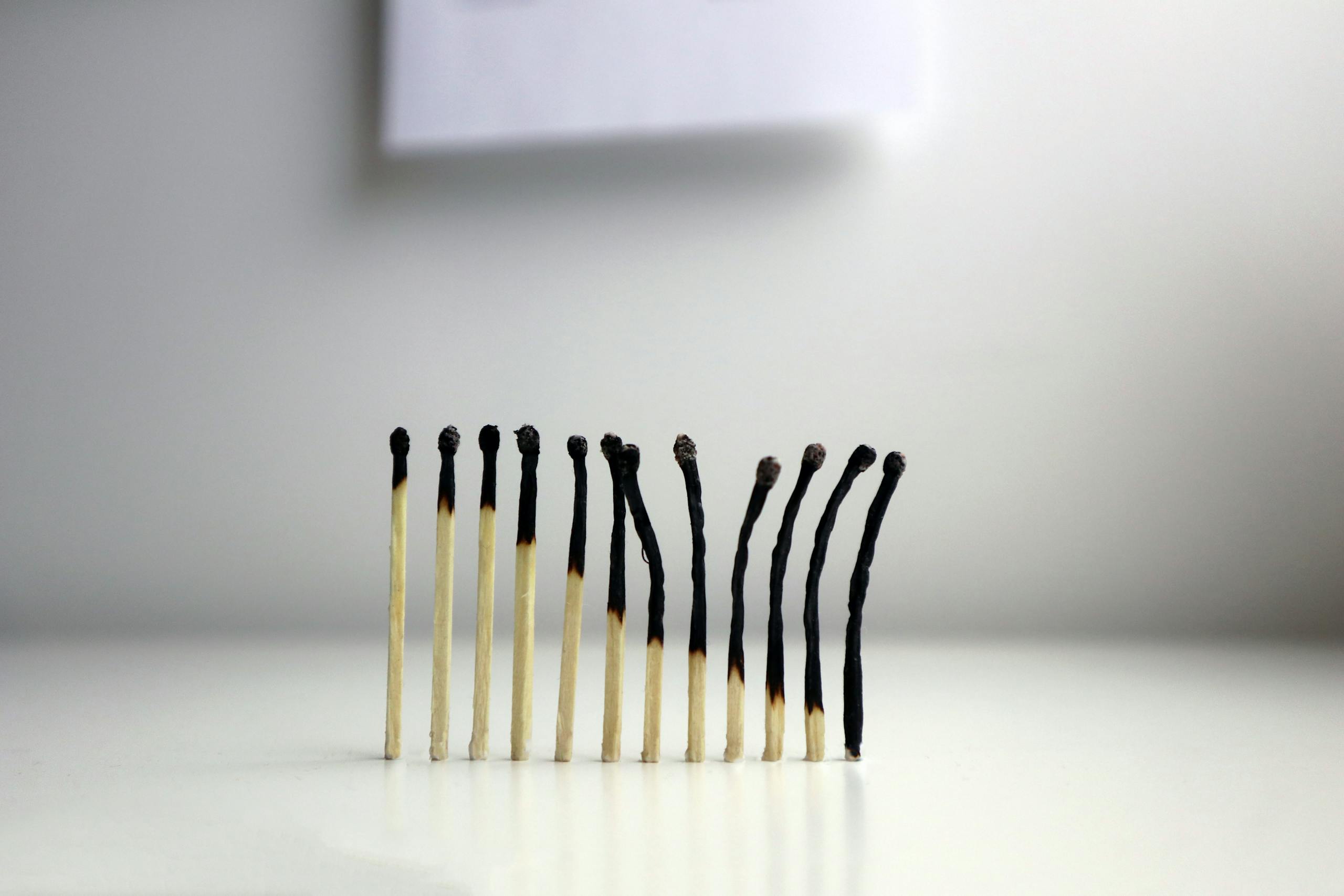
Why Does Emotional Experience Feel So Inconsistent for Sensitive People?
There’s a particular kind of exhaustion that comes from not being able to predict yourself. You handle a difficult client call with grace on Monday, and then on Thursday you nearly fall apart during a routine check-in. Same skill set. Same person. Completely different outcome.
Early in my agency career, I chalked this up to stress or sleep or caffeine. It took me years to understand that what I was experiencing was something more structural. My nervous system was processing an enormous amount of input, and without any kind of consistent framework for managing that input, my responses were essentially random. I was reacting to whatever happened to be loudest in the moment.
For highly sensitive people, the volume is always turned up. Not metaphorically. Neurologically. The HSP trait, first described by psychologist Elaine Aron, involves a nervous system that processes sensory and emotional information more deeply than average. That depth is genuinely valuable. It’s also genuinely costly when there’s no structure around it.
The variability problem isn’t just about big emotions. It’s about the inconsistency of small ones too. A slightly sharp tone in an email. A colleague who doesn’t make eye contact in the hallway. A meeting that runs ten minutes over. For someone wired to pick up on everything, these micro-inputs accumulate. And when they accumulate without any kind of processing structure, they create what I’d call emotional static: a background noise that makes it hard to think clearly, respond predictably, or feel stable.
One of the most useful things I’ve read on this is the American Psychological Association’s work on the stress cycle, which describes how unresolved stress responses compound over time. For sensitive people, that cycle often runs faster and feeds on smaller inputs. The result is a kind of chronic low-grade dysregulation that feels normal because it’s always been there.
Understanding HSP overwhelm and sensory overload is often the first step. But managing it long-term requires something more than awareness. It requires consistency.
What Does “Reducing Variability” Actually Mean for a Sensitive Person?
In my agency world, we used to talk about process standardization constantly. When you’re managing a team of fifty people across multiple accounts, variability in workflow is the enemy of quality. One account manager handles a client revision one way. Another handles it completely differently. The output is unpredictable. The client experience suffers. And the team burns out trying to compensate.
The solution was never to eliminate individual judgment. It was to create enough structure that individual judgment had a stable foundation to operate from. A clear intake process. A shared revision protocol. A consistent communication rhythm. The creative work could still be wild and original. But the scaffolding around it was reliable.
That’s exactly the kind of thinking that applies to emotional self-management for sensitive people. You’re not trying to flatten your responses or become less feeling. You’re building scaffolding. Consistent practices, predictable rhythms, and clear internal protocols that give your emotional depth a stable place to land.
What this looks like in practice varies by person. But the underlying principle is the same: your nervous system responds to regularity. When your daily rhythms are consistent, when your sleep is protected, when you have reliable ways to decompress, your baseline emotional state becomes more stable. And from a stable baseline, your responses become more predictable. Not robotic. Predictable. There’s a meaningful difference.

One thing worth naming here is that HSP anxiety often feeds directly on this unpredictability. When you can’t trust your own responses, anxiety fills the gap. You start anticipating the moments when you’ll be overwhelmed, and that anticipation becomes its own source of stress. Stabilizing your baseline doesn’t just reduce the big reactions. It quiets the anticipatory anxiety too.
How Does Deep Emotional Processing Create Both Strength and Instability?
One of the things I’ve noticed about the most sensitive people I’ve worked with is that they’re often also the most insightful. The same neural wiring that makes them susceptible to overwhelm also makes them extraordinarily good at reading situations, anticipating problems, and understanding what’s really going on beneath the surface of a conversation.
I had a creative director at one of my agencies who was an INFJ. She could walk into a client presentation and within five minutes have a completely accurate read on whether the client actually liked the work or was just being polite. She was almost never wrong. But that same sensitivity meant that a tense internal meeting could leave her emotionally drained for the rest of the day. The gift and the cost came from the same source.
The depth of HSP emotional processing is genuinely remarkable. Sensitive people don’t just feel emotions more intensely. They process them more thoroughly, connecting emotional experience to memory, meaning, and context in ways that most people simply don’t. That’s a cognitive and relational asset. It’s also a metabolic one, in the sense that it takes real energy.
The instability comes when that processing happens without structure. When every emotion gets processed at full depth in real time, with no triage and no recovery window, the system gets overwhelmed. It’s like running every file through a full security scan the moment it arrives, with no queue management. Eventually the whole system slows down.
What reduces variability here is learning to distinguish between emotions that need immediate processing and ones that can wait. Not suppression. Scheduling. There’s a significant difference between “I’ll deal with this feeling right now even though I’m in the middle of something important” and “I’m going to hold this until I have the space to actually process it properly.” The latter is a skill. And it’s one that takes deliberate practice to develop.
The Harvard research on mindfulness and the brain points toward something relevant here: that consistent contemplative practice can actually change how the brain responds to emotional input over time. Not eliminating the depth of feeling, but building more capacity to hold it without being swept away by it.
What Role Does Empathy Play in Creating Emotional Variability?
There’s a version of empathy that’s a superpower. And there’s a version that’s a trap. The difference, I’ve come to believe, is whether it’s boundaried or not.
I spent the better part of my first decade running agencies trying to be everything to everyone. I thought that was good leadership. What I was actually doing was absorbing the emotional states of everyone around me and then wondering why I felt so depleted by the end of every week. As an INTJ, I’m not someone who leads with feeling, but I’m deeply attuned to the dynamics in a room. And when those dynamics are charged, I feel it even if I don’t show it.
For highly sensitive people, empathy is genuinely a double-edged sword. The capacity to feel what others feel, to understand their perspective at a deep level, is one of the most valuable human qualities there is. It makes you a better leader, a better friend, a better collaborator. It also makes you susceptible to emotional contagion in ways that can destabilize your own internal state.
When someone around you is anxious, you pick it up. When a room is tense, you feel it before anyone says a word. When a colleague is struggling, you carry some of that weight even when it’s not yours to carry. And all of that input, absorbed without any filtering mechanism, contributes directly to emotional variability. Your internal state becomes a reflection of your environment rather than something you’re actively shaping.
Reducing variability in this area means developing what I’d call empathic boundaries. Not walls. Filters. The ability to notice what you’re picking up from others, acknowledge it, and then consciously decide how much of it you’re going to take in. This is genuinely hard for sensitive people because it can feel like caring less. It’s actually the opposite. It’s caring in a way that’s sustainable.

Some research on workplace well-being, including findings from the American Psychological Association, has highlighted how emotional labor without adequate recovery contributes to burnout. For sensitive people in professional environments, this isn’t a distant risk. It’s a constant one.
How Does Perfectionism Amplify Emotional Instability?
Ask me about perfectionism and I’ll tell you about the pitch deck I rewrote eleven times before a major presentation to a Fortune 500 client. Not because the tenth version was bad. Because I couldn’t trust that it was good enough. That’s not diligence. That’s a nervous system that doesn’t know when to stop scanning for problems.
Perfectionism and sensitivity are frequent companions. The same depth of processing that makes sensitive people so thorough and careful also makes them prone to endless self-evaluation. Every decision gets examined from multiple angles. Every interaction gets replayed afterward. Every piece of work gets held up against an internal standard that keeps shifting.
The emotional variability this creates is significant. When your sense of stability depends on everything meeting a high internal standard, you’re essentially living in a state of perpetual conditional calm. Things are okay as long as nothing goes wrong. And something always eventually goes wrong.
Working through HSP perfectionism is one of the most direct paths to greater emotional consistency. Not by lowering your standards, but by decoupling your emotional stability from your performance. When your baseline sense of okayness doesn’t depend on everything going perfectly, you become far more resilient to the inevitable moments when things don’t.
What helped me personally was making a distinction between the quality of my work and the quality of my judgment. I could hold high standards for the output while trusting that my process was sound, even when the result wasn’t perfect. That separation created breathing room. It reduced the emotional stakes of every individual decision, which in turn made my responses more consistent.
There’s also something worth saying about the relationship between perfectionism and masking, which Psychology Today describes as the practice of concealing aspects of yourself to fit in. Many sensitive people are also masking, presenting a version of themselves that seems more composed, more certain, more “normal” than they actually feel. That performance is exhausting, and it adds another layer of variability because you’re managing two versions of yourself simultaneously.
What Happens When Rejection Destabilizes Your Entire System?
There’s a particular kind of pain that sensitive people know well. Someone gives you critical feedback, or pulls away unexpectedly, or responds to something you said with indifference, and the reaction inside you is completely disproportionate to what actually happened. You know it’s disproportionate. That knowledge doesn’t make it smaller.
Rejection sensitivity in highly sensitive people isn’t weakness. It’s wiring. The same neural depth that makes you so attuned to connection also makes disconnection feel acute. And because sensitive people often invest deeply in relationships and interactions, the gap between what they hoped for and what they received can feel enormous even when the actual event was small.
I remember presenting a campaign concept to a client I’d worked with for three years. He didn’t hate it. He just wasn’t excited. And I spent the next two days quietly dissecting everything I might have done differently, replaying the meeting, wondering if the relationship had shifted. An extroverted colleague in the same meeting had moved on by lunch. I was still processing it on Friday.
That kind of extended processing after perceived rejection is one of the biggest contributors to emotional variability in sensitive people. One interaction can color an entire week. Understanding how to work through HSP rejection responses is genuinely important, not just for emotional health, but for functional stability. You can’t maintain consistent performance or consistent relationships when a single piece of critical feedback sends you into a multi-day internal spiral.
What I’ve found helpful is having a deliberate processing protocol. Not rumination. Structure. When something triggers a rejection response, I give myself a defined window to feel it and examine it, and then I consciously close that window. Not because the feeling is resolved, but because extended processing past a certain point stops being useful and starts being self-perpetuating.

There’s also something important about distinguishing between feedback and rejection. Feedback is information. Rejection is a social signal. Sensitive people often experience them as the same thing, which means every piece of constructive criticism lands with the emotional weight of personal dismissal. Separating those two categories, even imperfectly, makes a real difference in how quickly you can return to baseline.
What Practical Structures Actually Create Emotional Consistency?
Talking about emotional variability is useful. Actually reducing it requires building things. Concrete practices, consistent habits, and deliberate structures that give your nervous system something reliable to return to.
After years of running agencies and years of working through my own introversion, consider this I’ve found actually moves the needle.
Anchor Your Day at Both Ends
The beginning and end of your day are the highest-leverage points for emotional regulation. A consistent morning practice, even fifteen minutes of quiet before the world starts making demands, sets a baseline that’s harder to disrupt. A consistent wind-down practice at the end of the day creates a processing window that prevents the day’s inputs from carrying over into sleep.
This isn’t about elaborate rituals. It’s about reliability. Your nervous system responds to predictability. When the start and end of your day are consistent, the middle becomes easier to handle.
Build Recovery Into Your Schedule, Not Around It
One of the most common mistakes I see sensitive people make is treating recovery time as a luxury that gets scheduled when everything else is done. It never gets done. Recovery has to be non-negotiable, built into the structure of the day the way meetings are built in.
For me, this meant protecting the hour after lunch as a quiet window, regardless of what was happening. No calls. No drop-ins. A genuine pause. My team learned to work around it. The quality of my thinking in the afternoon improved noticeably. The emotional static that used to build through the day started clearing more reliably.
Some research on recovery and cognitive performance, including work published in PubMed Central, supports the idea that deliberate rest periods improve both emotional regulation and sustained attention. This isn’t about being lazy. It’s about sustainable performance.
Create a Triage System for Emotional Input
Not every emotional input deserves immediate full processing. Developing the ability to triage, to sort what needs attention now versus what can wait, is one of the most practical skills for reducing variability.
A simple version: when something triggers a strong response, ask yourself whether this needs to be processed right now or whether it can go into a designated processing window later. If it can wait, let it wait. You’re not ignoring it. You’re queuing it. The difference matters psychologically.
Reduce Environmental Variability Where You Can
Sensitive people are particularly affected by their physical environment. Noise levels, lighting, temperature, the energy of the space around them. These aren’t preferences. They’re inputs that directly affect your nervous system’s baseline state.
When I finally moved my primary workspace to a quieter part of the office and stopped taking calls in the open bullpen, my afternoon energy improved significantly. A small structural change with a meaningful functional impact. You can’t control everything about your environment, but you can control more than you probably think.
Additional reading on stress physiology and nervous system regulation, including a comprehensive overview from PubMed Central, offers useful context for understanding why environmental inputs have such a direct effect on emotional state in sensitive individuals.
Develop a Consistent Language for Your Internal States
One of the most underrated tools for emotional consistency is simply having precise language for what you’re experiencing. Vague emotional states are harder to regulate than named ones. “I feel bad” is much harder to work with than “I’m feeling overstimulated and I need quiet.”
Developing a personal vocabulary for your internal states, what each one feels like, what typically triggers it, and what helps it resolve, creates a kind of internal map that makes responses more predictable. You stop being surprised by yourself. And that alone reduces variability significantly.

When Variability Signals Something Deeper
Everything I’ve described so far assumes that the variability you’re experiencing is primarily about sensitivity and nervous system wiring. That’s true for many people. But it’s worth naming that persistent, disruptive emotional variability can also signal something that goes beyond the HSP trait.
Burnout, for instance, dramatically increases emotional volatility. When you’re running on empty, your capacity to regulate responses shrinks. Small things become big things. Situations you’d normally handle with ease become genuinely difficult. If you’re finding that your emotional variability has increased significantly over a period of weeks or months, burnout is worth considering seriously.
Psychology Today has written thoughtfully about returning to work after burnout, and what strikes me about that framing is how much it emphasizes rebuilding structure gradually rather than trying to return to full capacity immediately. The same principle applies to emotional regulation. You can’t force consistency. You build it incrementally.
There’s also a body of research, including work published in PubMed Central, examining how chronic stress affects emotional regulation capacity over time. For sensitive people who’ve been operating in high-demand environments without adequate recovery, the cumulative effect can be significant. Recognizing that isn’t defeat. It’s useful information.
If you’re finding that the strategies I’ve described don’t seem to be moving the needle, working with a therapist who understands sensitivity and nervous system regulation can make a real difference. There’s no version of this where asking for support is a failure.
If you want to explore more of these themes in depth, the Introvert Mental Health hub covers a wide range of topics relevant to sensitive, introverted people working toward greater psychological stability and self-understanding.
About the Author
Keith Lacy is an introvert who’s learned to embrace his true self later in life. After 20 years in advertising and marketing leadership, including running agencies and managing Fortune 500 accounts, Keith now channels his experience into helping fellow introverts understand their strengths and build fulfilling careers. As an INTJ, he brings analytical depth and authentic perspective to every article, drawing from both professional expertise and personal growth.
Frequently Asked Questions
What causes emotional variability in highly sensitive people?
Emotional variability in highly sensitive people typically stems from a nervous system that processes sensory and emotional input more deeply than average. This depth of processing means that more inputs reach conscious awareness, and those inputs get connected to memory, meaning, and context in ways that amplify their emotional impact. Without consistent structures for managing this input, responses can feel unpredictable. Environmental factors, accumulated stress, empathic absorption from others, and perfectionism can all increase the degree of variability experienced.
Is it possible to reduce emotional variability without suppressing sensitivity?
Yes, and this distinction matters enormously. Reducing variability is about building scaffolding around your sensitivity, not flattening it. Consistent daily rhythms, deliberate recovery practices, empathic boundaries, and precise internal language all help stabilize your baseline emotional state. From a more stable baseline, your depth of feeling remains intact but becomes more predictable and easier to work with. The goal is consistency, not numbness.
How does perfectionism contribute to emotional instability in sensitive people?
Perfectionism creates conditional emotional stability. When your sense of okayness depends on everything meeting a high internal standard, any deviation from that standard becomes a source of distress. For sensitive people, who already process experiences thoroughly, this creates a feedback loop where perceived failures or shortcomings trigger extended self-evaluation and emotional disruption. Decoupling your emotional baseline from your performance, trusting your process even when the outcome isn’t perfect, is one of the most effective ways to break this pattern.
Why do sensitive people have such strong reactions to perceived rejection?
Sensitive people invest deeply in relationships and interactions, which means the gap between expected and received connection feels proportionally larger. The same neural wiring that makes them highly attuned to social signals also makes those signals carry more emotional weight. Perceived rejection, whether it’s critical feedback, social withdrawal, or simple indifference, can trigger a response that feels disproportionate because it’s being processed at the same depth as genuinely significant events. Building a deliberate processing protocol and learning to distinguish feedback from rejection helps reduce the destabilizing effect of these experiences.
When should emotional variability prompt seeking professional support?
When emotional variability significantly disrupts your ability to function at work, maintain relationships, or take care of yourself, professional support is worth pursuing. A notable increase in variability over weeks or months, particularly when it’s accompanied by exhaustion, withdrawal, or a sense of losing ground you’d previously gained, can signal burnout or another condition that goes beyond typical sensitivity. A therapist who understands nervous system regulation and the HSP trait can offer tools and perspective that self-directed strategies alone may not provide.