

Blue space eyes contacts are cosmetic or vision-correcting lenses tinted in shades of blue, from soft sky hues to deep ocean tones, designed to change or enhance eye color for everyday wear or special occasions. For many introverts, the appeal goes beyond aesthetics: the color blue carries a well-documented association with calm, mental clarity, and psychological rest that resonates deeply with people who are already attuned to how their environment shapes their inner state. Whether you’re curious about trying them for the first time or simply wondering why certain colors feel more grounding than others, the connection between blue tones and introvert wellbeing is worth exploring.
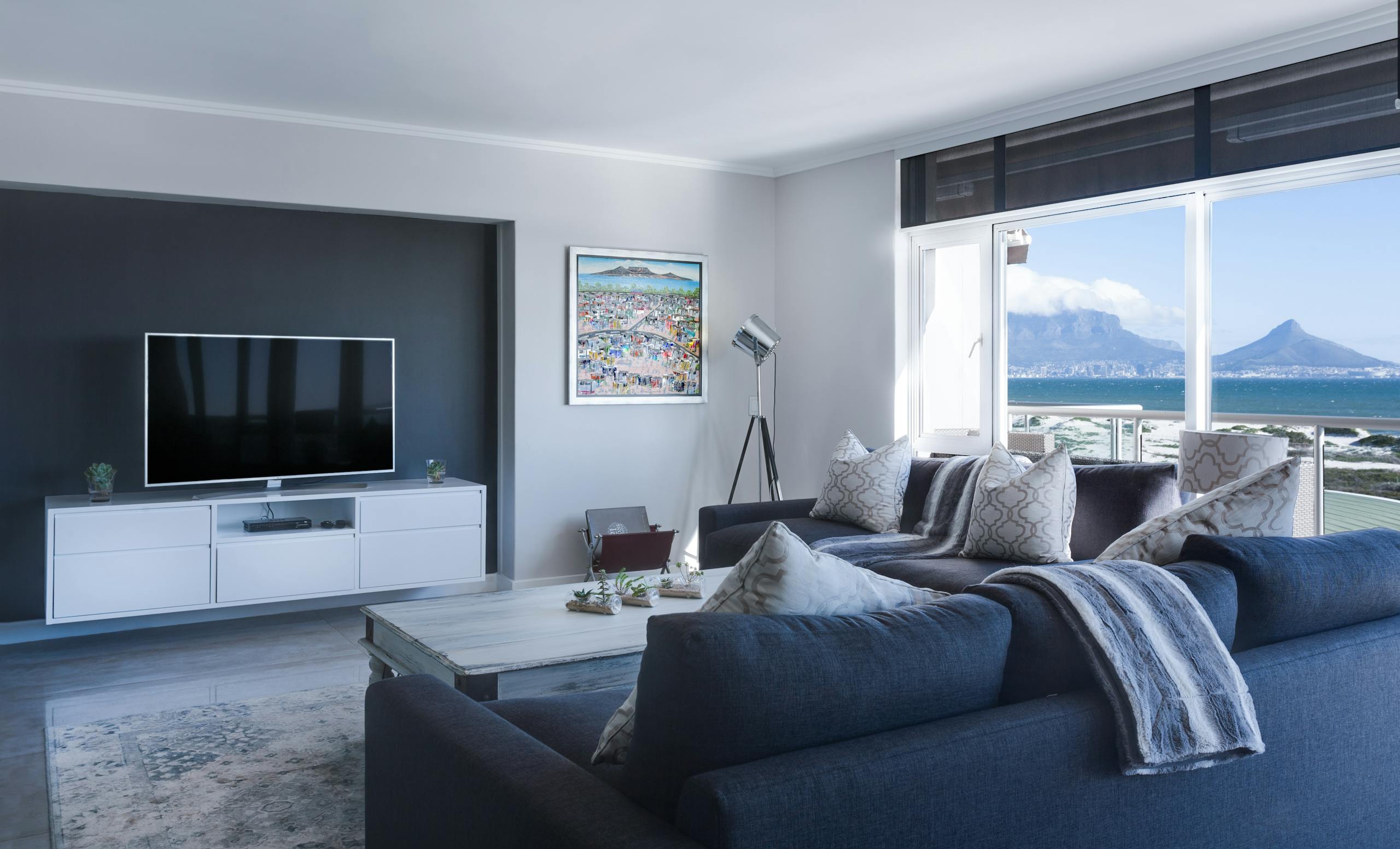
My own relationship with color and environment started long before I knew anything about introvert psychology. I ran advertising agencies for over two decades, and somewhere in the middle of all that noise, I started paying close attention to what made me feel settled versus what drained me completely. The answer almost always traced back to my surroundings. The color of a room. The quality of light. The textures I could see from my desk. Those observations eventually led me to think much more carefully about how visual choices, including something as small as the color of a contact lens, interact with how a quiet mind processes the world.
If you’ve been thinking about how your personal environment shapes your energy, you’ll find a lot to explore in the Introvert Home Environment hub, where I cover everything from sensory-friendly spaces to the small details that help introverts recharge at home. Blue space eyes contacts fit naturally into that larger conversation about intentional living.
Why Do Introverts Feel Drawn to Blue Tones?
Color psychology isn’t a fringe concept. It shows up in architecture, retail design, hospital environments, and branding, and the advertising world I worked in for so long built entire campaigns around color’s power to shape mood and behavior. Blue consistently lands in a specific emotional category: calm, trustworthy, spacious, cool. It’s the color of open sky and deep water, both of which carry a sense of visual breathing room that the mind seems to crave after sustained social effort.
For introverts, that craving is particularly pronounced. Quiet processing types tend to notice environmental details with unusual precision. On my team at the agency, I managed several people who identified as highly sensitive, and watching them respond to color, sound, and spatial design taught me a lot about how perception operates differently depending on how a person is wired. One of my senior designers would rearrange her entire workspace when a project felt stuck, swapping out warm-toned accessories for cooler blues and grays. She told me she could literally think more clearly once the visual temperature dropped. At the time I filed it under “creative quirk.” Later I understood she was managing her nervous system through her environment.
That kind of intentional sensory management is something many highly sensitive introverts practice instinctively. If you’re drawn to HSP minimalism and the idea of simplifying your surroundings to reduce overstimulation, the appeal of soft blue tones, whether on your walls, in your wardrobe, or reflected in your eyes, makes complete sense. Blue creates visual quiet.
What Are Blue Space Eyes Contacts, Really?
The term “blue space” in this context refers to a specific aesthetic within the contact lens market, lenses that evoke the feeling of depth and openness rather than simply adding a flat wash of color. These aren’t the opaque theatrical lenses you might associate with Halloween costumes. Blue space eyes contacts are typically crafted with layered pigmentation that mimics the natural variation of iris color, creating a look that’s subtle enough for daily wear yet noticeably different from your natural eye color.

They come in a wide range of shades. Some lean toward pale, icy blue that reads almost silver in certain light. Others go deep and saturated, closer to navy or sapphire. There are options that blend blue with gray for a stormy, overcast quality, and options that layer blue over natural brown to create a teal or aquamarine effect. The “space” descriptor often points to lenses with a starburst or limbal ring pattern that gives the iris a dimensional, otherworldly depth, less like painted glass and more like something you’d see reflected in still water.
From a purely practical standpoint, they function like any other soft cosmetic contact lens. You can get them with or without vision correction, in daily disposable or extended-wear formats. The fitting and prescription process is the same. What changes is the color, and with it, something subtle about how you present to the world and, perhaps more importantly for introverts, how you feel looking out at it.
Is There a Real Connection Between Blue and Mental Rest?
The idea that blue environments promote psychological recovery isn’t just aesthetic preference. Environmental psychology has explored how natural water and sky settings tend to lower perceived stress and support mental restoration. A study published in PubMed Central examined how natural environments, particularly those involving water, support attention restoration and stress reduction, findings that align with what many introverts report intuitively: blue spaces feel like a place to exhale.
That same logic extends to color choices in personal appearance. When you wear something that carries a calming visual signal, whether a blue sweater, a blue-toned room, or contacts that shift your eyes toward cooler hues, you’re engaging in a form of environmental design that starts at the level of your own face. It sounds small, and maybe it is. But introverts often find that small, intentional choices compound into something meaningful over time.
I noticed this pattern repeatedly in my agency years. The introverted members of my team, and I include myself here, were far more likely to have strong opinions about their physical workspace than their extroverted colleagues. The extroverts could work anywhere. The introverts needed to get the environment right before they could think clearly. Lighting, color, sound levels, furniture arrangement: these weren’t preferences, they were functional requirements. Blue space eyes contacts sit in that same category of intentional environmental choice, just applied to the most intimate canvas possible.
How Do You Choose the Right Blue Shade for Your Coloring?
Choosing the right blue contact lens involves a few variables that most first-time buyers underestimate. Your natural eye color matters more than you’d think. On light eyes, blue lenses tend to read true to the color shown in product photos. On darker eyes, the same lens can appear much more muted or shift toward green or gray depending on how much of your natural pigmentation shows through the tint.

Skin tone is the second variable. Cooler blue shades, those with gray or silver undertones, tend to complement cooler complexions with pink or neutral undertones. Warmer blue shades, those with aqua or teal in the mix, often work better on warm or olive skin tones. This isn’t a rigid rule, but it’s a useful starting point when you’re sorting through options online.
The third variable is the effect you’re after. If you want something that reads as a natural enhancement, look for lenses described as “enhancer” or “limbal ring” styles that add depth and definition without completely changing your underlying color. If you want a more dramatic shift, opaque lenses with full coverage pigmentation will give you that, though they tend to look less natural in bright light. For the “blue space” aesthetic specifically, lenses with a starburst pattern and a slightly translucent outer ring tend to give the most dimensional, photorealistic result.
My practical advice, shaped by years of making visual decisions in a high-stakes professional context: order samples when the brand offers them, and test the lenses in the actual lighting conditions you’ll wear them in most. Overhead fluorescent light, natural daylight, and warm indoor light all render color differently. What looks stunning in a product photo may read entirely differently in the environment where you actually live.
What Should You Know Before Buying Blue Space Contacts?
Contact lenses are medical devices. That sentence sounds obvious, but it’s easy to forget when you’re shopping for something that feels more like an accessory than a prescription item. In the United States, all contact lenses, including purely cosmetic ones with no vision correction, require a valid prescription from an eye care professional. Buying lenses without a prescription, or from vendors that don’t require one, carries genuine health risks.
Poorly fitted lenses can restrict oxygen flow to the cornea, leading to discomfort, dryness, and in serious cases, corneal damage or infection. Research indexed at PubMed Central has documented the range of complications associated with cosmetic contact lens misuse, and the findings are a good reminder that the fitting process exists for a reason. A proper fitting takes about thirty minutes and ensures the lens diameter and base curve match your eye anatomy.
Beyond the fitting, the practical care routine matters. Blue space contacts, like all soft lenses, require consistent cleaning and storage in fresh solution, never tap water or saliva. Daily disposable options simplify this considerably, since you’re starting fresh each time rather than maintaining a cleaning routine. For introverts who value simplicity and low-friction daily routines, dailies are often the better choice even if the per-lens cost is slightly higher.
Wear time is another consideration. Most eye care professionals recommend no more than eight to ten hours of continuous wear for cosmetic lenses, and removing them before sleep unless they’re specifically approved for extended wear. Dry environments, screen-heavy work, and low-humidity climates can all reduce comfort over a long wear day. Lubricating eye drops compatible with contact lens wear can extend comfortable wear time significantly.
Where Does Personal Appearance Fit Into Introvert Self-Expression?
There’s a version of introvert culture that prizes invisibility, the idea that the goal is to move through the world without drawing attention. I spent a long time operating under that assumption, and it cost me. Not because visibility is inherently good, but because conflating introversion with self-erasure misses something important. Introverts aren’t people who don’t want to be seen. They’re people who want to be seen accurately, on their own terms, in ways that feel authentic rather than performed.
Cosmetic choices, including contact lenses, can be a quiet form of that authentic self-expression. They’re not about seeking attention. They’re about curating the experience of moving through the world in a way that feels right to you. An introvert who chooses blue space contacts isn’t necessarily making a statement to other people. They might simply be creating a small, personal alignment between their inner landscape and their outer appearance.
That kind of inner-directed self-care resonates with the homebody sensibility that many introverts share. If you’ve ever spent a quiet evening at home on a well-chosen couch reading something that genuinely interests you, you understand the feeling of having your environment match your interior state. Blue space contacts can carry a version of that same feeling into the world with you.

I’ve watched this play out in interesting ways professionally. Some of the most quietly confident people I worked with over my agency career had a very deliberate relationship with their appearance, not flashy or high-maintenance, but specific. They knew what they wore and why. They made choices that felt like them rather than choices that were trying to signal something to a room. That specificity communicated something even when they weren’t speaking. It said: I know myself. For an introvert in a meeting-heavy, extroversion-rewarding environment, that kind of quiet self-possession is genuinely powerful.
Can Blue Space Contacts Become Part of a Broader Self-Care Practice?
Framing a contact lens as self-care might sound like a stretch, but bear with me. Self-care for introverts isn’t primarily about bubble baths and scented candles, though those have their place. It’s about the ongoing practice of making choices that support your energy, your clarity, and your sense of self. Some of those choices are large, like protecting your schedule from over-commitment. Others are small, like choosing a visual environment that feels restorative rather than agitating.
Blue space contacts fit into that second category. They’re a small, deliberate choice that connects your appearance to a color psychology you already respond to positively. If you’ve noticed that you feel calmer near water, more focused in rooms with cool-toned light, or more yourself when your wardrobe leans toward blues and grays, then choosing lenses that carry that same quality isn’t vanity. It’s consistency.
That kind of thoughtful, layered self-care often shows up in how introverts approach gift-giving for themselves and others. If you’re building out a home environment that supports deep rest and genuine recharging, the gifts for homebodies collection offers ideas that pair well with the same sensibility. Blue-toned candles, cool-spectrum lighting, soft textiles: these are the physical correlates of the same instinct that draws people to blue space contacts.
The broader point is that introverts tend to thrive when their environment, including their personal appearance, functions as a kind of external support system for their inner life. Every small choice that reinforces calm, clarity, and authenticity is one less thing the nervous system has to compensate for. That might sound like a lot of weight to put on a contact lens. But introverts understand that the details accumulate, and getting the details right is often the difference between a day that drains you and one that doesn’t.
What Does the Research Say About Color and Psychological State?
Color perception and emotional response have been studied across a range of psychological contexts, and the findings consistently suggest that color affects mood and cognitive performance in measurable ways. A 2024 paper published in Frontiers in Psychology explored how environmental color influences emotional processing, contributing to a growing body of work that takes color seriously as a variable in psychological wellbeing.
Blue specifically tends to be associated with reduced arousal states, which in psychological terms means a calmer, less activated nervous system. That’s not the same as sedation or disengagement. It’s more like the difference between a mind that’s running hot and one that’s running at its optimal temperature. For introverts who already tend toward internal over-arousal in stimulating social environments, anything that nudges the nervous system toward that cooler, more settled state is functionally useful.
The connection between color and introvert experience also shows up in how introverts process their environment more deeply than their extroverted counterparts, according to perspectives shared in Psychology Today. That depth of processing means that color, texture, and visual detail register more intensely and with more emotional weight. What an extrovert might not consciously notice, an introvert has already catalogued, evaluated, and responded to. Blue space contacts, in that context, aren’t just an aesthetic choice. They’re a sensory input that a deeply processing mind will interact with in real time.
How Do You Build a Consistent Look Around Blue Space Contacts?
Once you’ve found a blue contact shade that works for you, the next question is how to build around it. fortunately that blue eyes, whether natural or cosmetic, are one of the more versatile starting points in personal styling. The color reads differently depending on what surrounds it, and with some intentionality you can direct that effect toward the aesthetic you’re after.
Cool neutrals, charcoals, soft whites, and muted grays tend to let the blue read clearly and calmly. Warm earth tones create contrast that makes the blue pop more dramatically. Navy and deep teal can create a monochromatic depth that feels very composed and understated. For introverts who gravitate toward a quieter personal aesthetic, the cooler palette tends to feel most cohesive.
Makeup, if you wear it, follows similar logic. Soft, cool-toned neutrals on the eyes let the lens color do the work. Brown and bronze tones warm the overall effect. Avoid very warm or orange-adjacent tones near the eye if you want the blue to read as crisp and clear rather than muddy.
Photography is worth thinking about too, especially if you spend time in online spaces. Many introverts find community and connection through digital channels rather than in-person social settings. If you’ve explored chat rooms for introverts or similar online spaces, you know that a profile photo carries real weight in how you present yourself to a community you may never meet face to face. Blue space contacts photograph beautifully in natural light, and a photo that captures them well can communicate something genuine about your aesthetic sensibility before you’ve typed a single word.
What Are the Best Brands and Where Should You Buy?
The cosmetic contact lens market has expanded considerably in recent years, with brands ranging from budget options sold primarily through social media to premium lines developed with optometrist input. Quality varies significantly, and given that these go directly on your eyes, this is not the category to optimize primarily for price.
Some of the more consistently well-reviewed brands in the cosmetic lens space include Solotica, known for their highly natural-looking opaque lenses in rich blue tones, Air Optix Colors by Alcon, which offers a more accessible price point with solid comfort ratings, and Freshlook Colorblends, a long-standing option with a wide range of blue shades and good availability through mainstream optical retailers. Each has a different aesthetic approach, so reading reviews from people with your natural eye color is more useful than relying on brand photography alone.
Where to buy matters as much as which brand. Reputable online retailers that require a valid prescription and are licensed to sell contact lenses in your country are the safe option. 1-800 Contacts, Clearly, and Vision Direct are among the well-established online options. Your optometrist’s office can also order cosmetic lenses directly, which has the advantage of professional guidance on fit and shade selection.
Avoid purchasing from social media marketplaces, unlicensed sellers, or any vendor that doesn’t ask for a prescription. The lenses sold through those channels are often manufactured without the quality controls that protect eye health, and the savings aren’t worth the risk. This is one area where the introvert’s tendency toward thorough research before purchase genuinely pays off.
How Does This Fit Into the Larger Introvert Home and Lifestyle Picture?
The thread connecting all of this, blue contacts, color psychology, intentional personal appearance, sensory self-care, is the same thread that runs through most of what I write about here. Introverts thrive when their environment, in the broadest sense, is designed to support rather than deplete them. That environment includes the spaces you live in, the relationships you maintain, the work you choose, and yes, the way you present yourself to the world.
If you’re building a life that feels genuinely aligned with how you’re wired, every deliberate choice contributes to that. A book about homebody living might reshape how you think about your relationship with home. A thoughtfully chosen gift from a homebody gift guide might add a layer of comfort to the space where you do your best thinking. And a pair of blue space contacts might, in a small but genuine way, help you carry a piece of that calm blue interior world with you when you step outside it.
None of these things are transformations. They’re accumulations. And for introverts, who tend to build meaning through depth rather than breadth, those accumulations matter more than they might appear to from the outside.
I spent years in boardrooms and client meetings trying to present a version of myself that matched what I thought leadership was supposed to look like. What I’ve come to understand, and what I try to pass along through everything I write here, is that the real work is in the opposite direction. Getting quieter. Getting more specific. Making choices that reflect who you actually are rather than who the room expects you to be. Blue space contacts, for the introverts who feel drawn to them, are a small expression of that same instinct. They say: I choose what surrounds me, including what I show the world, with intention.
There’s much more to explore about building environments and habits that genuinely support introvert wellbeing. The full Introvert Home Environment hub brings together everything from sensory design to recharging rituals, and it’s worth a longer visit when you have the quiet time to settle in.
About the Author
Keith Lacy is an introvert who’s learned to embrace his true self later in life. After 20 years in advertising and marketing leadership, including running agencies and managing Fortune 500 accounts, Keith now channels his experience into helping fellow introverts understand their strengths and build fulfilling careers. As an INTJ, he brings analytical depth and authentic perspective to every article, drawing from both professional expertise and personal growth.
Frequently Asked Questions
Do I need a prescription to buy blue space eyes contacts?
Yes. In the United States and most other countries, all contact lenses including purely cosmetic ones with no vision correction require a valid prescription from a licensed eye care professional. This applies to blue space contacts regardless of whether you need vision correction. The prescription process includes a contact lens fitting that ensures the lens dimensions match your eye anatomy, which matters for both comfort and safety.
Will blue contacts look natural on dark eyes?
It depends on the lens opacity and the specific shade of blue. On dark eyes, semi-transparent or enhancement lenses will show very little color change. Opaque lenses with full-coverage pigmentation will produce a more visible color shift, though the result can sometimes read as less natural in bright light. For the most convincing result on dark eyes, look for lenses specifically formulated for dark iris coverage, and read reviews from people with similar natural eye colors before purchasing.
How long can you wear blue space contacts in a day?
Most eye care professionals recommend no more than eight to ten hours of continuous wear for soft cosmetic lenses. Extended wear beyond that can reduce oxygen flow to the cornea and increase discomfort, particularly in dry or screen-heavy environments. Daily disposable options are a convenient choice for introverts who prefer a simple routine, since they eliminate the cleaning and storage steps required for reusable lenses.
What is the “blue space” aesthetic in contact lenses?
The blue space aesthetic refers to contact lenses designed to evoke depth and visual openness rather than a flat wash of color. These lenses typically use layered pigmentation with starburst or limbal ring patterns that mimic the natural variation of iris color, creating a dimensional, ocean-like effect. The result tends to look more realistic in everyday light than standard opaque cosmetic lenses, and the color palette draws on cool, calming blue tones associated with water and sky.
Are there psychological benefits to wearing blue-toned contacts?
The direct psychological benefits of wearing blue contacts haven’t been studied in isolation, but color psychology broadly supports the idea that blue tones are associated with calm and reduced arousal states. For introverts who process their environment with particular depth and sensitivity, choosing personal appearance elements that align with calming color associations can be a meaningful form of intentional self-care. The effect is subtle and personal rather than clinically proven, but many introverts report that small, deliberate choices in their visual environment genuinely support their sense of wellbeing.