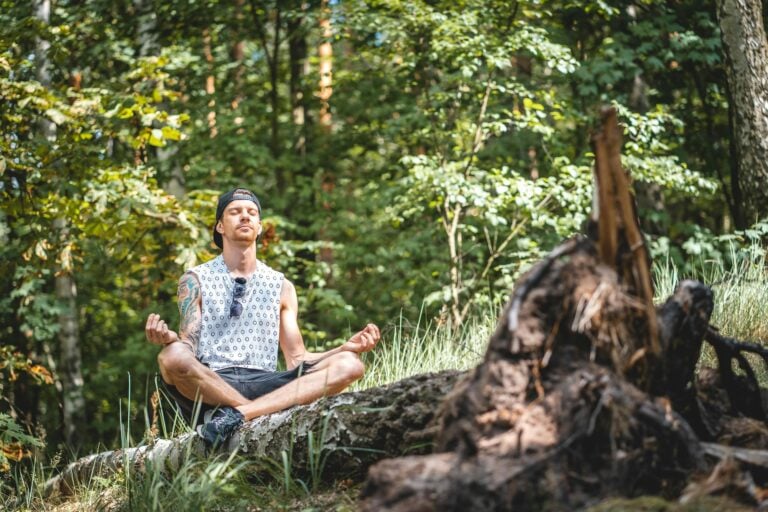

Meditation in Richmond, Virginia has grown into something genuinely worth paying attention to, especially if you’re an introvert who craves quiet, depth, and genuine inner work. Whether you’re drawn to silent sitting practices, mindfulness-based stress reduction, or community-centered contemplative spaces, Richmond offers more than most people realize.
As an INTJ who spent two decades running advertising agencies, I came to meditation not through wellness trends but through exhaustion. The kind that builds quietly over years of forcing yourself to operate in a mode that doesn’t fit your wiring. What I found in stillness changed how I lead, how I process, and how I understand myself.

If you’re exploring meditation in Richmond for the first time, or returning to a practice that once helped and somehow slipped away, this article is for you. We’ll look at what makes Richmond’s meditation scene genuinely useful for introverted minds, where to start, and why the internal work matters as much as the physical space.
Meditation is one thread in a much larger fabric of introvert mental health. Our Introvert Mental Health Hub covers everything from sensory overload to emotional processing, and this piece fits naturally into that broader conversation about how quiet people can build sustainable inner lives.
Why Do Introverts Respond So Strongly to Meditation?
Meditation doesn’t ask you to perform. It doesn’t reward the loudest voice or the most enthusiastic participant. It asks you to go inward, to observe, to slow down. For introverts, that’s not a challenge. That’s home.
What’s your personality type?
Take our free 40-question assessment and get a detailed personality profile with dimension breakdowns, context analysis, and personalised insights.
Discover Your Type8-12 minutes · 40 questions · Free
My mind has always processed things at a level of depth that could feel like a burden in a fast-moving agency environment. Clients wanted quick answers. Account teams wanted confident energy in the room. What I actually needed was time to think, to filter, to arrive at something true rather than something fast. Meditation gave me a structured container for that natural tendency. Instead of fighting my processing style, I learned to work with it.
For highly sensitive introverts especially, the case for meditation is even stronger. If you’ve ever felt flattened by a day of back-to-back meetings, or noticed that crowded environments leave you depleted in ways you can’t easily explain, you’re probably familiar with HSP overwhelm and sensory overload. Meditation creates a reliable reset point. It’s not a cure for sensitivity, but it is a practice that helps you metabolize what you absorb.
There’s also something important about the relationship between meditation and anxiety. Many introverts carry a low hum of worry that they’ve normalized over years. The National Institute of Mental Health describes generalized anxiety as persistent, difficult-to-control worry that interferes with daily functioning. Meditation doesn’t replace professional support when anxiety reaches clinical levels, but as a daily practice it can interrupt the thought loops that feed chronic worry before they gain momentum.
What Does Richmond’s Meditation Scene Actually Look Like?
Richmond has developed a meditation culture that’s quieter than what you’d find in larger coastal cities, which is honestly part of its appeal. You’re not walking into rooms full of people performing wellness. The spaces tend to feel more grounded, more accessible, and less performative.

The city has a mix of options that suit different introvert preferences. Some people want a structured class with a teacher who can correct posture and offer guidance. Others want a drop-in space where they can sit quietly without being noticed. Still others prefer secular, evidence-based programs like Mindfulness-Based Stress Reduction, which strips away the spiritual framing and focuses on the neurological and psychological mechanics of attention training.
Richmond’s yoga and wellness studios, several of which are concentrated in neighborhoods like Carytown, the Fan District, and Scott’s Addition, often include dedicated meditation offerings separate from physical yoga classes. These tend to be smaller groups, which suits introverts well. You’re not anonymous in a crowd of fifty. You’re in a room of eight or ten people, which feels manageable without feeling isolating.
There are also Buddhist centers in the Richmond area that offer sitting groups open to practitioners of any background or none at all. These spaces tend to operate on a dana model, meaning you give what you can, which removes the financial barrier that keeps some people from exploring contemplative practice. The atmosphere in these groups is typically very quiet, very unhurried, and deeply welcoming of people who prefer to observe before they participate.
One thing I’d encourage any introvert to consider: don’t dismiss online and hybrid options. After years of building in-person client relationships at agencies, I was skeptical that anything meaningful could happen through a screen. I was wrong. A well-facilitated online meditation group, especially one small enough that faces are visible and the teacher can check in individually, can be just as valuable as an in-person class, and for many introverts, the reduced social friction actually makes it easier to show up consistently.
How Does Meditation Help Introverts Process Emotion More Effectively?
Introverts don’t feel less than extroverts. They often feel more, and they feel it longer. Emotion tends to move through the introvert system at a slower, deeper pace. That’s not a flaw. It’s a feature of how the introverted nervous system works. But it can become overwhelming when there’s no outlet and no structure for processing what accumulates.
I managed a team of twelve at one of my agencies, and one of the most emotionally attuned people on that team was a creative director who processed every piece of feedback, every client rejection, every internal conflict at an almost cellular level. She wasn’t dramatic about it. She was quiet about it, which made it easy to miss. What she needed, and what took me too long to understand, was space to process without being rushed toward resolution. Meditation gave her that. She started a daily practice and within a few months, her work got sharper and her recovery time from difficult days got shorter.
The connection between meditation and HSP emotional processing is particularly meaningful. When you feel deeply, you need practices that honor that depth rather than trying to suppress or speed past it. Meditation creates a space where emotion can be witnessed without being amplified. You’re not pushing feelings away. You’re learning to sit alongside them without being swept away.
A body of research published through PubMed Central has examined how mindfulness-based practices affect emotional regulation, with findings pointing toward reduced reactivity and improved capacity to observe internal states without immediately acting on them. For introverts who already have strong observational instincts, meditation tends to accelerate this kind of development because it works with the grain of how they already process experience.

What Should Introverts Know About Anxiety and Meditation?
Anxiety and introversion often travel together, though they’re not the same thing. Introversion is a personality orientation. Anxiety is a mental health experience that can affect anyone. That said, many introverts develop HSP anxiety patterns that are worth understanding before you sit down on a cushion, because meditation can sometimes surface difficult material rather than immediately soothing it.
Early in my own practice, I had a few sessions that felt more agitating than calming. My mind, accustomed to constant strategic planning and problem-solving, did not take kindly to being asked to simply observe. It offered me a running inventory of unresolved concerns. That’s not unusual. What helped was understanding that this is part of the process, not evidence that meditation doesn’t work for you.
For introverts with significant anxiety, starting with shorter sessions, perhaps five to ten minutes rather than thirty, can make the practice feel more manageable. Guided meditations are also useful because the voice of a teacher gives the analytical mind something to anchor to, which reduces the likelihood of getting lost in worry loops. Apps like Insight Timer offer free guided content, and many Richmond-based teachers post recordings that you can use at home before committing to a group setting.
It’s also worth knowing that meditation is not a substitute for professional mental health support when anxiety is severe. The clinical literature on anxiety treatment consistently points to therapy, particularly cognitive-behavioral approaches, as a cornerstone of effective care. Meditation can be a powerful complement, but it works best alongside professional support rather than instead of it.
How Does Empathy Factor Into an Introvert’s Meditation Practice?
Many introverts are also highly empathic, which creates a particular challenge. When you absorb the emotional states of people around you, the internal landscape you’re trying to observe in meditation can feel crowded with things that aren’t entirely yours. Sorting out what belongs to you and what you’ve picked up from others is real work, and meditation is one of the few practices that directly addresses it.
I remember a period during a particularly contentious agency merger when I was carrying what felt like the collective anxiety of everyone on both teams. My own feelings were in there somewhere, but they were buried under layers of absorbed stress. Sitting in meditation during that time was uncomfortable, but it was also clarifying. I started to develop a better sense of where my own emotional signal ended and the noise from the environment began.
HSP empathy is genuinely a double-edged quality. It makes you a more perceptive leader, a more attuned colleague, a more thoughtful friend. It also makes you vulnerable to emotional exhaustion in ways that people with lower empathic sensitivity simply don’t experience. Meditation practices that include a body scan component are particularly useful here because they help you locate where absorbed emotion is sitting physically, which makes it easier to release.
Loving-kindness meditation, known in Pali as metta, is another practice worth exploring. It involves directing goodwill first toward yourself, then outward in expanding circles. For highly empathic introverts who tend to give their emotional resources outward without replenishing inward, this practice can feel surprisingly difficult at first, and surprisingly necessary.
Does Perfectionism Interfere With Building a Meditation Practice?
Absolutely, and this is something I see come up constantly among introverts who are drawn to meditation but struggle to sustain it. The introvert mind tends toward high standards. We want to do things well. We read about meditation, we understand the theory, and then we sit down and immediately begin evaluating whether we’re doing it correctly.

I did this for the first two years of my practice. I would sit, notice my mind wandering, and immediately generate a self-critical internal commentary about the fact that my mind was wandering. Which, of course, was just more mind-wandering. The irony was not lost on me, though it took a while to find it funny.
The perfectionism trap in meditation is particularly insidious because the practice is supposed to be about releasing judgment, and yet the perfectionistic mind applies judgment to the act of releasing judgment. HSP perfectionism runs deep, and it doesn’t take a vacation just because you’re sitting quietly. What meditation does, over time, is give you a front-row seat to the perfectionism itself, which is actually the first step toward loosening its grip.
The practical advice here is simple: there is no such thing as a bad meditation session. A session where your mind wanders sixty times is not a failure. It’s sixty opportunities to practice returning. That’s the whole practice. Every return is a repetition, like a bicep curl for the attention muscle. The wandering is not the problem. The wandering is the training ground.
Work from PubMed Central research on mindfulness suggests that regular practice changes the way the brain relates to self-referential thought, which is the kind of thinking that feeds perfectionism and self-criticism. This doesn’t happen in a single session. It accumulates gradually, which is another reason consistency matters more than quality in any given sitting.
How Can Meditation Support Introverts Who Struggle With Rejection?
Rejection lands differently on introverted and highly sensitive people. It’s not that we’re fragile. It’s that we process social and emotional information at a depth that makes rejection feel more significant, more personal, and more lasting than it might for someone with a different temperament.
In agency life, rejection was constant. Pitches lost. Campaigns killed. Clients who went elsewhere. I watched colleagues with more extroverted styles shake these things off within hours and move on. My own process was slower and more internal. I needed to understand what happened, what it meant, what I could learn from it. That’s not weakness. That’s how my mind works. But without a practice to support that processing, it could tip into rumination that lasted far longer than was useful.
Meditation gave me a container for that processing. Not a shortcut past it, but a structured way to move through it. The practice of observing thoughts without immediately identifying with them is particularly valuable when those thoughts are rejection-related. You can notice “I feel like a failure” without that thought becoming a conclusion about who you are. That’s a meaningful distinction, and it’s one that meditation builds capacity for over time.
If you’re working through significant rejection, the piece on HSP rejection, processing, and healing offers a more detailed look at why sensitive people experience rejection so acutely and what genuinely helps. Meditation is part of the picture, but it works best alongside other forms of support, including honest self-reflection, trusted relationships, and sometimes professional guidance.
The American Psychological Association’s framework on resilience emphasizes that bouncing back from difficulty isn’t about avoiding pain. It’s about building the internal resources to move through it. Meditation is one of the most direct ways to build those resources, because it trains the mind to remain present even when presence is uncomfortable.
What Practical Tips Help Introverts Start Meditating in Richmond?
Getting started is the hardest part, and the advice that sounds obvious is often the most true: start smaller than you think you need to. Five minutes of consistent daily practice will do more for you than an occasional forty-five-minute session when you feel motivated. Motivation is unreliable. Habit is what carries you.

For introverts in Richmond specifically, a few practical suggestions worth considering:
Visit spaces before you commit to a class. Many Richmond studios offer open houses or allow you to observe a session before registering. This matters for introverts who find it difficult to assess whether an environment is right for them without direct experience. Reading a website is not the same as sitting in the room.
Consider the time of day. Early morning sessions tend to attract a quieter, more internally oriented crowd. Evening sessions can vary more widely. If you’re sensitive to the energy of the people around you, the composition of the group matters as much as the teacher’s approach.
Don’t underestimate outdoor practice. Richmond has the James River, the Virginia Capital Trail, and several parks that offer genuine quiet at the right hours. Some introverts find that meditating in nature, even informally, feels more accessible than a studio setting. There’s no wrong venue if the practice is happening.
Give any practice at least thirty days before evaluating whether it’s working. The academic literature on habit formation consistently suggests that meaningful behavioral change requires sustained repetition before it becomes self-reinforcing. Thirty days is a reasonable minimum for assessing whether a meditation approach suits you, not three sessions.
Finally, consider what you’re looking for before you start. Some introverts want stress reduction. Some want deeper self-understanding. Some are drawn to the philosophical dimensions of contemplative practice. Some simply want to sleep better. All of these are valid, and knowing your own intention helps you choose the right format and stick with it when the novelty wears off.
As a psychology researcher from the Psychology Today Introvert’s Corner has noted, introverts often need more time and space to make decisions that feel right for them. That applies to choosing a meditation practice as much as anything else. Take the time. The right fit is worth finding.
Mental health as an introvert is a multi-layered experience, and meditation is one meaningful piece of it. If you want to go deeper into the full range of topics that affect quiet people’s inner lives, the Introvert Mental Health Hub brings together everything from anxiety and empathy to perfectionism and emotional processing in one place.
About the Author
Keith Lacy is an introvert who’s learned to embrace his true self later in life. After 20 years in advertising and marketing leadership, including running agencies and managing Fortune 500 accounts, Keith now channels his experience into helping fellow introverts understand their strengths and build fulfilling careers. As an INTJ, he brings analytical depth and authentic perspective to every article, drawing from both professional expertise and personal growth.
Frequently Asked Questions
Is meditation in Richmond suitable for complete beginners?
Yes. Most Richmond studios and meditation centers offer beginner-specific sessions or introductory workshops that assume no prior experience. Many teachers in the area are trained in secular mindfulness approaches, which makes the entry point accessible regardless of your background or beliefs. Starting with a structured beginner series is often easier than trying to build a solo practice from scratch.
How is meditation different from simply relaxing or zoning out?
Meditation involves deliberate attention. You’re not passively letting your mind drift. You’re actively training your attention to return to a chosen anchor, whether that’s the breath, a word, a sound, or a physical sensation. Relaxation can be a byproduct of meditation, but the practice itself is more like mental exercise than passive rest. The distinction matters because it explains why meditation produces lasting changes in how the mind operates, while simple relaxation doesn’t build the same kind of capacity over time.
Can introverts meditate effectively at home, or is a group setting better?
Both can work well, and many experienced practitioners combine the two. Home practice offers the privacy and control that introverts often prefer. Group settings offer accountability, guidance from a teacher, and the subtle but real effect of shared attention, which many people find deepens their practice. Starting with occasional group sessions while building a home practice is a common and effective approach.
How long does it take to notice the benefits of a regular meditation practice?
Most people who practice consistently report noticing some changes within two to four weeks, particularly in their ability to catch themselves in anxious or reactive thought patterns before those patterns take over. Deeper changes, including shifts in how you relate to stress, rejection, and difficult emotion, tend to develop over months rather than weeks. Consistency matters more than session length. Ten minutes daily will produce more noticeable results than an hour once a week.
Are there meditation options in Richmond for people who aren’t interested in the spiritual or religious dimensions of practice?
Yes, and this is increasingly common. Mindfulness-Based Stress Reduction, often called MBSR, is a secular eight-week program developed at the University of Massachusetts Medical School that focuses entirely on the practical mechanics of attention training. Several Richmond-area instructors are MBSR-certified. Additionally, many studios offer straightforward mindfulness meditation classes that make no reference to spiritual traditions and focus on the psychological and physiological dimensions of the practice.