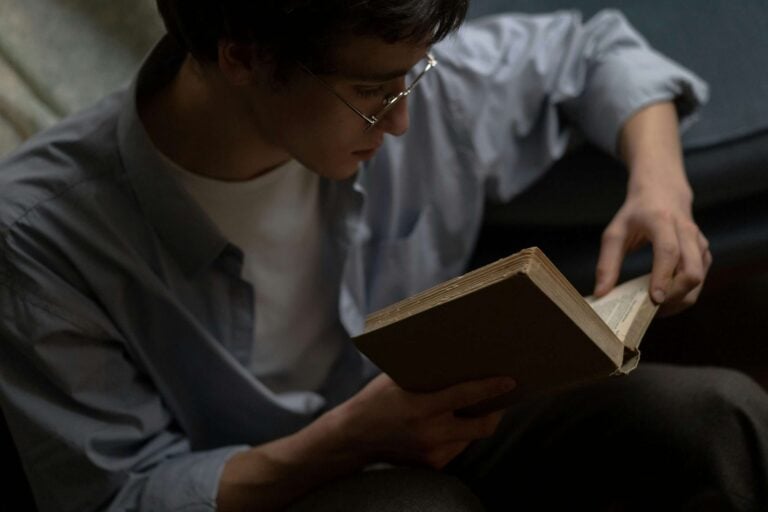

Kadampa Meditation Center Washington in Seattle offers a structured, welcoming space for anyone seeking mental stillness, with programs rooted in Kadampa Buddhist teachings that emphasize practical meditation techniques for everyday life. For introverts and highly sensitive people, a center like this can function as more than a spiritual destination. It can become a genuine anchor for mental health, a place where the internal world is not just tolerated but actively honored.
My own relationship with meditation started out of necessity, not curiosity. After two decades running advertising agencies, managing high-volume client relationships, and spending entire weeks in rooms full of people who seemed energized by all that noise, I was depleted in a way that sleep couldn’t fix. Quiet spaces, intentional ones, changed that for me. And if you’re an introvert in the Pacific Northwest wondering whether a meditation center might offer something real, I think the answer is worth exploring carefully.

Mental health resources for introverts span a wide range, from therapy to journaling to community support. Our Introvert Mental Health Hub pulls together many of those threads, and meditation centers like Kadampa fit naturally into that broader picture of what it means to care for an inward-leaning mind.
What Is Kadampa Meditation Center Washington, and Who Is It For?
Kadampa Meditation Center Washington is part of the New Kadampa Tradition, an international Buddhist organization founded by Geshe Kelsang Gyatso. The Seattle location offers drop-in meditation classes, structured courses, retreats, and a community space grounded in Mahayana Buddhist philosophy. The teachings focus on practical tools: breathing techniques, visualization practices, and conceptual frameworks for working with the mind rather than against it.
What makes this particular tradition accessible to people without a religious background is its emphasis on application. You don’t need to convert to anything or adopt a new identity. The center presents meditation as a mental skill, something you practice the way you’d practice any discipline that requires patience and repetition.
For introverts, that framing resonates. We already spend significant time inside our own heads. The question isn’t whether we’re capable of internal focus. It’s whether we’re directing that focus productively or letting it spiral into rumination, overthinking, or what feels like an endless loop of analysis with no exit ramp. Kadampa’s approach offers a structured method for interrupting that loop.
Highly sensitive people, in particular, often arrive at meditation out of sheer necessity. The world generates a relentless volume of input, and without a deliberate practice for processing that input, the accumulation becomes overwhelming. If you’ve read anything about HSP overwhelm and managing sensory overload, you’ll recognize this pattern immediately. Meditation doesn’t eliminate the input, but it changes your relationship to it.
What Does a Typical Class at Kadampa Look Like for a First-Timer?
Walking into any new group setting as an introvert carries its own particular weight. I remember the first time I attended a meditation class in a similar center years ago, not in Seattle but in a city where I’d relocated for a client project. I sat in the back. I watched everyone else settle in with what looked like practiced ease. My mind was already cataloging exits.
What I found, once the session started, was that the format itself was designed for internal experience rather than social performance. Nobody was asked to share. Nobody had to introduce themselves. The teacher guided the room through a breathing exercise, offered a short teaching on a Buddhist concept, led a guided meditation, and closed with a few minutes of silence. The whole structure was built around going inward, which is exactly where introverts already live.

Kadampa centers typically follow a similar structure. Classes run roughly an hour. Drop-in options mean you’re not committing to a cohort or a social contract. You can attend once, or every week, without anyone tracking your consistency or asking why you missed last Tuesday. For people who find social obligation exhausting, that flexibility matters enormously.
The Seattle center also offers online classes, which removes even the logistical friction of showing up in person. For introverts who are managing HSP anxiety and find that new environments trigger heightened alertness, starting with a virtual session before attending in person can make the transition feel less charged.
How Does Meditation Actually Support Introvert Mental Health?
There’s a meaningful difference between rest and restoration for introverts. Rest is passive, collapsing on the couch after a long meeting. Restoration is active, doing something that genuinely replenishes the inner resources that social and professional demands drain. Meditation, practiced consistently, tends to fall into the restoration category.
The mechanism isn’t mysterious. When you sit with your breath and deliberately redirect attention away from future-planning or past-reviewing, you’re giving the mind a different kind of workout. Instead of processing external demands, you’re building the capacity to observe your own mental activity without being swept along by it. That capacity, sometimes called metacognition in psychological literature, is genuinely useful in daily life.
As an INTJ, I’ve always had a reasonably strong relationship with my own thought processes. I’m comfortable with analysis, with sitting alone and working through a problem methodically. What meditation added was something different: the ability to notice when I was thinking without needing to immediately do something about the thought. That sounds simple, but it took months of practice before it felt natural.
For introverts who also identify as highly sensitive, the emotional dimension of meditation adds another layer. HSP emotional processing involves a depth of feeling that can be both a gift and a source of exhaustion. Meditation doesn’t flatten emotion. If anything, it makes you more aware of what you’re carrying. What changes is your ability to hold that awareness without being destabilized by it.
There’s also solid support in the psychological literature for meditation’s effects on anxiety and stress response. The National Institute of Mental Health recognizes mindfulness-based practices as a component of comprehensive anxiety management, and the body of evidence around meditation’s effects on the nervous system has grown substantially over the past two decades. A review published in PubMed Central examined mindfulness-based interventions and found consistent associations with reduced anxiety and improved emotional regulation across multiple study populations.
Is Kadampa’s Community Structure Manageable for Socially Drained Introverts?
One of the honest tensions around meditation centers is that they are, by definition, communities. And communities require some degree of social participation, even if that participation is minimal. For introverts who’ve spent the week depleted by professional obligations, the idea of adding another social context, even a gentle one, can feel counterproductive.
What I’ve observed, both personally and in conversations with other introverts who’ve explored contemplative communities, is that the social dynamic at a place like Kadampa tends to be low-pressure in a specific way. People are there for an internal practice. The culture doesn’t reward extroversion or punish quiet. Nobody is expected to network, perform enthusiasm, or fill silence with small talk.

That said, some introverts carry a particular sensitivity around belonging and exclusion that can make any new community feel precarious. The fear of saying the wrong thing, of not fitting the unspoken norms, of being perceived as strange or insufficiently spiritual, is real. If you’ve explored the territory around HSP rejection processing, you’ll recognize how much anticipatory anxiety can build around spaces where belonging feels uncertain.
My honest advice: go once without any expectation of belonging. Treat it as observation. You don’t have to join anything, commit to anything, or explain yourself to anyone. Kadampa’s drop-in format makes that possible. Give yourself the option of leaving without consequence, and you’ll likely find the anxiety around entry dissolves once you’re actually in the room.
The Psychology Today Introvert’s Corner has long noted that introverts often prefer to observe before engaging, and that this preference is a legitimate processing style, not social avoidance. Meditation communities, more than most social contexts, tend to accommodate that naturally.
How Do Kadampa’s Teachings Intersect With HSP Traits?
Kadampa Buddhism places significant emphasis on compassion, on developing genuine care for others’ wellbeing as a central practice. For highly sensitive people, that teaching can feel simultaneously affirming and complicated.
Affirming because HSPs often arrive at deep empathy naturally. The capacity to feel what others feel, to be moved by suffering, to respond to emotional nuance that others miss, is already present. Kadampa’s teachings give that capacity a framework and a direction. Instead of empathy as something that happens to you, it becomes something you can cultivate with intention.
Complicated because the same sensitivity that makes compassion feel natural can also make it costly. HSP empathy functions as a double-edged sword, and without boundaries or practices for self-regulation, deep compassion can tip into emotional exhaustion or what’s sometimes called compassion fatigue.
What Kadampa’s approach offers, and this is where it genuinely diverges from a purely secular mindfulness practice, is a philosophical structure for understanding why compassion is worth cultivating even when it’s costly. The teachings on equanimity, on developing a stable mind that can hold suffering without being consumed by it, are directly relevant to HSPs who find their empathy more draining than energizing.
A study available through PubMed Central examining compassion-based meditation practices found associations between structured compassion training and reduced emotional reactivity, suggesting that the deliberate cultivation of compassion, as opposed to unstructured empathic response, may actually protect against burnout rather than accelerate it. That’s a meaningful distinction for HSPs who feel like their empathy is something to manage rather than develop.
What About the Perfectionism That Many Introverts Bring to New Practices?
Here’s something I’ve noticed in myself and in the introverts I’ve worked with over the years: we tend to approach new practices with a particular intensity that can work against us. We want to do it correctly. We research before we begin. We worry that we’re meditating wrong, that our mind is too busy, that we’re not progressing at the right pace.
During my agency years, I managed a team that included several people who were deeply conscientious and high-achieving. One of the most talented strategists I ever worked with spent three months researching meditation before she ever sat down to try it. When she finally did, she quit after two weeks because she felt she wasn’t doing it well enough. The perfectionism that made her exceptional at her job became an obstacle the moment she tried something that couldn’t be optimized.

Meditation is one of the few practices that actively rewards imperfection. A wandering mind isn’t a failed meditation session. It’s the practice. Noticing that your mind has wandered and returning to the breath is the repetition that builds the skill. Kadampa teachers are generally clear about this, which helps, but the internal critic that many introverts carry doesn’t always listen to external reassurance.
If you recognize yourself in this pattern, the work on HSP perfectionism and high standards might be worth reading before or alongside your meditation practice. Understanding where the perfectionism comes from makes it easier to catch it operating in real time, including during a meditation session where you’re grading your own stillness.
The American Psychological Association’s framework on resilience is also relevant here. Building psychological resilience involves developing the capacity to tolerate imperfection and uncertainty, which is exactly what a consistent meditation practice trains. The two reinforce each other in ways that are particularly useful for introverts who tend toward high internal standards.
What Practical Steps Help Introverts Get the Most From Kadampa?
Practical guidance matters more than philosophical framing when you’re actually trying to make something work in your life. After years of experimenting with different contemplative practices, and after watching colleagues and friends approach them with varying degrees of success, a few things stand out as genuinely useful for introverts specifically.
Start with a single drop-in class rather than committing to a course. The low-stakes entry point removes the social pressure of being a “member” before you’ve decided whether the environment suits you. Kadampa Seattle’s schedule typically includes weekday and weekend options, which means you can find a time that doesn’t require you to rush from something else or arrive socially depleted.
Arrive a few minutes early rather than at the last moment. This sounds counterintuitive for introverts who often prefer to slip in unnoticed, but arriving when the room is still quiet gives you time to settle before the social dynamics of a filling room activate your alertness. You choose your seat without an audience. You breathe before the practice begins.
Give yourself explicit permission to not engage after class. The social period following a meditation session is optional. Nobody is keeping score. Leaving quietly is entirely acceptable, and doing so doesn’t mark you as unfriendly or unserious. Many regular attendees do exactly this, particularly on weekday evenings when energy is already running low.
Consider pairing your meditation practice with a home practice. Kadampa offers guided meditations and recorded teachings that can be used independently. For introverts, the combination of occasional center attendance and regular solo practice often works better than either approach alone. The center provides structure and community exposure in small doses. The home practice provides the depth and frequency that solo introverts need.
Research published through University of Northern Iowa scholarship on contemplative practices and psychological wellbeing suggests that consistency matters more than duration in the early stages of a meditation practice. Short, regular sessions tend to produce more durable results than occasional longer ones, which aligns well with the introvert preference for depth over breadth and quality over quantity.
How Does Seattle’s Environment Shape the Meditation Experience?
Seattle has a particular quality that I think suits introverts well. The city is dense enough to offer genuine cultural resources, including a meditation center of Kadampa’s caliber, but it also sits within a landscape that actively invites solitude. The water, the mountains, the grey winter light, all of it creates an environment where internal reflection feels natural rather than eccentric.
The Pacific Northwest also has a cultural relationship with introversion that differs from, say, the relentless social energy of certain other American cities. People here are generally comfortable with quiet. Silence in a coffee shop doesn’t feel like a problem to be solved. That ambient permission for introversion extends, in my experience, to the communities that form around contemplative practice.
Kadampa’s Seattle location draws from a population that includes a significant number of people working in technology, healthcare, and creative fields, many of whom bring an analytical, questioning orientation to spiritual practice. The center’s emphasis on understanding the reasoning behind each teaching, rather than asking for blind acceptance, tends to appeal to that demographic. As an INTJ, I find that approach far more sustainable than traditions that require doctrinal compliance without intellectual engagement.

There’s also something worth naming about the way Seattle’s weather shapes interior life. Long stretches of grey and rain push people inward in a way that can be either isolating or generative, depending on what you do with that inward pull. A meditation practice gives the inward pull somewhere to go. Instead of ruminating through a grey February afternoon, you’re sitting with intention. The environment that might otherwise amplify anxiety becomes, with practice, a prompt for stillness.
For introverts who struggle with the winter months specifically, the clinical literature on mood and seasonal patterns is worth understanding. Meditation doesn’t replace clinical treatment for seasonal mood disorders, but it can function as a meaningful complement to other approaches, particularly for people whose primary challenge is rumination rather than energy depletion.
What Should Introverts Know Before Their First Visit?
A few honest observations from someone who has attended various contemplative centers over the years, and who has made most of the beginner mistakes worth making.
You will not achieve immediate stillness. Your mind will wander. You may find the guided visualization practices unfamiliar or even slightly awkward at first. The language of Kadampa teachings draws on Buddhist terminology that has its own vocabulary, and some of it will take time to feel natural. None of this means the practice isn’t working.
The teachers at Kadampa centers are generally warm and approachable without being intrusive. They’re not going to corner you after class and ask about your spiritual progress. If you want to ask questions, the opportunity is there. If you prefer to absorb quietly and leave, that’s equally respected.
Wear comfortable clothes. Sit in a chair if the floor cushions don’t work for your body. Nobody will interpret this as insufficient commitment. The physical accessibility of Kadampa classes is generally good, and teachers typically offer options for people who can’t sit cross-legged on the floor for an extended period.
Check the center’s current schedule and pricing before you go. Drop-in class fees are typically modest, and many centers offer a first class free or on a sliding scale. The Seattle location’s website will have current information on class times, special events, and retreat schedules.
Finally, and this is perhaps the most important thing I can say: give it more than one visit before you decide it’s not for you. The first session is almost always about orientation. The second is when you start to actually practice. The third is when you begin to notice something shifting. One visit is data. Three visits is a pattern.
If you’re exploring the broader landscape of mental health support as an introvert, our complete Introvert Mental Health Hub covers everything from anxiety management to emotional processing, and it’s a useful companion to whatever contemplative practice you’re building.
About the Author
Keith Lacy is an introvert who’s learned to embrace his true self later in life. After 20 years in advertising and marketing leadership, including running agencies and managing Fortune 500 accounts, Keith now channels his experience into helping fellow introverts understand their strengths and build fulfilling careers. As an INTJ, he brings analytical depth and authentic perspective to every article, drawing from both professional expertise and personal growth.
Frequently Asked Questions
Is Kadampa Meditation Center Washington in Seattle suitable for beginners with no Buddhist background?
Yes. Kadampa centers are explicitly designed to be accessible to people with no prior meditation experience and no background in Buddhism. Classes begin with foundational breathing techniques and build gradually. Teachers explain the reasoning behind each practice rather than assuming familiarity with Buddhist concepts. Many regular attendees have no religious affiliation and approach the teachings as practical mental training rather than spiritual conversion.
How does meditation at a Kadampa center differ from secular mindfulness apps or programs?
Kadampa meditation is grounded in a philosophical framework that gives each practice a specific purpose within a broader understanding of the mind. Secular mindfulness apps typically focus on stress reduction and present-moment awareness without a larger conceptual structure. Kadampa’s approach includes teachings on compassion, equanimity, and the nature of mind that provide context for why you’re practicing and what you’re building toward. For people who find philosophical depth motivating, this distinction matters significantly.
Can introverts attend Kadampa classes without feeling socially pressured to participate or engage with others?
Generally yes. The class format is structured around individual internal practice rather than group interaction. Sharing, discussion, or social engagement after class is optional rather than expected. The drop-in model means you’re not part of a cohort with social accountability. Most attendees are focused on their own practice and the culture at Kadampa centers tends to be respectful of quiet and personal space.
What mental health benefits does consistent meditation practice offer for highly sensitive people specifically?
Consistent meditation practice can help highly sensitive people develop greater capacity to observe their own emotional responses without being immediately swept into them. Over time, this builds what’s sometimes called emotional regulation, the ability to feel deeply without losing stability. For HSPs who experience sensory overload, anxiety, or empathy fatigue, meditation offers a daily practice for resetting the nervous system and creating internal space between stimulus and response. It doesn’t eliminate sensitivity, but it can make sensitivity feel more manageable and even more purposeful.
How often should an introvert attend Kadampa classes to experience meaningful benefits?
Frequency matters more than duration in the early stages of a meditation practice. Attending once a week while also practicing at home for even ten to fifteen minutes daily tends to produce more noticeable results than attending a single longer session occasionally. Kadampa centers offer recorded teachings and guided meditations that support home practice between class visits. For introverts who find group settings energetically costly, this combination of occasional center attendance and regular solo practice often strikes the most sustainable balance.