

Jamie Dimon’s remote work comments have sparked real debate about where and how people do their best work. His position, stated bluntly and repeatedly, is that remote work hurts productivity, culture, and career development, and that serious professionals show up in person. What gets lost in that conversation is something worth examining honestly: the assumption that the office environment is neutral ground, equally productive for everyone who walks through the door.
It isn’t. And for introverts, the gap between what gets assumed and what actually happens is significant.

Plenty of the career development conversations I have with introverts circle back to this same tension: the workplace was designed around a set of assumptions about how people think, communicate, and recharge, and those assumptions tend to favor extroverted styles. If you want to explore that tension more broadly, our Career Skills and Professional Development hub covers the full range of challenges introverts face at work, from interviews to leadership to managing energy across long careers.
What Did Jamie Dimon Actually Say About Remote Work?
Jamie Dimon, CEO of JPMorgan Chase, has been one of the most vocal critics of remote work among major corporate leaders. He’s called it damaging to spontaneous collaboration, suggested it’s harder to manage remote workers, and argued that working from home doesn’t work for people who want to hustle. In internal memos and public statements, he’s pushed for a full return to the office, and JPMorgan has largely followed through on that direction.
What’s your personality type?
Take our free 40-question assessment and get a detailed personality profile with dimension breakdowns, context analysis, and personalised insights.
Discover Your Type8-12 minutes · 40 questions · Free
His argument isn’t unusual. A lot of executives share his view. The office, in their framing, is where culture lives, where mentorship happens, where you get seen and promoted, and where the real work gets done. Remote work, they argue, produces isolation, miscommunication, and a kind of professional invisibility that hurts younger employees most.
There’s something defensible in parts of that view. Culture does require intentional cultivation. Mentorship is harder at a distance. Visibility matters in organizations that still reward it. But the framing carries a hidden assumption: that the open office, the hallway conversation, the packed meeting room, and the after-work drinks are equally accessible, equally energizing, and equally productive for everyone. That assumption deserves scrutiny.
Why the Office Isn’t Neutral Ground for Introverts
I ran advertising agencies for over two decades. We worked with Fortune 500 brands, managed large creative teams, and operated in environments that rewarded fast talk, loud energy, and constant availability. I was the CEO. I set the tone. And I spent years performing a version of leadership that didn’t come naturally to me, because I believed that’s what the role required.
What I didn’t understand for a long time was how much energy I was spending just managing the environment itself. The open-plan office. The spontaneous drop-ins. The client dinners that ran until ten. The team meetings that started with thirty minutes of social warm-up before anyone got to the point. None of that was the work. It was the tax on the work.
As an INTJ, my best thinking happens in quiet. Not because I’m antisocial or disengaged, but because my mind processes deeply and sequentially. Interruption doesn’t just pause my thinking, it resets it. An open office isn’t a neutral space for someone wired that way. It’s a constant negotiation between the environment and the work you’re trying to do.
Dimon’s framing treats the office as the default productive environment and remote work as the deviation that needs justification. For many introverts, the opposite is closer to the truth.
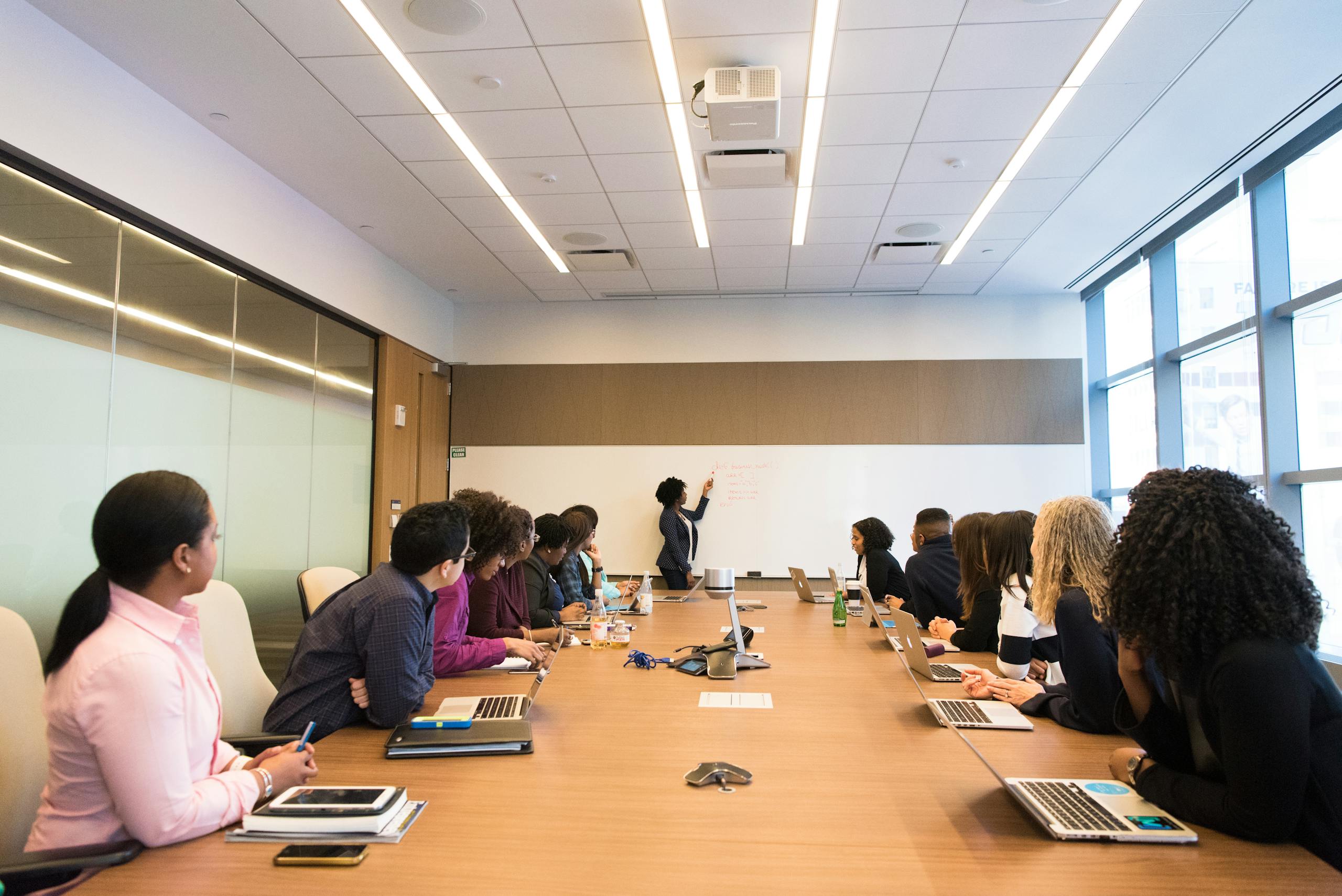
This isn’t just about preference. Psychology Today’s exploration of introvert cognition describes how introverts tend to process information more thoroughly and rely more heavily on long-term memory and internal reflection. That kind of processing requires sustained, uninterrupted focus. The modern open office, with its ambient noise and constant social stimulation, works against that processing style in measurable ways.
Is Dimon Right That Remote Work Hurts Career Growth?
This is the part of his argument that deserves the most honest engagement, because it’s not entirely wrong. Visibility does matter in most organizations. Proximity to decision-makers creates opportunities. Informal relationships built in hallways and over lunch do influence who gets promoted, who gets the interesting project, who gets pulled into the room when something important is being decided.
Introverts working remotely can genuinely miss some of that. Not because they’re less capable, but because organizations haven’t built systems that reward contribution over presence. That’s a structural problem, not a personal one, but it’s still a real consequence.
What Dimon’s framing misses is that the office environment also creates its own kind of career penalty for introverts. The people who dominate meetings get credit for ideas that weren’t always theirs. The loudest voice in the room gets treated as the most confident. The introvert who prepared the most thorough analysis gets talked over by someone who prepared less but performs better in real-time verbal sparring.
I watched this happen in my own agencies. I had a strategist, brilliant and methodical, who consistently produced the most rigorous thinking on any account. In client meetings, she was quiet. In internal reviews, she needed time to formulate her response before speaking. She got passed over for a senior role in favor of someone louder, someone who felt more “leadership-ready” to the people making the call. That decision cost us, eventually. The louder candidate didn’t have the depth. But by the time that became clear, the quieter one had left.
The office didn’t protect her. It penalized her. Remote work, where her written communication could shine and where she wasn’t competing against someone else’s volume, might have let her demonstrate what she was actually capable of.
What the Research Suggests About Introvert Productivity and Environment
The relationship between environment and cognitive performance is well-documented in psychological literature. A study published in PubMed Central examining personality and arousal points to meaningful differences in how introverts and extroverts respond to environmental stimulation. Introverts tend to reach their optimal cognitive arousal at lower stimulation levels than extroverts. Push the stimulation too high, as a busy open office reliably does, and performance drops.
This isn’t a character flaw. It’s a neurological reality. And it means that designing one environment for all workers and calling it the productive default isn’t neutral policy. It’s a choice that advantages one processing style over another.
Highly sensitive people face an even more pronounced version of this challenge. Those who identify as HSPs, a trait that overlaps significantly with introversion though it isn’t identical, often find that overstimulating environments don’t just reduce productivity. They create a kind of cognitive and emotional overwhelm that takes real time to recover from. If you’re someone who recognizes that pattern in yourself, the work around HSP productivity and working with your sensitivity offers practical ways to structure your environment and energy more intentionally.
Walden University’s overview of introvert strengths highlights qualities like deep focus, careful listening, and thorough preparation as genuine competitive advantages. Those advantages don’t disappear in an office. But they do get harder to demonstrate when the environment rewards speed, volume, and visibility over depth and precision.
The Spontaneous Collaboration Argument Deserves a Closer Look
One of Dimon’s core claims is that spontaneous collaboration, the hallway conversation, the impromptu whiteboard session, the accidental collision of ideas, only happens in person. Remote work kills it, in his view.
There’s something real here. Some of the best ideas I ever saw generated in my agencies came from two people running into each other in the kitchen and talking through a problem sideways. Serendipity has value. Not everything needs to be scheduled.
But spontaneous collaboration in an open office is not equally accessible to everyone. For an introvert, being approached without warning, being pulled into an unstructured conversation without time to prepare, being expected to generate ideas on the spot and out loud, that’s not energizing. It’s depleting. And the ideas that come out of it are often shallower than what the same person would produce if given time to think first.
What introverts tend to excel at is considered collaboration. Structured discussion. Written exchange where ideas can be developed before they’re shared. Asynchronous communication where the pressure to respond immediately doesn’t override the quality of the response. Remote work, when structured thoughtfully, creates more of those conditions, not fewer.
I’ve seen this play out in hiring contexts too. When I was evaluating candidates for strategic roles, the people who impressed me most in written exercises or structured interviews were often the ones who got overlooked in fast-paced group interviews. The dynamics of showcasing introvert and HSP strengths in interviews are genuinely different from what extroverted hiring processes tend to reward. The same is true of day-to-day collaboration.
What About Mentorship and Visibility?
Dimon’s concern about younger workers losing mentorship opportunities in remote environments is worth taking seriously. Early career development does benefit from proximity to experienced people. Watching how a senior colleague handles a difficult client, reading the room in a tense negotiation, absorbing the informal knowledge that never makes it into any handbook, that kind of learning is harder to replicate over video calls.
And yet, the office mentorship model has its own blind spots. Mentorship in traditional office environments tends to flow toward people who are socially comfortable, who initiate conversations easily, who remind senior leaders of themselves. Introverts, who are less likely to approach a senior colleague uninvited, who may not attend every optional social event, who don’t self-promote instinctively, often get less mentorship, not more, in office-first cultures.
Structured mentorship programs, which can be built into remote or hybrid environments, often serve introverts better than the organic, proximity-based model Dimon seems to be describing. The difference is intentionality. When mentorship is designed rather than assumed to happen naturally, it reaches more people.
This connects to something broader about how organizations understand their people. When I started using more structured personality assessments in my agencies, including tools like an employee personality profile test, I got a clearer picture of who was thriving in our environment and who was quietly struggling. Some of my best people were managing a gap between how they worked best and how we’d set things up. That gap was costing both of us.
The Hustle Framing and Why It Matters
Dimon has suggested that remote work doesn’t work for people who want to hustle. That framing is worth examining, because it equates visible activity with productive effort in a way that disadvantages introverted work styles almost by definition.
Hustle, as it’s culturally understood in most corporate environments, means being seen. Being responsive. Being energetic and available and present. It means performing effort as much as producing results. Introverts can produce extraordinary results. What they often can’t do, without significant cost, is perform the theater of hustle that gets rewarded in high-visibility office cultures.
An introvert working remotely might spend six hours in deep, uninterrupted focus and produce work that would take twice as long in an open office. That work might be invisible to a leader who equates hustle with physical presence. The person who spent those same six hours in the office, attending three meetings and chatting in the break room between them, looks busier. Gets noticed more. Gets credited with more initiative.
Output-based management, which remote work tends to force, often corrects for this. When the deliverable is what gets evaluated rather than the performance of effort, introverts compete on more level ground. That’s not a bug in remote work. It’s one of its most underappreciated features.

What Introverts Actually Need to Thrive at Work
The debate about remote work often gets framed as a binary: office or home. The more useful question is what conditions allow different kinds of thinkers to do their best work, and how organizations can build those conditions intentionally rather than assuming one environment fits everyone.
For introverts, a few things tend to matter consistently. Control over their environment, including the ability to reduce noise and interruption when deep work is required. Advance notice before meetings and discussions, so they can prepare rather than perform on the spot. Asynchronous communication options that let them contribute thoughtfully rather than in real time. Clear expectations based on output rather than presence. And recognition that quiet, thorough, considered work has value even when it doesn’t announce itself loudly.
None of those things require remote work specifically. Some offices, designed with intention, can provide them. But the default open office, which is what most return-to-office mandates are returning people to, provides almost none of them.
There’s also an energy management dimension that gets overlooked in these conversations. Introverts recharge through solitude. A full day in an office environment, even a functional and friendly one, draws down that energy in ways that don’t reset by the next morning. Over time, that accumulation creates something closer to chronic depletion than simple tiredness. The question isn’t just where introverts work best on any given day. It’s what environments allow them to sustain their best work over months and years.
Highly sensitive introverts face this challenge with particular intensity. The emotional residue of a difficult day, a tense meeting, a piece of critical feedback, doesn’t dissipate quickly for people wired that way. Understanding how HSPs handle criticism and feedback is part of understanding why the office environment carries costs that don’t show up in productivity metrics but are very real in terms of long-term wellbeing and retention.
There’s also the procrastination piece, which sounds unrelated but connects directly to environment. When an introvert’s workspace is overstimulating or emotionally charged, the avoidance response can look like laziness from the outside while actually being a form of self-protection. What looks like procrastination in sensitive people is often a signal that something in the environment or the task structure isn’t working, not a character failing.
What Leaders Like Dimon Could Learn From Introvert-Friendly Management
I want to be careful here not to reduce this to a simple critique of Dimon. He built one of the most successful financial institutions in the world. He clearly knows how to lead. But knowing how to lead in one context, with one set of cultural assumptions, doesn’t mean that context is universally optimal.
The leaders I’ve seen get the most from introverted employees share a few qualities. They evaluate contribution over performance. They create structured space for written input before and after meetings, so that people who think before they speak can actually be heard. They notice the quiet person in the room who has the most thorough read on a situation. They don’t mistake silence for disengagement.
Those qualities don’t require a particular stance on remote work. They require a more sophisticated understanding of how different people think and contribute. Introverts often bring distinct strengths to high-stakes professional situations, including the kind of careful preparation and measured communication that matters in complex negotiations and strategic decisions. Organizations that structure themselves to capture those strengths tend to outperform those that don’t, regardless of where the work happens physically.
It’s also worth noting that introversion shows up across every professional field and every level of seniority. The introvert managing a hospital ward faces different versions of these pressures than the introvert managing a creative team, but the underlying dynamic, an environment optimized for extroverted performance styles, is often the same. Medical careers for introverts illustrate how even the most demanding, high-stakes professions can be structured in ways that play to introvert strengths when the right conditions are in place.
The broader point is that the office-versus-remote debate is really a proxy for a more fundamental question: whose natural working style gets treated as the default, and whose gets treated as the deviation that needs accommodation? Dimon’s framing, however well-intentioned, lands on the side of the extroverted default. That’s worth naming clearly.

Where Does This Leave Introverts handling Return-to-Office Pressure?
Practically speaking, many introverts are facing real pressure right now. Return-to-office mandates are expanding. The cultural pendulum that swung toward flexibility during the pandemic years is swinging back. And the public framing from leaders like Dimon gives organizations cover to demand full presence without examining whether that demand serves their people or just their assumptions.
A few things are worth holding onto in that context. Your productivity isn’t defined by your visibility. Your value doesn’t diminish because you do your best thinking alone. The fact that an environment doesn’t suit your wiring doesn’t mean you’re wired wrong.
At the same time, working within systems that weren’t designed for you requires some intentional strategy. Building relationships before you need them matters more when you’re not relying on proximity. Making your work visible through written documentation and clear communication becomes more important when you’re not in the room where decisions happen. Finding allies who understand and advocate for your working style is worth the investment.
And if you’re in a position to influence how your team or organization works, the case for hybrid flexibility isn’t just about personal comfort. It’s about designing environments that capture the full range of human capability rather than optimizing for one style and losing everyone else.
There’s a lot more to explore on this topic across the full range of workplace dynamics introverts face. Our Career Skills and Professional Development hub pulls together resources on everything from managing energy at work to building influence without performing extroversion.
About the Author
Keith Lacy is an introvert who’s learned to embrace his true self later in life. After 20 years in advertising and marketing leadership, including running agencies and managing Fortune 500 accounts, Keith now channels his experience into helping fellow introverts understand their strengths and build fulfilling careers. As an INTJ, he brings analytical depth and authentic perspective to every article, drawing from both professional expertise and personal growth.
Frequently Asked Questions
What did Jamie Dimon say about remote work?
Jamie Dimon, CEO of JPMorgan Chase, has been one of the most outspoken corporate critics of remote work. He has argued that working from home damages spontaneous collaboration, makes employees harder to manage, and disadvantages people who want to advance their careers. JPMorgan has implemented a full return-to-office policy consistent with his public statements. His position represents a broader trend among major employers pushing back against the workplace flexibility that expanded during the pandemic years.
Are introverts more productive when working from home?
Many introverts do find remote work conditions more conducive to their best thinking, though this varies by individual and role. Introverts tend to process information deeply and perform best with sustained, uninterrupted focus. Open office environments, with their ambient noise and frequent interruptions, can work against that processing style. Remote work often provides more control over the environment, more opportunities for asynchronous communication, and fewer spontaneous social demands, all of which align better with how many introverts naturally work. That said, the specific conditions of any remote setup matter as much as the location itself.
Does return-to-office hurt introverts more than extroverts?
Return-to-office mandates tend to remove conditions that many introverts rely on for sustained performance, including environmental control, reduced interruption, and the ability to contribute through writing rather than real-time verbal exchange. Extroverts, who generally recharge through social interaction and tend to perform well in spontaneous collaborative settings, often find office environments more naturally energizing. This doesn’t mean introverts can’t function in offices, but it does mean that blanket return-to-office policies often impose a higher cognitive and emotional cost on introverted employees without acknowledging that cost.
How can introverts advocate for flexible work arrangements?
The most effective approach tends to center on output rather than preference. Documenting the quality and consistency of your work during remote or hybrid periods gives you concrete evidence to present. Framing flexibility as a productivity tool rather than a personal accommodation tends to land better with leadership. Building strong relationships and maintaining visibility through written communication, structured check-ins, and clear deliverables helps counter the concern that remote workers are less engaged. Finding managers or mentors who understand different working styles and can advocate internally also makes a meaningful difference over time.
What does Jamie Dimon’s position reveal about how workplaces treat introverts?
Dimon’s stance reflects a broader assumption embedded in most corporate culture: that the office environment is a neutral, universally productive space, and that deviations from it require justification. That assumption tends to treat extroverted work styles as the default and introverted ones as the exception. When leaders frame office presence as evidence of hustle and commitment, they’re often rewarding the performance of effort over the quality of output, a dynamic that systematically disadvantages people whose best work happens quietly, independently, and without an audience. His comments are a useful prompt for examining whose working style gets treated as normal and whose gets treated as a problem to solve.