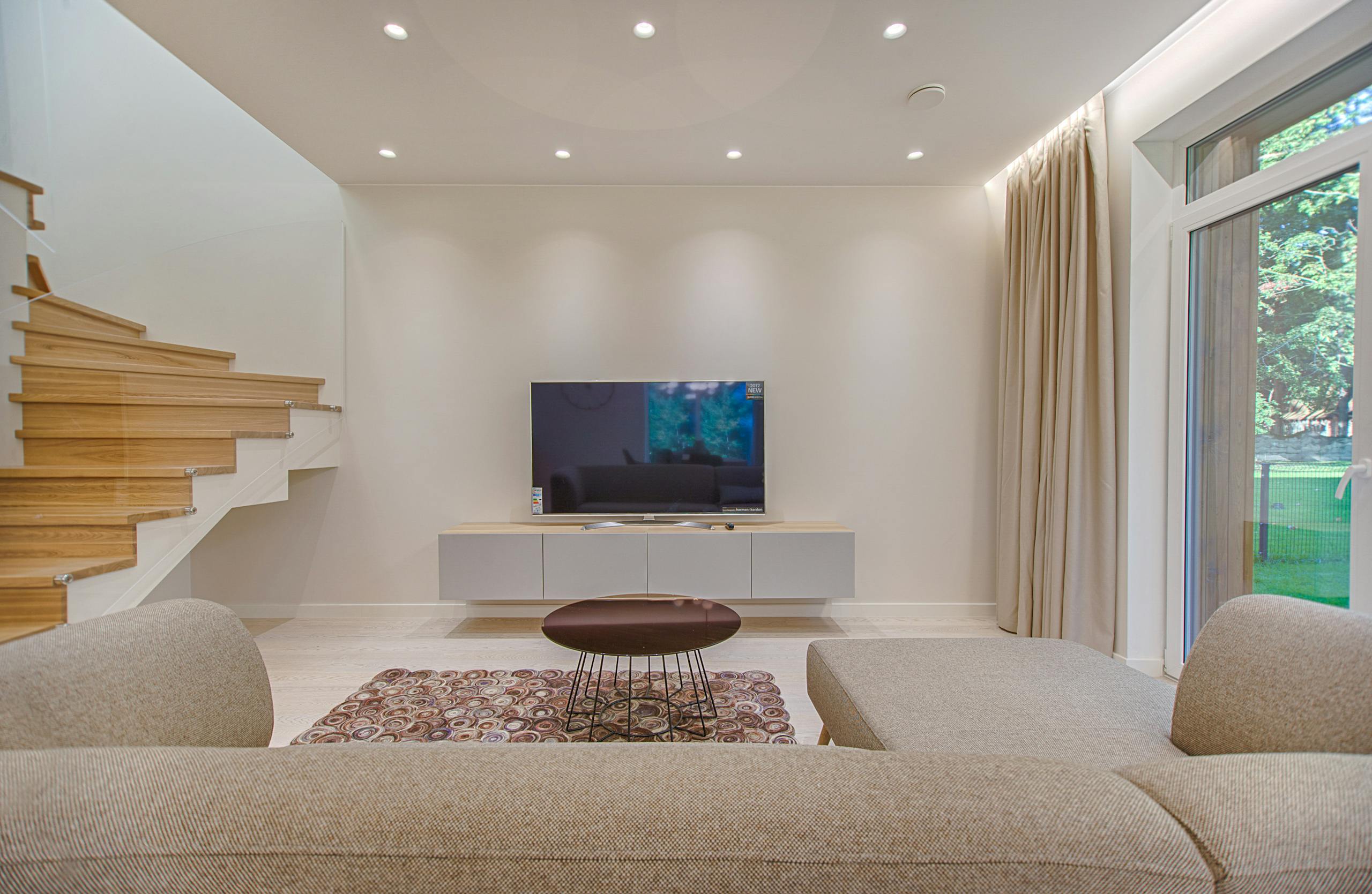

A minimal apartment isn’t just a design choice. For introverts, it can be one of the most quietly powerful decisions you make for your mental and emotional wellbeing. When your physical space carries less visual noise, less accumulated stuff, less unfinished business, your mind gets room to actually breathe.
Stripping back your living space to what genuinely serves you creates something that most introverts spend years searching for: a home that feels like a true retreat rather than another source of overstimulation. That’s the real argument for minimalism when you’re wired the way we are.

If you’ve been thinking about how your home environment shapes your inner life, you’re already asking the right questions. Our Introvert Home Environment hub covers this territory from multiple angles, but the specific case for a minimal apartment deserves its own honest look, especially for those of us who process the world deeply and need our physical surroundings to work with us, not against us.
What Does a Minimal Apartment Actually Mean for an Introvert?
Minimalism gets misrepresented constantly. It’s not about living in a sterile white box with one chair and a succulent. It’s not about punishing yourself for owning things you love. And it’s definitely not a personality contest to see who can own the fewest possessions.
For an introvert, a minimal apartment means something more personal than that. It means your space has been deliberately shaped to support how you actually function. You’ve removed the things that drain you and kept the things that restore you. That’s a meaningful distinction.
I spent most of my thirties and forties in an environment that was the opposite of minimal. Running advertising agencies meant my professional life was constant noise, constant input, constant demands on my attention. I’d come home to a space that reflected that same chaos. Stacks of industry publications I was going to read. Samples from client campaigns piled on surfaces. A home office that blurred into the living room. My apartment was an extension of the office, and my nervous system paid for it.
What I’ve come to understand, and what took me longer than I’d like to admit, is that as an INTJ, I need physical order to support internal clarity. When my environment is cluttered, my thinking gets cluttered. The two aren’t separate. They’re deeply connected, and that connection is especially strong for people who do most of their living inside their own heads.
This is also true for highly sensitive introverts. There’s a thoughtful piece on HSP minimalism that explores how people with heightened sensory sensitivity respond to their environments in ways that go beyond simple preference. For some introverts, visual clutter isn’t just annoying. It registers as genuine stress.
Why Do Introverts Benefit So Specifically from Minimal Living Spaces?
There’s a reason this conversation keeps coming up in introvert communities. The connection between introversion and a preference for calm, low-stimulation environments isn’t arbitrary. It reflects something real about how introverted brains process the world.
Introverts tend to process incoming information more thoroughly than their extroverted counterparts. That depth of processing is one of our genuine strengths. It’s what makes introverts careful thinkers, attentive listeners, and often surprisingly creative problem solvers. But it also means we can reach cognitive overload faster when the environment keeps feeding us new inputs.
A cluttered apartment is a constant source of low-level inputs. Every object in your visual field is a micro-demand on your attention. Your brain registers the pile of unopened mail, the tangled cables behind the TV, the collection of mugs that’s grown beyond any reasonable number. You’re not consciously thinking about any of it, but your system is processing it. Over hours and days, that adds up.
There’s interesting work in environmental psychology suggesting that physical disorder can elevate perceived stress and reduce the sense of psychological safety in a space. A piece published through PubMed Central examined how home environments affect psychological restoration, and the findings reinforce what many introverts already sense intuitively: where you rest matters as much as how long you rest.
Introverts recharge through solitude and internal reflection. But if your home environment is working against you, that recharging process is compromised. You’re not fully restoring. You’re just changing locations.

How Do You Actually Start Minimizing Without Losing Yourself?
One of the reasons people stall on minimalism is that the advice tends to be either too abstract or too aggressive. “Own less” doesn’t tell you much. And the more extreme decluttering philosophies can feel like they’re asking you to erase your personality from your home.
My approach, developed through a lot of trial and error across several apartments and one major life reset in my mid-forties, is to start with function rather than aesthetics. Ask yourself what each area of your apartment is actually for. What do you need it to do? What do you need to feel in that space?
Your bedroom should feel like genuine rest. Your living area should support whatever restoration looks like for you, whether that’s reading, listening to music, or simply sitting quietly. Your workspace, if you have one at home, should have clear psychological boundaries so it doesn’t bleed into your recovery zones.
Once you know what each space is for, the decluttering question becomes much simpler: does this object support what this space is supposed to do? If it doesn’t, it’s either in the wrong room or it doesn’t belong in the apartment at all.
The things that DO stay deserve to be genuinely good. A comfortable place to sit matters enormously when your home is your sanctuary. I’ve written elsewhere about the importance of a proper homebody couch and why introverts should think carefully about that particular investment. It sounds minor until you realize how many hours of genuine restoration happen in that one spot.
Here are some practical starting points that have worked for me and for introverts I’ve talked with over the years:
- Clear your surfaces first. Flat surfaces accumulate clutter faster than anywhere else. Start there before touching storage.
- Create one genuinely calm corner. Even if the rest of the apartment is still in progress, having one space that feels right gives you somewhere to retreat to while you work through the rest.
- Handle the entryway. What you see when you walk through your door sets the psychological tone for your entire time at home. Keep it intentional.
- Address the visual noise in your workspace separately. Work clutter and home clutter have different psychological weights. Don’t let them bleed into each other.
- Be honest about aspirational objects. The books you bought but haven’t read, the hobby equipment for the hobby you haven’t started. These create a subtle background hum of unfinished business that introverts feel acutely.
What Should an Introvert Actually Keep in a Minimal Apartment?
Minimalism is about curation, not deprivation. What you choose to keep says a lot about what actually matters to you, and that’s worth paying attention to.
For introverts specifically, the things worth keeping tend to fall into a few categories. Objects that support deep, focused activities: good books, quality headphones, proper lighting for reading or creative work. Objects that create genuine comfort without visual noise: textiles that feel good, furniture that earns its floor space. And objects that carry real meaning, not just sentimental accumulation, but things you’d actually notice if they were gone.
One of the more interesting shifts that happens when you start living minimally is that the things you DO keep start to feel more significant. When your bookshelf holds fifty books you’ve genuinely chosen rather than three hundred books you’ve collected, each one carries more weight. Your space becomes a more accurate reflection of who you actually are.
There’s something worth noting about gifts and the objects others bring into your space. If you’re an introvert who loves your home environment but struggles with well-meaning people filling it with things you don’t need, having a clear sense of what you actually want helps. Resources like a thoughtful homebody gift guide can be genuinely useful for communicating to people in your life what kinds of things actually enhance your space. And if you’re shopping for a fellow introvert, the gifts for homebodies roundup covers options that support rather than clutter a carefully curated living space.
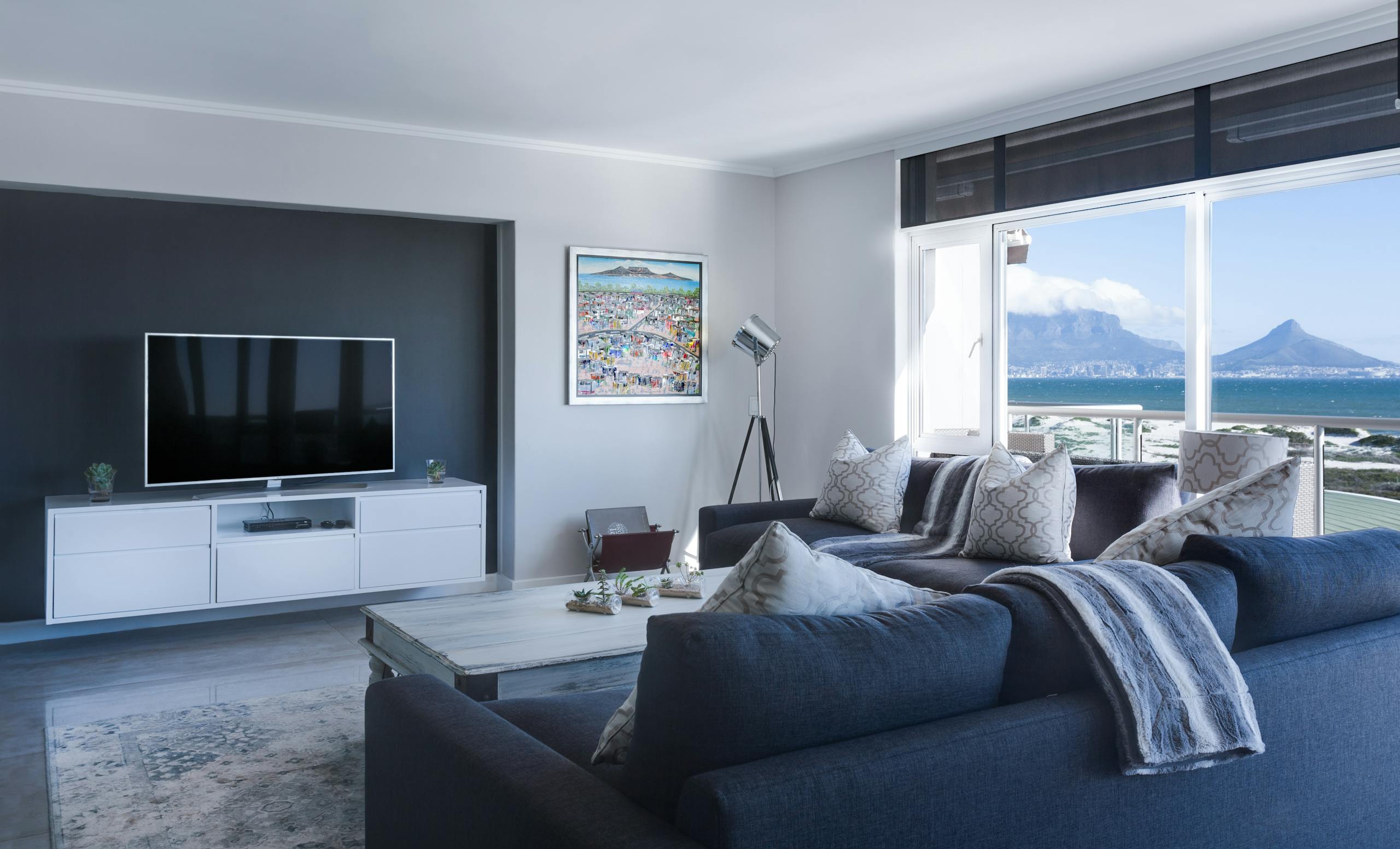
How Does Your Home Environment Connect to Your Introvert Social Life?
This angle doesn’t get discussed enough. Most minimalism content focuses on the solo experience of your space. But for introverts, the relationship between your home environment and your social life is genuinely interesting.
Many introverts are homebodies by genuine preference, not by default. They’re not staying home because they can’t handle social situations. They’re staying home because home is where they do some of their best living. Reading, thinking, creating, connecting with a small number of people in meaningful ways.
A minimal apartment supports that kind of intentional social life beautifully. When your home feels genuinely good, inviting one or two close friends over becomes a real pleasure rather than a logistical anxiety. You’re not worried about the state of the place. You’re not apologizing for the clutter. You’re just present with the people who matter to you.
There’s also the reality that many introverts maintain meaningful social connections online, especially the kind of slower, more thoughtful exchanges that suit our communication style. Spaces like chat rooms for introverts offer a way to connect that doesn’t require the energy overhead of in-person socializing, and they work particularly well when you’re settled comfortably in a space that feels like yours.
I noticed this shift in my own life after I finally got serious about my home environment. My apartment had become a place I actually wanted to be, and that changed how I related to being home. It stopped feeling like retreat-from and started feeling like retreat-to. That’s a meaningful psychological difference.
Some relevant work on the psychological dimensions of this comes from environmental psychology research on restorative spaces. A study published via PubMed Central on home environments and psychological wellbeing points to how the qualities of a space, its perceived order, its sense of belonging, its support for preferred activities, shape mental health outcomes in ways that are easy to underestimate.
What Are the Deeper Psychological Benefits of Minimal Living for Introverts?
Beyond the practical benefits of less cleaning and easier maintenance, there are some psychological dimensions to minimal living that I think deserve more attention, especially for people who process the world the way introverts do.
One is the relationship between external order and internal clarity. As an INTJ, I’m particularly attuned to this. My thinking is most effective when my environment isn’t competing for my attention. When I sit down to work through a complex problem, I need my visual field to be quiet. That’s not precious. It’s just how my processing works best.
Another is the sense of autonomy that comes from a deliberately curated space. Introverts often spend significant portions of their professional lives in environments they didn’t choose and can’t control. Open-plan offices, loud lunch rooms, meeting-heavy schedules. Your home is the one environment where you have complete authority. Exercising that authority intentionally, shaping your space to reflect your actual values and support your actual needs, is a form of self-knowledge made physical.
There’s also something worth saying about depth. Introverts are drawn to depth in conversation, in relationships, in work. A minimal apartment can support that same orientation toward depth in your physical life. Fewer things, more carefully chosen. Less surface variety, more genuine quality. It’s the same instinct that makes introverts prefer one meaningful conversation to ten superficial ones, applied to objects and space.
Psychology Today has written thoughtfully about the introvert preference for deeper, more substantive engagement across various domains of life. That preference doesn’t stop at conversation. It shapes how we relate to our homes, our possessions, and the environments we create for ourselves.

How Do You Maintain a Minimal Apartment Without Constant Effort?
One of the most common concerns I hear from introverts considering this kind of change is that minimalism sounds exhausting to maintain. The irony is that a well-established minimal apartment actually requires significantly less ongoing effort than a cluttered one. Getting there takes work. Staying there is much easier.
The maintenance challenge usually comes from not having finished the initial process. If you’ve cleared your surfaces but still have boxes of unsorted things in the closet, those boxes create a low-level psychological weight. You know they’re there. They represent decisions you haven’t made yet. That unfinished quality undermines the calm you’re trying to create.
The most effective maintenance strategy I’ve found is a simple one: be deliberate about what comes in. Before anything new enters your apartment, ask whether it earns its place. Not in a rigid, joyless way, but in the same way you’d think about any commitment. Does this serve something I actually care about? If the answer isn’t clearly yes, the default is no.
Reading about the homebody lifestyle has helped me think more clearly about this. There’s a particular homebody book that approaches the topic of intentional home living with real warmth and practicality. It’s not a minimalism manifesto. It’s more of an invitation to take your relationship with your home seriously, which is exactly the right frame.
A few practical maintenance habits worth building:
- A brief weekly reset of your main surfaces. Ten minutes on a Sunday evening can preserve the sense of order through the entire week.
- A seasonal review of what’s accumulating. Things creep back in. A quarterly honest look keeps the drift from becoming a problem.
- A one-in-one-out approach for categories that tend to grow. Books, kitchen items, clothing. Not as a rigid rule but as a useful check.
- Keeping storage honest. If something goes into a drawer or closet and you genuinely don’t know what’s in there, that’s worth addressing. Hidden clutter still has a psychological weight.
What About the Emotional Resistance to Letting Things Go?
This is where the honest conversation about minimalism gets more interesting. Most of the resistance people feel to decluttering isn’t really about the objects. It’s about what the objects represent. Identity, possibility, relationships, past versions of yourself.
Introverts tend to be particularly reflective about this. We process meaning deeply, and objects carry meaning. The guitar you haven’t played in eight years isn’t just taking up space. It represents something about who you thought you’d become, or who you were at a particular time. Letting it go feels like letting go of that version of yourself.
What I’ve found, both personally and in conversations with other introverts working through this, is that the resistance usually softens when you separate the meaning from the object. You can honor what something represented without keeping the physical thing. The memory, the identity, the aspiration, those don’t live in the object. They live in you.
There’s also something worth acknowledging about perfectionism, which runs strong in many introverts and especially in INTJs. The fear that you’ll get rid of something you later wish you’d kept can paralyze the whole process. My honest advice: you will occasionally make a choice you second-guess. It happens. In my experience, the things I’ve regretted keeping far outnumber the things I’ve regretted releasing. The cost of holding on is usually higher than the cost of letting go.
Frontiers in Psychology has published work on how psychological flexibility connects to wellbeing in ways that are relevant here. The capacity to make deliberate choices about your environment, rather than defaulting to accumulation, is a form of that flexibility in practice.
How Does a Minimal Apartment Support Deeper Thinking and Creative Work?
This is the angle that matters most to me personally. A minimal apartment isn’t just about feeling calm. For introverts who do significant intellectual or creative work, the quality of the home environment has a direct effect on the quality of the thinking.
During my agency years, some of my best strategic thinking happened at home, not in the office. The office was for managing, presenting, negotiating. Home was where I could actually think. But that only worked when my home environment supported it. When the apartment was chaotic, my thinking reflected that. When it was ordered and quiet, I could go deep.
I managed a creative director at one of my agencies, a genuinely talented INFP, who struggled with exactly this. She produced her best work from home but kept a living space that she described as “organized chaos.” She believed the chaos was part of her creative process. Maybe it was, for her. But she also consistently reported feeling depleted by her own home, never quite restored by her time there. That tension is worth examining honestly rather than accepting as fixed.
For introverts whose work involves sustained concentration, whether that’s writing, analysis, design, coding, or any other form of deep work, the home environment functions as a kind of cognitive infrastructure. A minimal apartment with good light, minimal visual interruption, and clear spatial organization for different activities supports that work in ways that are genuinely measurable in output quality.
There’s relevant research on how physical environments affect cognitive performance and focus. The principles align with what introverts tend to report from their own experience: lower stimulation environments support deeper processing, and the home is one of the few spaces where introverts have genuine control over that stimulation level.

Where Does Minimalism Fit Within the Broader Introvert Home Philosophy?
Minimalism is one approach within a broader orientation toward intentional home living. Not every introvert will want the same degree of spareness. Some introverts are deeply comforted by books covering every wall. Others prefer a single well-chosen piece of art. The specific aesthetic matters less than the underlying intention: your home should actively support how you’re wired.
What minimalism offers, at its most useful, is a framework for making those choices deliberately rather than by default. It asks you to be honest about what your space is actually doing for you, and to take responsibility for shaping it toward something better.
For introverts who’ve spent years trying to fit into environments designed for other people’s needs, that kind of deliberate self-advocacy at home can feel surprisingly significant. Your apartment is one of the few places where you genuinely get to set the terms. Taking that seriously is worth the effort.
If you’re exploring the full picture of how your home environment shapes your inner life, the Introvert Home Environment hub brings together the range of topics that matter here, from sensory sensitivity to social design to the psychology of personal space.
About the Author
Keith Lacy is an introvert who’s learned to embrace his true self later in life. After 20 years in advertising and marketing leadership, including running agencies and managing Fortune 500 accounts, Keith now channels his experience into helping fellow introverts understand their strengths and build fulfilling careers. As an INTJ, he brings analytical depth and authentic perspective to every article, drawing from both professional expertise and personal growth.
Frequently Asked Questions
Does minimalism suit every introvert, or just certain types?
Minimalism as a strict aesthetic doesn’t suit every introvert, and it doesn’t need to. What matters is the underlying principle: shaping your home environment to support how you’re wired. Some introverts thrive with very sparse surroundings. Others need rich sensory environments filled with books, art, and meaningful objects. The question isn’t whether you own few things. It’s whether the things you own genuinely serve your wellbeing. Introverts who lean toward high sensory sensitivity may find that a more streamlined space reduces overwhelm significantly, while others may find that certain kinds of richness, particularly books and music, are essential to how they restore.
How does a minimal apartment help with introvert energy management?
Introverts restore through solitude and low-stimulation environments. A cluttered apartment is a source of ongoing low-level stimulation, even when you’re not consciously attending to it. Visual disorder requires cognitive processing, and that processing draws on the same resources you’re trying to restore. A minimal apartment reduces that background demand, allowing your actual restoration to be more complete. Many introverts report that after clearing their living spaces, they feel genuinely rested after time at home in a way they hadn’t experienced before, even though they’d been spending the same amount of time there.
What’s the best place to start when minimizing a small apartment?
Start with your flat surfaces: countertops, tables, the tops of shelves and dressers. These areas accumulate clutter faster than anywhere else and have the most immediate visual impact when cleared. Getting your surfaces clear gives you a quick, tangible result that motivates the rest of the process. After surfaces, address the entryway, since what you see when you arrive home sets the psychological tone for your entire time there. Save closets and storage for later in the process, once you have a clearer sense of what you’re keeping and why.
Can you have a cozy, warm apartment and still be minimalist?
Absolutely. Minimalism and warmth aren’t opposites. In fact, a minimal apartment often feels warmer than a cluttered one, because the things that create genuine comfort, good textiles, proper lighting, a comfortable place to sit, get more attention and presence when they’re not competing with visual noise. The Scandinavian design tradition has been making this argument for decades, combining deliberate spareness with deep physical comfort. For introverts who are also homebodies, the goal is a space that feels genuinely welcoming and restorative, and minimalism, done with warmth rather than austerity, supports that beautifully.
How do you handle it when other people in your home have different preferences?
Shared living spaces require negotiation, and that’s genuinely challenging when one person needs a minimal environment to function well and another person is energized by a more varied, object-rich space. The most practical approach is to establish clear personal zones where each person has full authority over their environment, while negotiating the shared spaces toward something that works for both. It also helps to be specific about what you need and why, rather than framing it as a preference or aesthetic choice. Explaining that visual clutter affects your ability to restore and think clearly makes the conversation more concrete and easier to work with than a general preference for tidiness.