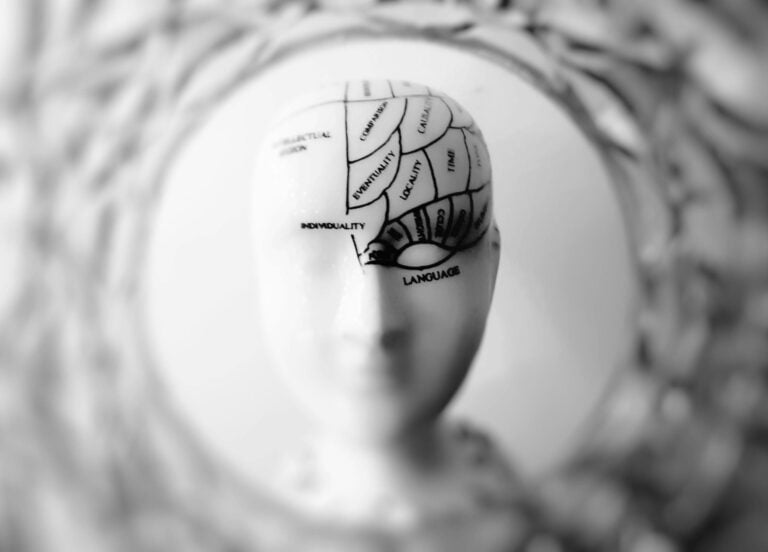

Dissociation is a chemical reaction in the brain, not a character flaw or a sign of weakness. When the nervous system becomes overwhelmed, specific neurochemical shifts alter how the brain processes reality, creating that strange sense of detachment, fogginess, or unreality that many sensitive, deeply wired people know well.
For introverts and highly sensitive people especially, understanding the biology behind dissociation can change everything. It reframes a frightening experience as a physiological response, one that can be understood, managed, and, over time, worked through with the right support.
Our Introvert Mental Health Hub covers the full spectrum of mental and emotional experiences that show up differently for those of us wired for depth and introspection. Dissociation sits squarely in that conversation, because the same sensitivity that makes introverts perceptive and thoughtful can also make the nervous system more reactive to overload.

What Is the Dissociation Chemical Reaction, Exactly?
Dissociation, at its neurobiological core, involves a cascade of chemical changes that interrupt the brain’s normal integration of sensory information, memory, and self-awareness. Several key players are involved.
The first is cortisol, the body’s primary stress hormone. When the brain perceives threat, whether physical or emotional, the hypothalamic-pituitary-adrenal (HPA) axis activates and cortisol floods the system. At moderate levels, cortisol sharpens attention and prepares the body to respond. At extreme or sustained levels, it begins to interfere with the prefrontal cortex, the region responsible for rational thought, self-awareness, and the sense of being grounded in the present moment.
Alongside cortisol, the brain releases endogenous opioids, naturally produced compounds that dull pain during extreme stress. These opioids create the emotional numbing and sense of unreality that characterize dissociation. According to clinical literature on dissociative disorders, this numbing response is thought to be an ancient protective mechanism, one the nervous system deploys when emotional or physical pain would otherwise be unbearable.
Glutamate, the brain’s primary excitatory neurotransmitter, also plays a significant role. Dissociative states involve disrupted glutamate signaling, particularly at NMDA receptors. This is why medications that block NMDA receptors, such as ketamine, can induce dissociative experiences. The brain, under extreme stress, essentially mimics this chemistry on its own.
Finally, dopamine dysregulation appears in dissociative states as well. Dopamine normally helps integrate attention and reality-testing. When its signaling is disrupted by sustained stress, the brain’s ability to anchor itself in the present moment weakens, contributing to that characteristic floating, detached quality.
Why Do Some People Dissociate More Than Others?
Not everyone who experiences stress dissociates. The threshold varies considerably from person to person, and several factors influence it.
Nervous system sensitivity is one of the most significant. People with a more reactive autonomic nervous system, including many highly sensitive people (HSPs), reach the neurochemical tipping point more readily. The same stimulus that registers as mildly stressful for one person can trigger a full stress cascade for someone whose nervous system is calibrated for finer detection. This isn’t weakness. It’s a different biological baseline.
I saw this play out repeatedly during my years running advertising agencies. My team included people with wildly different stress thresholds. Some could absorb a brutal client call and bounce back in twenty minutes. Others, particularly the most perceptive and emotionally attuned members of my team, needed real time to decompress before they could function creatively again. At the time, I interpreted this as a resilience gap. Looking back, I understand it was a sensitivity difference, and that sensitivity was often the same quality that made those team members exceptional at reading a room, anticipating client concerns, and producing work that actually connected with people.
Trauma history also dramatically lowers the dissociation threshold. When the nervous system has been conditioned by repeated overwhelming experiences, it learns to trigger the dissociation chemical reaction earlier and more easily. Research published in PubMed Central has examined how early adverse experiences alter HPA axis reactivity, effectively recalibrating the stress response system in ways that persist into adulthood.
Attachment patterns, sleep deprivation, chronic anxiety, and even certain nutritional deficiencies can all lower the threshold further. Dissociation isn’t a switch that either works or doesn’t. It’s more like a dial, and many factors influence where that dial sits on any given day.

How Does Sensory Overload Connect to Dissociation?
One of the less-discussed triggers for dissociative episodes is sensory overload. For highly sensitive people and introverts who process environmental stimuli more thoroughly than average, a chaotic or overwhelming sensory environment can push the nervous system past its threshold and initiate the dissociation chemical reaction.
The mechanism makes sense when you follow the neuroscience. Sensory overload floods the thalamus, the brain’s sensory relay station, with more input than it can efficiently filter. This triggers a stress response, cortisol rises, the prefrontal cortex begins to go offline, and the brain starts pulling back from full engagement with reality as a protective measure. What begins as too much noise, light, or social stimulation can end in that hollow, foggy, not-quite-here feeling that defines dissociation.
If you’ve experienced this pattern, the article on HSP overwhelm and managing sensory overload offers practical grounding strategies that address the nervous system directly, rather than just the surface symptoms.
During my agency years, I had a standing rule: no major creative reviews after 3 PM on Fridays. My team was often running on fumes by then, sensory systems taxed from a week of open-plan office noise, back-to-back calls, and the particular exhaustion of performing extroversion for clients all week. I’d noticed that the quality of thinking degraded sharply in those late-Friday sessions, and that some team members seemed to go somewhere else mentally, present in body but absent in engagement. I didn’t have the language for it then, but that pattern was dissociation adjacent, a nervous system that had simply hit its limit.
What’s the Relationship Between Anxiety and Dissociation?
Anxiety and dissociation share overlapping neurochemistry, but they represent different responses to the same underlying stress activation. Anxiety keeps the system revved up, hypervigilant, scanning for threat. Dissociation, by contrast, is the nervous system’s emergency brake, a chemical dampening that reduces the intensity of experience when the system becomes too activated to sustain.
Many people experience both in sequence. Anxiety builds, the cortisol load becomes unsustainable, and the brain shifts into dissociative gear as a kind of circuit breaker. This is why people with anxiety disorders are statistically more likely to also experience dissociative episodes. The National Institute of Mental Health’s resources on anxiety disorders note the significant overlap between anxiety and dissociative symptoms, though the two require somewhat different approaches to treatment.
For sensitive people who are also prone to anxiety, this cycle can become self-reinforcing. Anxiety triggers dissociation. Dissociation creates confusion and fear about what’s happening. That fear feeds more anxiety. Understanding the chemical logic of the cycle is one of the first steps toward interrupting it.
The article on HSP anxiety and coping strategies addresses this cycle specifically for people whose sensitivity makes them more prone to both anxiety and the dissociative responses that can follow it.
How Does Emotional Overwhelm Trigger the Dissociation Chemical Reaction?
Emotional intensity is one of the most reliable triggers for dissociative chemistry, particularly for people who process feelings deeply. When emotional experience becomes too intense to integrate in real time, the brain’s default mode network, which governs self-referential processing and emotional integration, can become destabilized. The result is a kind of internal fragmentation, where the felt sense of self temporarily loses coherence.
This is especially relevant for people who feel emotions with unusual depth and intensity. When you’re wired to process every nuance of an interaction, every layer of meaning in a conversation, every emotional undercurrent in a room, the sheer volume of emotional data can become chemically overwhelming. The brain responds by partially disconnecting the emotional processing circuitry from conscious awareness.
The piece on HSP emotional processing and feeling deeply explores this territory with real care, looking at both the gift and the cost of processing emotion at this level of depth.
One of the most vulnerable moments I can recall in my agency career happened during a particularly brutal agency review with a major packaged goods client. We’d spent eight months on a campaign. The work was strong. The client rejected everything in a forty-minute meeting that felt designed to humiliate rather than redirect. I remember sitting in the parking garage afterward, car running, completely unable to feel anything. Not anger, not disappointment, not relief that it was over. Just blank. At the time, I thought I was handling it well. I understand now that my nervous system had simply hit its chemical limit and dissociated as a protective response. It took me two days to actually process what had happened.

Does Empathy Play a Role in Dissociative Vulnerability?
Empathy, particularly the somatic or embodied kind, can contribute meaningfully to dissociative vulnerability. When you absorb other people’s emotional states as your own, your nervous system is essentially running double the emotional load. Your own stress response activates in response to someone else’s distress, and if that happens repeatedly or intensely enough, the cumulative neurochemical burden can trigger the dissociation chemical reaction.
This is one reason highly empathic people often report dissociative symptoms after intense emotional interactions, particularly those involving conflict, grief, or someone else’s crisis. The brain has been processing two emotional realities simultaneously, and at some point, it simply can’t maintain that integration.
The article on HSP empathy as a double-edged sword examines exactly this tension, the way deep empathic attunement is both a profound strength and a genuine source of emotional and physiological cost.
As an INTJ managing teams of creatives, I observed this pattern most clearly in my most empathic team members. One account director I worked with for years had an extraordinary ability to read client emotional states and adjust her approach accordingly. She was invaluable in high-stakes presentations. She was also the person who most often needed to take a quiet hour after those presentations before she could do anything else. Her nervous system had been doing something genuinely demanding during those meetings, absorbing and mirroring emotional states across the room. That’s not a soft skill. That’s a physiological process with real neurochemical costs.
Can Perfectionism Make Dissociation Worse?
Perfectionism creates a specific kind of chronic stress that can prime the nervous system for dissociative responses. When the internal standard is perpetually unmet, when every outcome is filtered through a lens of inadequacy, the HPA axis stays in a low-grade activation state. Cortisol levels remain elevated. The nervous system never fully settles. And a system that never settles is a system that’s always closer to the dissociation threshold.
There’s also a cognitive dimension to this. Perfectionists often engage in intense rumination, replaying events, cataloging failures, anticipating future inadequacy. This rumination activates the default mode network in ways that can destabilize the sense of present-moment groundedness that keeps dissociation at bay. The mind becomes so absorbed in the internal world of evaluation and self-criticism that it loses its tether to the here and now.
Interestingly, work from Ohio State University on perfectionism and parenting has highlighted how perfectionist standards create sustained physiological stress responses, findings that translate meaningfully to how perfectionism affects the nervous system more broadly.
For people who recognize this pattern in themselves, the article on HSP perfectionism and breaking the high standards trap is worth reading carefully. It addresses the specific way perfectionism functions differently for sensitive people, and why the standard advice to “just lower your standards” misses the point entirely.
What Role Does Rejection Play in Triggering Dissociation?
Rejection activates some of the same neural pathways as physical pain. Brain imaging work has shown that social rejection engages the anterior cingulate cortex and anterior insula, regions that process both physical pain and emotional distress. For people with high rejection sensitivity, this activation is more intense and more sustained, meaning the neurochemical cascade that follows rejection can be significant enough to trigger dissociative responses.
For sensitive people who already process emotional experience at depth, rejection doesn’t just sting. It can feel like a full-system disruption. The brain, faced with that level of pain signal, may deploy the same endogenous opioid numbing that characterizes dissociation in other high-stress contexts.
The article on HSP rejection, processing, and healing addresses this with the kind of specificity that generic advice about “building resilience” never quite reaches. Healing from rejection-triggered dissociation requires understanding both the emotional and the neurochemical dimensions of what’s happening.
I’ve felt this myself. Losing a major account after years of work, being passed over for an industry award I genuinely believed we’d earned, having a mentor relationship dissolve without explanation. Each of those moments carried a quality of unreality in the immediate aftermath, a sense of the world going slightly sideways. That wasn’t weakness. That was my nervous system doing exactly what it was chemically designed to do when the pain signal exceeded a certain threshold.
What Can Actually Help When the Dissociation Chemical Reaction Starts?
Because dissociation is a chemical event, the most effective immediate interventions work at the physiological level, not the cognitive one. Trying to think your way out of dissociation while it’s actively happening is a bit like trying to reason with a smoke alarm. The system isn’t in reasoning mode. It’s in protection mode.
Grounding techniques work by giving the nervous system clear, concrete sensory input that counters the disconnection. Cold water on the wrists or face activates the dive reflex, which can rapidly slow heart rate and shift the autonomic nervous system toward a more regulated state. The 5-4-3-2-1 technique, identifying five things you can see, four you can touch, three you can hear, two you can smell, one you can taste, works because it forces the sensory cortex back online and re-engages the thalamus’s filtering function.
Slow, controlled breathing directly influences the vagus nerve, which regulates the parasympathetic nervous system. Extended exhales, breathing in for four counts and out for six to eight counts, activate the vagal brake and begin to lower cortisol levels. Published work in PubMed Central has examined vagal nerve stimulation and its effects on stress regulation, supporting the physiological basis of breathing-based interventions.
Physical movement, even gentle movement, can help restore the sense of embodiment that dissociation disrupts. Walking slowly and deliberately, pressing your feet into the floor, or holding something weighted in your hands all send proprioceptive signals to the brain that help anchor the sense of being present in a physical body.
Longer term, the most meaningful work involves reducing the overall chronic stress load that keeps the nervous system primed for dissociation. That means addressing sleep, boundaries, sensory environment, and the patterns of anxiety or perfectionism that keep cortisol elevated. It often means working with a therapist who understands dissociation specifically, particularly one trained in somatic approaches or trauma-informed care.
The American Psychological Association’s resources on resilience are worth exploring here. Genuine resilience isn’t about being unaffected by stress. It’s about building a nervous system that can recover from activation more efficiently, and that recovery capacity can be developed over time.
Is Dissociation Always a Problem, or Can It Be Adaptive?
This is a question worth sitting with honestly. Dissociation exists on a spectrum. At the mild end, it includes the kind of highway hypnosis everyone experiences, the zone-out during a long drive where you arrive at your destination without clear memory of the last ten miles. It includes the absorption of deep creative flow, where time disappears and self-consciousness recedes. It includes the meditative states that many traditions deliberately cultivate.
At the more significant end, dissociation becomes disruptive, interfering with memory, relationships, sense of identity, and daily functioning. Dissociative disorders, including depersonalization-derealization disorder, dissociative amnesia, and dissociative identity disorder, represent the clinical end of this spectrum and require professional support.
The adaptive piece is real. The dissociation chemical reaction evolved as a survival mechanism, and in genuinely overwhelming circumstances, it serves its purpose. The problem arises when the nervous system deploys it too readily, in response to everyday stressors rather than genuine emergencies, or when the underlying conditions that trigger it remain unaddressed.
Understanding this spectrum matters because it changes how we relate to dissociative experiences. Pathologizing every moment of disconnection creates its own anxiety. Recognizing that mild dissociation is a normal neurological event, while also staying honest about when it’s becoming a pattern that interferes with life, is a more useful and accurate frame.
Academic work exploring this spectrum, including graduate research on dissociation and its relationship to psychological wellbeing, has helped clarify the distinction between normative and pathological dissociation, which is genuinely useful for anyone trying to understand their own experience.

What Should Introverts Specifically Know About Dissociation?
Introverts spend a great deal of time in internal worlds. That’s not a liability. It’s a cognitive style that enables depth of thought, creativity, and insight. Yet that same inward orientation means that when the internal world becomes chaotic or overwhelming, there’s less automatic buffer from external anchors. Extroverts naturally reach outward when distressed, toward people, activity, noise. Introverts tend to go further inward, which can accelerate the dissociative process when the inner world is already destabilized.
This doesn’t mean introverts are more fragile. It means the recovery pathway looks different. Solitude is genuinely restorative for introverts, but there’s a meaningful difference between restorative solitude and withdrawn isolation that deepens dissociation. The former involves quiet, embodied presence with oneself. The latter involves retreating into a foggy internal space that has no real anchor.
As someone who has spent decades understanding my own INTJ wiring, I’ve learned to notice the difference in myself. Productive solitude feels like coming home. The dissociative version feels like the lights are on but nobody’s quite there. Recognizing that distinction, and having grounding practices ready when I notice the second one, has made a real difference.
Introverts also tend to be more reluctant to seek help when something feels wrong internally, partly because internal experience feels private, partly because there’s a tendency to analyze rather than act. Psychology Today’s introvert column has long explored how introverts process distress differently from extroverts, and why the standard advice to “talk to someone” doesn’t always fit the introvert’s natural processing style. That’s worth knowing, because it means introverts may need to be more deliberate about reaching out, even when every instinct says to handle it alone.
If you’ve found this article useful, the Introvert Mental Health Hub brings together a full range of resources on the emotional and psychological experiences that show up distinctly for introverts and highly sensitive people. It’s a good place to keep exploring.
About the Author
Keith Lacy is an introvert who’s learned to embrace his true self later in life. After 20 years in advertising and marketing leadership, including running agencies and managing Fortune 500 accounts, Keith now channels his experience into helping fellow introverts understand their strengths and build fulfilling careers. As an INTJ, he brings analytical depth and authentic perspective to every article, drawing from both professional expertise and personal growth.
Frequently Asked Questions
What neurotransmitters are involved in the dissociation chemical reaction?
Several neurochemicals are involved. Cortisol, released during stress activation, disrupts prefrontal cortex function and contributes to the loss of present-moment grounding. Endogenous opioids create the emotional numbing and sense of unreality. Glutamate dysregulation at NMDA receptors alters sensory integration and reality-testing. Dopamine disruption affects the brain’s ability to anchor attention in the present. Together, these shifts produce the characteristic detachment, fogginess, and unreality of dissociative episodes.
Are highly sensitive people more prone to dissociation?
Highly sensitive people tend to have more reactive nervous systems, which means they can reach the neurochemical threshold for dissociation more readily than people with lower baseline sensitivity. Sensory overload, emotional intensity, and empathic absorption of others’ emotional states can all push the HSP nervous system toward dissociation more quickly. This isn’t a flaw in the system. It’s a feature of a nervous system calibrated for finer detection, one that requires more deliberate management of stress load and recovery time.
How do I know if what I’m experiencing is dissociation or just daydreaming?
Daydreaming is typically pleasant, voluntary, and easy to interrupt. You can snap back to attention without difficulty, and the experience feels comfortable. Dissociation tends to be less voluntary, more disorienting, and often accompanied by a sense of unreality, emotional numbness, or feeling like you’re watching yourself from a distance. It may feel difficult to return to full presence, and there’s often a quality of fogginess or blankness rather than the richness of imagination. If episodes are frequent, distressing, or interfering with daily life, speaking with a mental health professional is worthwhile.
Can grounding techniques actually change the brain chemistry of dissociation?
Yes, grounding techniques work at the physiological level. Cold water activates the dive reflex, which slows heart rate and shifts autonomic tone. Controlled breathing with extended exhales stimulates the vagus nerve and activates the parasympathetic nervous system, which begins to lower cortisol levels. Sensory grounding exercises re-engage the thalamus and sensory cortex, countering the disconnection that dissociation produces. These aren’t just psychological tricks. They are physiological interventions that directly influence the neurochemical state driving the dissociation.
When should dissociation be treated by a professional?
Mild, infrequent dissociation, such as zoning out during a boring meeting or losing track of time during focused creative work, is a normal neurological experience that doesn’t require clinical attention. Professional support becomes important when dissociation is frequent, distressing, or interfering with daily functioning, relationships, or memory. If you experience significant gaps in memory, feel persistently detached from your own body or identity, or find that dissociative episodes are disrupting your ability to work or maintain relationships, a therapist trained in trauma-informed care or somatic approaches can offer meaningful help.