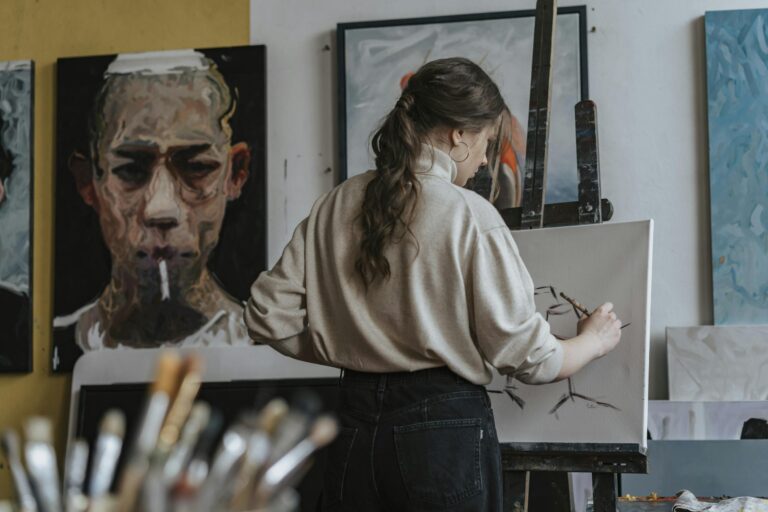

Freelance design work and introversion fit together in ways that most career advice completely misses. The ability to work in focused solitude, communicate through visual ideas rather than constant conversation, and structure your own schedule around energy rather than office hours makes freelance design one of the most naturally aligned career paths for introverts. This isn’t a workaround or a compromise. It’s a genuine match between how introverted minds operate and what creative independent work actually demands.
I spent over two decades running advertising agencies, and the designers I watched thrive were rarely the loudest voices in the room. They were the ones who disappeared into their work, surfaced with something extraordinary, and quietly changed the direction of an entire campaign. Watching that pattern repeat across hundreds of projects convinced me that freelance design isn’t just a viable path for introverts. For many, it’s the path where they finally stop apologizing for how they’re wired.

Before we get into the specifics of how this works in practice, it’s worth grounding yourself in what introversion actually means for your working life. Our Introvert Signs and Identification hub covers the full range of traits, tendencies, and patterns that shape how introverts experience work and relationships. If you’re still figuring out where you land on the spectrum, that’s a solid place to start.
What Makes Freelance Design Different From Most Creative Careers?
Most creative careers inside traditional organizations come with a tax that introverts pay heavily. Open offices, mandatory brainstorming sessions, status meetings that could have been emails, and the constant low-grade pressure to perform enthusiasm in group settings. Freelance design strips most of that away.
When you work independently as a designer, the structure of your day becomes something you build around your own cognitive rhythms. Many introverts do their sharpest thinking in the early morning or late at night, in stretches of uninterrupted quiet. Freelance design doesn’t just accommodate that. It rewards it. Clients care about the quality of what you deliver, not whether you looked engaged during a 10 AM check-in.
There’s also something specific about visual communication that suits the introvert’s tendency toward depth over breadth. A well-crafted design says things that would take a dozen meetings to articulate verbally. I’ve watched designers hand over a single comp and watch a client’s entire posture change. That kind of impact, achieved without performing extroversion, is genuinely meaningful for people who prefer to let their work speak.
Freelance also compresses the social load. Instead of managing relationships with 40 colleagues, a freelance designer might maintain meaningful working relationships with five to ten clients at a time. Those relationships tend to be more substantive, more focused on real work, and more aligned with the introvert preference for deeper conversation over surface-level interaction.
How Does the Introvert Brain Actually Perform in Design Work?
There’s a cognitive style that shows up consistently in introverts, and it maps remarkably well onto what strong design work requires. Introverts tend to process information more thoroughly before responding. They notice details that others move past. They’re comfortable sitting with ambiguity long enough to find a genuinely interesting solution rather than grabbing the first obvious one.
At my agency, I used to watch this play out in real time. We’d brief a design team on a project, and the introverted designers would go quiet for a day or two. The extroverted ones would come back fast with energetic concepts that were often competent but conventional. The introverts would surface later with work that had clearly been turned over many times in their heads. It wasn’t always the winning direction, but it was almost always the most considered one.
That internal processing style is genuinely valuable in design. Good design requires holding a client’s brand identity, their audience’s psychology, the competitive landscape, and dozens of aesthetic decisions in mind simultaneously. The introvert’s tendency to work through complexity internally, rather than thinking out loud, often produces more integrated solutions.

Personality research has consistently linked introversion to higher sensitivity to environmental stimulation. That same sensitivity often shows up as a heightened attunement to visual detail, color relationships, and compositional balance. What feels overwhelming in a crowded room becomes an asset when you’re evaluating whether a typeface choice subtly undermines the tone a client is trying to set. You can read more about this kind of nuanced self-awareness through the Intuitive Introvert Test, which explores how introverted intuition shapes the way you perceive and interpret information.
There’s also the question of focus. Sustained, deep focus is the engine of creative quality, and introverts tend to guard and protect their focused states more deliberately than their extroverted counterparts. Freelance design is one of the few careers where that guarding instinct is a professional asset rather than a social liability.
Is Freelance Design a Good Fit If You’re Not Sure Where You Land on the Introvert Spectrum?
Not everyone reading this has a clear, settled sense of their personality type. Some people feel introverted in certain contexts and surprisingly energized in others. That ambiguity is real, and it matters when you’re making career decisions.
If you’re genuinely uncertain whether you’re introverted, extroverted, or somewhere in between, the question of whether freelance design suits you depends on which version of yourself shows up most consistently at work. Do you do your best thinking alone? Do you find that too much back-and-forth communication fragments your concentration? Do you feel a quiet satisfaction from completing something without needing to process it socially? Those are the signals that matter more than any label.
The Am I an Introvert, Extrovert, Ambivert, or Omnivert resource can help you think through where you actually fall, not just where you assume you fall. I’ve met plenty of people who called themselves extroverts for years because they were good at social performance, only to realize they were quietly exhausted by it the whole time. That distinction matters enormously for how you design a sustainable work life.
Freelance design can also work well for ambiverts, people who genuinely draw energy from both solitude and social connection, as long as the client-facing elements are structured thoughtfully. The autonomy of freelance means you can build in the social contact you need without being submerged in it.
What Are the Real Challenges Introverts Face in Freelance Design?
Honesty matters here. Freelance design isn’t without friction for introverts, and pretending otherwise would be doing you a disservice.
Client acquisition is the most significant hurdle. Finding clients requires putting yourself and your work in front of people consistently, which means some version of marketing, networking, or self-promotion. For many introverts, that feels deeply uncomfortable. Not because they lack confidence in their work, but because the performance of visibility runs against their grain.
One of the designers who worked in my agency for years eventually went freelance. She was extraordinarily talented, and I was glad to see her make the move. But she called me six months in, frustrated. The work was going well. Finding the work was the problem. She’d built her reputation entirely through word of mouth inside the agency world, and translating that into active self-promotion felt like wearing a costume she hadn’t agreed to put on.
What helped her, and what tends to help most introverted freelancers, was reframing marketing as content rather than performance. Writing about her process, sharing work with genuine context, and letting her thinking become visible through her portfolio rather than through networking events. Marketing strategies built around introvert strengths tend to emphasize depth, authenticity, and written communication over high-volume social engagement, and that alignment makes a real difference.

Pricing and negotiation present another challenge. Many introverts undercharge because advocating for their own value feels confrontational in a way that designing for others doesn’t. Knowing that introverts bring genuine strengths to negotiation, including careful preparation and the ability to listen rather than dominate, can shift the frame from “I’m bad at this” to “I approach this differently, and that’s not the same thing.”
There’s also the isolation question. Freelance solitude is genuinely energizing for most introverts, but there’s a difference between chosen solitude and the kind that creeps into loneliness over time. Building some structure around connection, whether that’s a co-working day once a week, a professional community online, or simply regular client relationships that feel like genuine exchanges, matters for long-term sustainability.
How Do Introverted Women Experience Freelance Design Specifically?
Introverted women face a particular set of pressures in creative professional spaces that deserve direct attention. The expectation that women should be warm, expressive, and socially available compounds the already-uncomfortable pressure introverts feel to perform extroversion. In agency settings, I watched introverted women on my teams handle this constantly, managing the perception that their quietness was aloofness, or that their preference for written communication was somehow less engaged than verbal enthusiasm.
Freelance design removes a significant portion of that social performance pressure. Working directly with clients on a project basis means the relationship is defined by the work, not by how you present yourself in a team meeting. That’s a meaningful shift for introverted women who’ve spent years code-switching in office environments.
The Signs of an Introvert Woman resource explores how these patterns show up specifically, including the ways introverted women are often misread in professional contexts and how freelance structures can create more authentic working conditions. If that resonates with your experience, it’s worth reading alongside thinking about your career direction.
There’s also something worth naming about creative confidence. Many introverted women I’ve worked with over the years were extraordinarily skilled but deeply reluctant to advocate for the quality of their own work. Freelance design, paradoxically, can build that confidence faster than agency work does, because the feedback loop is more direct. A client either loves what you made or they don’t. The politics and social dynamics of a team environment, which often disadvantage quieter voices, fall away.
What Types of Freelance Design Work Align Best With Introvert Strengths?
Not all design work is equally suited to introvert working styles. Some specializations require heavy collaboration and ongoing real-time communication. Others are almost entirely solitary, with client contact concentrated in brief, defined phases. Knowing which end of that spectrum suits you is worth thinking through carefully.
Brand identity design tends to reward deep, patient thinking. Developing a visual identity system for a company requires understanding their values, their audience, their competitive context, and translating all of that into something that communicates without words. That’s exactly the kind of layered, analytical work that introverts find genuinely engaging rather than draining.
Editorial and publication design, book covers, magazine layouts, long-form content design, involves long stretches of focused solo work with relatively contained client interaction. For introverts who love typography and composition, this is close to ideal.
UX and product design occupy a more complex space. The work itself often suits introvert strengths, particularly the research and analysis phases. But the collaborative nature of product teams, with constant standups, sprint reviews, and cross-functional meetings, can make fully freelance UX work feel closer to an agency environment than a solo practice. Some introverts thrive in this space anyway. Others find that focusing on the research and strategy phases, rather than ongoing product collaboration, gives them the best of both.
Motion design and illustration tend toward the most solitary end of the spectrum. Long production phases, clear deliverables, and client contact that’s largely asynchronous. If your introversion runs deep and you’re most energized by extended creative immersion, these specializations are worth serious consideration.

How Should Introverts Structure Client Relationships in Freelance Design?
One of the most underrated advantages of freelance work is that you get to design the relationship structure, not just the deliverables. Most introverted freelancers I’ve spoken with have found that setting clear communication expectations upfront changes everything about how sustainable client work feels.
Defaulting to asynchronous communication wherever possible is one of the highest-leverage choices you can make. Email and written briefs give you time to process, formulate a considered response, and communicate with precision. That’s not a limitation. It’s often a better outcome for the client too, because they get a thoughtful response rather than a reactive one.
Structuring projects with defined check-in points rather than open-ended availability protects your focus without sacrificing responsiveness. A client who knows they’ll hear from you at project kickoff, at the first concept presentation, and at final delivery doesn’t need constant reassurance in between. Setting that expectation clearly is a professional act, not an antisocial one.
There’s a fascinating dynamic that plays out in client relationships that I noticed repeatedly in my agency years. The designers who were most deliberate about their communication, who didn’t respond instantly to every message but responded thoughtfully and completely, were often perceived as more professional and more trustworthy than those who were constantly available. Clients read considered responses as evidence of expertise. That’s genuinely good news for introverts who’ve worried that their communication style reads as disengaged.
Conflict resolution in client relationships is another area worth thinking through. When a client pushes back on creative direction or scope creep becomes a real issue, introverts sometimes go quiet rather than address it directly. That silence can create bigger problems than the original issue. Understanding how to handle those moments, with preparation and clarity rather than avoidance, is a skill worth developing deliberately. Some of the frameworks in introvert-specific conflict resolution approaches translate directly into client relationship management.
Does Personality Type Shape How Introverts Approach Freelance Design?
Within the introvert category, there’s significant variation in how people experience and approach creative work. MBTI frameworks, for all their limitations, can be genuinely useful for understanding why two introverts might find very different aspects of freelance design energizing or challenging.
As an INTJ, my natural orientation is toward systems, strategy, and long-term structure. When I think about freelance design through that lens, what appeals is the ability to build a practice with intentional architecture, to select clients and projects that align with a coherent creative vision, and to optimize the business side with the same rigor you’d bring to a design problem. INTJs in design tend to be drawn to brand systems and identity work, where the logic of visual consistency across applications scratches the systems-thinking itch.
INFPs and INFJs bring a different quality to design work, one centered more on emotional resonance and meaning. I’ve worked with several designers who fit these profiles, and their work had a particular quality of depth and feeling that was immediately recognizable. They were often most energized by projects with genuine social purpose, nonprofit work, editorial design for publications they cared about, or brand work for founders whose mission they believed in.
If you’re an introvert who also leads with intuition, the Am I an Introverted Intuitive resource is worth exploring. Introverted intuition shapes how you generate ideas, how you process feedback, and how you relate to creative risk. Understanding that function can help you choose design specializations that align with how your mind actually works, rather than how you think it should work.
ISTJs and ISTPs bring precision and technical rigor that makes them exceptional at certain design disciplines. Production design, technical illustration, and systems-heavy work like design operations benefit enormously from the kind of careful, methodical attention these types naturally bring. They’re often underrated in creative fields because the cultural image of a designer skews toward expressive and spontaneous, but precision is a genuine creative virtue.
What Does Sustainable Freelance Practice Actually Look Like for Introverts?
Sustainability in freelance work is something I’ve thought about a lot, both from watching designers in my agencies eventually burn out on the agency model and from understanding what the introvert energy economy actually requires.
The freelance model that tends to work best for introverts isn’t maximum client volume. It’s optimal client depth. A smaller roster of clients with whom you have substantive, ongoing relationships tends to be more energizing and more financially stable than a high-volume, transactional approach. Retainer arrangements, where you’re working with the same clients month after month, reduce the social overhead of constantly onboarding new people and re-establishing context.
Protecting creative energy requires treating it like a finite resource, because it is. The neuroscience here is real: introverts show different patterns of cortical arousal than extroverts, which is part of why environments and schedules that might feel energizing to an extrovert can feel depleting to an introvert. Building recovery time into your week isn’t laziness. It’s resource management.
There’s also the question of how you handle the ambiguity that’s inherent in creative work. Clients who change direction, briefs that are underspecified, feedback that’s contradictory. Some introverts find this genuinely distressing, particularly those who prefer clear structures and defined expectations. Others find it energizing, a puzzle to solve. Knowing which camp you’re in helps you set up client agreements and project structures that reduce the friction points that cost you the most energy.
One practical tool that many introverted freelancers find valuable is a thorough intake process. A detailed questionnaire or discovery call structure that surfaces everything you need to know before the work begins reduces the back-and-forth that interrupts creative flow later. It also signals to clients that you’re thorough and professional, which builds the kind of trust that leads to longer relationships.
How Do You Know If Freelance Design Is Right for Your Introversion?
There’s a version of this question that’s really about self-knowledge, and it’s worth sitting with honestly rather than answering quickly.
Some introverts are energized by the freedom and autonomy of freelance work and find that their introversion becomes an asset almost immediately. Others find that the lack of structure and the business development demands create a different kind of exhaustion than the office environment did. Neither response is wrong. They’re just data about what you actually need.
A few questions worth asking yourself: Do you have a clear sense of what kind of introvert you are? Not just “I prefer quiet” but specifically how you process information, how you recharge, and what kinds of social interaction you find genuinely tolerable versus genuinely draining. The How to Determine If You’re an Introvert or Extrovert resource offers a grounded framework for working through that self-assessment.
Some people who identify as introverts are actually more ambiverted than they realize, and for them, the complete social isolation of deep freelance work can create problems that wouldn’t exist in a hybrid or studio environment. The Introverted Extrovert or Extroverted Introvert Quiz can help clarify whether you’re someone who needs mostly solitude with some connection, or someone who needs a more even balance.
The honest answer to “is freelance design right for me” isn’t universal. What’s true is that the structural features of freelance design, autonomy, asynchronous communication, solitude-heavy work, and the ability to let your work speak for you, align well with how many introverts are wired. Whether they align with how you specifically are wired is worth finding out before committing fully, not after.
Personality psychology suggests that personality traits interact with work environments in complex ways, and that fit between person and environment matters significantly for wellbeing and performance. That’s not a reason to be cautious. It’s a reason to be intentional.
There’s also something worth naming about the longer arc. Freelance design, done well, is a practice you build over years. The skills that make introverts strong designers, depth of observation, patience with complexity, sensitivity to nuance, tend to compound over time. The designers I’ve watched build the most distinctive and sustainable freelance practices were almost always people who played a long game, who were more interested in developing a genuine point of view than in chasing volume. That’s an introvert’s game, and it’s one worth playing.
You can find more context on introvert traits and how they show up across different areas of life in our complete Introvert Signs and Identification hub. It’s a useful companion resource as you think through how your personality shapes your professional choices.
About the Author
Keith Lacy is an introvert who’s learned to embrace his true self later in life. After 20 years in advertising and marketing leadership, including running agencies and managing Fortune 500 accounts, Keith now channels his experience into helping fellow introverts understand their strengths and build fulfilling careers. As an INTJ, he brings analytical depth and authentic perspective to every article, drawing from both professional expertise and personal growth.
Frequently Asked Questions
Is freelance design a good career for introverts?
Freelance design is one of the strongest career fits for introverts because the core work is solitary, communication can be largely asynchronous, and success depends on depth of thinking rather than social performance. The main challenges are client acquisition and self-promotion, but those can be approached through content creation and referral networks rather than high-volume networking, which suits introverts considerably better.
What types of design work are best suited to introverts?
Brand identity design, editorial and publication design, illustration, and motion design tend to offer the most extended periods of solitary creative work with defined, rather than constant, client contact. UX design can also work well for introverts, particularly in the research and strategy phases, though fully integrated product team roles involve more ongoing collaboration. The best fit depends on how deeply introverted you are and how much real-time communication you find energizing versus draining.
How can introverted freelance designers handle client communication without burnout?
Setting clear communication structures upfront is the most effective approach. Defaulting to asynchronous communication, using detailed intake questionnaires to surface needs before work begins, and establishing defined check-in points rather than open-ended availability all reduce the social overhead that drains introverted energy. Clients generally respond well to clear, thorough communication even when it isn’t instantaneous, and many introverts find that their considered responses are perceived as more professional than reactive ones.
Do introverts struggle with the self-promotion required for freelance design?
Many introverts find self-promotion uncomfortable, but freelance design offers alternatives to traditional networking. Building a strong portfolio with genuine context, writing about your creative process, and developing a reputation through referrals and word of mouth are all approaches that align better with introvert strengths than attending high-volume networking events. Marketing through depth and authenticity tends to attract clients who value those same qualities, which often leads to better working relationships.
Can introverts build financially sustainable freelance design practices?
Yes, and the model that tends to work best for introverts is a smaller roster of deeper client relationships, often through retainer arrangements, rather than high-volume transactional work. This approach reduces the energy cost of constant onboarding and relationship establishment while creating more financial predictability. Introverts who undercharge should recognize that their tendency toward thoroughness and depth is a genuine premium quality, and pricing should reflect that rather than apologize for it.