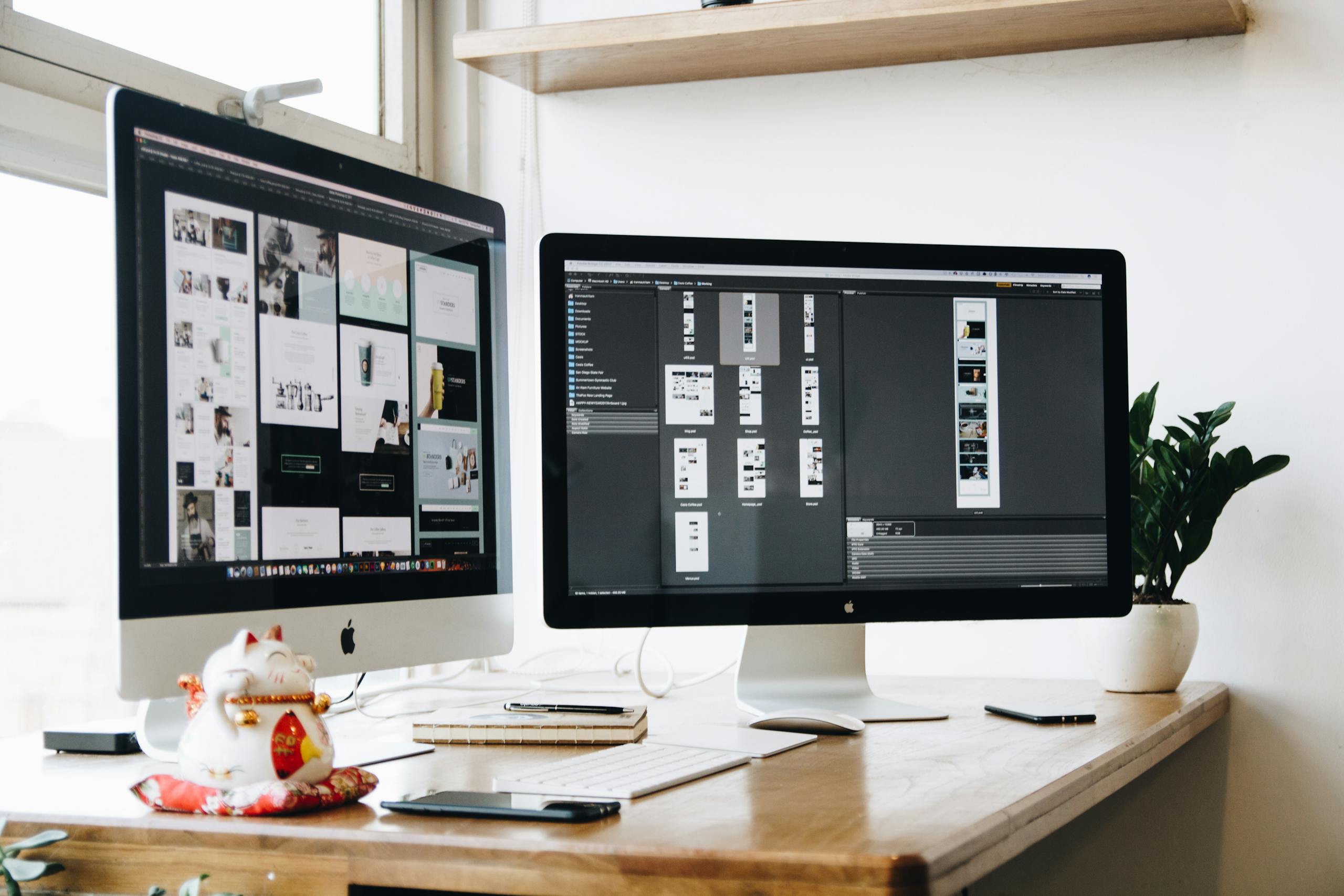

Freelance productivity tools work best when they match how your brain actually operates, not how a productivity guru says it should. For introverts who process deeply, prefer asynchronous communication, and do their best work in sustained, uninterrupted stretches, the right tools aren’t just conveniences. They’re the difference between a freelance career that drains you and one that genuinely sustains you.
After two decades running advertising agencies, I’ve tested more project management systems, communication platforms, and workflow apps than I care to count. Some were chosen for me by clients. Others I adopted because everyone else seemed to swear by them. What I’ve learned, slowly and sometimes painfully, is that tools built for open-office extrovert culture can quietly undermine the way introverts do their sharpest work. Choosing differently changes everything.

If you’re building a freelance practice and want to understand how your tools fit into a broader picture of introvert-friendly resources, our Introvert Tools and Products Hub covers everything from reading recommendations to practical gear, all filtered through the lens of how introverts actually think and work.
Why Do Standard Productivity Systems Often Fail Introverts?
Most mainstream productivity advice was built around a particular kind of worker: someone energized by collaboration, comfortable with constant check-ins, and able to context-switch without losing momentum. That’s not me. And if you’re reading this, it’s probably not you either.
What’s your personality type?
Take our free 40-question assessment and get a detailed personality profile with dimension breakdowns, context analysis, and personalised insights.
Discover Your Type8-12 minutes · 40 questions · Free
Early in my agency career, I tried to run my team the way I’d seen other agency heads operate. Stand-up meetings every morning. Open-door policies. Slack channels buzzing all day. I genuinely believed that if I just pushed through the discomfort, I’d eventually find it energizing. What actually happened was that I arrived home most evenings so depleted I could barely form a sentence. My best strategic thinking, the kind that won us accounts and solved real client problems, happened on Sunday mornings before anyone else was awake.
That gap between where I did my best work and how I was structuring my days took years to close. And a big part of closing it was recognizing that the tools I used either protected my deep work or eroded it. There was rarely a neutral option.
What the research on introversion and cognitive processing consistently points toward is that introverts tend to process information more thoroughly and respond more strongly to external stimulation. That’s not a weakness. It means the wrong environment, or the wrong tool set, creates friction that costs you more than it costs an extroverted colleague doing the same work.
What Project Management Tools Actually Respect How Introverts Think?
The project management category is crowded, and most tools are technically capable. The real question is which ones support the way an introverted freelancer naturally operates: visually, asynchronously, and with a preference for seeing the whole picture before acting on any single part.
Notion has become my personal anchor. It’s not the flashiest tool, and it has a learning curve that will frustrate anyone who wants to be productive on day one. But for an INTJ who wants to build systems that reflect exactly how they think, the flexibility is worth every hour of setup. I use it to house client briefs, track deliverables, store research, and write first drafts, all in one place that I’ve shaped entirely around my own logic.
Trello suits a different kind of introvert mind: one that thinks in visual flows and wants to see tasks move through stages. The kanban board format maps well to how many introverts mentally organize work, as discrete stages with clear transitions rather than a running list that never ends. Several freelancers I’ve mentored swear by it specifically because it reduces the cognitive noise of wondering what’s next.
ClickUp sits somewhere between the two. It’s more powerful than Trello and more structured than Notion, which makes it a strong fit if you’re managing multiple clients with different workflows and need a single system that can hold all of them without collapsing into chaos.
What matters more than which tool you choose is that it supports asynchronous work. Introverts tend to communicate better in writing, with time to think, than in real-time verbal exchanges. Isabel Briggs Myers wrote extensively about how different cognitive styles process information differently, and her foundational work in Gifts Differing remains one of the most honest frameworks for understanding why introverts aren’t simply “slow” communicators. They’re thorough ones.

Which Communication Tools Let You Work on Your Own Terms?
This is where most freelance advice goes wrong. The standard recommendation is to be responsive, always available, and quick to reply. For introverts, that approach is a slow drain on the exact mental resources that make your work valuable.
Loom changed how I handle client communication more than any other single tool. Instead of scheduling a call to walk a client through revisions, I record a three-minute video explaining my thinking, share the link, and let them watch it when it suits them. They get a clearer explanation than they’d get from a rushed phone call. I get to communicate without the performance anxiety that real-time conversation can trigger. Everyone wins.
Asynchronous video tools like Loom are genuinely built for the way introverts prefer to communicate: with preparation, intention, and the ability to organize thoughts before expressing them. Psychology Today notes that introverts often crave deeper, more substantive exchanges over frequent surface-level ones. Loom supports exactly that, because you can say something meaningful in one recorded message instead of trading a dozen back-and-forth emails that never quite get there.
For written communication, Front and Superhuman are both strong email clients that help you process your inbox in focused batches rather than reacting to every notification. Batching email is one of the simplest structural changes a freelance introvert can make. Set two windows a day, process fully, then close it. The mental relief is significant.
Calendly, or any scheduling tool that lets clients book time without a back-and-forth negotiation, is also worth mentioning here. The seemingly small act of removing scheduling conversations from your communication load frees up more mental energy than it sounds like it should. I added it to my client onboarding process years ago and never looked back.
How Do You Protect Deep Work Time When Clients Expect Availability?
This tension sits at the center of freelance life for introverts. Clients often equate responsiveness with professionalism. You know that your best work happens in long, uninterrupted blocks, not in the gaps between notifications. Bridging that gap requires both the right tools and a clear communication strategy.
Forest is a focus app that blocks distracting websites and apps during work sessions. It’s simple and slightly gamified, which some people find motivating and others find patronizing. What I appreciate about it is the visual feedback: you can see a growing forest of sessions over time, which gives you a tangible record of the deep work you’ve protected. For an INTJ who needs to see systems working, that matters.
Freedom and Cold Turkey are more aggressive alternatives that block entire categories of apps and websites across your devices. If you find yourself habitually checking social media or news during work blocks, one of these is worth the subscription cost. Willpower is a finite resource. Removing the option is more reliable than relying on discipline alone.
On the client expectation side, the tool isn’t enough on its own. You need to set clear response time expectations during onboarding. I started including a simple line in my client welcome documents: “I respond to messages within 24 hours on business days, typically in the morning or late afternoon.” Most clients not only accept this, they appreciate the clarity. The ones who don’t are often signaling something important about whether they’re a good fit.
Susan Cain’s work on introversion, which you can absorb in depth through the Quiet audiobook, makes a compelling case for why the ability to focus deeply is a genuine professional asset, not a limitation to apologize for. Structuring your tools and your client relationships around protecting that focus isn’t selfishness. It’s how you deliver your best work consistently.
What Financial and Administrative Tools Reduce the Social Load of Running a Freelance Business?
Nobody talks about this enough. The administrative side of freelancing, sending invoices, following up on late payments, tracking expenses, filing taxes, involves a surprising amount of social friction. For introverts who find confrontation draining, chasing a late invoice can feel disproportionately stressful.
FreshBooks and HoneyBook both automate the invoice-to-payment pipeline in ways that remove most of that friction. Automated payment reminders go out without you having to write an awkward follow-up email. Contracts are signed digitally. Receipts are captured through a mobile app. The whole financial side of your business can run with minimal direct negotiation, which is genuinely liberating if you find that kind of back-and-forth exhausting.
HoneyBook in particular is worth highlighting for freelancers who work with individual clients rather than large corporations. It combines contracts, invoicing, project management, and client communication in one platform, which reduces the number of tools you need to maintain and the number of places a client might reach you.
QuickBooks Self-Employed handles the tax side cleanly, separating business and personal expenses automatically and estimating quarterly tax payments. Knowing that side of the business is handled lets you stay in the work itself, which is where introverts tend to thrive.
One thing I’d add from experience: the administrative burden of freelancing is often underestimated, and it hits introverts harder because so much of it involves initiating contact, following up, and managing expectations in real time. Automating as much of it as possible isn’t laziness. It’s a strategic allocation of your limited social energy toward the work that actually requires your full presence.
Are There Tools That Help Introverted Freelancers Market Themselves Without Burning Out?
Marketing is the part of freelancing that most introverts dread, and understandably so. Traditional advice tends to lean heavily on networking events, cold outreach, and social media presence, all of which require the kind of sustained social performance that drains introverted energy fast.
Content-based marketing is a much better fit. Writing, whether that’s a blog, a LinkedIn newsletter, or a simple email list, lets you communicate your expertise on your own schedule, with time to think through what you want to say. Rasmussen University’s overview of marketing for introverts makes the case that written content and referral-based strategies often outperform high-volume networking for people who do their best work in quieter modes.
Buffer and Later handle social media scheduling, which means you can batch your content creation into a single focused session each week and then let the tools handle distribution. You’re not reacting to every platform’s algorithm in real time. You’re making deliberate choices about what you want to say, when you’ve had time to think about it.
ConvertKit, now rebranded as Kit, is the email marketing tool I’d point most freelancers toward. It’s built for individual creators, not marketing departments, and its automation features let you nurture potential clients over time without constant manual effort. An email sequence that introduces your work, shares your thinking, and demonstrates your expertise can do more for your freelance pipeline than attending three networking events a month.
There’s also something worth naming about the personality fit between content creation and introversion. Writing, recording, and creating in private before sharing publicly plays to introvert strengths in a way that live networking simply doesn’t. Many of the introverted freelancers I’ve connected with over the years have built their entire client base through content, never attending a single industry event.

How Do You Build a Tool Stack That Reflects Your Actual Working Style?
The biggest mistake I see introverted freelancers make with productivity tools is adopting whatever system a successful creator or business influencer recommends, without asking whether that person’s working style resembles their own at all. A tool that works brilliantly for someone who thrives on high-energy collaboration and rapid iteration may actively work against someone who needs long preparation windows and minimal interruption.
Start by mapping your actual energy patterns. When do you do your clearest thinking? What kinds of tasks feel natural and which ones feel like swimming upstream? For me, strategic writing and deep analysis happen best in the first three hours of the morning. Client-facing communication works better mid-afternoon, once I’ve had time to process the day. My tool stack is organized around that reality, not around what a productivity book told me a “high performer” should look like.
A useful resource for this kind of self-mapping is the Introvert Toolkit, which offers structured frameworks for understanding your own patterns and building systems that work with your wiring instead of against it.
Once you understand your patterns, choose tools that protect them. If you do your best work in the morning, don’t let your email client be the first thing you open. If deep focus is your competitive advantage, build your day around protecting those blocks before filling in everything else. The tools are only as useful as the structure you put them inside.
It’s also worth being honest about the social dimension of tool adoption. Some tools are genuinely better for introverts. Others are neutral. And some, particularly those built around real-time collaboration, constant visibility, and rapid-fire communication, actively favor extroverted working styles. Choosing the latter because they’re popular is a form of trying to work like someone you’re not. I spent too many years doing exactly that in my agency, and it cost me more than I recognized at the time.
Personality type frameworks can help here, and not just as a curiosity. Understanding how your cognitive preferences shape your working style gives you a principled basis for tool decisions. The Frontiers in Psychology research on personality and work behavior points toward meaningful connections between personality traits and the kinds of work environments where people genuinely thrive. That’s worth taking seriously when you’re building a freelance practice from scratch.
What Physical and Environmental Tools Often Get Overlooked?
Productivity tools aren’t only software. The physical environment you work in is itself a tool, and for introverts who are more sensitive to external stimulation, it may be the most important one of all.
Noise-canceling headphones are close to non-negotiable for any introvert working in a shared space. The Sony WH-1000XM series and the Bose QuietComfort line are both consistently strong, and the investment pays for itself quickly in recovered focus time. Even if you work alone at home, the act of putting them on can serve as a psychological signal that you’re entering a deep work block.
Ambient sound apps like Brain.fm and Noisli are worth exploring if silence itself becomes distracting, which it sometimes does after long periods of working alone. Brain.fm in particular is designed around focus states rather than entertainment, and many people find it extends their ability to stay in deep work longer than either silence or music with lyrics.
A standing desk or a well-configured ergonomic setup matters more than most productivity content acknowledges. Physical comfort directly affects cognitive endurance, and introverts who do sustained deep work need to be able to stay in that state for longer than a standard meeting-heavy workday would allow. Investing in your physical setup is investing in your capacity for the work that actually differentiates you.
On a lighter note, the environment you create around your workspace, including the small objects and comforts that make it feel like yours, matters too. If you’re looking for ideas on what actually makes a meaningful difference to an introverted person’s workspace and daily life, the collections of gifts for introverted guys and gifts for the introvert man in your life are full of things that translate directly into better working environments. And if you want something that acknowledges the reality of introvert life with a bit of humor, the funny gifts for introverts collection is worth a look too. Sometimes a well-chosen mug that says exactly what you’re thinking is its own kind of productivity tool.

How Do You Know When a Tool Is Helping and When It’s Just Adding Complexity?
This is the question most productivity content never asks, and it’s the one that matters most in the long run. Tools accumulate. Subscriptions pile up. Systems grow more elaborate. At some point, managing your productivity system becomes its own cognitive burden, which is exactly the opposite of what you were trying to achieve.
A useful test: does this tool reduce the number of decisions I have to make, or does it add new ones? Good tools automate, simplify, or remove friction from things you’d otherwise have to handle manually. Tools that require constant maintenance, configuration, or attention to function properly are often working against you, even if they’re technically impressive.
Another test: does this tool protect my energy, or does it demand it? Introverts have a particular sensitivity to tools that require constant social performance, real-time responsiveness, or high-stimulation interaction. If a tool consistently leaves you feeling more scattered or drained after using it, that’s information worth acting on, regardless of how many people swear by it.
I ran a fairly aggressive audit of my own tool stack about two years ago and cut it roughly in half. What remained was a smaller set of tools that I actually used consistently and that genuinely supported how I work. The ones I removed were mostly tools I’d adopted because they seemed like the right thing to use, not because they’d proven their value in my actual workflow. The simplification was significant.
The broader point is that productivity, for introverts especially, isn’t about doing more. It’s about doing the right things in the right conditions with the right support. Research on cognitive load and performance suggests that reducing unnecessary mental overhead directly improves the quality of complex thinking. For freelancers whose value lies in their depth of thought, that’s not a peripheral consideration. It’s central to everything.
If you’re still building out your understanding of what introvert-friendly work looks like across different dimensions of life and career, the full range of resources in our Introvert Tools and Products Hub is a good place to keep exploring.
About the Author
Keith Lacy is an introvert who’s learned to embrace his true self later in life. After 20 years in advertising and marketing leadership, including running agencies and managing Fortune 500 accounts, Keith now channels his experience into helping fellow introverts understand their strengths and build fulfilling careers. As an INTJ, he brings analytical depth and authentic perspective to every article, drawing from both professional expertise and personal growth.
Frequently Asked Questions
What are the best freelance productivity tools for introverts who hate constant communication?
Asynchronous tools are the strongest fit. Loom for video communication, Notion or ClickUp for project management, and Calendly for scheduling all reduce the need for real-time back-and-forth. Pair these with a clear client communication policy that sets response time expectations upfront, and you can build a freelance practice that respects your working style without sacrificing professionalism.
How do introverted freelancers protect deep work time without seeming unresponsive to clients?
Set expectations clearly during client onboarding rather than managing them reactively. A simple statement in your welcome materials, explaining that you respond within 24 hours on business days, handles most concerns before they arise. Focus apps like Freedom or Forest can protect your deep work blocks technically, while scheduled email-checking windows replace the habit of constant monitoring. Most clients respond well to clear boundaries when they’re communicated confidently from the start.
Is Notion or Trello better for introverted freelancers?
Both can work well depending on how your mind organizes information. Notion suits introverts who think in interconnected systems and want a single workspace that holds everything from client notes to first drafts. Trello works better for those who think visually in stages and want a clear, simple view of what’s in progress and what’s done. Try both on a small scale before committing, and pay attention to which one you actually open voluntarily rather than out of obligation.
How can introverted freelancers market themselves without relying on networking events?
Content-based marketing is the most natural fit. Writing a blog, maintaining a LinkedIn newsletter, or building an email list through a tool like ConvertKit lets you demonstrate expertise on your own schedule, with time to think carefully about what you want to say. Referral systems, where satisfied clients recommend you to others, also build pipelines without requiring constant outward social effort. Many introverted freelancers build full client rosters entirely through content and referrals.
What physical tools make the biggest difference for introverts working from home?
Noise-canceling headphones consistently rank as the highest-impact physical tool for introverts, particularly in shared living situations. Beyond that, a comfortable ergonomic setup supports the longer deep work sessions that introverts tend to rely on. Ambient sound apps like Brain.fm can extend focus time when silence becomes counterproductive. The physical environment is a tool in itself, and for introverts who are more sensitive to external stimulation, shaping it deliberately pays dividends in sustained cognitive performance.