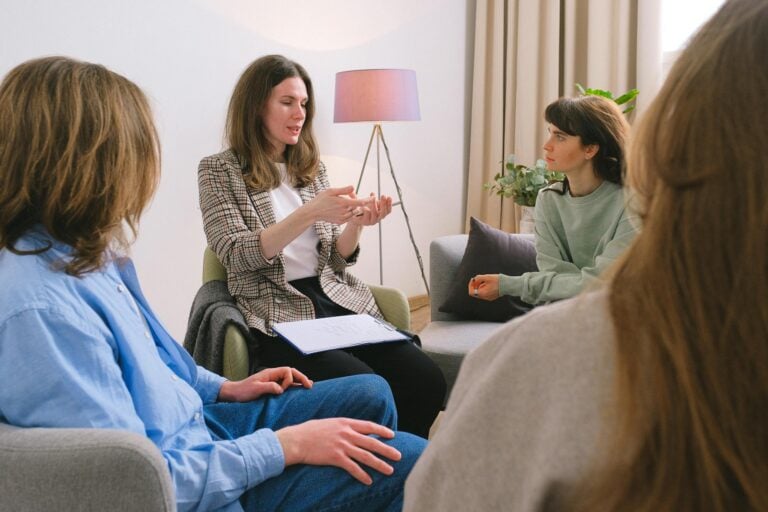

The preoccupied attachment style, sometimes called anxious-preoccupied attachment, describes a pattern where a person craves deep closeness in relationships yet lives in persistent fear that love will be withdrawn. It sits at the high-anxiety, low-avoidance end of the attachment spectrum, meaning someone with this style desperately wants connection and rarely pulls away, but their nervous system is almost always braced for loss. Understanding this pattern is one of the more clarifying things you can do for your romantic life, whether you recognize it in yourself or in someone you care about.

My years running advertising agencies taught me a lot about how people show up under pressure. Some people go quiet. Some get louder. Some need constant reassurance that the work is good before they can move forward. I watched those patterns play out in conference rooms for two decades before I understood that the same nervous system dynamics happening at work were also shaping everything happening at home.
Attachment theory gives us a framework for understanding why some people feel chronically unsettled in love, even when a relationship is objectively stable. And the preoccupied style, in particular, deserves more nuanced conversation than it typically gets.
If you want a broader picture of how introverts specifically experience romantic connection, our Introvert Dating and Attraction hub covers everything from first impressions to long-term compatibility. This article zooms in on one of the most emotionally charged attachment patterns and what it actually means for the people living inside it.
What Does Preoccupied Attachment Actually Mean?
Attachment theory, developed by John Bowlby and later expanded by Mary Ainsworth, describes the emotional bonds we form with caregivers early in life and how those bonds shape our expectations in adult relationships. The preoccupied style, sometimes labeled anxious or anxious-preoccupied, emerges when early caregiving was inconsistent. Sometimes the caregiver was warm and present. Other times they were unavailable, distracted, or emotionally unpredictable. The child learned that love was real but unreliable, so the only rational strategy was to stay hypervigilant, keep monitoring for signs of rejection, and turn up the emotional volume to ensure connection.
That hypervigilance does not simply disappear in adulthood. It travels forward into every close relationship, quietly running in the background like an alarm system that never fully powers down.
People with a preoccupied attachment pattern tend to experience what attachment researchers call a hyperactivated attachment system. Their brain registers relational threat more easily and more intensely than securely attached people do. A partner who takes a few hours to respond to a text is not just slow to reply. To someone with this pattern, that silence can feel like early evidence of abandonment. That interpretation is not a character flaw. It is a nervous system response shaped by genuine early experiences.
One important clarification worth making early: preoccupied attachment is not the same as being “clingy” or “needy” in some vague, dismissive sense. Those words flatten something genuinely complex. The behavior that looks like neediness from the outside is, from the inside, a very real fear of losing someone who matters. The published research on adult attachment and emotional regulation consistently shows that anxious attachment is associated with elevated physiological stress responses in relational contexts, not simply a preference for closeness.
How Does This Pattern Show Up in Real Relationships?

One of the most consistent features of preoccupied attachment in adult relationships is the push-pull quality it creates, even when only one partner has this pattern. The person with preoccupied attachment wants closeness so intensely that they often pursue it in ways that inadvertently push a partner toward distance. The partner pulls back slightly, which activates more anxiety, which generates more pursuit, which creates more distance. It is a cycle that can feel completely out of control from inside it.
I managed a client services director at one of my agencies who had this exact dynamic in her personal life, and she described it to me once over coffee after a particularly rough week. She said she knew intellectually that her boyfriend was not going anywhere, but the moment he seemed distracted or quiet, something in her body would shift into a kind of emergency mode. She would start asking questions, seeking reassurance, replaying conversations for evidence of cooling interest. She was not doing this to be difficult. She was doing it because her nervous system genuinely could not tell the difference between “he’s tired” and “this is ending.”
Common patterns that show up with preoccupied attachment include:
- Seeking frequent reassurance about the relationship’s stability
- Interpreting neutral behavior (silence, slowness, distraction) as signs of withdrawal
- Difficulty being alone or self-soothing during conflict
- Strong emotional reactions to perceived rejection or distance
- A tendency to prioritize the relationship over personal needs or boundaries
- Ruminating on relationship dynamics even during otherwise unrelated activities
- Feeling more settled and regulated when physically or emotionally close to a partner
None of these behaviors make someone a bad partner. They make someone a person whose attachment system is working overtime.
It is also worth noting that preoccupied attachment often creates a particular kind of emotional intensity that can be genuinely appealing in the early stages of a relationship. People with this pattern tend to be deeply attuned to their partners, highly expressive about their feelings, and fully present in the emotional life of a relationship. The same sensitivity that generates anxiety also generates warmth, empathy, and depth. Understanding how introverts fall in love and what their relationship patterns look like adds another layer to this picture, particularly when introversion and preoccupied attachment overlap in the same person.
Where Does the Preoccupied Style Come From?
The roots of preoccupied attachment almost always trace back to early caregiving experiences, though the specific form those experiences take varies widely. Inconsistency is the common thread. A parent who was sometimes warm and attuned but at other times emotionally unavailable, depressed, anxious, or preoccupied with their own concerns creates exactly the conditions that produce an anxious, hypervigilant child. The child cannot predict when love will be available, so they learn to constantly monitor and constantly reach for it.
This is not about blaming parents. Many parents who raised anxiously attached children were doing their best under genuine constraints, including their own unresolved attachment histories, mental health struggles, or life circumstances. The transmission of attachment patterns across generations is well-documented, and it happens largely without conscious awareness.
Other experiences can also contribute to preoccupied attachment developing or intensifying in adulthood. Significant loss, a relationship with a partner who was genuinely unpredictable or unreliable, or repeated experiences of abandonment can all reinforce the underlying belief that love is precarious and must be constantly secured. Peer-reviewed work on attachment across the lifespan supports the view that attachment orientation is not fixed at childhood but continues to be shaped by significant relational experiences throughout life.
That last point matters enormously. Attachment styles can change. A person who developed preoccupied attachment in childhood is not sentenced to live inside that pattern forever. Therapy, particularly approaches like Emotionally Focused Therapy, schema therapy, or EMDR, can shift the underlying patterns significantly. So can what researchers call “corrective relationship experiences,” meaning sustained relationships with consistently available, responsive partners. The concept of “earned secure” attachment describes exactly this: people who began with insecure attachment but developed secure functioning through meaningful relational experiences.
Preoccupied Attachment and Introversion: A Complicated Intersection

One thing I want to address directly, because I see it conflated constantly: introversion and preoccupied attachment are not the same thing, and they do not reliably go together. Introversion is about energy. It describes how a person recharges and where they draw their vitality from. Attachment style is about emotional security in close relationships. An introvert can be securely attached, anxiously attached, dismissively avoidant, or fearfully avoidant. The two dimensions are genuinely independent.
That said, when introversion and preoccupied attachment do overlap in the same person, the combination creates some specific tensions worth understanding.
An introverted person with preoccupied attachment needs solitude to recharge, but solitude can also activate their attachment anxiety. Being alone is necessary for their energy, yet being apart from a partner can trigger the fear that distance means disconnection. They may spend time alone feeling both relieved and unsettled, craving quiet while simultaneously monitoring their phone for signs that the relationship is still intact.
As an INTJ, my relationship with solitude has always been uncomplicated. I need it the way some people need sleep. But I have worked closely with introverts who described exactly this internal conflict, where alone time felt like both relief and low-grade dread. One account manager on my team, a thoughtful and deeply perceptive person, once told me that weekends were the hardest part of her relationship because she needed quiet, but quiet made her anxious about whether her partner was drifting away. She was not anxious in meetings or in client presentations. She was anxious in the spaces where connection felt uncertain.
Introverts with this attachment pattern often express love in quieter, less visible ways, which can inadvertently feed their own anxiety if a partner does not recognize or reciprocate those expressions. Understanding how introverts show affection through their love language can help both partners recognize connection even when it does not look like the loud, demonstrative gestures that anxious attachment sometimes craves.
The Anxious-Avoidant Dynamic: Why It Keeps Happening
People with preoccupied attachment have a particular tendency to find themselves in relationships with dismissively avoidant partners. This pairing is so common in the attachment literature that it has become almost a cliché, yet it keeps happening for very specific psychological reasons.
The dismissively avoidant person appears self-contained, emotionally steady, and unbothered by the things that activate everyone else’s anxiety. To someone with a hyperactivated attachment system, that steadiness can feel deeply attractive. It looks like security. The anxiously attached person moves toward that apparent calm, hoping it will soothe their own alarm system.
The avoidant person, meanwhile, often finds the emotional expressiveness and intensity of an anxiously attached partner initially appealing. Someone who wants closeness that much feels validating, at least at first.
The problem is that the two attachment systems are fundamentally mismatched in what they need. The preoccupied person needs proximity and reassurance to feel safe. The dismissively avoidant person needs space and autonomy to feel safe. Each person’s attempt to get their needs met activates the other person’s anxiety. The pursuer pursues more intensely. The withdrawer withdraws more completely. Both people end up feeling worse.
This dynamic is painful, but it is not hopeless. Couples with this pattern can develop secure functioning over time, particularly with professional support and genuine mutual commitment. What tends to be required is that both partners develop enough self-awareness to recognize their own patterns and enough compassion to understand what is driving their partner’s behavior. Working through the complexity of introvert love feelings adds useful context here, especially when one or both partners are introverted and processing emotion internally rather than out loud.
A clarifying note: dismissively avoidant people are not emotionally absent. Their feelings exist. Physiological studies have shown that avoidant individuals experience internal emotional arousal even when they appear outwardly calm. The deactivation is a defense strategy, not an absence of feeling. Knowing this can make a significant difference in how a preoccupied partner interprets their partner’s distance.
What Preoccupied Attachment Feels Like From the Inside
From the outside, preoccupied attachment can look like excessive worry, overreaction, or emotional intensity that seems disproportionate to the situation. From the inside, it feels like being unable to turn off an alarm that everyone else seems to not hear.
People with this pattern often describe a constant background hum of relational anxiety that intensifies during any perceived threat to closeness. A partner canceling plans, seeming distracted during a conversation, or being slower to initiate contact can send the attachment system into high alert. The cognitive and emotional resources that might otherwise go toward work, creativity, or personal projects get pulled into monitoring the relationship for signs of danger.
There is also a particular kind of emotional exhaustion that comes with preoccupied attachment. Constantly scanning for threat, constantly seeking reassurance, and constantly processing relational uncertainty is genuinely depleting. Many people with this pattern describe feeling tired in ways they cannot always explain, because the energy drain is happening in a place that is not always visible to others.
The Psychology Today piece on romantic introverts touches on how deeply introverts feel romantic connection, and that depth of feeling can intensify the experience of preoccupied attachment considerably. When someone feels love with great depth and processes it internally, the fear of losing that love can become consuming in ways that are hard to communicate to others.

Can Two People With Preoccupied Attachment Be Together?
This question comes up more than you might expect. What happens when two anxiously attached people enter a relationship with each other?
The honest answer is that it depends heavily on the individuals and what work they have each done on their own patterns. Two people with preoccupied attachment can create a relationship that is intensely close, emotionally expressive, and deeply committed. They tend to understand each other’s need for reassurance because they share it. There is less of the painful pursuit-withdrawal cycle that characterizes anxious-avoidant pairings.
The challenge is that two hyperactivated attachment systems in the same relationship can amplify each other’s anxiety rather than soothe it. One person’s fear can activate the other person’s fear. Conflict can escalate quickly because both people are in high-alert mode simultaneously. Without strong communication skills and some capacity for individual self-regulation, the relationship can become emotionally overwhelming for both people.
When both people are also introverted, there are additional layers to consider. Two introverts in a relationship bring their own specific dynamics, and the patterns that emerge when two introverts fall in love are worth understanding on their own terms, separate from the attachment dimension. The combination of introversion and preoccupied attachment in both partners creates a relationship that can be extraordinarily deep and also occasionally very fragile, requiring both partners to be intentional about building security.
Highly Sensitive People and Preoccupied Attachment
There is meaningful overlap between the highly sensitive person (HSP) trait and preoccupied attachment, though they are not the same thing. High sensitivity is a temperament trait, present from birth, that describes a nervous system that processes sensory and emotional information more deeply than average. Preoccupied attachment is a relational pattern shaped by early experiences.
That said, highly sensitive people may be more vulnerable to developing preoccupied attachment if their caregiving environment was inconsistent, simply because their nervous system registers emotional signals more intensely. An HSP child in an unpredictable caregiving environment absorbs that unpredictability more deeply than a less sensitive child might.
In adult relationships, HSPs with preoccupied attachment face a particular set of challenges. Their sensitivity means they pick up on subtle emotional cues with great accuracy, which can feed the relational monitoring that preoccupied attachment generates. They notice a slight shift in a partner’s tone, a brief hesitation, a change in body language, and their nervous system assigns it significance. The complete guide to HSP relationships covers this terrain in depth and is worth reading alongside this piece.
Conflict is particularly activating for HSPs with this attachment pattern. The combination of emotional sensitivity, fear of abandonment, and intense physiological arousal during disagreement can make even minor conflicts feel catastrophic. Approaching HSP conflict with tools for peaceful resolution becomes especially important when preoccupied attachment is also part of the picture.
Moving Toward Secure Attachment: What Actually Helps
Preoccupied attachment is not a permanent condition. That deserves to be said plainly, because many people who recognize this pattern in themselves carry an unspoken fear that they are simply wired for relational suffering. They are not.
Therapy is one of the most reliable pathways toward what researchers call “earned secure” attachment. Emotionally Focused Therapy, in particular, was designed with attachment dynamics in mind and has a strong track record with anxiously attached individuals and couples. Schema therapy helps people identify and work through the early maladaptive schemas that underlie the preoccupied pattern. EMDR can be useful when early experiences of inconsistency or loss have a traumatic quality.
Outside of formal therapy, several practices tend to support movement toward greater security. Building a stronger relationship with your own internal states, so that you can recognize when your attachment system is activated and respond with some deliberateness rather than pure reactivity, is foundational. Developing the capacity to self-soothe, to regulate emotional distress without requiring external reassurance, reduces the burden on both yourself and your partner.
Communication is another significant lever. Many people with preoccupied attachment have learned to express their anxiety through pursuit behaviors rather than direct, vulnerable communication about what they actually need. Saying “I’m feeling anxious about us right now and I need some reassurance” is very different from sending a cascade of text messages or escalating emotionally during a conflict. The Psychology Today guide on dating an introvert touches on communication differences that are relevant here, particularly when a preoccupied partner is also introverted and processing needs internally rather than expressing them directly.
Corrective relationship experiences also matter enormously. A partner who is consistently available, responsive, and honest, not perfect, but reliably present, can gradually recalibrate an anxious attachment system over time. The brain learns from repeated experience. A history of reliable love slowly builds the internal evidence that love can be trusted.
I watched this happen slowly with one of the most talented copywriters I ever employed. She came into the agency with an obvious anxiety about approval, always seeking confirmation that her work was good, always interpreting silence as criticism. Over about three years of working with a creative director who gave clear, consistent, non-punitive feedback, her whole relationship to uncertainty shifted. She stopped needing constant reassurance because she had accumulated enough evidence that the environment was safe. Attachment works the same way in romantic relationships. Evidence accumulates. Security builds.

If You Love Someone With a Preoccupied Attachment Style
Loving someone with preoccupied attachment requires a particular kind of patience and a willingness to provide reassurance more consistently than might feel intuitive, especially if your own attachment style leans toward avoidance or even secure independence.
A few things tend to help significantly. Consistency matters more than grand gestures. A partner who reliably responds, follows through on commitments, and communicates openly does more for an anxiously attached person’s security than occasional dramatic expressions of love. Predictability is calming to a nervous system that learned early that love was unpredictable.
Reassurance, given proactively rather than only in response to pursuit, can interrupt the anxiety cycle before it escalates. A brief “I’m thinking about you” or “I’m really glad we’re together” offered without prompting carries more weight than the same words offered after an anxious partner has already gone into high-alert mode.
It also helps to understand that the fear driving preoccupied attachment behavior is genuine and involuntary. Telling a preoccupied partner to “just relax” or “stop being so insecure” is not only unhelpful, it reinforces the underlying belief that their emotional needs are too much. Compassion and clear communication are far more effective than frustration.
At the same time, partners of preoccupied people are not responsible for healing another person’s attachment wounds. That work in the end belongs to the individual. A partner can provide a secure base, but the internal work of building self-regulation and earned security requires the preoccupied person’s own engagement, ideally with professional support.
The 16Personalities exploration of introvert-introvert relationship dynamics raises some useful points about how two deeply internal people can sometimes struggle to externalize enough of their emotional experience to actually reach each other. That challenge is worth being aware of in any relationship where preoccupied attachment is present.
There is a lot more to explore across the full landscape of introvert relationships and attraction. Our Introvert Dating and Attraction hub brings together articles on everything from how introverts approach early dating to the long-term patterns that shape their most meaningful relationships.
About the Author
Keith Lacy is an introvert who’s learned to embrace his true self later in life. After 20 years in advertising and marketing leadership, including running agencies and managing Fortune 500 accounts, Keith now channels his experience into helping fellow introverts understand their strengths and build fulfilling careers. As an INTJ, he brings analytical depth and authentic perspective to every article, drawing from both professional expertise and personal growth.
Frequently Asked Questions
What is the preoccupied attachment style?
The preoccupied attachment style describes an adult relational pattern characterized by high anxiety and low avoidance. People with this style deeply want closeness and connection, yet live with persistent fear that love will be withdrawn. Their attachment system is hyperactivated, meaning they respond to perceived relational threats with heightened emotional intensity. This pattern typically develops when early caregiving was inconsistent, creating a nervous system that learned to stay constantly alert for signs of abandonment.
Is preoccupied attachment the same as being needy or clingy?
No. Those labels flatten something genuinely complex. The behaviors that look like neediness from the outside, seeking reassurance, monitoring a partner’s emotional availability, reacting strongly to perceived distance, are driven by a genuine fear of abandonment rooted in early experience. The response is a nervous system pattern, not a character weakness. Understanding it as a hyperactivated attachment system rather than a personality flaw changes both how you relate to it in yourself and how you respond to it in a partner.
Can preoccupied attachment be changed or healed?
Yes. Attachment styles are not fixed. Preoccupied attachment can shift significantly through therapy, particularly Emotionally Focused Therapy, schema therapy, or EMDR. Sustained relationships with consistently available and responsive partners also create what researchers call corrective relationship experiences, which gradually build the internal evidence that love can be trusted. The concept of “earned secure” attachment, well-documented in the research, describes people who moved from insecure to secure attachment through meaningful relational and therapeutic work.
Why do people with preoccupied attachment often end up with avoidant partners?
The anxious-avoidant pairing is common for specific psychological reasons. The dismissively avoidant person’s apparent emotional steadiness and self-containment can feel deeply attractive to someone with a hyperactivated attachment system, because it looks like the security they crave. The avoidant person may initially find the preoccupied partner’s expressiveness and desire for closeness validating. The problem is that the two attachment systems have fundamentally mismatched needs, with the preoccupied person needing proximity and the avoidant person needing space, which creates a painful pursuit-withdrawal cycle. With mutual awareness and often professional support, couples with this dynamic can develop more secure functioning over time.
Are introverts more likely to have preoccupied attachment?
No. Introversion and attachment style are independent dimensions. An introvert can be securely attached, anxiously preoccupied, dismissively avoidant, or fearfully avoidant. Introversion describes energy preference and where a person draws their vitality from. Attachment style describes emotional security in close relationships and is shaped by early caregiving experiences. When introversion and preoccupied attachment do overlap in the same person, it can create specific tensions, particularly around needing solitude while also fearing that distance signals disconnection, but the combination is not inherent to introversion itself.