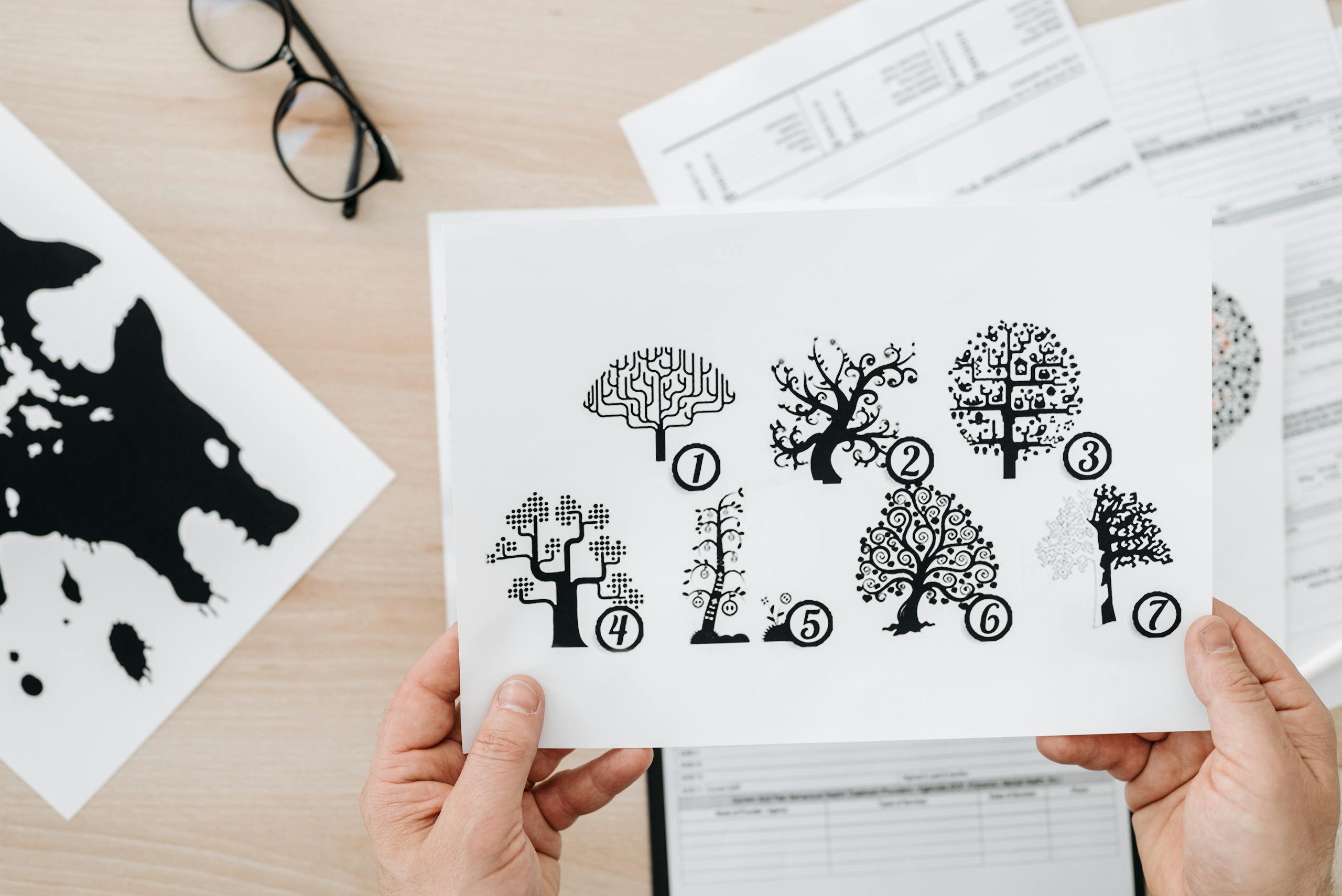

The Wicked personality test is a character-based assessment inspired by the musical “Wicked,” designed to reveal which archetype from the story best reflects your core personality traits. Rather than assigning a formal psychological type, it uses narrative archetypes like Elphaba and Glinda to surface how you relate to authenticity, social belonging, ambition, and self-expression. Think of it as a creative entry point into deeper self-awareness, one that often leads people toward more structured frameworks like the Myers-Briggs Type Indicator.
What surprises most people is how accurately a story-based quiz can mirror something real about their inner world. Characters like Elphaba resonate with introverts and independent thinkers precisely because her arc captures what it feels like to be misunderstood for being different. Glinda, by contrast, reflects a particular kind of social intelligence and external orientation that many extroverted types recognize in themselves. The test works because great storytelling and personality psychology often reach for the same truths.
Personality typing, whether through pop culture quizzes or formal assessments, has always fascinated me. As an INTJ who spent two decades running advertising agencies, I was constantly surrounded by people trying to make sense of why certain team members thrived in some environments and struggled in others. The Wicked personality test, lighthearted as it seems, often opens a door that more clinical tools leave closed.
If you want to go deeper than any character quiz can take you, our MBTI General and Personality Theory hub covers the full cognitive function framework that sits underneath all of this, from how your dominant function shapes your worldview to why two people with similar surface personalities can process information in completely different ways.

What Is the Wicked Personality Test and Where Did It Come From?
The Wicked personality test emerged organically from fan communities and pop culture psychology spaces, gaining real momentum after the 2024 film adaptation brought a new wave of interest in the story’s characters. At its core, the test asks a series of questions about your values, social tendencies, and decision-making patterns, then maps your answers onto one of several characters from the Wicked universe. Elphaba, Glinda, Fiyero, Nessa, and Madame Morrible each represent distinct psychological profiles.
What makes the test interesting from a personality psychology standpoint is that it accidentally captures some genuine cognitive differences. Elphaba’s archetype reflects someone who processes information internally, holds strong personal values, and resists external pressure to conform. In MBTI terms, that profile overlaps significantly with introverted intuition and introverted feeling, functions that show up prominently in types like INFJ, INTJ, INFP, and INTP.
Glinda’s archetype, by contrast, maps onto extroverted feeling and extroverted sensing. She reads social environments with precision, adjusts her presentation based on audience feedback, and draws energy from group approval and connection. Those traits align with types that lead with Fe or Se, such as ESFJ, ENFJ, or ESFP.
None of this means the Wicked test is a substitute for formal assessment. What it does is give people an emotionally resonant starting point. I’ve watched this happen in professional settings too. When I was running a mid-sized agency in Chicago, we occasionally used creative icebreakers before diving into more structured team assessments. The character-based questions opened people up in ways that direct psychological inventories sometimes didn’t. People are more willing to say “I’m definitely an Elphaba” than “I score high on introverted intuition.”
Which Wicked Character Are You? Breaking Down the Main Archetypes
Each character in the Wicked story carries a distinct psychological signature. Understanding what each archetype represents can help you connect your result to something more meaningful than a fun quiz outcome.
Elphaba: The Independent Thinker
Elphaba is the character most introverts claim immediately, and for good reason. Her defining traits are intellectual independence, moral conviction, a deep discomfort with performative social behavior, and a willingness to stand alone when her values demand it. She processes her world through an internal lens, forming conclusions based on her own reasoning rather than consensus. When the crowd cheers for something she finds unjust, she doesn’t cheer along.
In cognitive function terms, Elphaba reflects the kind of convergent, pattern-driven thinking associated with introverted intuition. She sees through surface appearances to underlying structures, often arriving at conclusions others find uncomfortable because they’re true. If you want to understand how that function actually operates versus its extroverted counterpart, the series on Ni vs Ne: Introverted vs Extraverted Intuition Part 3 gets into the real mechanics of how Ni processes information differently from Ne.
As an INTJ, I recognize the Elphaba archetype deeply. Not because I romanticize being misunderstood, but because I spent years in agency leadership watching my instinct to cut through social performance and get to what actually mattered create friction in rooms that rewarded polish over substance. My analytical approach to client relationships sometimes read as cold to people who expected more warmth. What I was actually doing was respecting them enough to be direct.

Glinda: The Social Architect
Glinda is not shallow, and the test results that label her as such miss the point entirely. She is someone who understands social systems with extraordinary precision and uses that understanding to achieve her goals. Her orientation is outward. She reads rooms, adjusts her communication style, and builds influence through connection rather than confrontation. That’s a genuine cognitive strength, not a character flaw.
People who score as Glinda often have strong extroverted feeling or extroverted sensing as their dominant or auxiliary function. They’re energized by social interaction, skilled at group dynamics, and often excellent at building the kind of consensus that moves organizations forward. Some of the best account directors I hired over my career were Glinda archetypes. They could walk into a tense client meeting and shift the emotional temperature in the room within five minutes. I could analyze the situation clearly, but they could feel and redirect it.
Fiyero, Nessa, and Morrible: The Supporting Archetypes
Fiyero represents the archetype of someone who initially performs a persona that doesn’t fit their actual values, then gradually moves toward authenticity. That arc resonates with many people who’ve spent years suppressing their natural tendencies to fit external expectations. In personality development terms, it mirrors the process of moving from an unhealthy expression of your type toward a more integrated one.
Nessa represents the archetype of someone whose identity is built around external circumstances, status, or the perception of others, rather than internal values. Morrible reflects calculated, externally-directed thinking that prioritizes outcomes over ethics. Neither is a flattering result, but both capture real patterns in how people can become disconnected from their authentic selves.
How the Wicked Test Connects to MBTI Cognitive Functions
The Wicked personality test doesn’t use cognitive function language, but the archetypes it describes map onto function preferences in ways that are worth exploring. If you’ve taken the test and landed on a result that resonates, the next step is understanding the underlying cognitive architecture that makes you that way.
One of the most significant distinctions the test captures, even without naming it, is the difference between internally directed logic and externally directed logic. Elphaba reasons from her own internal framework. She builds conclusions from the inside out. Glinda and Morrible reason in relation to external systems and social structures. That difference maps directly onto what MBTI calls Ti versus Te, introverted thinking versus extroverted thinking.
If that distinction sounds abstract, the series starting with Ti vs Te: Internal vs External Logic Part 1 breaks it down in concrete, practical terms. Part 1 covers the foundational difference in how these two functions approach problem-solving. Ti vs Te Part 2 gets into how those differences show up in communication and decision-making, which is where you start to see the Elphaba-versus-Morrible dynamic play out in real life.
The intuition dimension matters too. Elphaba’s ability to perceive patterns and possibilities that others miss is a hallmark of introverted intuition. She doesn’t just see what’s in front of her. She synthesizes information into a coherent picture of what’s actually happening beneath the surface. That’s a fundamentally different process from the kind of intuition that generates multiple possibilities and connections outward, which is what extroverted intuition does. The fourth installment in the Ni vs Ne series, Ni vs Ne: Introverted vs Extraverted Intuition Part 4, covers how these two functions differ in practice in ways that character quizzes can only hint at.
One important clarification worth making here: the Wicked test, like many pop psychology assessments, sometimes conflates emotional sensitivity with being an “empath.” Elphaba’s deep feeling and moral conviction come from her values-based decision-making, not from a supernatural absorption of others’ emotions. Empathy as a psychological concept, as explored by sources like WebMD’s overview of what it means to be an empath, is a separate construct from MBTI type. Being an INFJ or INFP doesn’t automatically make someone an empath, and strong feeling functions don’t equal emotional absorption.

What Your Wicked Result Might Say About Your MBTI Type
Character-based tests and MBTI aren’t the same thing, but there’s enough overlap in what they measure to draw some useful connections. If you haven’t yet identified your formal type, taking our free MBTI personality test after exploring your Wicked result can give you a much more precise picture of your cognitive preferences.
If you scored as Elphaba, you likely have a strong introverted orientation with a dominant function that processes information internally before acting on it. Types that frequently identify with her include INTJ, INFJ, INTP, and INFP. What these types share is a preference for depth over breadth, independent reasoning over consensus, and long-term pattern recognition over immediate social feedback.
If you scored as Glinda, you probably have a strong extroverted orientation, particularly around social awareness and interpersonal dynamics. ESFJ, ENFJ, ESFP, and ENFP types tend to resonate with her archetype. These types are energized by connection, skilled at reading group dynamics, and motivated by creating positive experiences for others. That’s not superficiality. It’s a genuine cognitive orientation toward the external social world.
Fiyero results often point to types in transition, people who are either developing their lower functions or who’ve been living out of alignment with their dominant preferences for a long time. I’ve seen this pattern in people who scored as sensing types but had been working in roles that demanded heavy intuitive processing, or introverts who’d been performing extroversion for so long that they’d lost track of where the performance ended and the real person began. That was a pattern I recognized in myself during my agency years.
The connection between personality type and team dynamics is something that 16Personalities explores in their research on team collaboration, noting that personality diversity within teams often produces better outcomes than homogeneous groups, as long as team members understand how their differences actually function.
Why Introverts Often Identify with Elphaba Specifically
There’s a reason the Elphaba archetype resonates so strongly with introverts, and it goes beyond surface-level identification with “the outcast.” Her story captures something specific about what it feels like to have a rich, complex inner world in a culture that rewards external performance and social fluency above almost everything else.
Introversion in MBTI terms isn’t about shyness or social anxiety. It refers to the orientation of your dominant cognitive function, which processes information through an internal rather than external channel. Many introverts are socially confident and even charismatic. What distinguishes them is that their most powerful processing happens internally, away from the noise of group input and social expectation.
Elphaba’s arc is fundamentally about the cost of having that internal orientation in a world that keeps demanding you perform externally. She’s not broken. She’s misaligned with her environment. That distinction matters enormously, and it’s one that many introverts spend years failing to make for themselves.
Personality psychology points to the importance of understanding your own processing style before trying to adapt it to external demands. The American Psychological Association’s work on self-perception and identity touches on how the stories we use to understand ourselves shape our behavior in ways that formal assessments sometimes don’t capture as effectively.
When I was running my second agency, I had a creative director on my team who was a textbook Elphaba type. Brilliant strategic thinker, deeply values-driven, absolutely allergic to the kind of performative enthusiasm that agency culture often demands. She kept getting passed over for client-facing roles because she didn’t “present” the way the extroverted account managers did. What nobody was noticing was that her strategic briefs were the most insightful documents coming out of the agency. Her depth was being penalized because it didn’t look like the energy the room expected.
That experience reinforced something I’d been slowly learning about myself: the way introverts process information isn’t a deficit. It’s a different kind of strength, one that produces different outputs on a different timeline. The challenge isn’t changing the processing style. It’s finding environments and roles where that style produces visible value.

The Limits of Character-Based Personality Tests
Character quizzes like the Wicked personality test are genuinely useful as entry points, but they have real limitations that are worth being honest about. Understanding those limits will help you get more out of the experience rather than less.
First, character archetypes are designed to be relatable and emotionally compelling, which means they tend to emphasize the most dramatic and distinctive traits of a personality at the expense of nuance. Real personality types are multidimensional. Every MBTI type has a stack of cognitive functions, not just a dominant trait. An INTJ isn’t just “analytical and independent.” They also have auxiliary extroverted thinking, tertiary introverted feeling, and inferior extroverted sensing, each of which shapes behavior in specific contexts. Character quizzes flatten that complexity.
Second, people tend to choose quiz answers based on their ideal self-image rather than their actual patterns. Someone who admires Elphaba’s independence might answer questions in ways that push them toward that result, even if their actual behavior patterns align more closely with Glinda. That’s not dishonesty. It’s a natural feature of self-report assessments, and it’s one reason formal personality typing works better when combined with honest behavioral reflection over time.
Third, the Wicked test, like most pop psychology quizzes, doesn’t account for function development. A healthy, well-developed INTJ and an unhealthy, underdeveloped INTJ might answer the same quiz questions very differently, and might land on completely different character results, even though they share the same underlying type. Cognitive function development is something that the more rigorous parts of the Ti vs Te series, particularly Part 3, address in ways that character quizzes simply can’t.
None of this means the Wicked test isn’t worth taking. It means taking it as a starting point rather than a conclusion. The emotional resonance you feel with a particular character is real data. What it points to, and why it resonates, is worth investigating further through more structured frameworks.
Using Your Wicked Result as a Gateway to Deeper Self-Knowledge
The most productive way to use any personality test, Wicked-based or otherwise, is as a prompt for reflection rather than a label to collect. If your result resonated strongly, ask yourself what specifically felt true. Was it the independence? The social fluency? The gap between your inner world and how others perceive you? Those specific points of resonance are more useful than the character name itself.
From there, the cognitive function framework gives you a much more precise vocabulary for what you’re actually experiencing. If you identified with Elphaba’s tendency to see through social performance to what’s really happening underneath, that might point toward strong introverted intuition or introverted thinking. The distinction matters because Ni and Ti produce similar outputs through very different processes. Ni synthesizes patterns from unconscious data into convergent insight. Ti builds internal logical frameworks from first principles. Both can produce the “seeing through the surface” quality, but they feel different from the inside and produce different blind spots.
For people who want to understand how their logical processing actually works, the final installment in the Ti vs Te series, Ti vs Te Part 4, covers the practical implications of each orientation in ways that connect directly to real-world patterns in work, relationships, and decision-making.
The broader personality landscape also matters here. According to global personality data from 16Personalities’ world profile research, introverted types make up a significant portion of the global population, yet most workplace and educational systems are still designed around extroverted norms. Understanding your type isn’t just an exercise in self-knowledge. It’s practical information about where you’re likely to thrive and where you’ll need to build deliberate strategies.
Personality research published through PubMed Central’s work on personality and behavioral patterns supports the idea that self-knowledge and type awareness are associated with better decision-making and more authentic goal-setting, not because knowing your type limits you, but because it helps you stop wasting energy fighting your own natural processing style.
There’s also something worth noting about the relationship between personality type and deep thinking specifically. People who identify strongly with the Elphaba archetype often share traits that Truity identifies as markers of deep thinkers, including a preference for processing experience internally, a tendency to question surface-level explanations, and a natural inclination toward complexity over simplicity. Those aren’t personality flaws. They’re cognitive orientations that, in the right context, produce exceptional work.
The neuroscience behind introversion and deep processing also offers some grounding here. Research published in PubMed Central on brain activity and personality has found differences in how introverted and extroverted brains process stimulation, which helps explain why the internal orientation isn’t a choice or a habit but a genuine feature of how some nervous systems are wired.

From Wicked Test to Real-World Application
Self-knowledge only matters if it changes something. The question isn’t just “which character am I?” but “what do I do with this information?”
If your result confirmed a strong introverted orientation, the practical application is about designing your environment and workflow to match your actual processing style rather than constantly adapting to one that drains you. That might mean protecting blocks of uninterrupted thinking time, choosing communication channels that allow for written reflection over spontaneous verbal response, or building your professional reputation around depth and precision rather than visibility and volume.
If your result reflected a more extroverted orientation, the application is different. Your energy comes from engagement and interaction, which means isolation-heavy work structures will undercut your performance regardless of how disciplined you are. You need collaborative touchpoints built into your workflow, not as rewards for getting through the solo work, but as part of the work itself.
One thing I’ve learned across twenty years of leading creative teams is that the biggest performance problems rarely come from lack of skill. They come from people working in ways that fight their natural cognitive orientation. The account manager who’s actually a deep introvert, grinding through back-to-back client calls and wondering why they’re exhausted by noon. The creative director who’s genuinely extroverted, stuck in a solo ideation process that produces mediocre work because they think better out loud with other people. Matching workflow to cognitive style isn’t a luxury. It’s a performance variable.
For small business owners and independent professionals, this matters even more. When you’re building your own structure rather than inheriting someone else’s, you have the rare opportunity to design around your actual strengths. The SBA’s 2024 small business data shows that small business ownership continues to grow, and a significant portion of that growth comes from people who left corporate environments precisely because those environments didn’t accommodate how they naturally work.
Personality awareness, whether it starts with a Wicked quiz or a formal MBTI assessment, is part of building a working life that fits you rather than one you’re constantly performing.
There’s much more to explore across the full range of personality theory topics, from cognitive function stacks to type development to how introversion intersects with leadership and creativity. Our complete MBTI General and Personality Theory hub is the best place to go deeper on any of these threads.
About the Author
Keith Lacy is an introvert who’s learned to embrace his true self later in life. After 20 years in advertising and marketing leadership, including running agencies and managing Fortune 500 accounts, Keith now channels his experience into helping fellow introverts understand their strengths and build fulfilling careers. As an INTJ, he brings analytical depth and authentic perspective to every article, drawing from both professional expertise and personal growth.
Frequently Asked Questions
What is the Wicked personality test?
The Wicked personality test is a character-based quiz inspired by the musical and film “Wicked” that matches your answers about values, social tendencies, and decision-making to one of the story’s main characters. It’s designed to surface personality traits through narrative archetypes rather than formal psychological categories, making it an accessible starting point for self-exploration. While it isn’t a clinical assessment, many people find the results resonate in ways that connect meaningfully to more structured frameworks like MBTI.
Which Wicked character do most introverts identify with?
Most introverts identify strongly with Elphaba, whose archetype reflects internal processing, independent reasoning, strong personal values, and a tendency to see through social performance to underlying patterns. Her story resonates with people who have rich inner worlds and feel misaligned with environments that reward external performance and social fluency above depth and authenticity. That said, introversion exists across all the character archetypes to varying degrees, and your specific result depends on the full pattern of your responses rather than introversion alone.
How does the Wicked test relate to MBTI types?
The Wicked test and MBTI measure personality through different lenses, but there’s meaningful overlap in what they capture. Elphaba’s archetype aligns most closely with MBTI types that lead with introverted intuition or introverted thinking, such as INTJ, INFJ, INTP, and INFP. Glinda’s archetype aligns with types that lead with extroverted feeling or extroverted sensing, such as ESFJ, ENFJ, and ESFP. The character test captures dominant traits, while MBTI maps the full cognitive function stack, so treating your Wicked result as a starting point rather than a complete picture will give you more useful information.
Is the Wicked personality test accurate?
The Wicked personality test is accurate in the sense that it reliably surfaces the traits you present through your answers, but it has real limitations compared to formal psychological assessments. It flattens cognitive complexity into a single archetype, doesn’t account for function development or type health, and is vulnerable to self-image bias in how people answer questions. It works best as an emotionally resonant entry point that prompts genuine reflection, rather than as a definitive personality verdict. Following up with a more structured assessment and honest behavioral reflection will give you a more complete picture.
Can your Wicked personality result change over time?
Your result can shift across different sittings, particularly if you’re going through a significant life transition or period of personal development. Character quiz results are more sensitive to current emotional state and self-perception than formal personality typing, which is designed to measure stable cognitive preferences. In MBTI theory, core type doesn’t change, but behavioral expression and function development do evolve over time. If your Wicked result feels different from a previous one, it’s worth asking whether something in your circumstances or self-understanding has genuinely shifted, or whether you’re answering from a different emotional baseline.