

A loving mirror meditation for CPTSD is a gentle mindfulness practice that uses self-compassionate reflection to help survivors of complex trauma begin to see themselves with kindness rather than judgment. Rooted in loving-kindness (metta) traditions and adapted for trauma-sensitive contexts, it creates a safe internal space where the nervous system can slowly learn that self-regard is not dangerous. For introverts and highly sensitive people carrying the weight of complex trauma, this practice can become one of the most quietly powerful tools in a healing toolkit.
What makes this particular approach worth understanding is how well it fits the way many introverts naturally process experience. We tend to live in our inner worlds. We notice things. We feel things deeply and carry them for a long time. When that inner world has been shaped by chronic relational trauma, turning inward can feel less like refuge and more like walking into a room that hasn’t been aired out in years. The loving mirror meditation offers a way to open that window, slowly and safely.
If you’ve been exploring the connection between introversion and mental health, the Introvert Mental Health Hub is a good place to ground yourself in the broader picture. The topics there, from anxiety to emotional processing to sensory overwhelm, form a web of understanding that makes something like trauma-informed meditation easier to place in context.
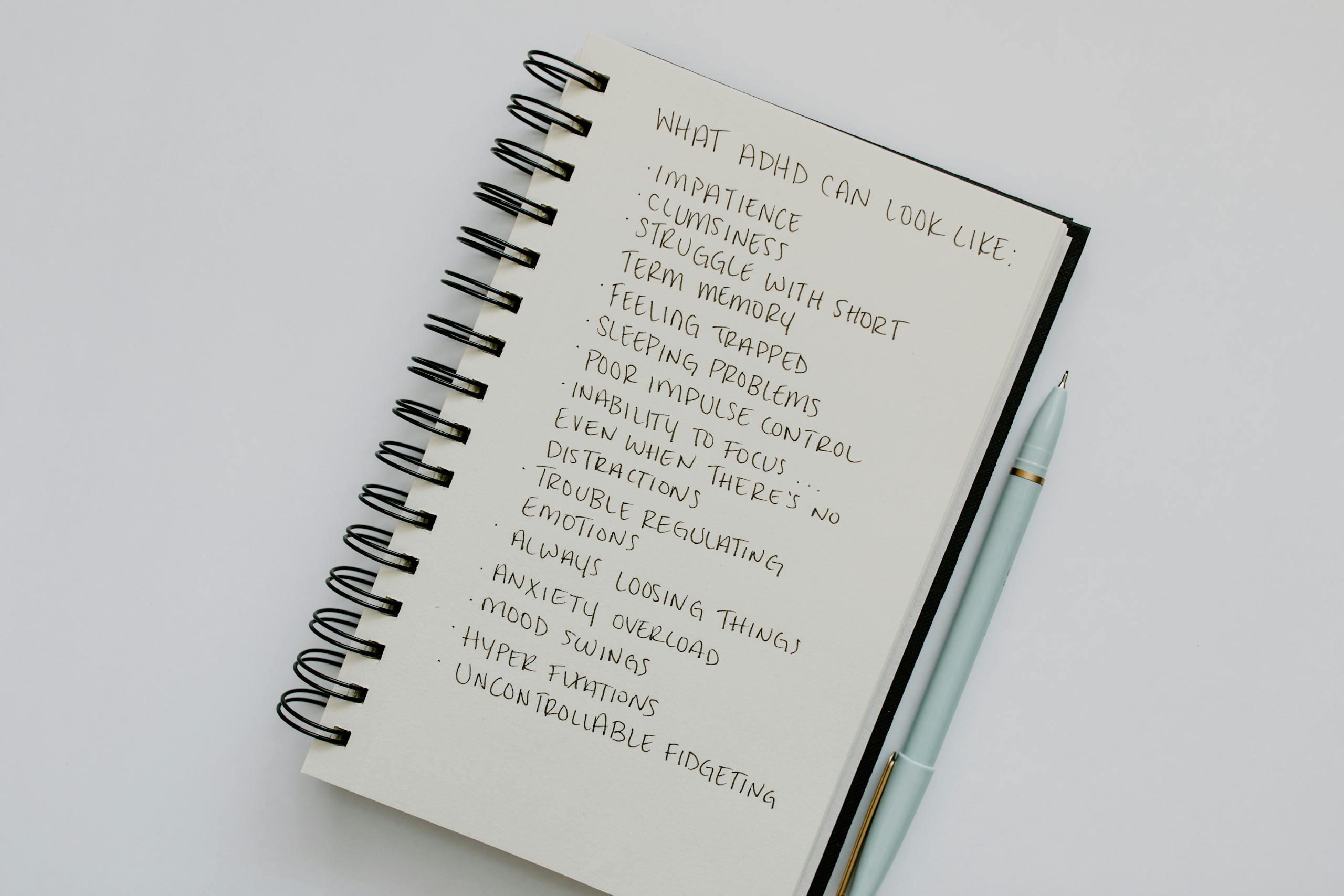
What Is CPTSD and Why Does It Hit Introverts So Hard?
Complex PTSD, or CPTSD, differs from single-incident PTSD in that it develops from prolonged, repeated trauma, often relational in nature. Childhood neglect, emotional abuse, growing up in a chaotic household, years of workplace bullying, or sustained exposure to someone else’s untreated mental illness. The National Institutes of Health’s clinical overview of PTSD describes how repeated trauma exposure can reshape core aspects of identity, emotional regulation, and the capacity for trust in ways that single-event trauma typically does not.
What’s your personality type?
Take our free 40-question assessment and get a detailed personality profile with dimension breakdowns, context analysis, and personalised insights.
Discover Your Type8-12 minutes · 40 questions · Free
What I’ve noticed, both in my own experience and in watching people I’ve worked with over the years, is that introverts often carry CPTSD quietly for a very long time before naming it. Our internal processing style means we’re already accustomed to living in our heads. We can rationalize, intellectualize, and analyze our pain with impressive precision while still being completely dysregulated underneath. I did this for most of my thirties. Running an advertising agency, managing fifty people, presenting to Fortune 500 clients, and privately cycling through hypervigilance and emotional shutdown on a near-daily basis. I thought that was just what leadership felt like.
Introverts with CPTSD also tend to internalize the messages of their trauma more completely. When the wound comes from repeated relational injury, the nervous system learns to treat connection itself as a threat. For someone already wired to be selective about relationships and to process emotion internally, that lesson can calcify into something that looks like preference but is actually protective withdrawal. The difference matters enormously when it comes to healing.
Highly sensitive people face a particular version of this. Their capacity to absorb emotional information from the environment, the thing that makes them perceptive and empathic, also means that chronic relational stress gets absorbed more deeply. The overlap between HSP traits and CPTSD symptoms is significant enough that many people spend years confusing one for the other. If you recognize this pattern in yourself, the piece on HSP anxiety and coping strategies speaks directly to that experience.
What Is a Loving Mirror Meditation and Where Does It Come From?
The phrase “loving mirror” draws on two distinct but compatible traditions. The first is loving-kindness meditation, or metta, a Buddhist contemplative practice that involves systematically directing compassion toward yourself and others. The second is the psychological concept of the “mirroring” relationship, drawn from attachment theory and object relations psychology, which refers to the early experience of seeing yourself reflected back through a caregiver’s attuned, accepting gaze.
When early mirroring goes wrong, as it often does in the environments that produce CPTSD, the internal image a person develops of themselves is distorted. Not in a metaphorical sense, but in a neurologically literal one. The brain builds its model of “self” partly through repeated relational feedback. When that feedback is critical, inconsistent, dismissive, or frightening, the internal self-model reflects that damage. A loving mirror meditation works to gently introduce a corrective experience: the act of meeting yourself with the kind of steady, warm, non-judgmental attention that may have been missing in those early years.
This is not about positive affirmations or forcing yourself to feel things you don’t feel. People with CPTSD often have a strong aversion to that kind of practice, and for good reason. It can feel dishonest, even destabilizing. The loving mirror approach is slower and more honest. It asks you to look, not to perform. To notice, not to fix. That distinction makes it considerably more accessible for trauma survivors, and considerably more effective.

How Does Loving-Kindness Meditation Actually Affect the Traumatized Brain?
There’s a meaningful body of work on how compassion-based meditation practices affect the nervous system, particularly for people whose baseline stress response has been chronically elevated. A study published in PLOS ONE examining the neurological effects of loving-kindness meditation found changes in brain regions associated with emotional regulation and self-referential processing, areas that are frequently disrupted in complex trauma. This isn’t magic. It’s the brain’s capacity for change being activated through consistent, gentle practice.
For people with CPTSD, the default mode network, the brain system that generates our ongoing sense of self, tends to run on threat-based narratives. Thoughts like “I’m too much,” “I’m not enough,” “I’ll be abandoned,” or “I deserve what happened to me” aren’t character flaws. They’re learned patterns that the brain encoded as survival information. Loving-kindness meditation, practiced consistently, begins to introduce competing data. Not by arguing with the old patterns, but by creating enough moments of genuine self-compassion that the nervous system slowly updates its priors.
What I find particularly relevant for introverts is that this practice works through internal experience rather than external interaction. You don’t need a therapist in the room, though having one is genuinely valuable. You don’t need to talk about your trauma. You sit with yourself and practice a specific quality of attention. For people who do their deepest processing alone, that’s not a limitation. It’s actually ideal.
The challenge, and it’s a real one, is that for trauma survivors, sitting with yourself can initially feel more threatening than calming. The research on trauma-sensitive mindfulness is clear that standard mindfulness instructions can sometimes activate rather than soothe traumatic stress responses. Loving mirror meditation, done carefully, addresses this by starting outside the self and working inward gradually. More on that in the practice section below.
Why Do Highly Sensitive People and Introverts Respond Differently to Self-Compassion Practices?
One thing I’ve observed across years of managing creative teams is that highly sensitive people often have the most sophisticated emotional intelligence and the least tolerance for their own emotional experience. There’s a painful irony in that. The same depth of feeling that makes an HSP extraordinary at reading a room, at anticipating a client’s unspoken concerns, at crafting something that resonates, can make self-directed compassion feel almost unbearably vulnerable.
Part of this connects to what happens when HSP traits intersect with perfectionism. If you’ve spent years managing the internal critic that tells you your feelings are too much, your needs are too demanding, your sensitivity is a liability, then being asked to look at yourself with kindness can feel like being asked to look directly at the sun. There’s a whole dimension of this worth examining in the context of HSP perfectionism and the trap of impossibly high standards.
Introverts with CPTSD also tend to have a complicated relationship with empathy. The capacity to feel deeply into another person’s experience is one of the gifts of introversion and high sensitivity. But when that empathy has been weaponized, when you learned early that your job was to attune to others’ emotional states for safety, not connection, it can become a source of depletion rather than meaning. The double-edged nature of HSP empathy is something many trauma survivors recognize immediately.
What loving mirror meditation offers these individuals is a practice that honors the depth of their feeling without requiring them to perform wellness. You’re not being asked to feel better. You’re being asked to feel more honestly, and to bring a quality of warmth to whatever you find. That’s a meaningful distinction for people who’ve spent years performing emotional states they didn’t actually feel.

How Do You Actually Practice the Loving Mirror Meditation?
Before getting into the steps, one important note: if you are in active trauma treatment with a therapist, share this practice with them before beginning. A good trauma-informed therapist will either support it, adapt it to your specific needs, or flag if the timing isn’t right. The National Institute of Mental Health emphasizes the importance of professional support when working with anxiety and trauma-related conditions, and that guidance applies here.
With that said, here is a foundational version of the loving mirror meditation adapted for CPTSD and sensitive nervous systems.
Step One: Establish Safety First
Find a position that feels physically comfortable and slightly grounded. Sitting with your back supported, feet on the floor, or even lying down with a blanket are all fine. The goal is a body posture that communicates “I am safe right now” to your nervous system. Take a few slow breaths, not forcing anything, just noticing the breath as it is.
If you feel activation, tightness in the chest, a sudden urge to get up and do something, or a kind of emotional flatness, note that without judgment. These are nervous system responses, not failures. You can work with them or simply pause the practice and return another time.
Step Two: Begin with Someone Easy
Classic loving-kindness meditation begins with someone easy to love, often a pet, a child, or a beloved person who carries no complicated history. Hold an image of that being in your mind. Notice what happens in your body when you think of them with warmth. That warm, open quality is what you’re cultivating. Let it settle for a few minutes before moving on.
Step Three: Introduce the Mirror
Now, gently shift the focus. Imagine you are looking at yourself in a mirror, but the self you see is younger, perhaps the age when the hardest things happened, or simply a younger version of you who needed more than they received. Look at this younger self the way you just looked at the being you love easily. Not with pity. With the same steady, warm attention.
You don’t have to feel it fully right away. Even a 10% opening is meaningful. The practice is the repeated act of turning toward, not the quality of feeling you generate on any given day.
Step Four: Offer Simple Phrases
Traditional metta phrases include things like “May you be safe. May you be well. May you be at peace.” For CPTSD survivors, some people find it helpful to adapt these to something more directly relational: “You deserved better. What happened to you was not your fault. You are allowed to take up space.” Use whatever words feel true, not aspirational. Honesty is more healing than hope at this stage.
Step Five: Close Gently
After five to fifteen minutes, bring your awareness back to your body in the room. Wiggle your fingers, feel the weight of your body in the chair. Take a few breaths. If emotions have surfaced, that’s appropriate. Give yourself a few minutes before moving back into activity. Journaling after the practice can help integrate what came up.
What Makes This Practice Different from Standard Mindfulness?
Standard mindfulness instruction often emphasizes neutral observation. Notice your thoughts without attachment. Watch sensations arise and pass. That framework works beautifully for many people, but for trauma survivors, neutral observation of internal experience can sometimes feel like being asked to stand in a burning building and notice the flames without reacting.
The loving mirror approach introduces a relational quality into the practice. Instead of neutral witnessing, you’re practicing warm witnessing. The difference may sound subtle but it’s functionally significant. Warmth activates the parasympathetic nervous system and the social engagement system in ways that neutral observation alone does not. For people whose nervous systems learned to associate internal experience with threat, that warmth is not a luxury. It’s the actual mechanism of change.
This also connects to why sensory overwhelm can derail standard meditation for HSPs. When the nervous system is already running hot, adding more internal focus without a relational container can amplify rather than reduce distress. The experience of HSP sensory overwhelm is relevant here because trauma survivors often carry a baseline of physiological activation that standard mindfulness doesn’t adequately address.

How Does CPTSD Affect Emotional Processing for Introverts?
One of the more disorienting aspects of CPTSD for introverts is how it can corrupt the very processing style that is usually a strength. Introverts tend to be reflective by nature. We process before we speak. We sit with experiences and extract meaning from them over time. That’s genuinely valuable. But CPTSD can turn that reflective capacity into a loop: rumination that revisits the same material without resolution, self-analysis that generates insight without relief, emotional processing that goes deep but never quite completes.
I spent a significant stretch of my agency years in exactly that pattern. Brilliant at diagnosing problems, mine included. Completely stuck when it came to actually moving through them. I could write a ten-point analysis of why I was struggling and still feel exactly as stuck at the end of it. The analysis was real. The insight was real. But insight without self-compassion is like having a map with no way to move your legs.
The depth of emotional processing that highly sensitive people experience is something I’ve watched play out in creative teams throughout my career. The most perceptive people in the room were often the ones most likely to get stuck in their own emotional material, not because they were weak, but because they felt everything so fully that completion required more than just understanding. It required something gentler than analysis.
Loving mirror meditation offers a different kind of processing. Not analytical, not linguistic, but somatic and relational. You’re not figuring anything out during the practice. You’re creating a felt experience of being met with warmth, and that felt experience, repeated over time, begins to shift the emotional baseline in ways that analysis alone cannot.
What Role Does Rejection Sensitivity Play in CPTSD Healing?
Rejection sensitivity is one of the most consistently painful features of CPTSD, and one of the least discussed in mainstream conversations about trauma. When your nervous system has learned through repeated experience that connection leads to pain, it becomes exquisitely attuned to any signal that rejection might be coming. A delayed text message. A slightly flat tone in someone’s voice. A meeting invitation that didn’t include you. The threat detection system fires at stimuli that wouldn’t register for someone without that history.
For introverts, this can be particularly isolating because the natural preference for selective, deep connection means that when those connections feel threatened, there’s less of a social buffer. An extrovert with rejection sensitivity might have twenty relationships to distribute the emotional load across. An introvert with three or four deeply meaningful connections feels each tremor more acutely.
A graduate research review on trauma and interpersonal functioning highlights how early relational trauma shapes the templates through which adult relationships are interpreted. Loving mirror meditation addresses this not by changing your relationships but by changing the internal observer who interprets them. When you’ve practiced meeting yourself with warmth consistently enough that it starts to feel familiar, the threat detection system begins to recalibrate. Not overnight. But measurably, over time.
The work of processing rejection as an HSP is genuinely different from what the standard advice about “not taking things personally” suggests. For someone with CPTSD and high sensitivity, rejection doesn’t land in the rational mind first. It lands in the body, in the threat system, in the part of the nervous system that learned long ago that being left behind was dangerous. Meditation alone won’t resolve that. But it builds a foundation that makes the other work possible.
How Do You Build a Consistent Practice When Motivation Is Inconsistent?
One of the most honest things I can say about meditation practice for trauma survivors is that motivation is an unreliable guide. There will be days when you feel called to sit. There will be many more days when every part of you wants to do anything else. The avoidance is not laziness. It’s the nervous system protecting you from something it still perceives as threatening. Treating that avoidance with judgment makes it worse. Treating it with curiosity makes it workable.
What I’ve found more reliable than motivation is structure. Not rigid, punishing structure, but gentle scaffolding. Attaching the practice to an existing anchor in your day, morning coffee, the end of the workday, the few minutes before sleep, reduces the activation cost of beginning. You’re not deciding each day whether to practice. You’re just following a groove you’ve already worn.
Start shorter than feels meaningful. Five minutes is enough to begin. The Ohio State research on parenting and perfectionism touches on something relevant here: the expectation of doing something perfectly is often what prevents people from doing it at all. A five-minute loving mirror meditation done imperfectly and consistently is worth considerably more than a twenty-minute practice you attempt twice and abandon.
Also worth saying: you will have sessions that feel like nothing happened. You’ll sit, offer the phrases, and feel flat, distracted, or vaguely irritated. That’s fine. The practice is still working at a level below conscious experience. The nervous system is registering the repeated act of showing up for yourself even when it doesn’t feel meaningful. Over time, that registration matters.
The American Psychological Association’s framework on resilience emphasizes that recovery from adversity is not a linear process and that small, consistent actions compound in ways that aren’t always immediately visible. That framing is useful for anyone building a meditation practice from inside a trauma history.

What Are the Limits of Meditation in CPTSD Recovery?
Loving mirror meditation is a meaningful tool. It is not a complete treatment for CPTSD, and I want to be clear about that. Complex trauma, by its nature, is relational in origin. That means a significant part of healing happens in relationship, specifically in the experience of safe, consistent, attuned connection with another person. A good therapist, particularly one trained in trauma-focused modalities like EMDR, somatic experiencing, or IFS, offers something that solo meditation cannot: the actual corrective relational experience of being witnessed and accepted by another human being.
Meditation works well as a complement to that work. It builds the internal capacity to tolerate the feelings that therapy surfaces. It provides a daily practice of self-compassion that extends the therapeutic work between sessions. It gives the nervous system repeated small doses of safety in a format that introverts often find more accessible than group therapy or social support networks.
What it doesn’t do, at least not on its own, is process the specific traumatic memories and relational wounds that drive CPTSD symptoms. For that, professional support is genuinely important. If cost or access is a barrier, community mental health centers, sliding scale therapists, and telehealth platforms have made trauma-informed therapy more accessible than it was even five years ago.
There’s more depth on the intersection of introversion, sensitivity, and mental health throughout the Introvert Mental Health Hub, which covers everything from anxiety and perfectionism to emotional processing and empathy. If you’re building a broader understanding of your own inner landscape, that collection of resources is worth spending time with.
About the Author
Keith Lacy is an introvert who’s learned to embrace his true self later in life. After 20 years in advertising and marketing leadership, including running agencies and managing Fortune 500 accounts, Keith now channels his experience into helping fellow introverts understand their strengths and build fulfilling careers. As an INTJ, he brings analytical depth and authentic perspective to every article, drawing from both professional expertise and personal growth.
Frequently Asked Questions
Can loving mirror meditation make CPTSD symptoms worse?
For some people, particularly those in early trauma recovery or with significant dissociation, any inward-focused practice can initially increase activation rather than reduce it. This is a known phenomenon in trauma-sensitive mindfulness work. If you notice significant distress during the practice, stop and ground yourself physically. Shorter sessions, more external grounding (eyes open, feet on floor), and the guidance of a trauma-informed therapist can help you find a version of the practice that works for your nervous system’s current capacity.
How is CPTSD different from regular PTSD for introverts?
CPTSD develops from prolonged, repeated trauma rather than a single event, and it tends to affect identity, emotional regulation, and relational patterns more pervasively than single-incident PTSD. For introverts, the key distinction often shows up in how thoroughly CPTSD can corrupt the internal processing style that is normally a strength. What should be a reflective, meaning-making capacity becomes a rumination loop. The introvert’s natural preference for depth and internal experience becomes a trap rather than a resource until healing work begins to restore access to that capacity.
How long before loving mirror meditation produces noticeable results?
There’s no honest universal answer to this, and anyone who gives you a specific timeline is oversimplifying. Many people notice subtle shifts in their relationship to self-criticism within a few weeks of consistent daily practice. More significant changes in nervous system baseline, rejection sensitivity, and emotional regulation tend to emerge over months rather than weeks. The most important variable is consistency rather than session length. Five minutes daily produces more meaningful change than forty-five minutes twice a month.
Is loving mirror meditation appropriate for highly sensitive people without CPTSD?
Absolutely. The practice is valuable for anyone who carries a harsh internal critic, struggles with self-compassion, or has absorbed relational wounds that didn’t rise to the level of clinical trauma. Highly sensitive people often develop self-protective patterns around their sensitivity, learning to judge or minimize their emotional responses because those responses have been criticized by others. Loving mirror meditation offers a way to begin meeting that sensitivity with acceptance rather than management. You don’t need a CPTSD diagnosis to benefit from practicing warmth toward yourself.
Can introverts do this practice effectively without a therapist or guide?
Many introverts find solo practice more accessible than guided group settings, and loving mirror meditation can be practiced independently with good results. That said, working with a trauma-informed therapist alongside the practice significantly deepens its effects and provides a safety net if difficult material surfaces. If solo practice is your starting point, keeping sessions short, staying grounded physically, and journaling afterward to process what arises are all practices that support safe independent work. If symptoms increase or you feel consistently destabilized, that’s a signal to bring professional support into the picture.