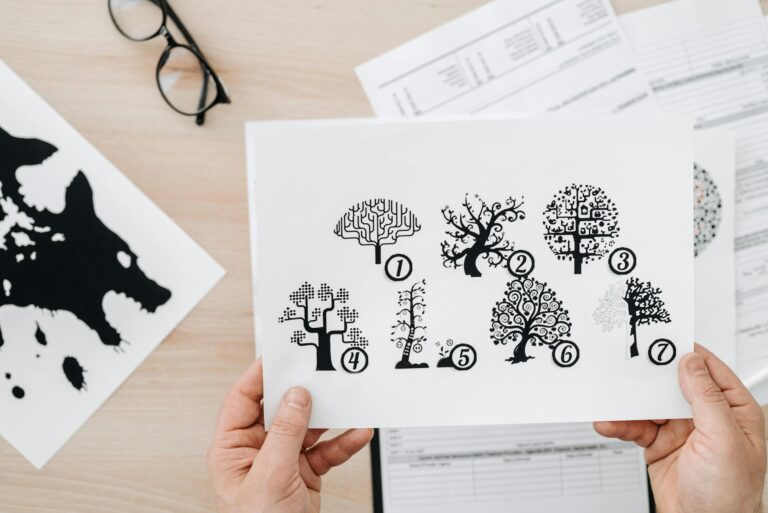

The Real Colors personality test is a four-color framework that sorts people into Gold, Green, Blue, and Orange personality types based on their core values, communication styles, and behavioral tendencies. Developed by Don Lowry in the 1970s and refined for workplace and educational use, it offers a fast, accessible way to understand how you and the people around you are wired.
What makes it different from longer assessments is its emphasis on emotional drivers rather than cognitive mechanics. You are not just categorized by how you think. You are sorted by what you care about most deeply, and that distinction changes everything about how the results feel when you read them.

Personality frameworks have always fascinated me, partly because I spent two decades in advertising trying to understand what made people tick, and partly because I spent most of those same two decades misunderstanding myself. If you want a fuller picture of how personality theory connects to self-awareness, introversion, and cognitive wiring, our MBTI General and Personality Theory hub pulls together everything from foundational concepts to nuanced assessments worth exploring.
What Are the Four Real Colors Personality Types?
Each color in the Real Colors system represents a cluster of values, motivations, and interpersonal tendencies. No color is better than another, and most people carry some of each. What the assessment identifies is your dominant color, the one that shapes your default behavior under pressure, your communication preferences, and what you need from relationships and work environments.
Gold personalities are the stabilizers. They value order, responsibility, and reliability. Golds tend to be planners who honor commitments and expect the same from others. They thrive in structured environments and often feel unsettled when rules are unclear or processes break down. In workplace settings, Gold types are frequently the people who actually make things happen because they follow through.
Green personalities are the analyzers. They are driven by competence, logic, and the pursuit of understanding. Greens ask why before they agree to anything, and they tend to be skeptical of ideas that cannot withstand scrutiny. They value intellectual independence and often prefer working alone or in small groups where depth of thinking is rewarded. Sound familiar? Many INTJs and INTPs identify strongly with Green.
Blue personalities are the connectors. They are motivated by authentic relationships, emotional harmony, and meaning. Blues bring empathy and warmth to every interaction and often serve as the emotional backbone of teams. They notice tension before it becomes conflict, and they invest deeply in the people around them. A 2019 study published in PLOS ONE via PubMed Central found that empathy-driven individuals show distinct patterns in social cognition, which maps closely to what the Blue framework is trying to describe.
Orange personalities are the activators. They are energized by action, freedom, and immediate results. Oranges are adaptable, spontaneous, and often charismatic. They get bored with too much process and excel in environments that reward quick thinking and bold moves. They are the ones who will pitch the wild idea in the meeting and somehow make it work.
How Does Real Colors Compare to MBTI and Other Frameworks?
Most people who encounter Real Colors have already spent time with the Myers-Briggs Type Indicator or one of its close relatives. The comparison is worth making carefully because the two frameworks are measuring different things.
MBTI, at its most rigorous, is built on Carl Jung’s theory of psychological types. It describes how you take in information and make decisions through a stack of cognitive functions. Real Colors does not go that deep. It is not trying to map your mental architecture. It is trying to describe your emotional priorities and how those priorities show up in behavior. That is a meaningful distinction.
Think about it this way. Two people can share the same MBTI type and still experience the world very differently based on what they value most. An INTJ with a strong Gold orientation will run their agency with meticulous systems and long-term planning. An INTJ with a strong Green orientation will spend more energy on intellectual mastery and less on operational structure. Both are INTJ. Both are wired similarly at the cognitive level. Yet they lead differently.
I was that first person. When I ran my agencies, I built processes and timelines that my team sometimes found suffocating. My Gold tendencies ran deep, even though my INTJ wiring was doing the strategic thinking. Understanding that combination helped me see why I sometimes frustrated people who needed more flexibility, and why I frustrated myself when I could not let go of a plan that was no longer working.

One area where MBTI goes deeper is in explaining how different people process sensory information and present-moment experience. If you want to understand that dimension more fully, the Extraverted Sensing (Se) explained guide covers how some people are wired to engage intensely with their immediate environment, which maps loosely to Orange energy in Real Colors but tells a richer cognitive story.
Real Colors also differs from MBTI in accessibility. The four-color model is genuinely fast to grasp. You can explain it in ten minutes to a room full of people who have never thought about personality theory before, and most of them will immediately recognize themselves and their colleagues. That accessibility is a feature, not a flaw. It makes Real Colors particularly useful in team workshops and organizational settings where you need a shared language quickly.
Why Do Introverts Often Score Strongly as Green or Blue?
Not every introvert scores the same on Real Colors, but there are patterns worth noticing. Green and Blue tend to show up most prominently in people who process internally, prefer depth over breadth in relationships, and feel drained by environments that prioritize performance over substance.
Green resonates with introverts who lead with analysis. The Green drive for competence and independent thinking mirrors the internal processing style that many introverts rely on. Greens are often misread as cold or aloof when they are actually just thinking, which is an experience most introverts know well. A 2005 article in the American Psychological Association’s Monitor on Psychology explored how internal processing styles can be misinterpreted as disengagement, a finding that feels personally relevant to me every time I think about how I showed up in client meetings during my agency years.
Blue resonates with introverts who lead with empathy. Blues feel things deeply, invest in meaningful one-on-one connection, and often find large social gatherings exhausting rather than energizing. The WebMD overview of empaths describes how highly empathic people absorb emotional information from their environment, which is a capacity that Blues tend to have in abundance and that can be both a gift and a source of genuine exhaustion.
Gold introverts exist too, of course. The Gold need for order and structure does not require extraversion. Some of the most disciplined, reliable, and quietly effective people I have ever worked with were Gold introverts who preferred to lead by example rather than by presence. They were the ones who made my agencies actually function.
What matters here is that introversion and extraversion describe your energy source, not your values. Real Colors describes your values. The two frameworks answer different questions, which is why using them together gives you a more complete picture than either one alone. If you want to get clearer on where you fall on the introversion-extraversion spectrum before layering on a color framework, the E vs I in Myers-Briggs guide breaks down what that distinction actually means at a practical level.
How Is the Real Colors Assessment Actually Structured?
The Real Colors assessment is typically administered as a card-sorting or ranking exercise rather than a traditional multiple-choice questionnaire. Participants receive a set of cards, each describing a cluster of traits or preferences, and are asked to rank them in order of how well they describe themselves. This approach reduces the tendency to overthink individual questions and often produces results that feel more honest than forced-choice formats.
The ranking produces a score for each of the four colors, and your highest score indicates your dominant type. Most people have a secondary color that also scores high, and understanding that combination adds nuance. A Gold-Green person operates very differently from a Gold-Blue person, even though both share the Gold commitment to reliability and follow-through.
One thing I appreciate about the card-sort format is that it forces you to make trade-offs. You cannot rate everything highly. You have to choose what matters most, which is actually a more honest reflection of how values work in real life. We do not operate with equal commitment to everything. We have priorities, and those priorities shape our behavior more than we usually acknowledge.
The assessment is most commonly used in facilitated group settings, workshops, team development programs, and educational environments. It was designed to be a conversation starter rather than a standalone diagnostic tool, and it works best in that context. Pairing it with a deeper cognitive framework gives you both the what and the why of your personality.

What Can Real Colors Tell You About How You Lead and Collaborate?
Running an advertising agency means managing creative people, analytical people, client-facing people, and operational people all at once. Every one of those groups has a different dominant color, and the friction between them is almost always a values conflict dressed up as a process dispute.
My creative directors were almost always Orange. They needed freedom, fast feedback, and the sense that their ideas mattered. My account managers were often Gold, needing clear timelines, defined deliverables, and reliable client communication. My strategists leaned Green, wanting data, rationale, and time to think before committing to a direction. My agency producers were frequently Blue, holding the team together emotionally and noticing when someone was burning out before anyone else did.
When I understood those orientations, I stopped trying to manage everyone the same way. I stopped expecting my Orange creatives to thrive in structured planning meetings. I stopped expecting my Green strategists to be enthusiastic in brainstorming sessions that moved too fast for them to think clearly. I started designing workflows that gave each type what they needed to do their best work.
The research on personality-based collaboration supports this approach. An analysis by 16Personalities on team collaboration and personality found that teams with diverse personality types outperform homogeneous groups when those differences are understood and leveraged rather than smoothed over. Real Colors gives teams a shared vocabulary for doing exactly that.
Leadership style also shifts considerably by color. Gold leaders tend to build strong systems and hold people accountable. Green leaders tend to set high intellectual standards and push for rigor. Blue leaders tend to build cultures of trust and psychological safety. Orange leaders tend to create momentum and energy. None of those styles is universally superior. Each becomes a liability when overdone without the others to balance it.
As a Green-Gold INTJ, my leadership strengths were strategy and structure. My blind spots were spontaneity and emotional attunement. Knowing that did not fix everything, but it told me exactly where to build support systems and where to trust my instincts.
How Does Real Colors Relate to Cognitive Functions?
This is where things get interesting for people who want more than a surface-level personality snapshot.
Real Colors describes values and behavioral tendencies. Cognitive functions describe the mental processes you use to gather information and make decisions. The two systems operate at different levels of analysis, but they are not unrelated.
Green, for example, tends to correlate with strong Thinking functions. The Green drive for competence, logic, and analytical precision maps onto what cognitive function theory describes as either Extroverted Thinking (Te), which organizes the external world through systems and measurable outcomes, or Introverted Thinking (Ti), which builds internal frameworks for understanding how things work. Both are logic-driven. Te is more action-oriented and externally focused. Ti is more process-oriented and internally focused. A Green person with dominant Te will want to implement efficient systems. A Green person with dominant Ti will want to understand the underlying principles before committing to any system at all.
Blue tends to correlate with strong Feeling functions, particularly Introverted Feeling (Fi) and Extroverted Feeling (Fe). Blues who lead with Fi are deeply values-driven and intensely personal in their emotional processing. Blues who lead with Fe are more attuned to the emotional climate of a group and naturally oriented toward harmony and connection.
Gold often correlates with strong Judging functions, particularly Te or Si (Introverted Sensing), which provides a strong orientation toward tradition, reliability, and proven methods. Orange often correlates with strong Perceiving functions and Se (Extroverted Sensing), which keeps people present, adaptable, and energized by immediate experience.
These are tendencies, not rules. Personality is too complex for perfect one-to-one mapping between systems. Still, understanding where they overlap deepens your self-awareness considerably. If you have ever wondered whether your MBTI result actually fits you, or whether you might have been mistyped, the mistyped MBTI guide explains how looking at your cognitive function stack can clarify your true type in ways that surface-level questionnaires sometimes miss.

What Are the Limitations of Real Colors?
Any personality framework worth taking seriously should come with honest caveats, and Real Colors is no exception.
The most significant limitation is its simplicity. Four colors can capture broad tendencies, but they cannot account for the full complexity of how personality develops, shifts across contexts, or interacts with culture, trauma, upbringing, and life experience. A 2019 study published in PubMed Central on personality trait stability found that while core traits show meaningful consistency over time, context and environment shape behavior in ways that fixed-type models tend to underestimate.
Real Colors also does not distinguish between introversion and extraversion in any meaningful way, which matters if you are trying to understand your energy patterns alongside your values. Two people can share the same dominant color and have completely different social needs. Layering in an introversion-extraversion framework is worth doing if you want a fuller picture.
There is also the self-report problem. How you see yourself and how you actually behave are not always the same thing. Under stress, people often shift toward their secondary or even tertiary color, and the card-sort format may capture your aspirational self rather than your operational self. This is not unique to Real Colors. It applies to most personality assessments, including MBTI.
What Real Colors does well, it does very well. It creates immediate, accessible insight. It gives teams a shared language. It surfaces values conflicts before they become relationship conflicts. Those are meaningful contributions, as long as you hold them with appropriate humility and resist the urge to use your color as an excuse for behavior you could actually change.
I have seen this happen in agency culture. Someone discovers they are Orange and suddenly every missed deadline becomes a personality trait rather than a professional problem. That is not what these frameworks are for. They are for understanding, not absolution.
How Do You Get the Most From Your Real Colors Results?
The assessment itself is just the beginning. What you do with the results determines whether they become genuinely useful or just an interesting curiosity you mention at dinner parties.
Start by sitting with your dominant color honestly. Not the color you wish you were, not the color that sounds most impressive in a professional context, but the one that actually describes how you move through the world. For me, acknowledging my Green-Gold combination meant admitting that I sometimes prioritized being right over being connected, and that I sometimes held people to standards they had no idea I was applying. That was uncomfortable. It was also useful.
Next, pay attention to your secondary color. That is where your adaptability lives. Your dominant color is your default. Your secondary color is what you reach for when the default is not working. Understanding that combination gives you more flexibility than knowing your dominant color alone.
Then look at your lowest-scoring color. That is typically where your blind spots live. If Orange is your lowest score, you may struggle with spontaneity, risk-taking, and adapting when plans fall apart. If Blue is your lowest, you may underestimate the emotional dimension of conflicts and relationships. Knowing your gaps does not mean you have to become something you are not. It means you know where to build support, ask for help, or slow down before making assumptions.
Pairing Real Colors with a deeper cognitive assessment gives you the most complete picture. Our cognitive functions test can help you identify your mental processing stack, which adds the cognitive layer that Real Colors does not cover. Used together, you get both what you value and how your mind works to pursue those values.
And if you have not yet identified your MBTI type, that piece of self-knowledge adds meaningful context to everything else. Taking our free MBTI test gives you a foundation to work from, so that frameworks like Real Colors have something deeper to build on rather than standing alone.

Is Real Colors Worth Taking Seriously as a Self-Awareness Tool?
Yes, with the right expectations. Real Colors is not a clinical diagnostic tool. It will not tell you why you process information the way you do or predict how you will behave in every situation. What it will do is give you a fast, accessible, emotionally resonant snapshot of your core values and how those values shape your relationships and work.
For introverts especially, personality frameworks often serve a function that goes beyond intellectual curiosity. They provide language for experiences that felt private and hard to explain. They offer evidence that the way you are wired is not a deficiency. They create permission to stop performing a version of yourself that was never quite right.
According to 16Personalities’ global data, personality type distribution varies meaningfully across cultures and contexts, which suggests that the way we express our personality is always shaped by environment, not just internal wiring. Real Colors captures something real about that expression, even if it cannot tell the whole story.
The Truity research on deep thinkers identifies traits like preferring depth over breadth, needing time to process before responding, and feeling most alive in meaningful intellectual or emotional engagement. Those traits show up across Green and Blue types in Real Colors, and they describe the inner life of many introverts with striking accuracy.
What I have found, across two decades in business and years of writing about introversion, is that self-knowledge compounds. Every framework you engage with honestly adds a layer. Real Colors adds the values layer. MBTI adds the cognitive layer. Understanding introversion and extraversion adds the energy layer. None of them is complete on its own. Together, they build a picture of yourself that is genuinely hard to argue with.
And when you stop arguing with who you are, you can finally start building on it.
Find more frameworks, assessments, and perspectives on personality and self-understanding in our complete MBTI General and Personality Theory hub.
About the Author
Keith Lacy is an introvert who’s learned to embrace his true self later in life. After 20 years in advertising and marketing leadership, including running agencies and managing Fortune 500 accounts, Keith now channels his experience into helping fellow introverts understand their strengths and build fulfilling careers. As an INTJ, he brings analytical depth and authentic perspective to every article, drawing from both professional expertise and personal growth.
Frequently Asked Questions
What does your dominant color in Real Colors actually mean?
Your dominant color represents the core values and motivations that most consistently drive your behavior. Gold indicates a strong orientation toward order, responsibility, and reliability. Green reflects a drive for competence, logic, and independent thinking. Blue points to a deep investment in authentic relationships and emotional meaning. Orange signals a preference for action, freedom, and adaptability. Your dominant color is your default mode, especially under pressure or when you are not consciously adapting to a situation.
Can your Real Colors results change over time?
Your core color tendencies tend to remain fairly stable because they are rooted in deeply held values. That said, life experience, professional development, and intentional growth can shift how prominently certain colors express themselves. Someone who has worked hard on emotional intelligence may find their Blue score rising over time. Someone who has built strong organizational habits may score higher in Gold than they did earlier in their career. The framework captures tendencies, not fixed destinies.
Is Real Colors the same as the True Colors personality test?
Real Colors and True Colors are related but distinct frameworks. Both use a four-color system and share similar color categories. True Colors was developed by Don Lowry in 1978 and is one of the original frameworks in this space. Real Colors was developed later as a separate program, also using four colors but with its own facilitation methodology and assessment format. They draw from similar theoretical roots but are administered and licensed differently. If you encounter either in a workplace or educational setting, the underlying concepts will feel familiar, though the specific materials and facilitation approaches differ.
How does Real Colors work in a team setting?
Real Colors is particularly effective as a team development tool because it gives groups a shared, non-threatening language for discussing differences in communication style, work preferences, and conflict patterns. When a team understands that a Green colleague needs time to think before responding and an Orange colleague needs to move fast and iterate, they stop interpreting those differences as personality clashes and start designing workflows that accommodate both. The framework works best when facilitated by someone trained in the methodology and when the results are discussed openly rather than used to label or limit people.
Should introverts use Real Colors alongside MBTI or on its own?
Using Real Colors alongside MBTI gives you a more complete picture than either framework provides alone. Real Colors describes what you value and how those values shape your behavior. MBTI, particularly when understood through cognitive functions, describes how your mind processes information and makes decisions. For introverts who want to understand not just their social preferences but their deeper cognitive wiring, combining the two frameworks adds meaningful depth. Start with whichever resonates more immediately, then layer in the other as your self-understanding develops.