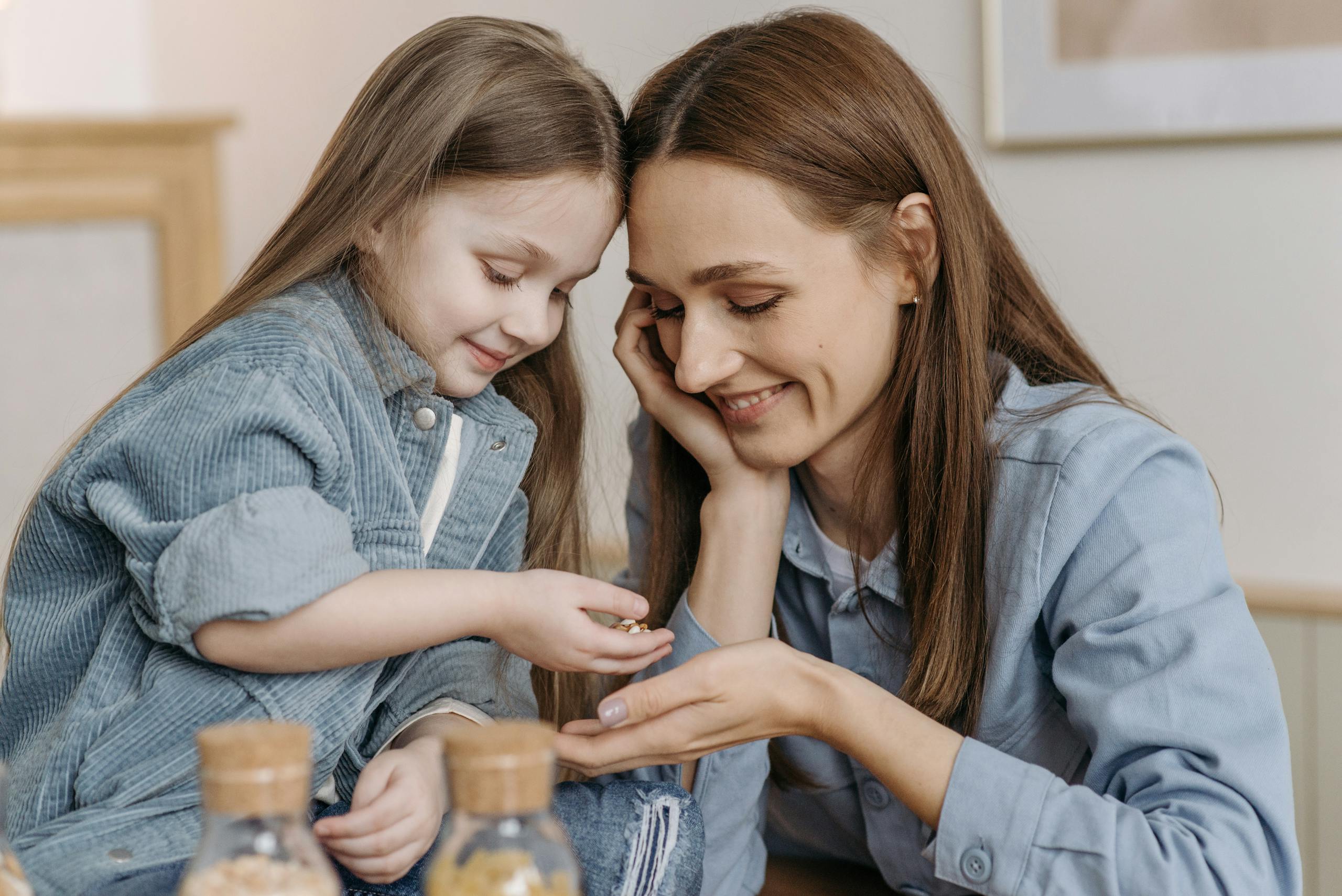

Authentic kid font refers to the natural, imperfect, and deeply personal quality of children’s handwriting and self-expression, the way a child’s personality shows up in the letters they form, the drawings they make, and the notes they leave behind. Far from being a design trend or typography style, authentic kid font is a window into how children process the world around them, and for introverted parents, learning to read that window can change everything about how you connect with your child.
Children communicate in layers. The words they write are only part of the message. The pressure of the pencil, the size of the letters, the way they crowd the margins or leave wide open spaces, all of it carries meaning. And if you’re a parent who processes the world quietly and pays close attention to subtle signals, you may already be picking up on things other parents miss entirely.
I spent more than two decades in advertising, building campaigns for Fortune 500 brands, and one of the first things I learned in that world was that authenticity is the hardest thing to manufacture. You can hire the best designers, the most talented copywriters, and still produce something that feels hollow. The same principle applies to children. Their authentic expression, the unpolished, unfiltered version of how they communicate, is worth more than anything a curriculum or structured activity can produce. Protecting that authenticity as a parent is one of the most meaningful things you can do.

If you’re exploring how introversion shapes the way you parent, and how your child’s personality intersects with your own, our Introvert Family Dynamics and Parenting Hub covers the full range of those questions, from communication styles to emotional regulation to the quieter moments where real connection happens.
What Does “Authentic Kid Font” Actually Mean for Parents?
When designers talk about “kid font,” they mean typefaces that mimic the irregular, hand-drawn quality of children’s writing. Slightly wobbly letters. Uneven spacing. A warmth that polished fonts can’t replicate. But when I use the phrase here, I mean something more personal. Authentic kid font is the actual handwriting, the actual drawings, the actual written communication your child produces when no one is correcting them or grading them.
What’s your personality type?
Take our free 40-question assessment and get a detailed personality profile with dimension breakdowns, context analysis, and personalised insights.
Discover Your Type8-12 minutes · 40 questions · Free
Psychologists and developmental researchers have long understood that the way children express themselves on paper reflects their inner world. A child who writes in tiny, cramped letters clustered in the center of the page is communicating something different than a child who fills every corner with bold, sprawling shapes. Neither is wrong. Both are telling you something real.
As an INTJ, I’ve always been drawn to systems and patterns. When my own children were young, I found myself cataloging their drawings the way I used to catalog consumer research data at the agency. Not in a clinical or detached way, but with genuine fascination. What were they trying to say? What did the choice of color mean? Why did one child always draw people with enormous eyes, while the other left faces completely blank?
Those questions matter. And they matter even more when you factor in personality type, both yours and your child’s.
Why Introverted Parents Notice What Others Miss
One of the quieter advantages of being an introverted parent is that you tend to observe before you react. You sit with things. You notice the small shifts in energy, the subtle change in how your child holds their pencil when they’re anxious versus when they’re at ease. You catch the drawing tucked under the bed that wasn’t meant for you to see, and you understand instinctively that it deserves careful attention, not a casual glance.
The National Institutes of Health has noted that temperament traits visible in infancy, including behavioral inhibition and sensitivity to stimulation, often predict introversion in adulthood. What this suggests is that many introverted children are wired from very early on to process experience more deeply than their peers. Their authentic expression on paper often reflects that depth.
If you’re also a highly sensitive parent, this dynamic becomes even more layered. The experience of raising children through the lens of high sensitivity brings its own set of gifts and challenges, and our article on HSP parenting and raising children as a highly sensitive parent goes much deeper into what that looks like day to day.
What I’ve noticed, both in my own parenting and in conversations with other introverted parents, is that we sometimes underestimate how much we’re already picking up. We second-guess our observations because they’re quiet and internal, not backed by loud, confident declarations. But the ability to sit with a child’s drawing for five minutes and genuinely wonder what it means, that’s not a small thing. That’s the kind of attention children remember.

How Personality Type Shapes a Child’s Creative Expression
Children don’t come with personality type labels attached, and I’d be cautious about applying rigid frameworks to kids who are still forming. That said, personality tendencies show up early and often, and understanding the broad strokes can help you respond to your child more effectively.
Some children approach a blank page the way extroverts approach a room full of people: with immediate, energetic engagement. They grab the biggest markers, fill the space fast, and move on to the next thing. Other children approach the same blank page the way introverts approach a social event: carefully, thoughtfully, sometimes with visible hesitation before committing a single line.
Neither approach is better. But they require different responses from a parent.
At the agency, I worked with creative teams of wildly different personality types. One of my most talented art directors was someone whose personality profile, when we did a Big Five personality traits assessment as part of a team-building exercise, scored extremely high in openness but low in extraversion. Her work was extraordinary precisely because she processed ideas slowly and privately before putting anything on paper. She produced less volume than some of her colleagues, but what she produced was almost always exactly right.
I see the same pattern in children. The ones who take longer to start drawing, who erase more, who ask more questions before picking up a pencil, are often producing something more considered when they finally do. The challenge for parents, especially those who feel pressure to see immediate output, is resisting the urge to rush that process.
Personality research from sources like Truity’s work on personality types consistently shows that introversion and openness to experience often travel together. Children who are more introverted frequently show strong creative tendencies, they just express them on their own timeline and in their own way.
What Handwriting and Drawing Actually Reveal About Your Child’s Inner World
I want to be careful here, because there’s a version of this conversation that slides into pseudoscience. Graphology, the formal study of handwriting as a diagnostic tool, has a mixed and contested history. What I’m describing is something more observational and less clinical: the idea that a child’s authentic written expression is worth paying attention to as one signal among many.
With that caveat clearly stated, consider this many child development professionals and parents consistently observe.
Children who are experiencing anxiety often show it in their writing and drawing before they can articulate it verbally. The letters get smaller. The lines get lighter. The drawings become more contained, more controlled, less spontaneous. A child who used to fill pages with big, confident drawings and suddenly starts producing small, tentative work in the corner of the page is communicating something, even if they can’t name it.
The American Psychological Association’s resources on trauma note that children often express distress through non-verbal channels long before they find words for their experience. Creative expression, including drawing and writing, is one of the primary ways that happens.
On the other end of the spectrum, a child whose authentic expression suddenly becomes bigger, louder, more chaotic on the page may be processing something overwhelming. More color, more pressure, more crossing out and starting over. These aren’t signs of a problem in themselves, but they’re signals worth noticing.
I had a moment early in my parenting where I almost missed one of these signals entirely. I was deep in a pitch cycle at the agency, the kind of week where you’re in the office before sunrise and home after the kids are asleep. My youngest had left a drawing on my desk, which was her way of getting my attention without asking for it directly. I almost filed it in a pile without looking. When I finally sat down with it, I realized she’d drawn our family with one figure conspicuously smaller than the others, positioned at the edge of the page. We had a long conversation that weekend. It changed things.

How to Encourage Authentic Expression Without Imposing Your Own Lens
One of the more interesting challenges for introverted parents is that we can sometimes over-interpret. We’re wired to find meaning in patterns, and we can project our own emotional experience onto our children’s work in ways that aren’t always accurate. A child who draws dark, moody landscapes might simply love those colors. A child who writes in tiny letters might just prefer fine-point pens.
success doesn’t mean become a constant analyst of your child’s creative output. It’s to stay curious and open, to notice without immediately concluding.
Some practical approaches that have worked for me and for many introverted parents I’ve spoken with over the years:
Create low-pressure space for expression. Keep art supplies accessible without making art a structured activity. Some children produce their most authentic work when they think no one is watching or evaluating. A sketchbook left on the kitchen table with no instructions attached will often yield more honest expression than a scheduled “art time.”
Ask open questions rather than offering interpretations. “Tell me about this” is more useful than “I notice this figure looks sad.” You’re inviting the child to be the expert on their own work, which they are.
Preserve the work without making it precious. Save drawings and notes in a simple folder or box without turning it into a formal archive. Children should feel free to produce without worrying about whether each piece is good enough to keep.
Watch for changes over time rather than analyzing single pieces. One drawing tells you very little. A collection of drawings over weeks and months tells you much more. Patterns are more meaningful than individual data points, something I learned doing brand tracking research for consumer packaged goods clients.
When Authentic Expression Signals Something That Needs Attention
Most of the time, a child’s authentic written and drawn expression is simply that: authentic expression. It doesn’t require intervention or analysis. It just requires a parent who pays attention.
There are situations, though, where what shows up on the page warrants a closer look. Persistent themes of isolation, violence, or hopelessness in a child’s drawings or writing, especially when combined with behavioral changes, are worth discussing with a professional. Children who are struggling with emotional regulation sometimes communicate that struggle most clearly through their creative work.
It’s also worth being aware that some emotional and behavioral patterns that show up in children’s expression can reflect underlying conditions that benefit from professional support. If you’re noticing patterns that feel more intense or persistent than typical developmental variation, tools like a borderline personality disorder screening exist for adults who want to better understand their own emotional patterns, and consulting a child psychologist can help you make sense of what you’re seeing in your child.
The research published in PubMed Central on emotional development consistently points to early identification and supportive response as factors that significantly improve long-term outcomes for children experiencing emotional difficulties. Being the parent who notices, even quietly, even without immediately knowing what to do, is already a meaningful act.

The Connection Between How Children Express Themselves and How They’re Supported
There’s a broader point here that I think gets lost in conversations about child development: the adults in a child’s life who are most capable of supporting authentic expression are often those who have done some of their own inner work.
When I was running the agency, I had a team member who was exceptionally good with clients who were difficult to read. She had a quiet, attentive quality that put people at ease, and she could sense when a client was unhappy before they’d said a word. I once asked her how she did it. She told me she’d spent years learning to understand her own emotional patterns, and that made it easier to recognize them in others.
Parenting works the same way. A parent who understands their own personality, their own tendencies, their own triggers, is better equipped to respond to a child’s authentic expression without projecting, overreacting, or shutting down. That’s one reason why tools like the likeable person assessment or broader personality frameworks can be genuinely useful, not as labels, but as starting points for self-awareness.
Self-awareness is also what allows you to recognize when your child needs something you may not be naturally equipped to provide. Some children need a parent who can meet them in high-energy, expressive moments. Some need someone who can sit quietly beside them while they work through something on paper. Most need both at different times, and knowing which one is called for in a given moment is a skill that develops with practice and honest self-reflection.
For parents who work in caregiving roles or are considering professional support structures for their children, understanding the qualities that make a good caregiver can be illuminating. A personal care assistant aptitude assessment can offer insight into the attentiveness and emotional attunement qualities that matter most in supportive relationships, whether professional or personal.
Building a Home Environment Where Authentic Expression Thrives
The physical and emotional environment you create at home has a direct effect on how freely your child expresses themselves. Children who feel chronically evaluated, corrected, or compared to others learn quickly to produce what’s expected rather than what’s true. That’s a loss, and it’s one that often doesn’t show up until much later, in adolescence or adulthood, when the habit of performing rather than expressing is already deeply ingrained.
I think about this in terms of what I used to call “creative safety” at the agency. A team that feels safe to produce bad work will eventually produce great work. A team that feels like every idea is under immediate judgment will produce safe, predictable work that satisfies no one. The same dynamic plays out at the kitchen table.
Creative safety at home looks like this: a child’s drawing gets the same respectful attention whether it’s technically skilled or not. A note written in wobbly, imperfect letters is treated as communication worth reading carefully. The authentic kid font, whatever form it takes in your household, is received as meaningful rather than corrected into something neater.
For parents who are also thinking about their own fitness and physical wellbeing as part of a sustainable parenting approach, it’s worth noting that physical health directly supports emotional capacity. A certified personal trainer knowledge assessment can be a useful tool for parents exploring fitness options that fit their introverted preferences, whether that’s solo training, home workouts, or quiet early-morning routines.
Family dynamics, as Psychology Today’s overview of family dynamics describes, are shaped by the patterns of interaction that develop over time. The habits you build around how your family communicates, including how you respond to your child’s creative expression, become part of the emotional architecture of your home.

What Authentic Expression Teaches Introverted Parents About Themselves
Here’s something I didn’t expect when I started paying closer attention to my children’s authentic expression: it taught me things about myself.
Watching a child produce something unguarded and genuine, without worrying about whether it’s good enough, has a way of holding up a mirror. I spent a lot of years in advertising producing work that was polished, strategic, and designed to achieve a specific outcome. That’s not the same as authentic expression, and somewhere along the way I’d gotten so good at the former that I’d lost touch with the latter.
My children’s drawings reminded me what it looks like to put something on paper without a strategy attached to it. That’s a gift I didn’t anticipate.
Many introverted parents find that their children’s expressive freedom prompts their own. You start keeping a journal again. You pick up a sketchbook. You write notes by hand instead of typing everything. The authentic kid font in your household becomes a kind of permission slip for your own quieter forms of expression.
Research published through PubMed Central on expressive writing and emotional processing supports what many introverts already know intuitively: putting thoughts and feelings into written form has measurable benefits for emotional regulation and self-understanding. For introverted parents, modeling that practice for their children, by writing, drawing, or simply being seen in quiet creative acts, may be one of the most powerful things they do.
And for those handling the complexities of blended or non-traditional family structures, where authentic expression may carry additional emotional weight, Psychology Today’s resources on blended family dynamics offer useful context for understanding how children process belonging and identity through their creative work.
There’s more to explore on all of these themes. Our Introvert Family Dynamics and Parenting Hub brings together the full range of articles on how introversion shapes the way we parent, connect, and build family life on our own terms.
About the Author
Keith Lacy is an introvert who’s learned to embrace his true self later in life. After 20 years in advertising and marketing leadership, including running agencies and managing Fortune 500 accounts, Keith now channels his experience into helping fellow introverts understand their strengths and build fulfilling careers. As an INTJ, he brings analytical depth and authentic perspective to every article, drawing from both professional expertise and personal growth.
Frequently Asked Questions
What is authentic kid font and why does it matter for parents?
Authentic kid font refers to the natural, unpolished quality of a child’s actual handwriting and drawn expression, the imperfect, personal marks that reflect how they’re processing the world. It matters for parents because children often communicate emotional states, needs, and inner experiences through their creative work before they can articulate them verbally. Paying attention to how your child writes and draws, not to evaluate quality but to understand meaning, is one of the most direct ways to stay connected to their inner life.
How can introverted parents use their natural strengths to connect with their children through creative expression?
Introverted parents are often naturally observant, patient, and attuned to subtle signals, qualities that are genuinely valuable when engaging with a child’s creative expression. Rather than filling silences with evaluation or instruction, introverted parents can sit alongside their children in quiet companionship, ask open questions, and notice patterns over time. These tendencies, which can feel like limitations in louder social contexts, become real strengths in the quieter work of parenting.
When should a parent be concerned about what shows up in their child’s drawings or writing?
A single drawing or piece of writing rarely tells the whole story. Persistent themes of isolation, hopelessness, or intense distress, especially when combined with behavioral changes like withdrawal, sleep disruption, or loss of interest in activities, are worth discussing with a child psychologist or pediatrician. success doesn’t mean over-analyze every piece of creative work, but to stay attentive to patterns that shift noticeably over time. If something feels consistently off, trust that instinct and seek a professional perspective.
How does a child’s personality type affect the way they express themselves creatively?
Children with more introverted tendencies often approach creative tasks more slowly and deliberately than their extroverted peers. They may produce less volume but invest more consideration in each piece. Children who score high in openness to experience, a Big Five personality trait, tend to show more creative range and experimentation. Understanding your child’s natural tendencies, without labeling them rigidly, helps you respond to their creative process in ways that feel supportive rather than pressuring.
What practical steps can parents take to encourage authentic expression at home?
Keep art supplies and writing materials accessible without attaching structured expectations to them. Treat your child’s creative work with genuine curiosity rather than evaluation. Ask open questions like “tell me about this” instead of offering interpretations. Save work over time to notice patterns rather than analyzing individual pieces. Model your own authentic expression by writing, drawing, or creating in your child’s presence. And resist the urge to correct imperfect handwriting or drawing during free creative time. The authentic kid font in your home is more valuable unpolished.