
Breath counting meditation is a practice of silently counting each exhale from one to ten, then starting again, using the rhythm of the breath as an anchor for a wandering mind. It asks nothing complicated of you: just sit, breathe, count, and return when you drift. For those of us who live largely inside our own heads, this deceptively simple technique can become one of the most grounding tools we own.
My relationship with this practice started not in a yoga studio or a meditation retreat, but in a conference room in downtown Chicago, about fifteen minutes before a pitch I was absolutely dreading. I had forty-five minutes to present a full brand strategy to a room of skeptical executives, and my mind was already three conversations ahead, rehearsing objections, anticipating awkward silences, cataloguing every possible way it could go sideways. A colleague suggested I try counting my breaths. I thought it sounded ridiculous. I did it anyway. Something shifted.
That small experiment eventually became a daily practice, and over time I came to understand why it works so well for people wired the way I am. If you tend toward deep internal processing, heightened sensitivity, or a mind that never quite stops analyzing, breath counting offers something rare: a structured way to be still without demanding that you be someone you’re not.
Mental wellness for introverts and sensitive people covers a lot of ground. Our Introvert Mental Health hub explores the full range of what it means to manage an inner world that runs deep and sometimes runs hot. Breath counting fits naturally into that larger picture, and I want to show you exactly why.
Why Does a Counting Practice Work When “Just Breathe” Doesn’t?
Most people who try meditation for the first time get the same advice: focus on your breath. And most people who try it discover the same problem. Focusing on your breath, without any additional structure, leaves too much space. The mind fills that space immediately. You’re thinking about what to make for dinner, replaying a conversation from three days ago, or mentally drafting an email before you’ve even finished your first exhale.
Why You Keep Ending Up Here
The attachment workbook for introverts who keep finding themselves in the same draining or painful relationship patterns. Work through your attachment style, identify your triggers, and build the self-awareness to finally choose differently.
Get the Workbook — $35Instant download · PDF workbook · $35
Breath counting solves this by giving the analytical mind a small, concrete job. Instead of trying to think about nothing (which is genuinely impossible for most of us), you’re doing something. You’re counting. One on the exhale. Two. Three. The number occupies just enough of your mental bandwidth to crowd out the noise, without demanding so much concentration that the practice becomes stressful.
There’s a reason this particular structure has persisted across contemplative traditions for centuries. Counting is simple enough to feel effortless, but specific enough to notice when you’ve drifted. If you suddenly realize you’re on seventeen, you know you’ve been somewhere else entirely. That moment of noticing isn’t a failure. It’s the actual practice. You return to one. You start again.
For people who tend toward HSP anxiety, this structure matters enormously. An anxious mind doesn’t respond well to vague instructions. “Just relax” lands like a small insult when your nervous system is genuinely dysregulated. But “count to ten” is something you can actually do. It’s a handhold in the dark.
The National Institute of Mental Health recognizes that anxiety disorders involve persistent, difficult-to-control worry that interferes with daily functioning. Breath-based practices offer a way to interrupt that cycle by anchoring attention in the body rather than the thought stream. The counting element adds a layer of cognitive engagement that helps even the most restless minds find traction.
What Actually Happens in Your Nervous System During Breath Counting?
Slow, deliberate breathing activates the parasympathetic nervous system, the part of your autonomic system responsible for the rest-and-digest response. When you extend your exhales and breathe at a measured pace, you’re essentially sending a signal to your brain that the threat has passed, that it’s safe to lower the alert level.
Published research in PubMed Central has examined how mindfulness-based practices affect physiological stress markers, including heart rate variability and cortisol levels, finding meaningful reductions in stress response among regular practitioners. Breath counting sits squarely within this category of practice, combining attentional focus with slow, rhythmic breathing to create a double effect on the nervous system.
For highly sensitive people who experience HSP overwhelm and sensory overload, this physiological reset is particularly valuable. Sensory overload isn’t just uncomfortable. It’s physically exhausting. The nervous system has been running at a high pitch, processing more input than most people register, and it needs a deliberate signal to downshift. Breath counting provides that signal in a form that’s accessible anywhere, without equipment, without a therapist present, without even closing an office door.
I learned this firsthand during a period when my agency was managing three major account reviews simultaneously. The cognitive load was enormous, and I was sleeping poorly. A mentor suggested I end each workday with ten minutes of breath counting before leaving the office. It felt indulgent at first. Within two weeks, I was sleeping better and arriving home as a version of myself my family actually wanted to be around. The practice wasn’t magic. It was physiology.

How Do You Actually Practice Breath Counting Meditation?
The mechanics are genuinely simple, and that simplicity is part of what makes this practice so durable. You don’t need a cushion, a mantra, or years of training. You need a place to sit and a few minutes you’re willing to protect.
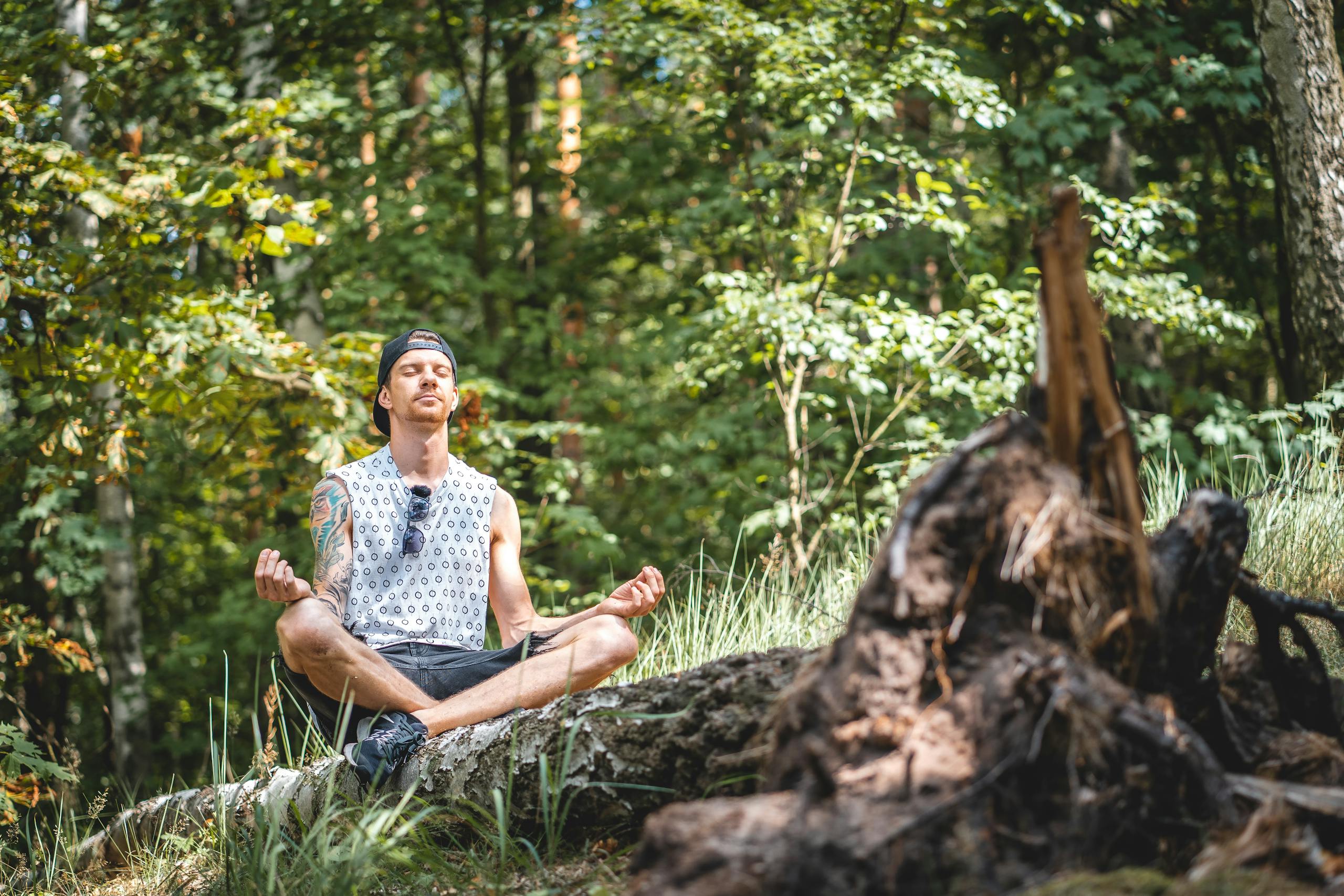
Start by finding a comfortable seated position. You can sit in a chair with your feet flat on the floor, cross-legged on a cushion, or even perched on the edge of your bed in the morning. What matters is that your spine has some natural length without being rigid. Close your eyes or soften your gaze downward.
Take a few natural breaths without trying to control them. Let your body breathe the way it wants to for a moment. Then, on your next exhale, silently count “one.” On the following exhale, “two.” Continue through ten, then return to one. That’s the entire practice.
When you lose count, and you will, you return to one. Not to where you think you were. Not to five because that feels like a reasonable estimate. Back to one. This isn’t punishment. It’s the structure that makes the practice work. The return is where the real training happens.
Some traditions count on the inhale instead of the exhale, and some count each breath rather than just the out-breath. Experiment and find what creates the clearest anchor for you. What matters is consistency within a session, not which variation you choose.
Start with five minutes. That’s enough to feel the effect without creating a commitment that becomes a source of pressure. Five minutes of genuine breath counting is worth more than twenty minutes of distracted sitting. As the practice becomes familiar, you can extend it naturally, but there’s no obligation to do so. Some of the most experienced meditators I know maintain a ten-minute daily practice and find it entirely sufficient.
Additional research available through PubMed Central points to the benefits of consistent, brief mindfulness practice over sporadic longer sessions, which aligns with what I’ve found to be true in my own experience. Regularity matters more than duration.
Why Does This Practice Feel Different for Deeply Sensitive People?
Highly sensitive people process experience at a different depth than most. Emotions register more fully. Sensory details that others filter out land with real weight. Social interactions carry a residue that takes time to metabolize. This isn’t a flaw or a fragility. It’s a feature of a nervous system calibrated for depth. But it does mean that the accumulated load of an ordinary day can feel genuinely heavy.
Breath counting creates a container for that processing. When you sit down and count your breaths, you’re not suppressing the emotional content of your day. You’re giving your nervous system permission to settle before it tries to make sense of everything. The emotional material is still there when you finish, but you approach it from a different physiological state. Calmer. More grounded. Less reactive.
This connects directly to how sensitive people handle HSP emotional processing. The depth of feeling that characterizes high sensitivity isn’t something to be managed away. It’s something to be metabolized well. Breath counting supports that metabolic process by creating regular intervals of stillness in which the nervous system can integrate rather than accumulate.
One of the creative directors I managed at my agency was someone I’d describe as highly sensitive in the most productive sense. She absorbed the emotional texture of every client relationship, every team dynamic, every piece of feedback. That depth made her work extraordinary. It also meant she ended most days visibly depleted. She eventually developed a practice of sitting in her car for ten minutes before driving home, just counting breaths. She told me later it was the thing that made the rest of her life feel possible alongside the work.
The quality of HSP empathy means that sensitive people often carry not just their own emotional weight but some portion of everyone else’s too. Breath counting doesn’t eliminate that tendency, but it creates a daily moment of returning to your own internal experience, your own breath, your own count. That return to self is quietly powerful.
What About the Inner Critic That Shows Up During Meditation?
There’s a particular kind of irony that many sensitive, high-achieving people encounter when they first try meditation. They sit down to practice, lose count almost immediately, and then spend the next several minutes berating themselves for being bad at it. The practice intended to quiet the inner critic becomes fuel for it.
This is especially common among people who tend toward perfectionism. If you’ve built your identity around doing things well, and then you sit down to do something that seems simple and immediately discover you can’t get to ten without your mind wandering, the response can be disproportionately harsh. You’re not bad at meditation. You’re human. The mind wanders. That’s what minds do.
The work of HSP perfectionism often involves learning to distinguish between high standards and self-punishment. Breath counting offers a daily opportunity to practice that distinction. Every time you lose count and return to one without judgment, you’re training a different relationship with imperfection. Not lowered standards. A more compassionate response to the inevitable gap between intention and execution.
I spent a long time being a harsh internal critic, particularly in the early years of running my own agency. Every lost account, every presentation that landed flat, every team conflict I failed to anticipate became evidence in an ongoing case against my own competence. Breath counting didn’t fix that tendency, but it gave me a daily practice in noticing when I’d drifted and returning without drama. That muscle, built in five-minute increments, eventually transferred to the rest of my life.
Work from the University of Northern Iowa on perfectionism and self-compassion suggests that the relationship between high standards and wellbeing depends significantly on whether those standards are accompanied by self-criticism or self-compassion. Breath counting, practiced with patience, tends to cultivate the latter.
Can Breath Counting Help With Rejection Sensitivity?
Rejection hits differently when you process experience at depth. A critical comment that rolls off someone else’s back can settle into a sensitive person’s body and stay there for days. A missed connection, a project dismissed without much consideration, a relationship that ended without a clear explanation: these things don’t just sting. They can feel like evidence about fundamental worth.
The experience of HSP rejection sensitivity is real and it’s worth taking seriously. Breath counting doesn’t protect you from rejection, and it doesn’t make you care less about connection. What it does is give you a physiological anchor to return to when the emotional response is at its most intense. Counting your breaths in the immediate aftermath of a painful experience doesn’t resolve it, but it can interrupt the spiral long enough to prevent the worst of the reactive thinking.
I remember losing a significant account after a year of strong work. The client’s decision had more to do with internal politics than our performance, but that didn’t make it feel any less personal. My instinct was to replay every meeting, every deliverable, every conversation, looking for the moment I’d failed. Instead, I sat with my breath for ten minutes. Not to avoid the feelings, but to approach them from a slightly more regulated place. The analysis still happened. It was just less punishing.
The American Psychological Association frames resilience not as an absence of distress but as the capacity to adapt and recover from difficult experiences. Breath counting supports that capacity by building a habit of returning to equilibrium, one breath at a time, so that when genuine difficulty arrives, the path back is already familiar.

How Do You Build a Breath Counting Practice That Actually Sticks?
Consistency is what separates a useful tool from a good intention. The challenge with meditation practices, especially for people with full lives and active minds, is that they tend to get crowded out by everything else. You do it for three days, miss a day, feel guilty, and then quietly abandon it. That pattern is almost universal, and it has nothing to do with willpower or commitment.
What works is attaching the practice to something that already happens reliably. Morning coffee. The commute, if you’re a passenger. The transition from work to home. That ten-minute window after lunch before the afternoon begins. You’re not creating a new habit from scratch. You’re grafting a small practice onto an existing routine.
Keep the time commitment honest. Five minutes done daily is genuinely more valuable than thirty minutes done occasionally. Set a timer so you’re not spending mental energy wondering how long you’ve been sitting. Choose a consistent location if you can. The environmental cues help signal to your nervous system that it’s time to settle.
Expect the first week to feel awkward. Your mind will wander constantly. You’ll lose count at two. You’ll lose count at eight and feel a flash of frustration. All of that is normal. The practice is working exactly as it should. The wandering isn’t the problem. Your relationship to the wandering is what changes over time.
Research through the National Library of Medicine on habit formation suggests that new behaviors become automatic through repetition in consistent contexts. The location, time of day, and preceding activity all serve as contextual cues that make the practice easier to initiate over time. You’re essentially building a groove in your daily life that the practice can settle into.
After about three weeks of daily practice, most people report that something shifts. The practice starts to feel less like a discipline and more like a need. You notice on the days you skip it. Your system has learned what it feels like to have that reset, and it starts asking for it. That’s when you know the habit has taken root.
What Makes Breath Counting Particularly Well-Suited for Introverted Minds?
Introverts restore through solitude and internal reflection. That’s not a preference or a quirk. It’s how our nervous systems work. We process experience inward, and we need time and space to do that processing well. Breath counting is, at its core, a solitary internal practice. It asks nothing of the outside world. It requires no performance, no social calibration, no management of how you’re being perceived.
For an INTJ like me, there’s also something satisfying about the structure. Counting is orderly. The sequence is clear. The rule for what to do when you lose count is unambiguous. Unlike some meditation practices that feel deliberately vague or mystical, breath counting has a logic to it that the analytical mind can respect. You’re not asked to surrender your thinking capacity. You’re asked to redirect it toward a specific, contained task.
The practice also honors depth over breadth. You’re not trying to process everything at once. You’re doing one thing: counting. That singular focus is deeply compatible with an introvert’s natural mode of engagement. We tend to go deep rather than wide, to give our full attention to one thing at a time. Breath counting is that tendency applied to the breath itself.
Psychology Today’s writing on introversion has long observed that introverts often find their own company genuinely restorative rather than merely tolerable. Breath counting is an extension of that inner companionship, a way of being with yourself that asks for nothing and offers genuine rest.
There were periods in my agency years when I felt like I was constantly performing extroversion. Client dinners, team meetings, networking events, all of it requiring a version of myself that didn’t come naturally. Breath counting became the practice that let me return to my actual self at the end of those days. Not because it changed who I was at the networking event, but because it gave me somewhere to return to afterward.

What Common Mistakes Undermine the Practice?
The most common mistake is treating the wandering mind as a sign that you’re doing it wrong. You’re not. Mind-wandering is the raw material of the practice. Every time you notice you’ve drifted and return to one, you’ve done the thing. That moment of noticing and returning is the entire point. A session where you lose count forty times and return forty times is a productive session.
Another mistake is trying to control the breath too aggressively. Breath counting is an observation practice, not a breathing exercise. You’re counting the breaths that arise naturally, not forcing a particular rhythm. When people try to control their breathing, they often end up more tense than when they started. Let the breath be what it is. Count what comes.
Skipping the practice when you feel fine and only returning when you’re overwhelmed is also a pattern worth examining. Breath counting works best as a maintenance practice, not a crisis intervention. When you only sit down to count your breaths during your worst moments, you’re asking the practice to do heavy lifting without any training behind it. Regular practice during ordinary days is what builds the capacity to use it well when things get hard.
Finally, comparing your experience to some idealized version of what meditation is supposed to feel like will undermine the practice reliably. You may never feel blissful. You may never experience the dramatic stillness you’ve read about. That’s fine. What you’re likely to experience is a gradual, quiet shift in how you relate to your own mental activity. Less reactive. More spacious. That’s enough. That’s actually quite a lot.
If you’re exploring the broader landscape of mental wellness practices for sensitive and introverted people, the Introvert Mental Health hub is a good place to continue that exploration. Breath counting is one piece of a larger picture, and the hub covers many of the adjacent topics in depth.
About the Author
Keith Lacy is an introvert who’s learned to embrace his true self later in life. After 20 years in advertising and marketing leadership, including running agencies and managing Fortune 500 accounts, Keith now channels his experience into helping fellow introverts understand their strengths and build fulfilling careers. As an INTJ, he brings analytical depth and authentic perspective to every article, drawing from both professional expertise and personal growth.
Frequently Asked Questions
How long should a breath counting meditation session last for beginners?
Five minutes is a genuinely sufficient starting point for breath counting meditation. Many beginners assume longer sessions are more valuable, but consistency matters far more than duration. Five minutes of focused practice done daily will produce more meaningful results than thirty-minute sessions done sporadically. As the practice becomes familiar and comfortable, you can extend it naturally to ten or fifteen minutes, but there is no minimum length required to experience real benefit.
What should I do when I keep losing count before I reach ten?
Return to one and start again, without judgment. Losing count is not a sign that you’re practicing incorrectly. It’s evidence that the practice is working as designed. The moment of noticing that you’ve drifted and choosing to return is the actual training. A session in which you lose count repeatedly and return repeatedly is a productive session. Over time, you may find you can reach ten more consistently, but that’s a byproduct of practice, not the goal of it.
Is breath counting meditation the same as mindfulness meditation?
Breath counting is one form of mindfulness meditation, but not all mindfulness practices involve counting. Mindfulness broadly refers to the practice of maintaining non-judgmental awareness of present-moment experience. Breath counting achieves this by anchoring attention to the breath and using the count as a tool for noticing when attention has wandered. It shares the core principles of mindfulness while offering additional structure that many people find helpful, particularly those with analytical minds or significant anxiety.
Can breath counting help with anxiety and emotional overwhelm?
Breath counting activates the parasympathetic nervous system through slow, rhythmic breathing, which directly counteracts the physiological state associated with anxiety and overwhelm. The counting element also gives the anxious mind a concrete task, which can interrupt the cycle of ruminative thinking that tends to amplify distress. It works best as a regular maintenance practice rather than a crisis tool, though it can also provide meaningful relief in moments of acute stress when practiced consistently beforehand.
Do I need to sit in a specific position to practice breath counting meditation?
No specific posture is required. The most important physical consideration is that your spine has some natural length and you’re not so comfortable that you’re likely to fall asleep. Sitting in a chair with feet flat on the floor works well for most people. You can also sit cross-legged on a cushion, kneel with support, or even stand if sitting is uncomfortable. What matters is finding a position you can maintain without significant physical distraction for the duration of your session.