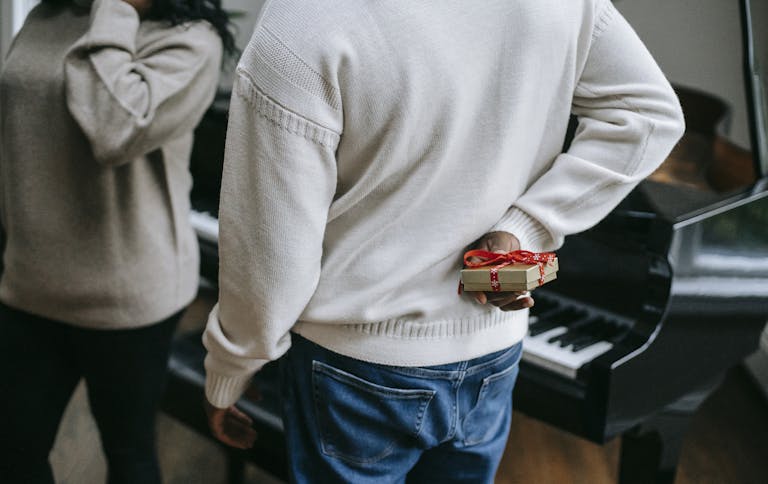

Stonewall blueberry jam is one of those small, specific things that carries an outsized emotional weight in a relationship. For introverts, love often lives in exactly these kinds of details, the remembered preference, the quietly restocked jar, the gesture that requires no announcement. Understanding how introverts express and receive affection through small, intentional acts can reshape how you read the people closest to you.
My partner noticed I’d finished the last of it on a Sunday morning. By Tuesday, a new jar was on the counter. She didn’t mention it. She didn’t need to. That silence was the whole point.
That moment stayed with me longer than most conversations I’ve had about love. And as someone who spent two decades in advertising, where everything was pitched loudly and sold with urgency, learning to recognize quiet love as real love took longer than I’d like to admit.

Our Introvert Dating and Attraction hub covers the full range of how introverts connect romantically, but the small, sensory details of everyday life, like a jar of jam, add a layer that’s easy to overlook in broader conversations about personality and partnership.
Why Do Small Gestures Carry So Much Weight for Introverts?
My mind has always worked by accumulating details. In my agency years, I was the person who remembered which client preferred email over phone calls, which creative director needed silence before presenting work, which account manager shut down in group settings but produced brilliant thinking alone. I wasn’t collecting this information to be strategic. It just stuck, because I was paying attention when others weren’t.
That same wiring shows up in how I love. I notice what my partner reaches for first in the morning. I notice which songs make her go quiet. I notice when she’s tired in a way that’s different from when she’s sad. And when I act on those observations, I do it without fanfare, because the noticing itself is the intimacy. The action is just evidence that I was paying attention.
This is deeply consistent with what many introverts describe when asked how they show affection. The patterns that emerge when introverts fall in love tend to be slow-building, observation-rich, and expressed through behavior rather than declaration. If you’ve ever wondered why an introvert in your life seems to show love through logistics rather than grand gestures, understanding how introverts fall in love and the relationship patterns that follow can reframe what you’re actually seeing.
The blueberry jam isn’t about jam. It’s about the fact that someone held your preference in their mind across multiple days, prioritized it among a dozen other things, and acted on it quietly. That’s attention. That’s care. That’s a form of love language that doesn’t require a single word.
What Does Introvert Love Language Actually Look Like in Practice?
There was a period in my career when I managed a team of about fourteen people at an agency I was running in the mid-2000s. One of my senior strategists, an introvert I’ll call Dana, had a habit of leaving printed articles on colleagues’ desks. No note. No explanation. Just a piece she thought they’d find useful. People initially found it odd. Some thought it was passive-aggressive. I knew exactly what it was. It was her love language at work, the quiet transmission of “I thought of you.”
I watched her do this for two years before anyone else understood it. When they finally did, her relationships with teammates shifted completely. The gesture hadn’t changed. The interpretation had.
This is the central challenge with introvert affection. It’s rarely legible to people who are looking for the conventional signals. Introverts tend to express love through acts of service, through remembered details, through the creation of comfortable shared silence, through showing up consistently rather than dramatically. How introverts show affection through their love language is a topic worth sitting with carefully, because the gap between intention and perception can quietly erode even strong relationships.

In my own marriage, I had to learn to occasionally translate. My partner is more expressive than I am, and she needed to hear things said aloud sometimes, not because my actions weren’t clear to me, but because they weren’t always clear to her. That was a fair ask. The work wasn’t changing who I am. It was building a small bridge between my internal language and hers.
A jar of jam restocked without comment is a complete sentence in my language. Learning to occasionally add a spoken footnote, something as simple as “I noticed you were out,” made the same gesture land differently for her. Neither version was more loving. One was just more legible.
How Do Introverts Process the Emotional Complexity of Relationships?
Emotional processing for me has always been slow and layered. When something significant happens in a relationship, my first response is almost never verbal. It’s internal. I go quiet, I observe, I let the information settle before I form a response. This is not withdrawal. It’s not indifference. It’s how my mind actually works, filtering experience through multiple layers before arriving at something I can articulate.
In the advertising world, this made me a frustrating person to brainstorm with in real time. I was rarely the one shouting ideas across a whiteboard. My contributions came later, in writing, or in a one-on-one conversation, or sometimes in a memo that landed on someone’s desk the following morning. The ideas were good. The timing was just different from what the room expected.
Relationships carry the same dynamic. When my partner and I disagree about something meaningful, my instinct is to go quiet and think. Hers is to talk it through immediately. For years, that gap created friction. She read my silence as stonewalling. I read her immediacy as pressure. Neither of us was wrong about our own experience. We were just describing the same moment from opposite sides of a very real divide.
Understanding the emotional interior of introverts, and specifically how introverts process love feelings over time, matters enormously for long-term relationship health. The piece on understanding and working through introvert love feelings gets into this territory in ways I find genuinely useful, particularly around the idea that slow emotional processing isn’t the same as shallow emotional depth.
What I’ve come to understand is that my emotional responses are thorough precisely because they’re slow. By the time I say something about how I feel, I’ve usually already examined it from several angles. That’s not a limitation. It’s a feature, once the people around you understand what the silence actually contains.
What Happens When Two Introverts Build a Life Together?
Some of the most functional relationships I’ve observed have been between two introverts. And some of the quietest disasters have been, too. The difference almost always comes down to whether both people have developed enough self-awareness to name what they need, even when naming it feels uncomfortable.
Two introverts sharing a home can create something genuinely beautiful. Parallel quiet. Mutual respect for solitude. An unspoken understanding that presence doesn’t require performance. My wife and I can spend an entire Saturday in different rooms, reading or working, and feel more connected at the end of it than we do after some evenings out. That kind of compatibility is rare, and it’s worth protecting.

Yet the risks are real. Two people who both default to silence can sometimes silence the very conversations that need to happen. Avoidance can look a lot like harmony until it doesn’t. The hidden dynamics in introvert-introvert relationships described by 16Personalities touches on this tension well, noting that shared introversion can become a shared avoidance pattern if neither person is willing to initiate the harder talks.
There’s also a deeper look at this worth exploring. The dynamics of when two introverts fall in love and the relationship patterns that emerge covers both the strengths and the specific vulnerabilities that come with this pairing. What I’d add from my own experience is that the Stonewall blueberry jam moment works beautifully between two introverts precisely because both people are fluent in the same language. The risk is assuming that fluency means you never need to speak aloud.
How Does Sensory and Emotional Sensitivity Shape Introvert Relationships?
Not every introvert is a Highly Sensitive Person, but there’s meaningful overlap between the two. Many introverts process sensory and emotional input more intensely than average, and that sensitivity shapes how they experience relationships at every level.
I’ve watched this play out in professional settings in ways that were instructive. One of the most talented copywriters I ever hired was someone I’d describe as both introverted and highly sensitive. She was extraordinary in her work, but the open-plan office we had at the time was genuinely painful for her. The noise, the interruptions, the ambient emotional charge of thirty people in a shared space, it all registered for her in a way it simply didn’t for most of the team. When I moved her to a private office, her output improved by a measurable degree. The environment had been the obstacle, not her capability.
In romantic relationships, this sensitivity means that small things carry disproportionate weight, in both directions. A remembered preference, like the blueberry jam, lands with real warmth. But a careless comment, a forgotten detail, a moment of emotional dismissal, can also land harder than the speaker intended. The complete dating guide for HSP relationships is worth reading whether or not you identify as highly sensitive, because understanding this end of the emotional spectrum makes you a more thoughtful partner regardless of your own wiring.
There’s also compelling work in psychological literature on the relationship between introversion, sensitivity, and emotional regulation. A paper published through PubMed Central examining personality traits and emotional processing points toward the ways that inward-oriented people tend to engage more deeply with emotional stimuli, which tracks with what many introverts describe in their own relationships.
What this means practically is that the small gestures matter more, and the small wounds do too. Introvert relationships, especially those involving high sensitivity, tend to be both more tender and more durable than they appear from the outside. They’re built on layers of careful attention, and that foundation holds.
How Do Introverts Handle Conflict Without Losing Themselves?
Conflict is the place where introvert relationships are most likely to develop cracks, not because introverts can’t handle disagreement, but because the way they handle it is so frequently misread.
My default in conflict has always been to get quieter. Not to shut down, but to think. I need to understand what I actually believe before I can defend it. In a boardroom, this served me reasonably well because the stakes were usually clear and the timeline allowed for deliberation. In a marriage, the person across from you sometimes needs a response before you’ve finished processing, and the silence that feels productive to you can feel like abandonment to them.

What helped me was developing a small vocabulary for the gap. Something like “I need a few minutes to think about this before I respond” is a complete sentence that does real work. It’s not avoidance. It’s a promise to return. The difference matters enormously to the person waiting.
For those who are both introverted and highly sensitive, conflict carries additional weight. The physiological response to interpersonal tension can be intense enough to make clear thinking genuinely difficult in the moment. The guidance on working through conflict peacefully as an HSP offers practical frameworks that I’ve found useful even as someone who doesn’t fully identify as highly sensitive. The core principle, creating enough safety and space for honest exchange without overwhelming either person, applies broadly.
There’s also something worth naming about the aftermath of conflict for introverts. Where extroverts often feel better immediately after a difficult conversation, introverts frequently need time to process what was said, even after resolution. That continued quietness post-conflict isn’t lingering resentment. It’s integration. Knowing this about yourself, and being able to explain it to a partner, is one of the more useful things you can do for a relationship.
What Can Introverts Learn About Love From the Small, Specific Things?
There’s a reason the blueberry jam stayed with me. It wasn’t a dramatic moment. Nobody cried. Nobody said anything particularly profound. A jar appeared on a counter, and I felt completely seen.
That’s the thing about introvert love. It tends to concentrate in the specific rather than the general. It lives in the particular song, the exact temperature of coffee, the precise way someone needs quiet after a hard day. Grand gestures can be meaningful, but they’re rarely where the real intimacy lives for people wired the way I am.
Psychology Today’s piece on the signs of a romantic introvert captures some of this well, particularly the observation that introverts tend to invest deeply in fewer relationships rather than broadly across many. That concentration of attention is what makes the small gestures so charged. When someone has your full attention, they notice everything you notice about them.
I spent years in advertising trying to create moments of emotional resonance for brands. The ones that worked were almost never the loudest. They were the ones that felt specific, like the campaign knew something true about you that you hadn’t quite articulated yourself. The best relationships work the same way. They’re built on the accumulation of small, accurate observations, offered back as evidence of care.
Stonewall blueberry jam, specifically, is a premium product. It’s the kind of thing you notice when someone buys it instead of the generic version. It signals that they didn’t just remember the category. They remembered your preference within it. That level of specificity is the whole language.
There’s also something worth considering about how introverts approach dating before they reach the long-term relationship stage. The dynamics of introvert attraction and courtship carry their own particular texture. Psychology Today’s look at how to date an introvert offers perspective from the outside, which can be genuinely useful for partners who are trying to understand what they’re actually experiencing.
And for introverts who are still in the earlier stages of dating, the question of how to present yourself authentically, especially in formats like online dating that favor extroverted communication styles, is worth thinking through carefully. The Truity analysis of introverts and online dating raises some honest questions about where the format works for introverts and where it genuinely doesn’t.

How Do You Build a Relationship That Honors Introvert Depth?
The relationships that have worked best in my life, romantic and otherwise, share a common quality. They make room for depth without demanding performance. They allow for silence without interpreting it as distance. They recognize that care doesn’t always announce itself.
Building that kind of relationship requires a few things that don’t come automatically, even between two people who are genuinely well-suited to each other. It requires some degree of explicit conversation about how you each process emotion, even if that conversation feels awkward. It requires enough trust to say “I need quiet right now” without the other person hearing it as rejection. And it requires both people to stay curious about what the other’s behavior actually means, rather than defaulting to the interpretation that feels most familiar.
There’s relevant research on the relationship between personality traits and relationship satisfaction worth noting here. A paper through PubMed Central examining personality and relationship quality points toward the importance of self-awareness and mutual understanding as factors that mediate the effect of personality differences on long-term satisfaction. That tracks with what I’ve observed across twenty years of watching people work together, and twenty-plus years of trying to be a good partner.
The Stonewall blueberry jam moment works because both people in that exchange understand the language. One person pays attention and acts quietly. The other receives the action and understands what it means. That mutual literacy doesn’t happen automatically. It’s built over time, through small moments of getting it right, and the occasional larger moment of getting it wrong and repairing it.
What I’d offer to any introvert reading this is something I had to figure out slowly, through a lot of professional experience and some personal trial and error: your way of loving is complete. It doesn’t need to be louder or more demonstrative to be valid. What it does need, sometimes, is a translator. Not to change what you’re saying, but to help the person you love hear it in the language they understand.
A jar of jam restocked in silence is a love letter. Some people just need help reading it.
There’s much more to explore about introvert attraction, connection, and long-term partnership in the complete Introvert Dating and Attraction hub, where these themes are covered across a full range of relationship contexts.
About the Author
Keith Lacy is an introvert who’s learned to embrace his true self later in life. After 20 years in advertising and marketing leadership, including running agencies and managing Fortune 500 accounts, Keith now channels his experience into helping fellow introverts understand their strengths and build fulfilling careers. As an INTJ, he brings analytical depth and authentic perspective to every article, drawing from both professional expertise and personal growth.
Frequently Asked Questions
What does Stonewall blueberry jam have to do with introvert relationships?
Stonewall blueberry jam serves as a concrete example of how introverts tend to express love, through specific, remembered details and quiet acts of care rather than grand declarations. For introverts, noticing and acting on a partner’s small preferences is a primary love language. The specificity of the gesture, remembering not just “jam” but the exact brand and variety, is what carries the emotional weight.
How do introverts typically express love in relationships?
Introverts most commonly express love through consistent, observant behavior rather than verbal declaration or dramatic gesture. This includes acts of service, remembered preferences, creating comfortable shared silence, showing up reliably, and offering focused attention. These expressions are often quiet and specific, which can make them easy to miss if a partner is looking for more conventional signals of affection.
Can two introverts have a successful long-term relationship?
Yes, and many introvert-introvert partnerships are deeply functional and satisfying. Shared comfort with quiet, mutual respect for solitude, and fluency in the same emotional language create a strong foundation. The primary risk is that shared introversion can sometimes become shared avoidance, where both people default to silence on topics that need direct conversation. Self-awareness and a willingness to occasionally speak what might otherwise go unsaid are the key factors in keeping these relationships healthy.
How should introverts handle conflict in relationships?
Introverts tend to process conflict internally before they can respond effectively, which means their first response to disagreement is often silence. This can be misread as avoidance or indifference. Developing a small vocabulary for the gap, something like “I need a few minutes to think before I respond,” helps partners understand that the quiet is a pause, not a withdrawal. After conflict resolves, introverts often need additional time to integrate what was said, and that continued quietness should not be interpreted as lingering resentment.
What’s the difference between an introvert and a Highly Sensitive Person in relationships?
Introversion and high sensitivity are related but distinct traits. Introversion refers primarily to how a person gains and loses energy, with introverts recharging through solitude rather than social interaction. High sensitivity refers to a deeper processing of sensory and emotional input, which can amplify both positive and negative experiences. Many introverts are also highly sensitive, and the overlap means that small gestures and small wounds alike tend to carry more weight. Understanding both traits separately helps partners respond more accurately to what the other person is actually experiencing.