
Creating guided meditation audio with background music is more accessible than most people realize. You need a quiet recording space, a decent microphone, free or low-cost audio software, and royalty-free music tracks that complement your spoken words without overwhelming them. The result is a personalized mental health tool you can return to again and again.
What surprises most people is how deeply personal the process becomes. Writing your own script forces you to articulate what calm actually feels like for you, and recording your own voice means every listen carries something familiar and grounding. For those of us who process the world quietly and internally, building something this intimate makes a lot of sense.
My interest in this topic didn’t come from a wellness trend. It came from necessity. After two decades running advertising agencies, managing high-stakes client relationships, and sitting in rooms full of people who seemed to thrive on noise and stimulation, I needed tools that worked for my particular nervous system. Guided meditation became one of those tools, and eventually I wanted to understand how to build my own.

If you’re exploring mental health practices that fit the way introverts actually function, our Introvert Mental Health Hub is worth bookmarking. It covers everything from anxiety management to emotional processing, with a consistent focus on what works for people who think and feel deeply.
Why Would an Introvert Want to Make Their Own Meditation Audio?
There’s something worth examining in that question before we get into the technical steps. Most people just download an app. Why go through the effort of creating something yourself?
Partly it’s about control. Pre-recorded meditations are built for a general audience, which means the pacing might feel rushed, the music might be jarring, or the voice might carry a tone that doesn’t settle your nervous system the way you need it to. Highly sensitive people, in particular, often find that generic wellness content misses the mark. The music is too dramatic, the pauses are too short, or the language feels performative rather than genuine.
I’ve written before about how HSP overwhelm and sensory overload can make standard relaxation tools counterproductive. A meditation track with swelling orchestral music might calm one person and overstimulate another entirely. Building your own audio means you get to decide every variable, from the tempo of the background music to the length of the silences between sentences.
There’s also something genuinely therapeutic about the creation process itself. Writing a meditation script requires you to think carefully about what your mind needs. Recording it in your own voice builds a strange kind of self-compassion. You’re essentially talking to yourself with kindness, which is harder than it sounds for many of us.
At one of my agencies, I managed a creative director who was also a highly sensitive person, though neither of us had that language at the time. She would disappear into the sound booth we’d built for radio spots, not to record anything, but just to sit in the quiet. She told me once that the controlled acoustic environment was the only place in the building where she could think clearly. That image stayed with me. Sometimes the right environment, whether physical or auditory, is the whole intervention.
What Equipment Do You Actually Need to Get Started?
The good news, if you’ll permit me that phrase just this once, is that you don’t need a professional studio. The barrier to entry is much lower than most people assume. consider this actually matters.
A Microphone Worth Using
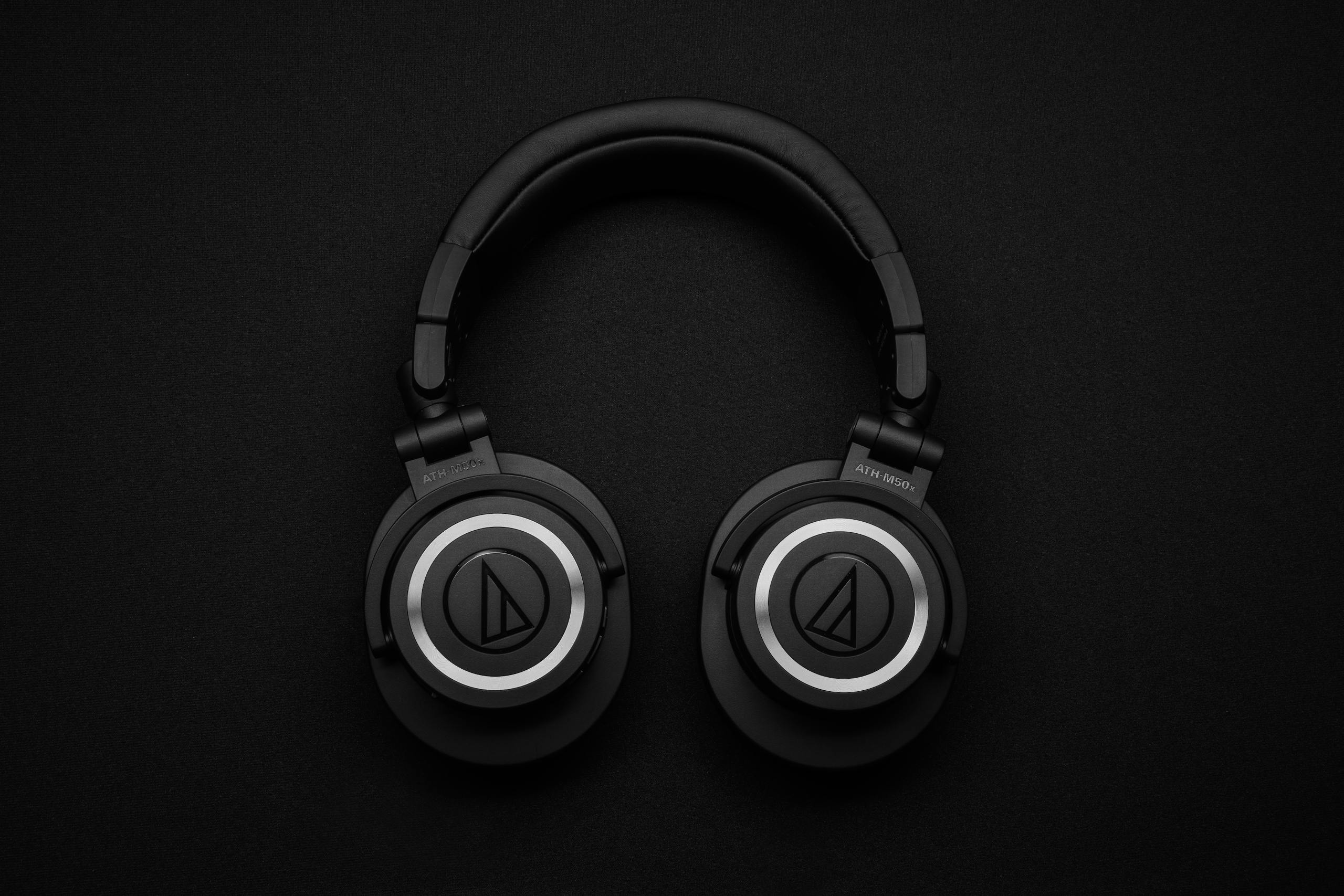
Your built-in laptop microphone will produce audio that sounds like you’re recording inside a tin can. A USB condenser microphone in the $60 to $120 range makes an enormous difference. Popular options include the Blue Yeti Nano and the Audio-Technica AT2020USB+. Both plug directly into your computer without needing additional hardware.
Position the microphone about six to eight inches from your mouth, slightly off-axis to reduce plosives (those hard “p” and “b” sounds that create a burst of air). A pop filter, which costs around $10, helps with this as well.
Your Recording Space
Your Recording Space
Hard surfaces reflect sound and create echo. Soft surfaces absorb it. Record in a room with carpet, curtains, bookshelves, or upholstered furniture. A closet full of clothes is genuinely one of the better DIY recording environments available to most people. The fabric absorbs sound reflections effectively.
Turn off anything that creates background noise: HVAC systems, fans, refrigerators if they’re nearby. Record during quieter times of day if you live in an urban environment. Even a subtle hum in the background becomes noticeable when someone is listening with headphones in a quiet room trying to relax.
Audio Software
Audacity is free, open-source, and genuinely capable. It handles multi-track recording, which means you can record your voice on one track and layer background music on a separate track, then adjust the volume balance between them. GarageBand is free for Mac users and has a slightly more intuitive interface. Adobe Audition is the professional standard but comes with a subscription cost that’s hard to justify when you’re just starting out.
Start with Audacity. The learning curve is real but manageable, and there are hundreds of tutorials available for free online.

How Do You Write a Meditation Script That Actually Works?
This is where most guides skip ahead too quickly. The technical setup matters, but the script is the soul of the whole thing. A poorly written script recorded on expensive equipment still produces a meditation that doesn’t work.
Decide on Your Focus
Effective meditation audio has a specific intention. Are you building something to help with anxiety before difficult situations? Something to use for sleep? Something focused on body scan relaxation? Something that helps you process a difficult emotion?
Many introverts and highly sensitive people carry a particular relationship with HSP anxiety that standard breathing exercises don’t fully address. The National Institute of Mental Health notes that anxiety disorders are among the most common mental health conditions, and many people find that personalized, targeted relaxation tools work better than generic ones. Writing a script specifically for your own anxiety patterns means you can address the exact thoughts and sensations that show up for you, rather than a generalized version.
Structure Your Script
A solid guided meditation script follows a loose structure: an opening that signals transition from ordinary wakefulness, a body-focused grounding section, the main content (visualization, breathing, affirmation, or body scan), and a gentle closing that brings the listener back to the room.
Write in the second person (“you” rather than “I”) or in a neutral, inclusive voice. Use present tense. Keep sentences short. Build in explicit pauses by writing “[pause 5 seconds]” or “[pause 10 seconds]” directly in your script so you remember to honor the silence when recording.
Silence is the part most beginners cut short. In my experience, the pauses feel much longer when you’re the one sitting in the recording booth than they do for someone listening. Trust the silence. Give it more space than feels comfortable.
Language and Tone
Avoid clinical language. Avoid anything that sounds like it was written by committee. Write the way you’d speak to someone you care about who is having a hard day. Specific, sensory language works better than abstract concepts. “Notice the weight of your hands resting on your legs” lands differently than “become aware of your body.”
For those who process emotions with particular depth and intensity, which is common among highly sensitive people, HSP emotional processing often responds well to language that acknowledges complexity rather than rushing toward resolution. Your script doesn’t need to tie everything into a neat bow. Sometimes acknowledging that things are hard, and that rest is still available even so, is the most honest and effective thing you can offer.
Where Do You Find Background Music That Doesn’t Ruin Everything?
Background music for meditation audio needs to meet a specific set of criteria. It should be slow enough to encourage a lower heart rate. It should avoid sudden changes in volume or dynamics that could startle a relaxed listener. It should not have lyrics, because language competes directly with spoken guidance. And it needs to be royalty-free so you can use it without legal complications.
Where to Find Royalty-Free Tracks
Several platforms offer high-quality royalty-free music specifically suited to meditation and relaxation content. Pixabay’s music library is free and requires no attribution for most tracks. Free Music Archive has a solid collection of ambient and instrumental work. YouTube Audio Library, accessible through YouTube Studio, offers free tracks you can download directly. Incompetech, run by composer Kevin MacLeod, has been a reliable resource for creators for years.
Paid options like Epidemic Sound and Artlist offer broader catalogs and cleaner licensing terms if you eventually plan to share or publish your recordings. For personal use, the free options are more than sufficient.
What to Listen For When Choosing a Track
Preview tracks with your eyes closed. Notice whether the music creates a sense of spaciousness or whether it feels busy. Avoid tracks with prominent percussion, even subtle rhythmic patterns can be distracting. Binaural beats and nature sounds (rain, ocean waves, forest ambience) work well for many people, though some find them overstimulating. Trust your own nervous system’s response.
The research published in PubMed Central on music and relaxation response suggests that slow-tempo music with minimal harmonic complexity tends to support parasympathetic nervous system activation more reliably than more complex arrangements. In plain terms, simpler music tends to work better for genuine relaxation.

How Do You Actually Mix Voice and Music Together?
This is the technical step that intimidates people most, and it’s also the one that becomes surprisingly intuitive once you’ve done it a few times.
Setting Up Multi-Track Recording in Audacity
Open Audacity and record your voice on the first track. Once you’re satisfied with the recording, import your background music file using File > Import > Audio. This creates a second track beneath your voice track. You’ll see both waveforms stacked vertically.
Each track has a gain slider on the left side. Your voice should sit significantly louder than the music. A common starting point is to reduce the music track to about 20 to 30 percent of its original volume. Play the combined tracks and adjust until the music is clearly present but never competes with your spoken words. The voice should always be the dominant element.
Cleaning Up Your Voice Recording
Audacity’s Noise Reduction tool is worth learning. Record a few seconds of silence at the beginning of your session, select that section, go to Effect > Noise Reduction, click “Get Noise Profile,” then select your entire voice track and apply the effect. This removes consistent background hum or room tone.
Apply a gentle compression effect to even out volume variations in your voice. This matters more than most beginners realize. Natural speech varies considerably in volume, and a listener who has to keep adjusting their volume to hear you clearly will not be able to relax.
Fading In and Out
Both your voice track and music track should begin and end with gentle fades rather than abrupt starts and stops. Select the first few seconds of a track and apply Effect > Fade In. Select the final few seconds and apply Effect > Fade Out. This creates the sense of the audio gently appearing and dissolving rather than switching on and off.
Export your finished file as an MP3 using File > Export > Export as MP3. Choose a bitrate of at least 192 kbps for good audio quality without an unnecessarily large file size.
What Does Recording Your Own Voice Teach You About Yourself?
I want to spend a moment here on something that doesn’t appear in most technical guides about audio production, because I think it matters particularly for introverts and highly sensitive people.
Recording your own voice is uncomfortable at first. Most people dislike the sound of their own recorded voice, which is a well-documented phenomenon related to the difference between how we hear ourselves through bone conduction versus how others hear us through air conduction. But there’s a deeper discomfort for many of us, which is the vulnerability of speaking slowly, warmly, and with genuine care into a microphone in an empty room.
In my agency days, I was comfortable presenting to rooms full of executives. I’d refined a professional voice that projected confidence and authority. Recording a meditation script required something entirely different. Softness. Patience. A willingness to sound gentle rather than impressive. It took me several sessions before I stopped performing and started actually speaking.
That shift, from performing to speaking, is where the real value lives. And it connects to something I’ve noticed about how HSP empathy functions as both a gift and a weight. When you’re someone who feels things deeply and picks up on the emotional states of everyone around you, creating a space that’s entirely your own, recorded in your own voice, calibrated to your own sensory needs, becomes an act of genuine self-care rather than a wellness checkbox.
How Do You Refine and Improve Your Audio Over Time?
Your first recording will not be your best one. That’s not a discouraging statement, it’s a liberating one. The pressure to produce something perfect on the first attempt is one of the main reasons people abandon creative projects before they find their footing.
Highly sensitive people often carry a particular relationship with perfectionism that makes starting anything feel high-stakes. The HSP perfectionism trap is real, and audio production can trigger it easily because you’re listening to your own voice critically, comparing your work to polished professional recordings, and evaluating every breath and pause. The Ohio State University research on perfectionism highlights how high standards, while often motivating, can become a barrier to completion when they’re applied without self-compassion.
A more useful frame: treat each recording as a draft rather than a final product. Listen back with curiosity rather than judgment. Notice what works. Notice what you’d change. Make one or two adjustments and record again. Over time, your voice will settle into something more natural, your pacing will improve, and your scripts will become more attuned to what actually helps you.
Gathering Feedback Without Losing Your Vision
If you share your recordings with others, be selective about whose feedback you take seriously. Not everyone will resonate with your particular style, and that’s fine. Your meditation audio doesn’t need to work for everyone. It needs to work for you and for people whose nervous systems and preferences are similar to yours.
Criticism from people who prefer faster-paced, more energetic content is not useful feedback for a slow, deeply quiet meditation track. Consider the source before adjusting your approach.
Building a Personal Library
Over time, you can build a small library of recordings tailored to different needs. A five-minute grounding exercise for difficult moments at work. A twenty-minute sleep meditation for nights when your mind won’t quiet. A body scan for afternoons when sensory overload has accumulated and you need to reset. Having multiple options means you can choose what fits the moment rather than forcing a single recording to serve every purpose.
There’s also something meaningful about returning to older recordings and hearing how your voice and approach have evolved. It becomes a kind of archive of your own mental health practice, which carries its own quiet value.
What Are the Mental Health Benefits Worth Understanding?
Guided meditation has a substantial body of evidence supporting its effectiveness for stress reduction, anxiety management, and emotional regulation. Published findings in PubMed Central on mindfulness-based interventions consistently show meaningful reductions in self-reported stress and anxiety across a range of populations. The American Psychological Association’s resources on resilience also point to mindfulness practices as one of the core tools for building psychological resilience over time.
What’s less often discussed is how the act of creating your own meditation content adds another layer of benefit. Writing a script requires you to articulate your own mental and emotional landscape. Recording it requires you to practice speaking to yourself with care. Listening back requires a kind of self-witnessing that builds self-awareness over time.
For people who have experienced rejection sensitivity, which is common among highly sensitive individuals, HSP rejection processing can be supported by practices that strengthen the internal relationship you have with yourself. A meditation you created, in your own voice, for your own needs, is a concrete expression of that internal care. It’s not a replacement for therapy or other support, but it’s a meaningful addition to a broader mental health practice.
The clinical overview of mindfulness at the National Institutes of Health offers a solid grounding in what the practice actually involves and why it produces measurable effects on the nervous system. Worth reading if you want to understand the mechanism behind what you’re building.
I’ll also point you toward this research from the University of Northern Iowa on relaxation response and audio-based interventions. It’s a useful reminder that the format of the delivery, audio specifically, has particular advantages for people who respond strongly to auditory input.

How Does This Practice Fit Into a Broader Introvert Mental Health Toolkit?
Creating guided meditation audio is one practice among many. It works best when it’s part of a broader, intentional approach to mental health rather than a standalone fix.
For introverts, particularly those who are also highly sensitive, the mental health toolkit often needs to address sensory management, emotional regulation, and the particular exhaustion that comes from spending sustained time in environments designed for extroverts. Meditation is excellent for the regulation piece. It’s less effective as a substitute for adequate solitude, appropriate boundaries, or professional support when those are needed.
What I’ve found, both personally and in conversations with others who think and feel deeply, is that the practices that work best are the ones we actually use. A sophisticated meditation app you open once a month helps less than a simple five-minute recording you return to consistently. Building something yourself, in your own voice, calibrated to your own needs, increases the likelihood that you’ll actually use it.
That’s the real argument for making your own guided meditation audio. Not that it’s technically superior to what’s commercially available, but that ownership and personalization create a different relationship with the practice. You’re not a consumer of someone else’s wellness product. You’re the author of your own.
There’s a quiet kind of confidence that comes from that. And for those of us who spent years feeling like the world was designed for a different kind of person, building something that’s specifically designed for us, by us, carries more meaning than it might first appear.
If you’re looking for more resources on mental health practices that align with how introverts and sensitive people actually function, the Introvert Mental Health Hub is a good place to continue exploring. It covers the full range of emotional and psychological territory that comes with being wired for depth.
About the Author
Keith Lacy is an introvert who’s learned to embrace his true self later in life. After 20 years in advertising and marketing leadership, including running agencies and managing Fortune 500 accounts, Keith now channels his experience into helping fellow introverts understand their strengths and build fulfilling careers. As an INTJ, he brings analytical depth and authentic perspective to every article, drawing from both professional expertise and personal growth.
Frequently Asked Questions
Do I need expensive equipment to create guided meditation audio?
No. A USB condenser microphone in the $60 to $120 range, free software like Audacity, and a quiet room with soft furnishings is genuinely sufficient to produce clear, usable audio. The quality of your script and the care you bring to pacing and tone matters far more than the price of your equipment. Many people create effective personal meditation recordings with a mid-range microphone and a closet full of clothes as their recording booth.
Where can I find background music that’s free to use legally?
Pixabay’s music library, Free Music Archive, YouTube Audio Library, and Incompetech all offer royalty-free tracks you can use without paying licensing fees. For personal use, these free sources are more than adequate. If you plan to share or publish your recordings, review each platform’s specific licensing terms to confirm what’s permitted.
How long should a guided meditation script be?
It depends on the purpose. A grounding exercise for use during stressful moments works well at five to ten minutes. A sleep meditation benefits from twenty to thirty minutes. A body scan or visualization practice typically runs fifteen to twenty minutes. Start shorter than you think you need to. A focused, well-paced five-minute recording you actually use regularly is more valuable than an ambitious thirty-minute production you abandon after two listens.
What volume balance should I use between my voice and the background music?
Your voice should always be the dominant element. A common starting point in Audacity is to reduce the music track to roughly 20 to 30 percent of its original volume, then adjust by ear. Play the mixed tracks with headphones and close your eyes. If the music ever draws your attention away from the words, it’s too loud. The music should feel like a supportive atmosphere rather than a feature of the recording.
Is creating your own meditation audio genuinely beneficial, or is a commercial app just as good?
Commercial apps are excellent tools and work well for many people. The advantage of creating your own audio is personalization and ownership. You can calibrate the pacing, language, music, and focus to your specific nervous system and needs rather than a generalized audience. For highly sensitive people and introverts who find that standard content often misses the mark, building something tailored to their own experience often produces a more consistent and meaningful practice. Both approaches have merit, and they’re not mutually exclusive.