

Different types of meditation practices offer something genuinely rare in a noisy world: permission to go inward. Mindfulness, breathwork, body scan, loving-kindness, visualization, and walking meditation each work differently in the mind and body, but all share one quality that introverts tend to recognize immediately. They reward the kind of quiet, focused attention that many of us already bring naturally to our lives.
Not every practice will feel right for every person. Some methods pull you into the present moment through sensation. Others invite you to observe thought patterns from a distance. A few work best in complete stillness, while others need movement to settle the nervous system. Knowing the differences matters, because choosing the wrong entry point can make meditation feel like one more thing you’re failing at rather than something that genuinely helps.
I came to meditation late, and honestly, reluctantly. Twenty years running advertising agencies had trained me to treat every quiet moment as wasted time. The irony is that my mind was always doing exactly what meditation asks of you, processing slowly, noticing details, sitting with complexity. I just didn’t have a name for it yet, or a practice that honored it.
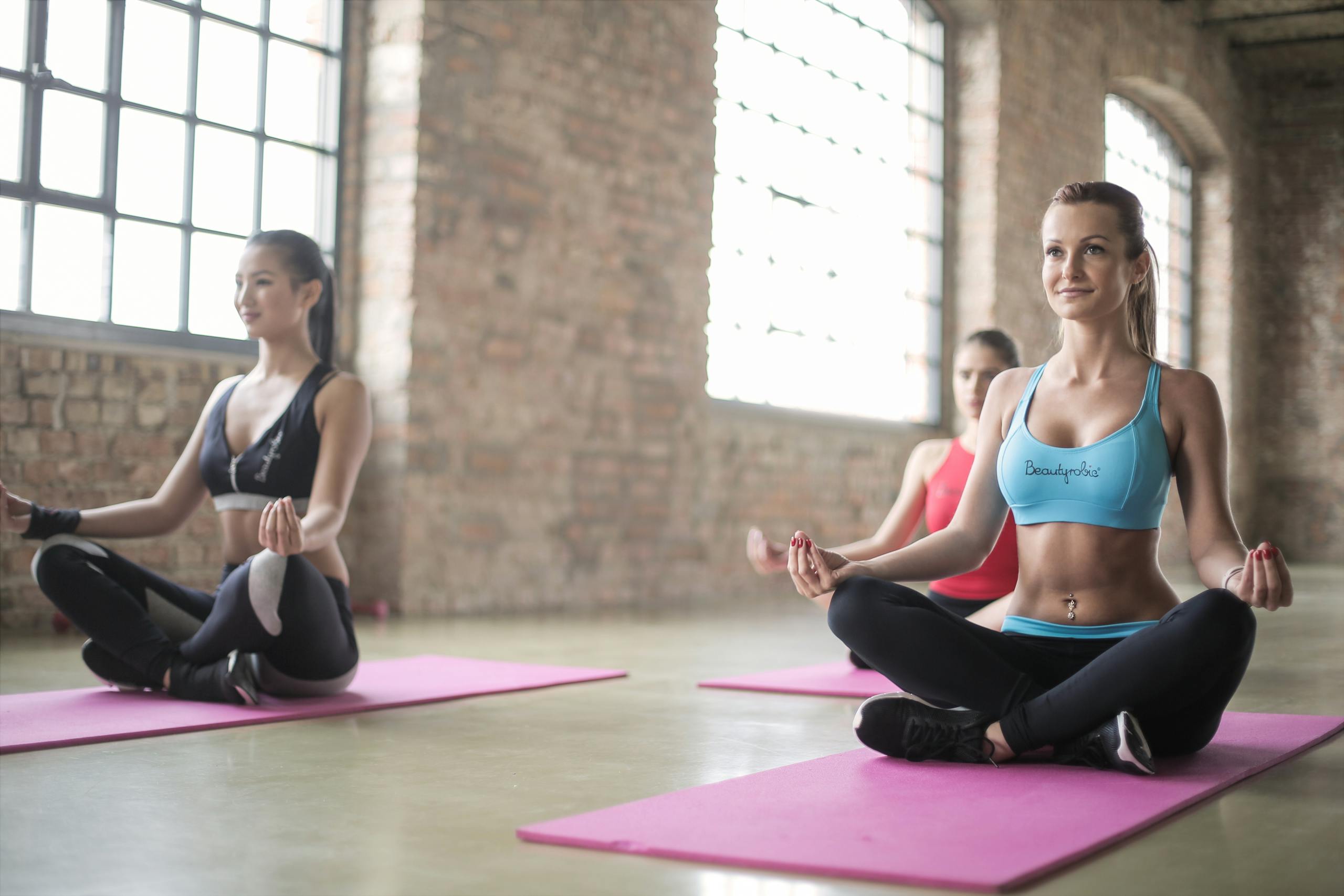
If you’re exploring mental health tools as an introvert, meditation sits at the center of a much larger conversation. Our Introvert Mental Health Hub covers that broader landscape, from anxiety and sensory overwhelm to emotional processing and the particular weight that comes with feeling everything deeply. This article focuses specifically on the different meditation methods available and how each one maps to the way introverted minds actually work.
Why Do Introverts Respond So Well to Meditation?
There’s a common misconception that introverts are naturally good at doing nothing. We’re not. What many of us are naturally good at is internal processing, which is something entirely different. Sitting in silence without a mental task can feel almost unbearable at first. The difference meditation makes is that it gives the mind a structured place to go.
Introverts tend to live in their heads. That’s not a flaw. It means we spend a lot of time analyzing, reflecting, and making connections that others might miss. But without any outlet or boundary, that same internal activity can tip into rumination, anxiety, or exhaustion. Meditation doesn’t quiet the mind so much as it teaches the mind to hold its own activity more lightly.
I managed a team of twelve at one of my agencies, and I noticed that the people who struggled most with burnout weren’t the ones who worked the hardest. They were the ones who never fully switched off. Their minds kept running client problems overnight, on weekends, during lunch. Several of them were highly sensitive people who absorbed not just their own stress but everyone else’s too. If you recognize that pattern in yourself, the connection between HSP empathy as a double-edged sword and the need for intentional mental rest will resonate immediately.
Meditation creates a container for that rest. Not sleep, not distraction, but actual mental recovery. The research published in PMC on mindfulness-based interventions points to measurable changes in how the brain processes stress responses over time, which matters especially for people whose nervous systems are already working overtime.
What Is Mindfulness Meditation and How Does It Work?
Mindfulness meditation is probably the most widely practiced form in Western settings, and for good reason. It’s accessible, well-studied, and doesn’t require any particular belief system or equipment. The practice is straightforward: you sit, you observe whatever is happening in your mind and body without judgment, and when attention wanders, you bring it back.
That last part is the actual practice. Not the sitting. Not the silence. The returning. Every time you notice your mind has drifted to a meeting from last Tuesday or a conversation you wish had gone differently, and you gently redirect attention back to the present moment, you’re building a mental skill. Over time, that skill transfers into daily life. You start catching yourself mid-rumination. You notice when anxiety is pulling you into a future scenario that hasn’t happened. You get a small but real pause between stimulus and reaction.
For introverts who struggle with HSP anxiety, that pause is enormously valuable. Anxiety thrives in the gap between what’s real and what the mind projects. Mindfulness doesn’t eliminate that gap, but it makes it visible, and visibility is the first step toward working with it rather than being controlled by it.
I practiced mindfulness inconsistently for years before it clicked. What changed wasn’t the technique. What changed was stopping the expectation that I’d feel calm during the session. Some of my most productive mindfulness sits have been genuinely uncomfortable, full of mental noise and restlessness. The value wasn’t in the experience itself. It was in what carried over into the rest of the day.

How Does Breathwork Differ From Standard Meditation?
Breathwork sits in an interesting middle space. Some forms of it are deeply meditative. Others are more physiologically active, designed to shift the nervous system quickly rather than cultivate sustained awareness over time.
At the gentler end, diaphragmatic breathing and box breathing (inhale for four counts, hold for four, exhale for four, hold for four) are among the most immediately effective tools available for stress regulation. They work because slow, controlled breathing directly influences the vagus nerve, which plays a central role in the body’s ability to shift from a stress response into a calmer state. The National Institutes of Health overview of the autonomic nervous system gives useful context for why this connection between breath and physiological state is so direct and reliable.
At the more intensive end, practices like holotropic breathwork or certain forms of pranayama can produce powerful emotional releases. These aren’t beginner practices, and they’re worth approaching with guidance rather than on your own. But even knowing they exist matters, because some introverts find that emotion doesn’t surface easily through quiet sitting. Movement or breath intensity can reach places that stillness can’t.
For daily use, I’ve found that two to three minutes of box breathing before a high-stakes meeting is more reliably effective than any other preparation I’ve tried. Running agencies meant constant high-pressure presentations, pitches, and difficult client conversations. Having a physical tool that could reset my nervous system in the time it took to walk from my office to the conference room was genuinely useful in a way that abstract mental preparation wasn’t.
What Is Body Scan Meditation and Who Is It Best For?
Body scan meditation involves moving attention systematically through the body, from feet to head or head to feet, noticing sensations without trying to change them. It sounds simple, and in some ways it is. In practice, it can be one of the more challenging forms for people who have learned to disconnect from physical sensation as a coping mechanism.
Many introverts, particularly highly sensitive ones, have a complicated relationship with their bodies. Sensory information can feel overwhelming rather than grounding. The body can carry tension, anxiety, and emotional residue that the conscious mind has carefully filed away. A body scan brings all of that into awareness, which is useful but can be confronting at first.
The practice is particularly well-suited for people who experience physical symptoms of stress, tight shoulders, shallow breathing, chronic headaches, stomach tension, without necessarily connecting those symptoms to emotional states. It builds the kind of interoceptive awareness that helps you catch stress earlier, before it compounds. For anyone familiar with the experience of HSP overwhelm and sensory overload, body scan can serve as both a diagnostic and a reset tool.
Start with shorter sessions, ten minutes rather than forty-five. Move slowly. Don’t force relaxation. success doesn’t mean feel good during the scan. It’s to become more familiar with what’s actually happening in your body so that information becomes useful rather than something to override.
What Makes Loving-Kindness Meditation Different?
Loving-kindness meditation (sometimes called metta) works differently from attention-based practices. Instead of observing what’s already present, you’re actively cultivating specific emotional states, starting with warmth toward yourself, then extending it outward to others in widening circles.
The traditional structure moves through four stages: yourself, someone you care about easily, a neutral person, and someone you find difficult. The phrases vary by tradition, but the core intention is the same: may you be well, may you be happy, may you be free from suffering.
For introverts who process emotion deeply, this practice can be surprisingly intense. The self-compassion component in particular tends to surface resistance. Many of us are considerably more generous toward others than toward ourselves. We hold ourselves to standards we’d never apply to a friend or colleague. That pattern connects directly to what I’ve written about elsewhere regarding HSP perfectionism and the high standards trap, because the same mechanism that drives perfectionism also makes self-compassion feel unearned.
The research on loving-kindness as a mental health tool is genuinely encouraging. A PMC study on compassion-based interventions found meaningful effects on self-reported wellbeing and reductions in self-critical thinking, both of which matter especially for people whose inner critic runs loud.
I’ll be honest: the first time I tried loving-kindness meditation, I found the phrases almost embarrassing to say internally. That reaction was information. It told me something about the gap between how I treated others and how I treated myself. Over time, that gap has narrowed, not because the practice is magic, but because repeating something with genuine intention, even imperfectly, gradually shifts what feels true.

How Does Visualization Meditation Work for Deep Thinkers?
Visualization meditation uses mental imagery as the primary object of attention. You might be guided to imagine a peaceful landscape, a healing light moving through the body, or a future version of yourself in a specific situation. Some forms are highly structured and guided. Others are more open, using a simple image as an anchor in the way other practices use the breath.
Introverts who are strong visual thinkers often take to this form quickly. The mind has somewhere specific to go, which can feel less frustrating than open awareness practices where the instruction is essentially “notice everything.” Visualization gives the imagination purposeful work rather than letting it drift into worry or planning.
There’s also a useful application here for emotional processing. Guided imagery that allows you to revisit difficult experiences from a safe distance, or to mentally rehearse challenging situations, can be a powerful complement to therapy or journaling. The University of Northern Iowa research on guided imagery offers a useful academic perspective on how this works in therapeutic contexts.
One caution worth naming: visualization can occasionally amplify anxiety rather than reduce it, particularly for people who already spend a lot of time in hypothetical mental scenarios. If you find that imagining future situations makes you more tense rather than less, that’s worth noting. Shift toward present-moment or body-based practices instead, and return to visualization when you have a more stable foundation.
Is Walking Meditation Actually Meditation?
Yes, genuinely. Walking meditation is a formal practice with deep roots in Buddhist tradition, and it’s one of the most underutilized tools available, particularly for introverts who find that sitting still actually increases mental restlessness rather than reducing it.
The practice involves walking slowly and deliberately, usually in a small space or a quiet path, with attention placed on the physical sensations of movement. The feeling of the foot lifting, from here, making contact with the ground. The shift of weight. The rhythm of breath in relation to steps. When the mind wanders, you return attention to the physical experience of walking, exactly as you would return to the breath in seated practice.
What makes this particularly valuable for introverts is that it channels physical energy while simultaneously quieting mental noise. Many of us process better when we’re moving. Ideas come more easily on a walk than at a desk. Difficult emotions that feel stuck when we’re sitting can begin to shift with movement. The American Psychological Association’s work on resilience consistently highlights physical activity as one of the most reliable contributors to psychological wellbeing, and walking meditation combines that physical benefit with intentional mental practice.
During a particularly difficult agency merger, I started taking twenty-minute walks at lunch that weren’t really walks in the conventional sense. No phone, no podcast, no agenda. Just attention on movement and breath. It wasn’t something I named as meditation at the time. Looking back, it was exactly that, and it was probably what kept me functional during one of the most sustained periods of stress in my career.

What About Transcendental Meditation and Mantra-Based Practices?
Transcendental Meditation (TM) uses a personally assigned mantra, a word or sound repeated silently, as the object of attention. The idea is that the mantra provides a gentle anchor that allows the mind to settle into progressively quieter states without forcing anything. Unlike mindfulness, which asks you to observe thoughts, TM instructs practitioners to let thoughts pass without engagement, returning to the mantra each time.
More broadly, any mantra-based practice, whether TM specifically or other forms that use repeated phrases or sounds, tends to work well for people who find open awareness too unstructured. The mantra gives the analytical mind something to do, which paradoxically allows deeper rest to occur.
Some introverts find that mantra practices feel slightly mechanical at first, particularly those of us who are drawn to meaning and depth in everything we do. Repeating a sound without semantic content can feel pointless. That reaction usually softens once you experience what happens when you stop fighting it and let the repetition do its work. The point isn’t the mantra itself. It’s what the consistent return to it trains the mind to do.
For those who process emotion intensely and find that sitting with open awareness can sometimes amplify rather than settle difficult feelings, mantra-based practices offer a gentler container. They keep the mind gently occupied while the nervous system does its own quieting work underneath.
How Do You Choose the Right Practice for Your Introvert Mind?
There’s no single right answer here, and anyone who tells you otherwise is selling something. Different practices suit different people, different seasons of life, and different mental health needs. What matters is finding something you’ll actually do consistently, because consistency over time is what produces change, not the specific technique.
A few questions worth sitting with as you consider your options:
Do you struggle more with a busy, racing mind or with emotional weight that feels hard to access? Racing minds often respond well to breath-focused or mantra-based practices that give attention a clear anchor. Emotional weight that’s hard to reach may respond better to body scan, loving-kindness, or guided visualization.
Do you find stillness grounding or agitating? If sitting still tends to amplify restlessness, start with walking meditation or breathwork before moving toward seated practice. There’s no hierarchy here. Movement-based meditation isn’t a lesser form.
Are you in a high-stress period or a more stable one? High-stress periods often call for shorter, more structured practices with clear anchors. Longer, more open-ended practices tend to become accessible as the nervous system stabilizes. Starting with ten minutes of box breathing during a crisis is more realistic than committing to a forty-minute mindfulness session.
Do you carry a lot of self-criticism or perfectionism? Loving-kindness and self-compassion practices are worth prioritizing. The National Institute of Mental Health’s resources on anxiety make clear how closely self-critical thinking patterns intertwine with anxiety disorders, and practices that directly address self-compassion work at that root level rather than just managing symptoms.
Have you experienced significant emotional pain, grief, or trauma? Some meditation practices can surface difficult material unexpectedly. That’s not inherently bad, but it’s worth having support in place. Working with a therapist alongside a meditation practice is often more effective than either alone. The experience of HSP emotional processing can make this especially relevant, because highly sensitive people often carry more emotional material than they realize until a practice creates space for it to emerge.
One thing I’ve learned from years of both practicing and recommending meditation to people I’ve worked with: the practice you’ll actually return to tomorrow is better than the practice that’s theoretically optimal. Start simple. Start short. Build from there.
What Role Does Rejection and Emotional Residue Play in Meditation Practice?
This question doesn’t get asked enough. Meditation opens things up. For people who have experienced significant rejection, criticism, or emotional wounds, that opening can feel threatening rather than liberating. Sitting in silence sometimes means sitting with the accumulated weight of things that haven’t been fully processed.
That’s not a reason to avoid meditation. It’s a reason to approach it thoughtfully. If you know that you carry significant emotional residue around rejection or relational pain, starting with shorter sessions and having a grounding practice ready (a few minutes of box breathing, a brief walk, journaling) for after the session can make the difference between a practice that feels sustainable and one that feels destabilizing.
The work of processing and healing from HSP rejection and the work of building a meditation practice are deeply complementary. Both ask you to be present with difficult material without being consumed by it. Both build the capacity to feel without being overwhelmed by feeling. Starting one often supports progress in the other.
I’ve had sessions, particularly in loving-kindness practice, where old professional wounds surfaced unexpectedly. A client relationship that ended badly. A business decision I made that hurt people I cared about. Meditation doesn’t make those things disappear. What it does, over time, is change the relationship you have with them. They become part of the story rather than the whole story.

How Do You Build a Consistent Meditation Practice as an Introvert?
Consistency is the part most guides skip over because it’s less interesting than technique. But it’s where the actual value lives. A meditation practice you maintain for years at ten minutes a day will do more for you than an intensive retreat you attend once and never follow up on.
Attach the practice to something that already happens reliably. Morning coffee, the transition between work and evening, the ten minutes before sleep. Introverts tend to be creatures of structure when we choose our own structure, so building meditation into an existing rhythm usually works better than treating it as a separate commitment.
Keep the bar low deliberately. Two minutes counts. Five minutes counts. The perfectionist tendency to feel that anything less than twenty minutes isn’t “real” meditation is the single most common reason people abandon the practice entirely. A Psychology Today piece on introvert behavior patterns touches on this tendency to all-or-nothing thinking, and it shows up nowhere more clearly than in how introverts approach new practices.
Track it simply. Not to judge yourself but to see patterns. You’ll notice that certain practices work better on certain kinds of days. You’ll notice that the sessions you dreaded most sometimes produced the most value. That information becomes its own form of self-knowledge, which introverts tend to find genuinely motivating.
Don’t measure success by how the session felt. Measure it by whether you showed up. The felt experience of meditation is unreliable as a quality indicator. Some of the most useful sessions feel uncomfortable in the moment. The metric that matters is cumulative: did you return to the practice over weeks and months? That’s where the change lives.
If you’re building out a broader mental health toolkit alongside meditation, the resources in our Introvert Mental Health Hub cover everything from anxiety management to emotional processing in ways that complement what a meditation practice can offer on its own.
About the Author
Keith Lacy is an introvert who’s learned to embrace his true self later in life. After 20 years in advertising and marketing leadership, including running agencies and managing Fortune 500 accounts, Keith now channels his experience into helping fellow introverts understand their strengths and build fulfilling careers. As an INTJ, he brings analytical depth and authentic perspective to every article, drawing from both professional expertise and personal growth.
Frequently Asked Questions
What are the main types of meditation practices available?
The most widely practiced types include mindfulness meditation, breathwork, body scan, loving-kindness (metta), visualization, walking meditation, and mantra-based practices like Transcendental Meditation. Each works differently in the mind and body. Mindfulness builds present-moment awareness. Breathwork regulates the nervous system directly. Body scan develops awareness of physical sensation. Loving-kindness cultivates self-compassion and warmth toward others. Visualization uses mental imagery as an anchor. Walking meditation combines movement with focused attention. Mantra practices use repeated sounds to allow the mind to settle. Most people benefit from trying several before settling into a primary practice.
Which type of meditation is best for anxiety?
Mindfulness meditation has the strongest body of evidence for anxiety reduction, particularly when practiced consistently over several weeks. Breathwork, especially box breathing and slow diaphragmatic breathing, offers faster physiological relief and works well in acute stress situations. Loving-kindness practice addresses the self-critical thinking patterns that often accompany anxiety. For highly sensitive people, body scan can help identify where anxiety is held physically before it becomes overwhelming. The most effective approach for most people combines a daily sitting practice with a quick breathwork tool for high-stress moments.
How long should a meditation session be for beginners?
Five to ten minutes is a genuinely sufficient starting point. The goal at the beginning is consistency rather than duration. Sitting for five minutes every day for a month produces more meaningful change than sitting for forty-five minutes twice and then abandoning the practice. Most experienced practitioners recommend building slowly, adding a few minutes each week as the practice becomes more natural. The perfectionist tendency to feel that short sessions don’t count is one of the most common barriers to establishing a sustainable practice, and it’s worth consciously resisting that framing from the start.
Can meditation help introverts with emotional overwhelm?
Yes, though the relationship is more nuanced than “meditation reduces overwhelm.” Different practices address different aspects of emotional overwhelm. Breathwork can interrupt an acute stress response quickly. Body scan builds the awareness needed to catch overwhelm earlier, before it peaks. Mindfulness practice develops the ability to observe emotional states without being consumed by them. Loving-kindness addresses the self-critical layer that often amplifies overwhelm for sensitive people. Over time, a consistent practice tends to raise the threshold at which overwhelm occurs, meaning the nervous system becomes more resilient rather than more suppressed.
Is meditation suitable for people who have experienced emotional pain or rejection?
Yes, with appropriate care. Meditation can surface difficult emotional material, particularly in practices like loving-kindness or open awareness mindfulness. For people carrying significant emotional pain, starting with shorter sessions, using structured practices with clear anchors like breath or mantra, and having a grounding routine available after sessions can make the practice feel safer. Working alongside a therapist is often more effective than meditation alone when processing significant emotional wounds. The capacity meditation builds, to be present with difficult feelings without being overwhelmed, is exactly what makes it valuable for emotional healing, but that capacity develops gradually rather than appearing immediately.