

A journal spiral happens when the act of writing intended to process emotions instead amplifies them, pulling you deeper into rumination, self-criticism, or anxiety rather than offering relief. For introverts and highly sensitive people who already process the world at significant depth, this pattern can feel confusing and even defeating, especially when journaling is supposed to help.
Most advice about journaling treats it as a universally safe outlet. Write it down, feel better, move on. My experience, and the experience of many introspective people I’ve talked with over the years, tells a more complicated story.

If you’ve ever sat down to journal and walked away feeling worse than when you started, you’re in good company. And understanding why that happens is the first step toward making journaling actually work for the way your mind operates.
The full picture of how introverts and sensitive people experience mental health, including the ways our inner lives can become both a refuge and a trap, is something I explore throughout the Introvert Mental Health Hub. The journal spiral is one piece of that larger puzzle.
What Exactly Is a Journal Spiral?
A journal spiral isn’t just having a bad journaling session. It’s a recognizable pattern where writing about a problem doesn’t discharge the emotional charge around it. Instead, each sentence seems to generate more material, more worry, more self-examination, until you’ve spent an hour excavating a wound that was manageable before you picked up the pen.
There’s a meaningful difference between processing and ruminating. Processing moves through something. Rumination circles it. The journal spiral is rumination with a pen in your hand, and it can feel deceptively productive because you’re doing something, filling pages, generating words, appearing to work through your feelings.
During my agency years, I kept what I called a “clarity journal.” The idea was that writing before big client presentations would calm my nerves and sharpen my thinking. Sometimes it did exactly that. Other times, particularly during high-pressure pitches or difficult personnel situations, I’d start writing about a concern and find myself forty-five minutes later having catalogued every possible way the situation could go wrong, every past failure that rhymed with the current one, every character flaw in myself that might be contributing to the problem. I wasn’t clearer. I was excavated.
What I didn’t understand then was that my INTJ brain, wired for pattern recognition and systematic analysis, was applying those same tools to my emotional life in a way that wasn’t always helpful. I was treating my anxiety like a strategic problem to be mapped, and the map kept growing.
Why Are Introverts and HSPs More Vulnerable to This Pattern?
Not everyone who journals ends up in a spiral. The pattern tends to show up more frequently in people who already process information and emotion at greater depth, which describes most introverts and virtually all highly sensitive people.
Highly sensitive people, a trait identified by researcher Elaine Aron, process sensory and emotional information more thoroughly than the general population. This depth of processing is genuinely valuable in many contexts, but it also means that when something painful enters the awareness, it gets examined from more angles, connected to more memories, and felt more intensely. When that processing happens inside a journal, the written word can act like a magnifier rather than a release valve.
Consider what happens with HSP emotional processing. Sensitive people don’t just feel an emotion and move on. They feel it, trace its origins, notice its physical sensations, connect it to related experiences, and often revisit it multiple times before it settles. Journaling can accelerate that cycle or, when done without intention, extend it indefinitely.
There’s also the perfectionism factor. Many introverts and HSPs bring high standards to everything they do, including their inner work. A journal entry becomes something that should be insightful, honest, well-expressed, and in the end illuminating. When it doesn’t deliver that, when you write three pages and still feel awful, the journal itself can become another arena where you feel like you’re falling short. That dynamic connects directly to what HSP perfectionism looks like in practice: the internal standards don’t turn off just because you’re supposed to be healing.

One of the creative directors I managed at my agency, a highly sensitive woman who was extraordinarily gifted at her work, used journaling as her primary mental health tool. She showed me her journals once, not the content, just the physical pages. Some entries were clean, spacious, clearly cathartic. Others were dense and cramped, the handwriting getting smaller and more pressured as the pages went on. She described those entries as “going down the drain.” She knew the spiral by feel before she had a name for it.
How Does Anxiety Feed the Spiral?
Anxiety and journaling have a complicated relationship. Writing can absolutely help with anxiety, but only when it moves toward resolution or acceptance rather than elaboration. When anxiety is already elevated, opening a journal can sometimes give it more room to expand rather than less.
The National Institute of Mental Health describes generalized anxiety as involving persistent, excessive worry that’s difficult to control. That “difficult to control” quality is worth paying attention to in the context of journaling. If worry is already hard to redirect internally, giving it a written form doesn’t automatically make it more controllable. Sometimes the act of writing a worry down makes it feel more real, more concrete, more worthy of sustained attention.
For people who experience HSP anxiety, the stakes feel higher because the emotional intensity is already amplified. A moderate concern can feel catastrophic, and writing about it in an unstructured way can reinforce that catastrophizing rather than defusing it.
What tends to help, based on both my own experience and conversations with therapists and coaches over the years, is structured writing rather than open-ended writing when anxiety is high. The difference between “write about how you’re feeling” and “write three things that are within your control right now” is significant. One invites the spiral in. The other gives the anxious mind a specific task with a clear boundary.
A therapist I worked with during a particularly difficult agency transition gave me what she called the “five-minute rule.” Set a timer. Write freely for five minutes. When the timer stops, stop writing, even mid-sentence. Then do something physical before returning to any reflection. That constraint alone broke the spiral pattern for me more reliably than any journaling prompt I’d ever tried.
When Empathy Turns Inward and Amplifies the Spiral
One of the less-discussed contributors to the journal spiral is what happens when a person’s natural empathy gets directed entirely inward. Highly sensitive people are often deeply attuned to the emotional states of others, which is both a gift and a source of significant strain. That same attunement, when turned toward the self in an unstructured journaling session, can become a kind of relentless self-scrutiny.
The quality of attention that makes an HSP a perceptive friend, someone who notices the subtle shift in another person’s tone, who picks up on what’s unspoken, who feels the emotional texture of a room, doesn’t disappear when they sit down alone with a journal. It turns inward. Every nuance of their own emotional state gets noticed, named, and examined. That’s not inherently problematic, but without structure, it can generate an overwhelming amount of material with no clear place to land.
The complexity of HSP empathy is that it doesn’t have an off switch. And in a journal spiral, the empathic attention becomes a loop: feeling something, writing about feeling it, feeling more intensely because you’ve articulated it, writing about that, and so on. The journal becomes an echo chamber for the inner life rather than a window out of it.

At my agency, I managed a team of strategists, several of whom were clearly highly sensitive. I watched one of my senior strategists, an INFJ who was brilliant at reading client dynamics, go through a period where his journaling practice seemed to be making him more distressed rather than less. He’d come into morning meetings looking more wrung out than when he’d left the night before. When I asked him about it privately, he described writing for hours, going deeper and deeper into an interpersonal conflict he was processing. He wasn’t resolving anything. He was rehearsing it.
What Does Overstimulation Have to Do With Journaling?
Most people think of overstimulation as a sensory problem, too much noise, too many people, too much visual input. But emotional overstimulation is equally real for sensitive people, and journaling can trigger it just as surely as a crowded event can.
When you’re already at or near your capacity for emotional input, sitting down to write about difficult feelings doesn’t necessarily reduce the load. It can add to it. The act of articulating pain, especially pain that involves other people, can bring fresh waves of feeling that compound rather than discharge the original overwhelm.
Understanding how HSP overwhelm actually works is useful here. Sensitive nervous systems need genuine downtime to regulate, not more intense internal activity dressed up as self-care. A journaling session that digs into raw material when the system is already overloaded isn’t processing. It’s piling on.
One signal I’ve learned to watch for in myself is what I’d call “writing heat.” When the pen moves fast, the thoughts are coming faster than I can capture them, and there’s a kind of urgency to the writing, that’s often a sign I’m not processing, I’m spiraling. Genuine processing tends to feel more spacious. There are pauses. The pen slows. There’s room to think between sentences. When the writing feels frantic, the nervous system is usually already overwhelmed, and continuing to write is rarely the answer.
A PubMed Central review on expressive writing and health notes that while expressive writing can support emotional processing in many people, the benefits are not universal and depend significantly on how the writing is structured and what the writer does with the material. Unstructured venting, particularly around interpersonal stress, doesn’t reliably produce the outcomes people hope for.
How Does Rejection Sensitivity Deepen the Spiral?
Rejection is one of the most common triggers for a journal spiral, and for good reason. It’s emotionally charged, it involves other people’s perceptions of us, and it tends to activate older wounds. For highly sensitive people, the pain of rejection can be particularly acute and particularly persistent.
When journaling about rejection without structure or intention, the writing often drifts toward self-indictment. What did I do wrong? What does this say about me? Is this a pattern? That line of questioning can feel like insight-seeking, but it frequently tips into self-attack. The journal becomes a space where the worst interpretations of events get written down and, in being written, feel more true.
The work of HSP rejection processing is genuinely different from how the general population handles social pain. Sensitive people often need more time, more intentional support, and more structured reflection to move through rejection without it becoming a defining narrative. Open-ended journaling during that raw period can sometimes cement the painful story rather than create distance from it.
There was a period in my agency career when I lost a significant account I’d worked on for three years. The client relationship had been strong, and the loss felt personal even though it was driven by factors largely outside my control. I journaled about it obsessively for two weeks. I thought I was processing. Looking back, I was building a case against myself. Every entry added another piece of evidence for the prosecution. It took a conversation with a mentor, not more journaling, to actually shift my perspective.
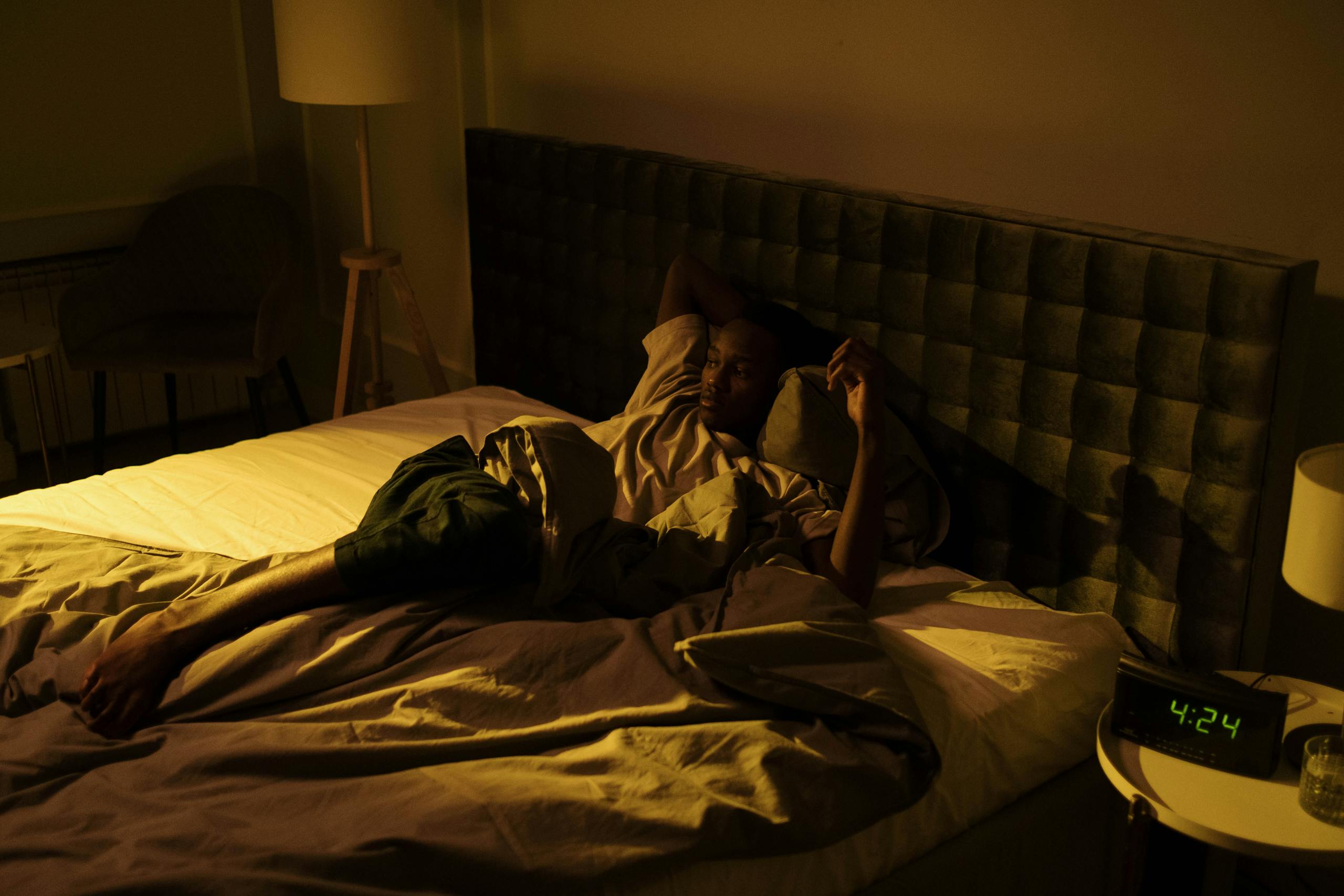
What Actually Breaks the Journal Spiral?
Breaking the spiral isn’t about abandoning journaling. It’s about changing the conditions under which you write. Several approaches have made a meaningful difference for me and for people I’ve spoken with over the years.
Time limits are probably the single most effective intervention. Giving yourself a defined window, five, ten, or fifteen minutes, creates a natural boundary that prevents the spiral from gaining momentum. The timer externalizes the stopping point so you don’t have to rely on your own judgment about when you’ve written enough, which is hard to access when you’re already in a spiral.
Prompt-based writing is more protective than free writing when you’re in a vulnerable emotional state. Prompts that orient toward agency, gratitude, or concrete next steps tend to interrupt the spiral pattern. Prompts that invite more excavation of painful feelings, while valuable at other times, can deepen the spiral when the nervous system is already strained.
Some people find that switching the physical medium helps. Moving from a private journal to a letter format, writing to a trusted friend even if you never send it, shifts the relational context of the writing and can interrupt the self-focused loop. Others find that writing by hand rather than typing slows the process enough to prevent the frantic quality that often characterizes a spiral.
Physical movement before and after writing matters more than most journaling advice acknowledges. The body holds emotional tension, and writing without first releasing some of that physical charge can mean you’re trying to process with a system that’s already at capacity. A short walk before journaling, even ten minutes, changes the starting conditions significantly.
There’s also value in what I’d call “closing the loop” at the end of a journal entry. Rather than ending wherever the writing runs out, deliberately writing a closing sentence that moves toward acceptance, perspective, or a specific action creates a container for the entry. Something as simple as “I don’t have this figured out yet, and that’s okay” can prevent the entry from feeling like an open wound you’re carrying forward into the rest of your day.
A PubMed Central paper on emotion regulation and writing points to the importance of cognitive reappraisal in written emotional processing. Writing that moves toward meaning-making and reframing tends to produce better outcomes than writing that stays focused on the details of the distressing event itself.
When Should You Step Away From Journaling Entirely?
Sometimes the most honest answer is that journaling isn’t the right tool for a particular moment or a particular season. That’s not a failure. It’s discernment.
Certain emotional states are genuinely better served by human connection, professional support, or physical activity than by written self-reflection. Acute grief, significant depression, trauma processing, and severe anxiety are situations where journaling without professional guidance can sometimes do more harm than good. The American Psychological Association’s resources on resilience emphasize that recovery and emotional regulation are fundamentally relational processes. Writing alone in a room is not the same as being supported by another person who can reflect back what they hear.
There’s also a self-knowledge component here. Some people are genuinely better served by external processing, talking with a trusted friend, working with a therapist, or even speaking their thoughts aloud, than by internal written reflection. That’s not a character flaw. It’s just accurate information about how your particular mind and nervous system work best.
I went through a stretch in my late thirties where I tried to journal my way through a significant professional crisis and found that the more I wrote, the more trapped I felt. A colleague eventually said something that reoriented me: “You keep trying to think your way out of a feeling.” He was right. No amount of written analysis was going to substitute for the grief of what I was going through, and the journaling was helping me avoid that grief rather than move through it.
Knowing when to put the journal down and call someone, or sit with discomfort without analyzing it, or simply go outside, is itself a form of emotional intelligence. For introverts who’ve been told their whole lives that they think too much, learning to recognize when internal reflection has become counterproductive is genuinely liberating.
The research on this is worth noting. A University of Northern Iowa study on journaling and well-being found that the relationship between journaling and mental health outcomes is moderated by individual differences in how people process emotion. What helps one person may not help another, and the assumption that more reflection always produces better outcomes doesn’t hold across the board.

Building a Journaling Practice That Works With Your Sensitivity
A journaling practice that works for a sensitive, introspective person looks different from the generic advice you’ll find in most wellness content. It requires more structure, more intentional constraints, and more honest self-monitoring than the “just write freely every morning” prescription.
Start by identifying your emotional baseline before you write. If you’re already activated, already anxious or sad or overwhelmed, that’s a signal to use a structured prompt rather than open-ended writing. Save the open-ended, exploratory writing for times when you’re relatively regulated. That’s when it’s most likely to produce genuine insight rather than amplified distress.
Build in an exit ritual. Something you do at the end of every journaling session that signals closure and transitions you back to the present. This might be a specific closing phrase, a brief gratitude note, a few slow breaths, or standing up and stretching. The ritual matters because it tells your nervous system that the reflection period has ended and doesn’t need to continue running in the background.
Consider keeping two separate journals: one for processing difficult emotions (used with structure and time limits) and one for observation, curiosity, and ideas (used freely). The separation keeps the heavy emotional work from contaminating the more expansive, generative writing that many introverts genuinely love. Some of the best thinking I’ve done in my career came from a notebook I kept specifically for ideas and observations, with no emotional processing allowed in its pages.
Pay attention to the neurobiological aspects of stress response when thinking about timing. Writing about stressful material activates the same stress response as the original event to some degree. Doing that work late at night, when your regulatory capacity is already depleted, is a recipe for a spiral. Morning writing, after sleep has done its regulatory work, tends to be more productive for difficult material.
And finally, give yourself permission to write badly. One of the most spiral-inducing dynamics I’ve observed in thoughtful, sensitive people is the expectation that their journals should be coherent, insightful, or well-expressed. A journal entry that’s messy, contradictory, or unresolved isn’t a failed entry. It’s an honest one. The pressure to produce something meaningful from every session is itself a form of perfectionism that can keep you stuck in the spiral, trying to write your way to a conclusion that might not be available yet.
Psychology Today’s introvert-focused writing has long noted that introverts often prefer to process internally before engaging externally. That preference is real and worth honoring. But internal processing has its own rhythms and limits, and a journaling practice that respects those limits will serve you far better than one that treats more reflection as always better.
If you’re working through any of the patterns described here and want a broader context for understanding your inner life as an introvert, the Introvert Mental Health Hub covers the full range of these experiences in depth.
About the Author
Keith Lacy is an introvert who’s learned to embrace his true self later in life. After 20 years in advertising and marketing leadership, including running agencies and managing Fortune 500 accounts, Keith now channels his experience into helping fellow introverts understand their strengths and build fulfilling careers. As an INTJ, he brings analytical depth and authentic perspective to every article, drawing from both professional expertise and personal growth.
Frequently Asked Questions
What is a journal spiral and how do I know if I’m in one?
A journal spiral is a pattern where writing about difficult emotions intensifies them rather than providing relief. Signs you’re in one include writing that feels increasingly urgent or frantic, sessions that go well beyond your intended time, entries that catalogue problems without moving toward any resolution, and feeling notably worse after writing than before you started. The key distinction is whether your writing is processing an emotion or rehearsing it.
Are introverts more prone to journal spirals than extroverts?
Introverts and highly sensitive people do appear to be more vulnerable to journal spirals, largely because they already process information and emotion at greater depth. That depth of processing is genuinely valuable in many contexts, but in an unstructured journaling session, it can mean that difficult material gets examined from more angles and connected to more memories than is helpful. The same quality that makes introverts thoughtful and perceptive can make open-ended emotional writing more intense than it is for people who process more lightly.
How can I journal about anxiety without making it worse?
When anxiety is elevated, structured prompts work better than open-ended free writing. Prompts that orient toward what’s within your control, what’s actually true versus what you fear might be true, or what small action you could take today tend to interrupt the spiral pattern. Setting a time limit of five to ten minutes and stopping when the timer ends, even mid-thought, prevents the anxious mind from expanding indefinitely. Physical movement before writing also changes the starting conditions in a meaningful way.
Is journaling ever the wrong tool for emotional processing?
Yes. Acute grief, trauma, severe depression, and significant anxiety are situations where journaling without professional guidance can sometimes be counterproductive. These states are often better served by human connection, professional therapeutic support, or physical activity than by solitary written reflection. There’s also an individual differences component: some people are genuinely better external processors who benefit more from talking through feelings than writing about them. Recognizing which approach works for your particular nervous system is more valuable than following generic advice about journaling being universally beneficial.
What practical changes can I make to my journaling practice to avoid spiraling?
Several changes make a meaningful difference. Use time limits, five to fifteen minutes, to create a natural boundary. Check your emotional baseline before writing and use structured prompts when you’re already activated. Build in a closing ritual that signals the end of the reflection period. Consider keeping separate journals for emotional processing and for ideas or observations. Write earlier in the day when regulatory capacity is higher. And give yourself permission to end an entry without resolution. Messy, unresolved writing is honest writing, and the pressure to produce insight in every session is itself a form of perfectionism that feeds the spiral.