

Meditation and contemplation aren’t practices introverts stumble into reluctantly. For many of us, they feel like coming home to something we were already doing, just without a name for it. At their core, both practices invite the kind of deep, unhurried inner attention that introverts naturally gravitate toward, and when approached deliberately, they can become powerful tools for mental clarity, emotional steadiness, and genuine self-understanding.
My relationship with stillness didn’t begin on a meditation cushion. It began in the back of a conference room, years into running an advertising agency, when I realized that the quietest moments in my day were the ones where I actually thought clearly. Everything else was noise I’d been trained to perform in.
If you’re an introvert trying to figure out whether meditation is worth your time, or if you’ve tried it and found the standard advice frustrating, you’re in the right place. This isn’t about emptying your mind. It’s about finally giving your mind the conditions it was built for.
Mental health for introverts covers far more ground than most people realize. Our Introvert Mental Health hub explores the full range of emotional and psychological experiences that shape introverted lives, and meditation sits at the center of much of it. What follows is my honest take on why contemplative practice matters specifically for people wired like us.

Why Do Introverts Take to Meditation So Naturally?
There’s a common misconception that meditation requires you to silence your thoughts completely. Anyone who’s sat down and tried it knows that’s not how minds work. What meditation actually asks of you is something different: the willingness to observe what’s happening inside without immediately reacting to it.
What’s your personality type?
Take our free 40-question assessment and get a detailed personality profile with dimension breakdowns, context analysis, and personalised insights.
Discover Your Type8-12 minutes · 40 questions · Free
Introverts tend to be practiced observers. We notice things. We process slowly and thoroughly. We’re often more comfortable with internal experience than external performance. Those aren’t obstacles to meditation. They’re advantages.
I spent the first decade of my agency career treating my internal processing as a liability. My extroverted business partners were quick with answers in client meetings. I needed time to think, and in the fast-moving world of advertising, time felt like a luxury no one was offering. What I didn’t understand then was that my tendency to sit with a problem, to turn it over quietly before speaking, was a form of contemplation I was already practicing. Meditation, when I finally approached it intentionally, felt like formalizing something my nervous system had been reaching for all along.
That said, introverts aren’t a monolith. Some of us are also highly sensitive people, and for those individuals, the path into meditation can be more complex. Sensory awareness runs deep, and sitting in silence can sometimes amplify rather than quiet the internal noise. If you recognize yourself in that description, the work around HSP overwhelm and managing sensory overload can offer helpful context before you build a formal practice.
What’s the Difference Between Meditation and Contemplation?
People use these words interchangeably, but they describe meaningfully different mental states. Understanding the distinction matters, especially if you’ve tried formal meditation and found it frustrating.
Meditation, in most of its modern forms, involves deliberate attention training. You choose an object of focus, typically the breath, a phrase, a sensation, or a sound, and you practice returning your attention to it when your mind wanders. The returning is the practice. Over time, this builds what psychologists sometimes call attentional control, the ability to direct your focus rather than be directed by it.
Contemplation is something subtler. It’s the practice of dwelling with a question, an experience, or an idea long enough to let meaning emerge. Where meditation trains attention, contemplation invites understanding. Monks and philosophers across traditions have used contemplative practice not to stop thinking, but to think more honestly and more deeply.
For introverts, contemplation often comes more naturally than formal meditation. We’re already inclined to sit with things. The challenge isn’t getting us to reflect. It’s helping us do it with intention rather than letting it spiral into rumination or anxiety, which is a pattern many sensitive introverts know well.
At my agency, I had a habit I didn’t recognize as contemplative at the time. After every major client presentation, I’d spend twenty minutes alone in my office before joining the debrief. My team thought I was reviewing notes. I was actually processing what had happened, what I’d noticed in the room, what the client’s body language had told me that their words hadn’t. That quiet integration period was contemplation, even if I’d never have called it that.
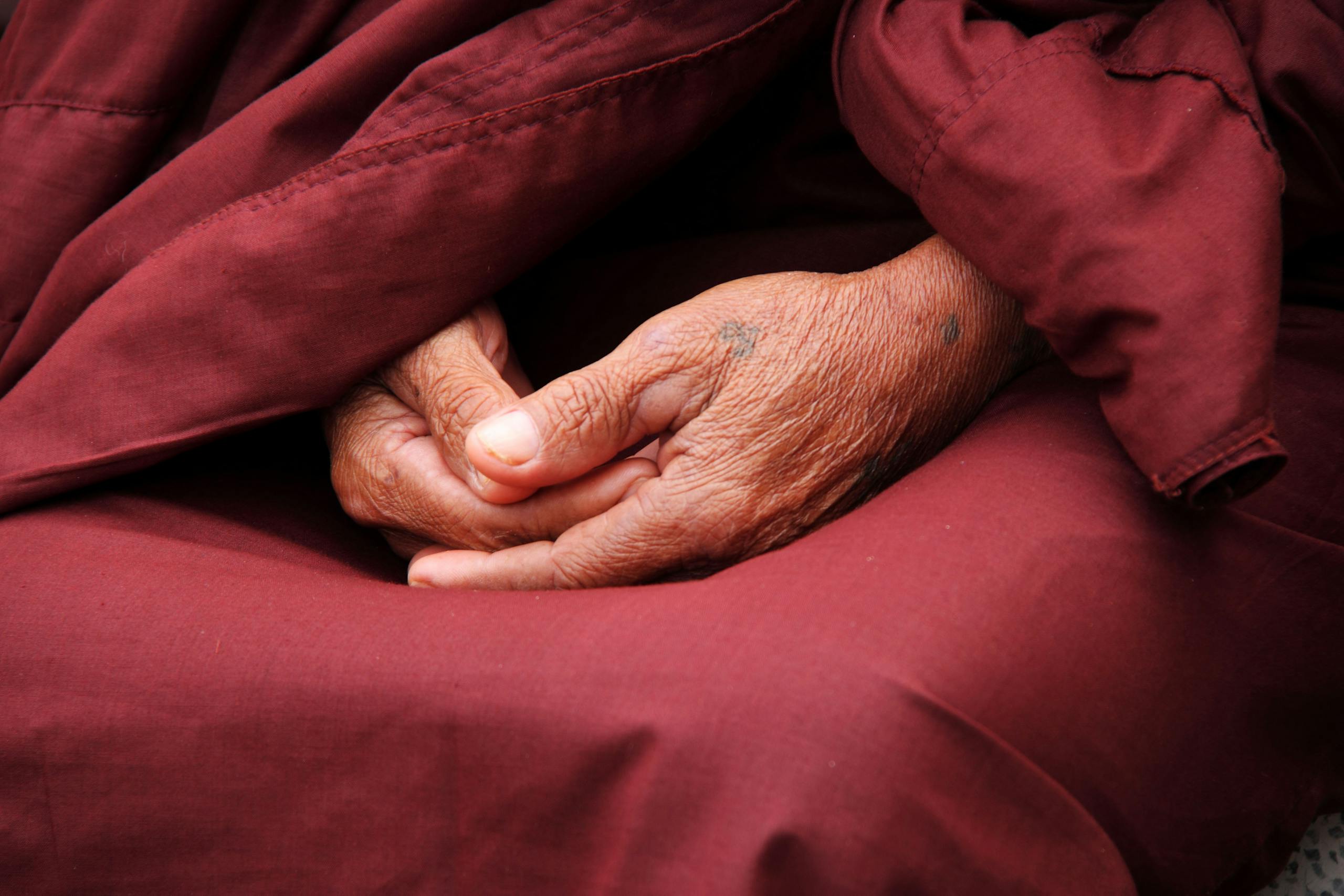
How Does Meditation Actually Affect the Introvert Brain?
There’s a substantial body of work on what regular meditation does to the brain over time. Without overstating the certainty of any single finding, the general picture is consistent: sustained practice appears to strengthen the brain’s capacity for self-regulation, reduce reactivity to stress, and support more flexible emotional responses.
One area that’s received considerable attention is the default mode network, a set of brain regions that activate when we’re not focused on external tasks. This is the network that hums along during daydreaming, self-reflection, and the processing of personal memories. Introverts tend to spend more time in this mode, which is partly why we’re often described as “in our heads.” Work published in PubMed Central has examined how meditation practice changes the activity and connectivity of this network, with findings suggesting that experienced meditators show different patterns of default mode activity than non-meditators, particularly around the tendency toward mind-wandering.
For introverts, this is worth paying attention to. Our default mode activity is often rich and generative. We do some of our best thinking in that space. Meditation doesn’t shut it down. Instead, it seems to give us more agency over when we’re in it and when we’re not, which is a meaningful difference from being pulled into rumination without choosing it.
There’s also the question of stress response. Many introverts, particularly those who identify as highly sensitive, carry a nervous system that’s tuned to pick up more. More emotional nuance, more sensory detail, more social complexity. That sensitivity is a genuine strength, and it’s also genuinely exhausting. Additional research available through PubMed Central points to meditation’s effects on the autonomic nervous system, specifically its role in supporting parasympathetic activity, the rest-and-digest state that counterbalances the stress response. For people who spend a lot of time in high-alert mode, that’s not a small thing.
I noticed this shift in my own body after about three months of consistent morning practice. I’d always been someone who woke up already calculating the day’s demands. Slowly, that changed. Not because my days became less demanding, but because I had a few minutes each morning where I wasn’t performing anything for anyone, including myself.
What Happens When Introverts Try to Meditate and Struggle?
Let’s be honest about something: the standard meditation advice often misses the mark for introverts, and especially for highly sensitive introverts.
Most beginner guidance focuses on breath awareness. Sit quietly, notice your breath, return when you wander. For some people, that’s accessible and calming. For others, particularly those who process emotion very deeply, turning inward without structure can feel like opening a door to a room that’s been locked for a reason.
Introverts who are also strong empaths sometimes find that stillness surfaces emotions they’ve been quietly absorbing from others without realizing it. The meditation session becomes unexpectedly heavy, not because something is wrong, but because the practice is doing its job. It’s just doing it faster than expected.
Others struggle with what I’d call the perfectionism trap. I’ve watched this pattern in myself and in people I’ve worked with over the years. You sit down to meditate, your mind wanders after thirty seconds, and instead of gently returning your attention, you spend the rest of the session criticizing yourself for not doing it right. The practice becomes another arena for self-judgment rather than self-compassion. If that resonates, the patterns explored in work around HSP perfectionism and high standards apply directly here.
There’s also the question of environment. Introverts are often more sensitive to sensory conditions than they realize, and trying to meditate in a space that feels wrong, too bright, too noisy, too cold, can make the whole thing feel impossible. This isn’t weakness. It’s information. Your environment matters, and adjusting it isn’t cheating.
One of my agency’s senior account managers, an INFJ who was one of the most emotionally intelligent people I’ve ever worked with, told me she’d given up on meditation three times before finding a body-scan practice that worked for her. The breath-focused approach kept pulling her into anxiety spirals. The body scan gave her somewhere specific to put her attention, which kept the practice grounded. Different introverts need different entry points.

Which Contemplative Practices Work Best for Introverts?
There’s no single answer here, and anyone who tells you otherwise is selling something. What I can offer is a map of different approaches and what they tend to suit.
Breath-Focused Meditation
The most widely taught form. You anchor attention to the physical sensation of breathing, noticing the rise and fall of the chest or the feeling of air at the nostrils. Simple in concept, genuinely challenging in practice. Works well for introverts who want a clear, repeatable structure and aren’t prone to anxiety spirals when they turn inward.
Body Scan Meditation
A systematic practice of moving attention through different parts of the body, noticing sensation without trying to change it. Particularly useful for introverts who tend to live in their heads and have lost touch with physical signals. It’s also helpful for those who carry stress as physical tension without recognizing it. The National Institutes of Health’s overview of mindfulness-based approaches includes body scan as one of the core practices in evidence-based programs.
Journaling as Contemplation
Not all contemplative practice looks like sitting in silence. For many introverts, writing is the most natural form of internal exploration available. Morning pages, reflective journaling, or structured prompts can serve the same integrative function as formal meditation, particularly for those who process emotion through language. I kept a private work journal for the last eight years of running my agency. It wasn’t therapy, and it wasn’t a diary. It was a place where I could think out loud without an audience, and looking back, it was one of the most consistently useful mental health practices I maintained during a genuinely demanding period.
Walking Meditation
Formal sitting practice isn’t the only option. Walking meditation, in which you move slowly and deliberately while maintaining present-moment awareness, suits introverts who find stillness activating rather than calming. The rhythm of movement can provide a natural anchor for attention in a way that sitting sometimes doesn’t.
Loving-Kindness Practice
A practice drawn from Buddhist tradition that involves deliberately cultivating feelings of warmth and goodwill, first toward yourself, then toward others. For introverts who struggle with self-criticism or who carry the weight of deep emotional processing, this can be both challenging and genuinely healing. It asks you to direct toward yourself the same compassion you might more naturally extend to others.
How Does Contemplation Support Emotional Health in Introverts?
Introverts tend to process emotion internally and thoroughly. That’s not a problem. It becomes one only when the processing loops without resolution, when reflection tips into rumination, or when the sheer volume of internal experience has nowhere to go.
Contemplative practice offers something specific here: a container. When you sit down with intention and a structure, even a loose one, you’re giving your emotional processing a defined space and time. You’re saying, in effect, I will attend to this now, rather than carrying it everywhere.
The American Psychological Association’s work on resilience consistently points to self-awareness and emotional regulation as core components of psychological durability. Contemplative practice builds both, not by suppressing emotional experience, but by developing a slightly more spacious relationship with it. You observe the emotion rather than becoming it.
That distinction matters enormously for introverts who’ve experienced the kind of emotional weight that comes from absorbing too much for too long without adequate processing time. Social environments that demand constant external engagement can leave introverts carrying emotional residue they haven’t had space to examine. Meditation and contemplation create that space deliberately.
There’s also the relationship between contemplative practice and how we handle interpersonal difficulty. Introverts who’ve experienced criticism or social rejection often carry it longer and more intensely than they’d like. The work of processing rejection and finding a path toward healing is genuinely supported by having a regular practice that gives difficult emotions somewhere to land.

Can Meditation Help Introverts Manage Anxiety?
Anxiety and introversion aren’t the same thing, though they often travel together. Many introverts spend years assuming their anxiety is simply part of their personality, an inevitable feature of being someone who thinks too much. That’s worth questioning.
The National Institute of Mental Health’s overview of generalized anxiety disorder describes a pattern of persistent, difficult-to-control worry that extends across multiple areas of life. That’s clinically distinct from introversion, even though the internal experience can feel similar from the inside. Introversion is a preference for depth and solitude. Anxiety is a dysregulated threat response. Meditation addresses both, but in different ways, and it’s worth knowing which you’re actually working with.
For anxiety specifically, the evidence base for mindfulness-based approaches is meaningful. The mechanism isn’t mystical. When you practice returning attention to the present moment repeatedly, you’re essentially training your nervous system to spend less time in the future, which is where anxiety lives. You’re not eliminating worry. You’re reducing its automatic authority over your attention.
I went through a period about twelve years into running my agency when I was managing a genuinely difficult client situation alongside some significant personal stress. My sleep was poor, my concentration was scattered, and I was snapping at people I cared about. A therapist I was seeing at the time suggested a simple ten-minute morning practice. I was skeptical. I was also desperate enough to try it. What I noticed after several weeks wasn’t that the problems had resolved. It was that I had a few more seconds between the trigger and my response. That gap, small as it sounds, changed how I handled things.
For introverts who are also highly sensitive, anxiety often has a sensory component that’s worth addressing directly. Academic work on sensory processing sensitivity has examined how HSP individuals respond to environmental and emotional stimuli differently, and that context matters when choosing which contemplative approach to start with.
How Do You Build a Contemplative Practice That Actually Lasts?
Consistency matters more than duration. Five minutes every morning is more valuable than forty-five minutes twice a month. That’s not motivational advice. It’s how habit formation actually works. The brain learns from repetition, and the cue-routine-reward loop that builds durable habits requires frequency more than intensity.
A few things I’ve found genuinely useful, drawn from both personal practice and watching others build theirs:
Anchor your practice to something you already do reliably. For me, it’s immediately after my first cup of coffee in the morning. The coffee is the cue. The meditation follows. I didn’t have to build willpower around it because I attached it to an existing behavior.
Start smaller than you think you need to. Most people who fail at building a meditation practice fail because they started with an ambitious target, missed a few days, and concluded they weren’t the type of person who meditates. Three minutes is a legitimate practice. Two minutes is a legitimate practice. The point is to show up, not to perform.
Create a physical environment that supports the practice. Introverts tend to be more responsive to their physical surroundings than they often acknowledge. A specific chair, a particular time of day, a room with the right light. These aren’t indulgences. They’re conditions that make the practice sustainable.
Expect unevenness. Some sessions will feel clear and grounding. Others will feel like you spent fifteen minutes arguing with your own brain. Both are the practice. The quality of any individual session matters far less than the accumulated effect of showing up regularly over months.
Consider keeping a brief practice log. Not a detailed journal, just a sentence or two after each session noting what you noticed. For introverts who are naturally reflective, this adds a contemplative layer to the meditation itself and helps you track patterns over time. You might notice, for instance, that your most scattered sessions consistently follow certain kinds of days. That’s useful information.

What Does a Contemplative Life Actually Look Like for an Introvert?
Meditation and contemplation, practiced consistently, tend to change something more fundamental than just your stress levels. They change your relationship with your own inner life.
For introverts, that matters in a specific way. We live in a culture that consistently undervalues the inner life. Speed, output, visibility, performance. These are the metrics that get rewarded. Depth, reflection, careful consideration, the willingness to sit with something before acting on it, these tend to get labeled as slowness or indecisiveness.
A contemplative practice is, among other things, an act of resistance against that framing. It’s a daily choice to treat your inner experience as worth attending to. Over time, that changes how you carry yourself. Not because you’ve become more confident in some performative sense, but because you’ve spent enough time with yourself to actually know what you think and feel, and to trust it.
When I finally stopped trying to lead like an extrovert and started leading from what I actually was, a thoughtful, internally-driven INTJ who processed best in quiet and communicated best in writing, my agency work improved. Not because I became more charismatic, but because I stopped spending energy pretending to be something I wasn’t. Contemplative practice was part of what made that shift possible. It gave me enough clarity about my own nature to stop arguing with it.
The Psychology Today writing on introversion has long made the case that introverts aren’t broken extroverts. We’re a different orientation, with different needs and different strengths. Contemplative practice is one of the clearest expressions of those strengths in action.
A contemplative life doesn’t require a monastery or a rigid schedule. It requires the willingness to take your inner experience seriously, to give it time and attention, and to let what you find there inform how you move through the world. For introverts, that’s not a stretch. It’s an invitation to do more deliberately what we were already inclined to do.
There’s much more to explore at the intersection of introversion and emotional wellbeing. Our complete Introvert Mental Health hub covers everything from sensory processing to anxiety, emotional depth, and the specific mental health challenges introverts face, all written from the inside out.
About the Author
Keith Lacy is an introvert who’s learned to embrace his true self later in life. After 20 years in advertising and marketing leadership, including running agencies and managing Fortune 500 accounts, Keith now channels his experience into helping fellow introverts understand their strengths and build fulfilling careers. As an INTJ, he brings analytical depth and authentic perspective to every article, drawing from both professional expertise and personal growth.
Frequently Asked Questions
Is meditation better suited to introverts than extroverts?
Meditation can benefit anyone, but introverts often find the entry point more natural. The practice asks for inward attention, tolerance of stillness, and comfort with one’s own mental activity. Those are things many introverts have been cultivating informally for years. That said, introverts who are highly sensitive may find that certain meditation styles surface difficult emotions quickly, which requires some care in choosing an approach that feels supportive rather than overwhelming.
How long do I need to meditate to notice a difference?
Most people who practice consistently report noticing some change in their baseline reactivity within four to eight weeks. That’s not a guarantee, and the changes tend to be subtle at first. You might notice you have slightly more space between a stressful event and your response to it, or that you’re sleeping a little more soundly. Dramatic transformations are less common than gradual, cumulative shifts. Consistency over weeks and months matters far more than session length.
What if my mind won’t stop during meditation?
A busy mind during meditation isn’t a sign that you’re doing it wrong. It’s a sign that you’re human. The practice isn’t about achieving mental silence. It’s about noticing when your attention has wandered and gently returning it to your chosen focus. Every time you notice the wandering and redirect, you’re doing exactly what the practice asks. Over time, the wandering doesn’t necessarily stop, but your relationship with it changes. You become less fused with the thoughts that arise.
Can journaling count as a contemplative practice?
Absolutely. Contemplation is about sustained, intentional attention to inner experience, and writing is one of the most effective ways to do that for many people. Reflective journaling, particularly when approached with curiosity rather than judgment, engages the same integrative processes as formal meditation. For introverts who process emotion through language, writing may actually be a more effective contemplative practice than sitting in silence. The two approaches complement each other well when used together.
Is meditation a substitute for therapy or mental health support?
No, and it’s important to be clear about that. Meditation and contemplation are valuable tools for self-regulation, emotional awareness, and stress management. They are not treatments for clinical anxiety, depression, trauma, or other mental health conditions that benefit from professional support. Many people find that meditation complements therapy well, but it works alongside professional care rather than replacing it. If you’re experiencing significant distress, please reach out to a qualified mental health professional.